


File image.
Earlier this year, researchers from the University of Zurich and Google DeepMind announced that they had developed a multi-agent reinforcement learning algorithm based on artificial intelligence (AI) that enables autonomous quadrotors to race at over 22 meters per second while outperforming five-time Swiss national champion Marvin Schepp in multi-player scenarios.
Through training, the drones learned sophisticated behaviors including proactive collision avoidance and handling aerodynamic interactions like downwash.
The algorithm reduced collision rates by 50 percent compared to single-agent baselines and showed strong zero-shot generalization for safer racing with humans, according to a paper on the project that was published on May 21.
The AI-powered drones were around 19.6 percent faster on the best lap, and overall 6.5 percent faster on the full race finish.
While the project was meant to highlight the path toward safe and robust robotic coexistence in shared real-world spaces, it ended up demonstrating that more advanced AI algorithms can be superior to humans even in sophisticated behavioral tasks like piloting drones.
AI is already superior in short, high-speed, multi-agent navigation, and collision avoidance — a critical skill for future drone swarms in combat.
In contrast, when falling behind, human pilots, driven by emotion, competitiveness, and even rage, take excessive risks, leading to more crashes and loss of control. This behavioral pattern applies far beyond racing — to any real combat situation.
AI is already playing a major role in military drones, improving navigation in challenging environments and assisting with target detection and tracking. Still, progress towards full autonomy is already underway.
The research done by the University of Zurich and Google DeepMind shows that we are now very close to the point where drones can fly and maneuver autonomy.
What comes right after that is fully-autonomous drones that can independently identify, select, and engage targets — effectively making lethal decisions with little or no real-time human oversight.
This shift dramatically compresses the kill chain, enabling faster and more aggressive operations, especially in swarm warfare and loitering munitions.
While this offers clear military advantages — such as overwhelming scale, lower costs, and reduced risk to personnel — it also introduces serious dangers: higher chances of mistaken targeting, loss of human judgment in complex situations, and difficulty in maintaining accountability.
Despite all of these risks, the push towards fully autonomous drones is ongoing, with the United States leading in this morally vogue field.
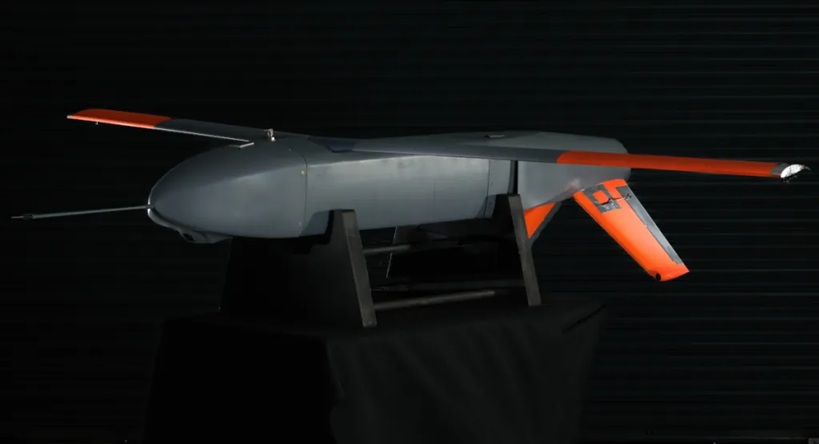
Last April, that the U.S. Army tested the Lumberjack, a new attack drone by Northrop Grumman, during the 101st Airborne Division’s Operation Lethal Eagle exercise.
The drone demonstrated autonomous target detection and precision strike capabilities, integrated with the Palantir-built Maven Smart System and Agentic Effects Agent for real-time mission planning, target identification, and battlefield analysis.
Launched from a ground system, it conducted simulated strikes using Hatchet munition surrogates while also performing surveillance missions.
Developed from concept to flight in under 14 months, Lumberjack supports the U.S. Army’s “Drone Dominance” initiative by showcasing rapid integration of affordable, AI-enabled autonomous systems through close military-industry collaboration.
Click to see full-size image. (Northrop Grumman)
Meanwhile in Ukraine, more risks are being taken. The country has very much become a testing ground for autonomous systems, with absolutely no regards to the risks.
Companies like NORDA Dynamics and The Fourth Law are already deploying AI modules that enable loitering munitions to independently navigate and engage targets in jammed environments, shifting from human-designated to machine-driven terminal autonomy.
The world is without a doubt entering an era where lethal force can be delegated to algorithms, raising urgent questions around ethics, escalation risks, and international norms.
Development is progressing fast, and highly autonomous kill-capable drones are likely to see widespread deployment in the coming years. All anticipated risks will likely materialize in a way, or another.
_______________________________________________________________________________________________________________________
SouthFront: Analysis and Intelligence
NOW hosted at southfront.press
Previously, SouthFront: Analysis and Intelligence was at southfront.org.
The .org domain name had been blocked by the US (NATO) (https://southfront.press/southfront-org-blocked-by-u-s-controlled-global-internet-supervisor/) globally, outlawed and without any explanation
Back before that, from 2013 to 2015, SouthFront: Analysis and Intelligence was at southfront.com



any non white (specially africans and asians) would be beaten to death by the white supremacists of the following organizations: ss aidar, ss kraken, wolfsangel (aka azov), waffen ss nachtigall (who were in kursk killing civilians), leibstandarte adolf hitler (zelenski security team), right sektor ukr – all of them hate africans and asians, and all of them are leading the ukrainian government and military. all of them funded by the us and eu tax payers
labels, labels and more labels ! i reject labels
humans don’t fall from the sky with their blades still running. not usually anyway. depending on the size, drones will never be safe. it’s physics.
whatever the us + eu can do on this front, the ru + prc can do in half the time.
the prc will but only for themselves.
yes, quick and deadly they have become. no common scene available. what great darkness
perfect for the pathological violence of the united states and israel – destroy everything, kill everyone. cheaply, too.
the west works tirelessly to make the dystopian scenario from 90s hollywood movies true. a eastern europe of permanent chaos and despair where killing maschines fly above the heads and kill whoever is on their list.
me dio gusto conocerlos chicos