


Click to see the full-size image
Against the backdrop of ongoing Russian-Ukrainian strikes, the United States and Ukraine discussed the possibility of proposing a limited ceasefire scheme to Russia. According to information from the Financial Times, the discussion concerned an agreement under which Moscow would cease attacks on Ukrainian energy infrastructure, and Kyiv would halt strikes on Russian oil refineries and “shadow fleet” tankers. However, negotiations on this idea, as reported by sources within the publication, have not progressed far. Moscow considers pressure on the energy sector an important lever, while Kyiv is cautious, pointing to the effectiveness of its long-range drones against Russia’s oil and gas sector.
At the same time, diplomatic efforts continue. It is reported that the United States is insisting on holding a trilateral meeting involving Ukraine and Russia in Abu Dhabi this very week, expecting negotiations on Friday and Saturday. The Office of the President of Ukraine clarified that the meeting has not yet been finally confirmed, and the parties are awaiting Moscow’s response. It is expected that US special envoys Whitkoff and Kushner will discuss this idea with Putin. Russia has indicated its openness to a parallel negotiations format, where mediators shuttle between delegations not in direct contact—an approach similar to the meetings in Abu Dhabi last November.
Speaking in Davos, Ukrainian President Volodymyr Zelensky expressed disappointment that, amid diplomatic discussions, the topic of supplying long-range weapons has taken a back seat. “Unlike previous years, there is now no talk about long-range weapons for Ukraine. In Europe, we are advised not to bring up ‘Tomahawks,’ not to ask about ‘Taurus’ missiles,” he stated.
A separate meeting between Zelensky and US President Donald Trump in Davos did not lead to an agreement. The parties failed to complete work and sign documents on post-war security guarantees and Ukraine’s economic recovery, which officials had agreed upon before the summit. Trump left Davos after an hour-long meeting, which was a disappointment for Zelensky.
Strikes on Ukraine
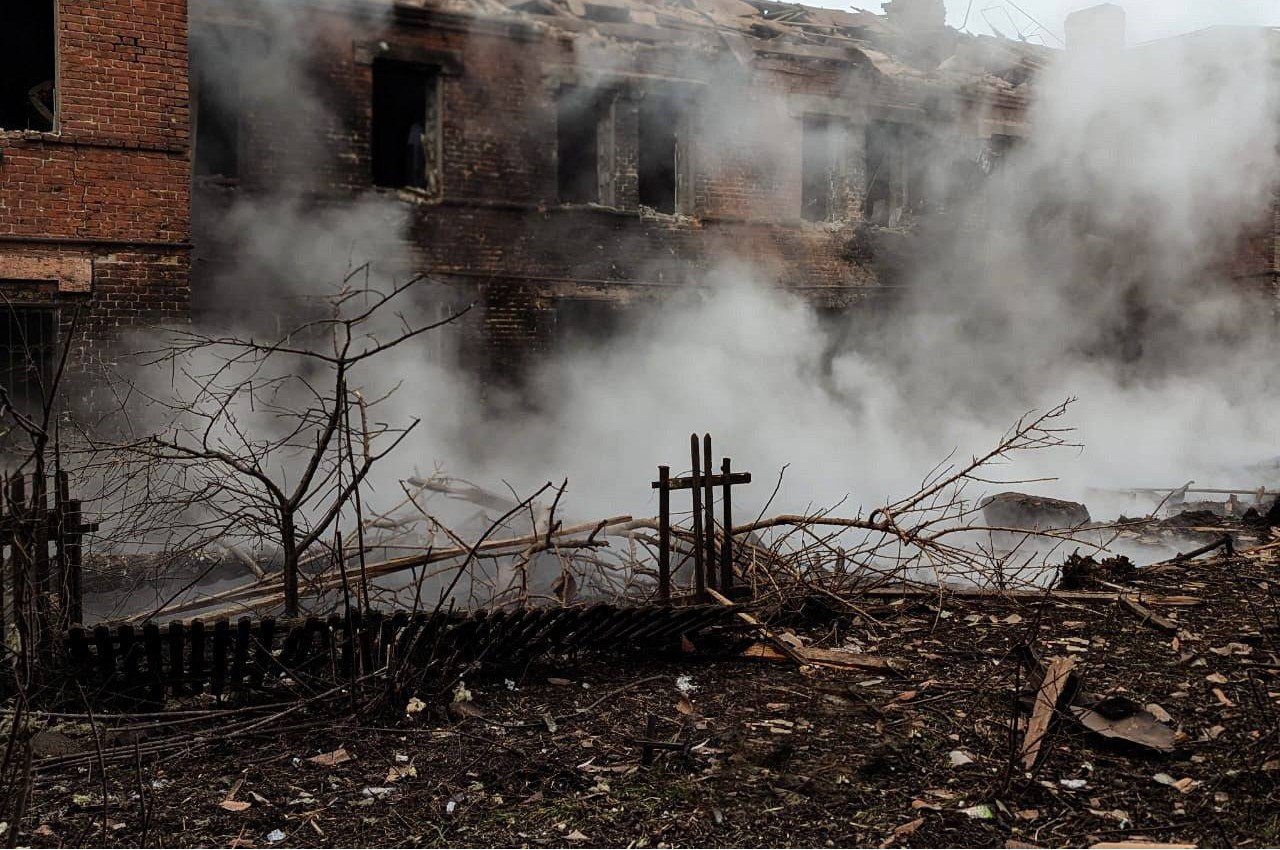
On January 22, the Armed Forces of the Russian Federation struck targets in five regions of Ukraine. The main strike, according to reports, hit the Odesa region, where logistics routes, bridge infrastructure, pontoon crossings, and the port area in the Beliarovo region and Yuzhny port were damaged.
In Zaporizhzhia, the strike hit the area of the “Epitsentr” hypermarket, where the “Bol’nichnaya” substation and a solar power plant are located; a workshop and warehouse used for assembling UAVs were also destroyed. In Kryvyi Rih (Dnipropetrovsk region), equipment concentrations at production sites and the Dolhintsevo airfield were hit.
In the Mykolaiv region, a strike targeted a control facility at the Glinozyomny plant, which, according to sources, was used as a coordination node involving foreign specialists. Explosions were also reported in the Chernihiv region and in the DNR territory controlled by the Ukrainian Armed Forces. Separately, there are reports of a bridge being destroyed in the Kharkiv region, which, according to statements, complicates logistics for Ukrainian troops.
Russian strikes carried out today and earlier have directly worsened the energy crisis in the country. The company “Ukrenergo” reported that as a result of nighttime strikes, power outages occurred in the Odesa, Kharkiv, and Dnipropetrovsk regions. From the morning, emergency power outages were introduced in most regions. According to “Ukrenergo,” the outages on January 22 were more extensive than the day before: electricity consumption in the country dropped sharply and was 7.8% lower than on January 21.
The population continues to live under conditions of severe energy resource shortages. Residents from Kyiv describe situations where electricity is provided for only three hours a day, and apartment temperatures drop to 10–12 degrees Celsius. In some city districts, the problems are complex: For example, residents of a building on Zabolotnoho Street report living for three weeks without heating, three days without water, and two days without electricity, leading to frozen sewage pipes. According to the latest official data, around three thousand apartment buildings in Kyiv remain without heating.
Experts give bleak forecasts. The Director of the Energy Research Center, Alexander Kharchenko, stated that even if shelling ceases, power outages in Ukraine will continue for another 2–3 years. He also predicts that expected warmer weather will give Kyiv only an extra one and a half to two hours of electricity per day but will not resolve the situation fundamentally.
January 21 was also marked by massive strikes. The main strike, according to reports, hit the Kharkiv region, where a Ukrainian Armed Forces rocket-artillery division was hit. At least five kamikaze drones attacked Illichivsk in the Odesa region, likely targeting a substation. Targets were also hit in the Sumy, Zaporizhzhia, Dnipropetrovsk regions, as well as in the DPR territory controlled by the Ukrainian Armed Forces.
Strikes on Russia
The Ukrainian side, in turn, continues attacks on fuel and energy complex facilities and infrastructure on Russian territory.
On January 22, the Security Service of Ukraine (SBU) announced a strike on the “Tamanneftegaz” oil terminal in the Krasnodar Krai. According to the SBU statement, the attack damaged technological pipelines at the piers, as well as a number of tanks containing vacuum gasoil and fuel oil. The Governor of Krasnodar Krai reported that terminals with petroleum products caught fire in the port of Taman.
The Governor also stated that this was the second day the Kuban region was subjected to a massive attack on civilian objects and reported that in the evening, port terminals in the Volna settlement of the Temryuk district came under attack. Furthermore, over Belgorod, according to preliminary data, air defense systems intercepted HIMARS rockets.
On January 21, three key objects were attacked. The Afipsky oil refinery in Krasnodar Krai was attacked, where the fire was subsequently localized. Strikes were carried out on a combined heat and power plant (CHPP) in Oryol, leading to damage to several private houses, cars, and power outages in two city districts, as well as on a CHPP in Belgorod. Additionally, in Novaia Adygea on the border with Krasnodar Krai, an explosion occurred near a residential building, resulting in about 40 cars being burned and damaged in a parking lot.
While President Zelensky points to a shortage of modern long-range systems, the Russian side, according to reports, continues to improve and expand the capabilities of its weaponry. Monitoring resources report that Russia has resumed combat use of the 9M729 missile for the “Iskander-M1” complex, whose range is estimated at 1,500 kilometers. This missile, capable of carrying nuclear weapons, poses a threat to the entire territory of Ukraine, including western regions. It is reported that 24 self-propelled launchers of this complex are concentrated around Ukraine, with a total salvo of up to 96 such cruise missiles.
Reconnaissance systems are also being developed in parallel. A representative of the “Bespilotnye Sistemy” Group, Ekaterina Zgirovskaia, stated at the UMEX 2026 exhibition in Abu Dhabi that the reconnaissance drones “Supercam” in service with the Russian Armed Forces have received new remote control technology with global control range. The development has already undergone combat testing in the zone of the special military operation. The system allows for deploying a control center thousands of kilometers from the flight area, where an operator receives telemetry and real-time video via a secure channel with minimal delay. This increases the survivability of crews, as only a minimal technical team for launch and landing remains in the combat zone, while main specialists work from safe situational centers that can be set up anywhere in the world. Such an approach, as noted by the developers, reduces logistical costs and opens prospects not only for military but also for civilian applications.
MORE ON THE TOPIC:



nato & usa shit all over midget putin’s “red lines”…heheheh
the narrative ramses redguard rear end ramjet hehehehe
exactly, russia begging for negotiations and peace because their energy is getting destroyed and their economy is in the toilet. russia slowly begging for peace to save themselves and their country. soon their invasion and terrorism on ukraine will have to stop and withdraw back to their borders.
it is only the amerikunts and the jooz and the ukronazis who beg for fake ceasefires. banderastan is falling apart. vlad’s economy is thriving.
nato is f…d. it won’t even exist in a few months time. neither will the eu or banderastan. the amerikunt economy will collapse like a house of cards. the whole world will turn on trumpy like a rabid dog. the eu economy is down the toilet.
this is so transparent, putin must have seen it coming. if he agrees to such an energy truce, he will look so bad. it will be like snatching defeat from the jaws of victory.
are you challenged or just fake ? your intentions are too obvious .grow up
just so fake ,so fudge ,so fiction .
hopefully a new stronger smarter leader will emerge
like trumpy?
if the tight arses with their hundreds of billions in panama from illegal arms drugs trafficking globally enduring no benefits to taxpayers from roads or military or housing ,actually ever opened their treasure chest x. then there would be no crises.
ensuring . absolutely depriving the public ,that of course they really love so much . when taking .
hey man have you ever been to darién’s gap? i have, and then i went to tijuana and then to east la.
what else did you get for xmas sonny ?
a corned beef sandwich on rye with dijon mustard and a half sour pickle from katz’s deli.
have no idea why bonehead putin thinks he can trust ukraine or us, russia was definitely stronger under communism
puygs arae dipstick .
you meant pigs arse i imagine . that is correct .
taliban therapists provide low cost sodomy to inferior americunts
no truce with trump unless trump release muduro,stop threatening cuba,iran and greenland.no deal with world threat one man show bully buffoon biblical goliath
hehehehehe youre stupid
trumpstein is as trustwrothy as a brit or a jew
it’s all crap .
yes it is .all of it is when nothing’s what it seems .
when the west goes to russia with proposal , they are losing
putin the meek, putin the weak… veterans won´t forget any pro-american action!
there´s nothing mutual! ruaf is destroying soviet grid that ukronazis use! no concessions will be accepted!
my post regarding vvp offering a billion for trump is very understandably awaiting approvl.