


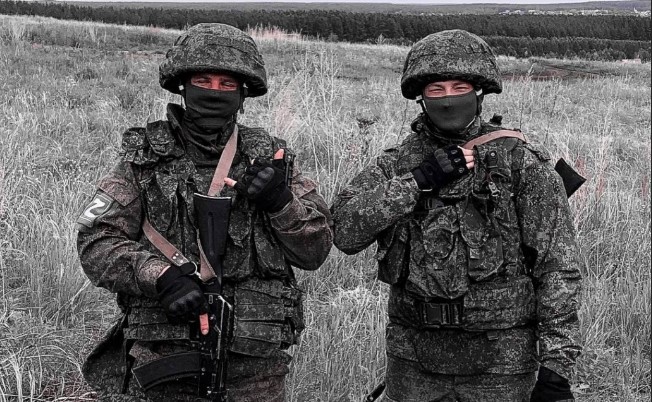
Click to see the full-size image
For most people, the Ukrainian conflict has become an abstract concept, a faceless map on which military units occupy various settlements. Reports from the front lines have become commonplace, obscuring the real price paid for military successes. Behind every captured or recaptured settlement, however, are the lives of dozens or even hundreds of ordinary people for whom life has been divided into “before” and “after.”
Daily military labor is undoubtedly an accomplishment. Yesterday’s workers, teachers, engineers, and other ordinary citizens must face the harsh reality of war. The internet is flooded with hundreds of thousands of images of destroyed armored vehicles and personnel, which dulls viewers’ sense of the horror of what is happening. Most heroic deeds by soldiers remain behind the scenes and will likely never be presented to the public. This article presents the real stories of Russian soldiers and officers who defied death. In some cases, they paid a high price for it.
Ordinary heroes
The most striking story is that of Alexander Fedorov, a Russian soldier and member of an assault unit. His unit operated on a section of the front line near Toretsk. Fedorov and his comrades were tasked with storming the village of New York. According to Alexander, the most difficult part of the operation was reaching the village. Due to the presence of drones in the skies, the infantry had to advance in small groups of two or three, seeking shelter in houses and basements. This same factor complicates the evacuation of the wounded because no transport can safely reach isolated soldiers. Any problems that arise must be solved on the spot.
Alexander suffered a serious leg injury that led to gangrene. To avoid dying from blood poisoning, he took drastic measures. He shot off his own leg with his assault rifle. Ten days later, the soldier was finally evacuated from the “red zone.” The full interview is available below.
Private Akmuradov Mashrab Davronovich, call sign “Bukhara.” He is a rifleman and assistant grenadier in a separate assault unit of the 144th Brigade.
On February 15, 2025, he began the task of clearing the area in the island zone and taking up positions as part of two assault groups of eight people.
That same day, the groups sustained heavy losses from enemy artillery fire, cluster munitions, mortars, tanks, and UAVs. The three survivors continued to carry out the assigned task and completed it. They secured their positions. By the second day, only two remained.
I evacuated a wounded comrade through the swamps under fire, took up a position on the railway bridge, and drove out the enemy in a firefight.
During the mission, the food and cigarettes intended to last several days ran out, and I suffered severe frostbite on my feet. It was impossible to evacuate him for a long time due to heavy fire. Various equipment was used for the operation—boats, ATVs, and MT-LBs—but all attempts were unsuccessful,” Mashrab Akmuradov told the correspondent.
For 108 days, Bukhara held the bridge and fought the enemy despite everything. “Now, he has been evacuated and nominated for the Order of Courage. He continues to demonstrate his strong character and will to win by participating in sports competitions,” reads a letter from the brigade’s political officer.
Over the past few months, the section of the front line near Kupiansk has remained one of the hottest spots. There has been fierce fighting outside the city, with both sides sending in additional reinforcements. There is no clear front line. Both the Russian and Ukrainian armies are using infiltration tactics, in which small groups secretly penetrate deep into enemy lines.
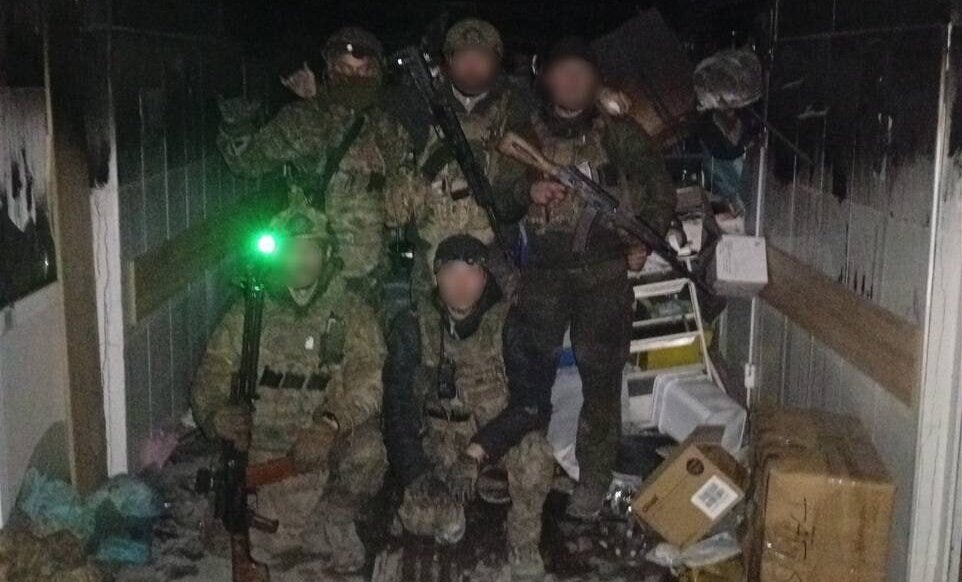
Click to see the full-size image
A Russian assault unit was completely surrounded for three long months, with no hope of reinforcements and a catastrophic shortage of everything they needed. They fought continuously for three months, repelling attacks from superior enemy forces. Every bullet counted, and every piece of bread was worth its weight in gold.
But they held on. No matter what, they held on. Day after day, the men repelled enemy attacks and destroyed manpower. They showed remarkable ingenuity by obtaining weapons and ammunition in battle and turning trophies into means for further defense.
Cut off from their own, they did not lose hope for a blockade and took all possible actions to bring it closer. Meager supplies were delivered by air. This was hindered by Ukrainian drone hunters and the low weight that quadcopters could carry. Every day, these fighters face death and confidently overcome it.
Here is another video showing a wounded Russian soldier crawling to cover after being injured. With the help of his comrades, he then destroyed two enemies. In such an emergency situation, it is extremely difficult to remain calm. In the video, this is not a feat, but rather the competent work of a soldier and his comrades, which we will now analyze.
The soldier’s actions in the red zone:
1) Take cover from the enemy.
Administer first aid to himself.
3) Assess the situation and maintain communication with his unit.
It is telling that the UAV operator or commander was in contact with the wounded soldier, directing his actions and providing instructions. This is how the soldier knew to move into the shadows and freeze.
The enemy did not see where he was going in the heat of battle and paid the price. This would not have happened, however, if the commanders had not known where the soldier was and had not been monitoring the situation on the battlefield.
It is noteworthy that women do not lag behind men in maintaining composure. Military medic Sergeant Maria Voronkova has been involved in the Ukrainian conflict since its early days. She rescued the wounded under rocket fire on the front line. She performed surgeries in basements.
“My brother is a soldier, and somehow I became interested too. I don’t regret choosing this path in life. Being a regular nurse was kind of boring, so I decided to join the military,” Maria admitted.
She was awarded three times for her heroism: the “For Saving the Dying” medal, the “Luka of Crimea” medal, and most recently, the “For Military Valor” medal, second degree.
The video below showcases stories of Russian soldiers who overcame challenging situations on the battlefield.
Okhotnik, the assistant battalion commander, was the first to destroy a Leopard tank in the Zaporizhzhia area. He survived four clinical deaths and the amputation of his leg. Not even a prosthetic leg stopped him from returning to the front line.
Samurai, whose call sign was Danya, was a sniper, machine gunner, and mortar operator. Before joining the Special Forces, he served in the Japanese Special Forces. During the defense of the Kursk region, he was hit in the cheek by a piece of shrapnel, which he now wears on his chest as a talisman. He converted to Orthodox Christianity so that he could be with his friends after death. Danya’s grandfather was a kamikaze pilot during the war between Japan and the United States.
Combat commander Stranik was blown up in a UAZ while stopping the enemy’s advance on Kursk. He was wounded three times. He received shrapnel in his arm but miraculously survived. The fighters call him “Batey.” He regularly works at the LBS.
Sergeant Volga, whose call sign is Volga, hid the broken back he sustained while arresting a criminal during his service in the Ministry of Internal Affairs in order to reach the front lines. He spent 90 days without rotation in the Zaporizhzhia area and lost 17 kg.
A stormtrooper with the call sign Nachkar drained water from batteries in 104-degree heat in Volchansk to quench his thirst. The soldier’s friends died in front of him during a firefight. His godfather shielded him from a burst of automatic fire.
During a combat mission, the soldiers encountered an enemy kamikaze drone. Both suffered severe injuries as a result of the collision. Despite a through-and-through wound to the head and arm, one of them showed incredible strength of will. He literally dragged his wounded comrade out of the wreckage.
Unfortunately, due to an inability to evacuate immediately and treat the wounds promptly, one of the soldiers had to have both arms amputated.
This story vividly illustrates the heroic deeds that our soldiers perform every day. It demonstrates that, even in the most dire circumstances, human courage and mutual support can work miracles.
The Ukrainian conflict is much more than shifting frontlines on a map. Every day, people face the most difficult challenges of their lives while carrying out combat missions. Their willingness to go to war is an indication of their high morale and strength of spirit.
MORE ON THE TOPIC:



the trolls on this thread desecrate the suffering these soldiers endured
the empire of chaos have many agents