Click to see full-size image. (SANA/Screengrab)
Ramping up pressure on Hezbollah as it fights off an Israeli offensive, Syrian government forces tightened security measures along the border with Lebanon to prevent any weapons from reaching the group.
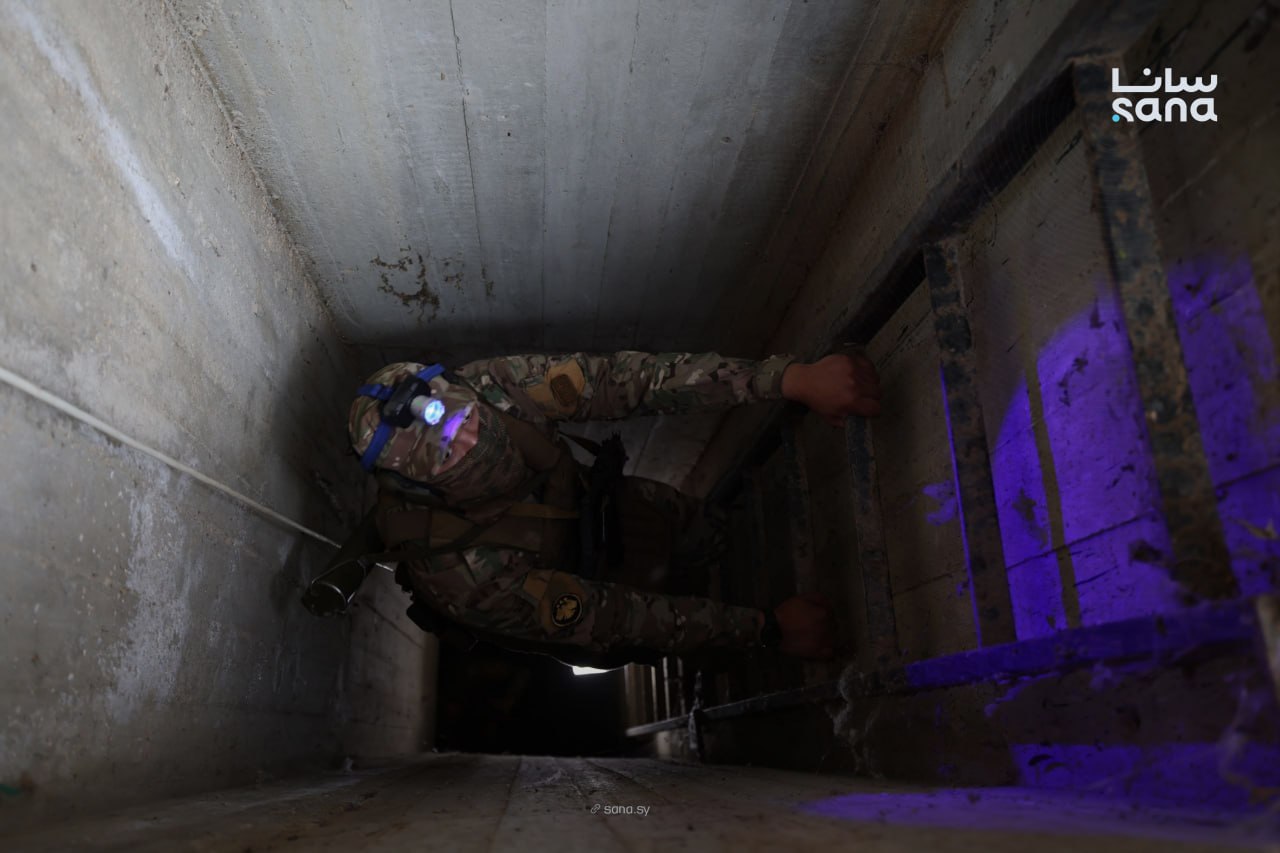
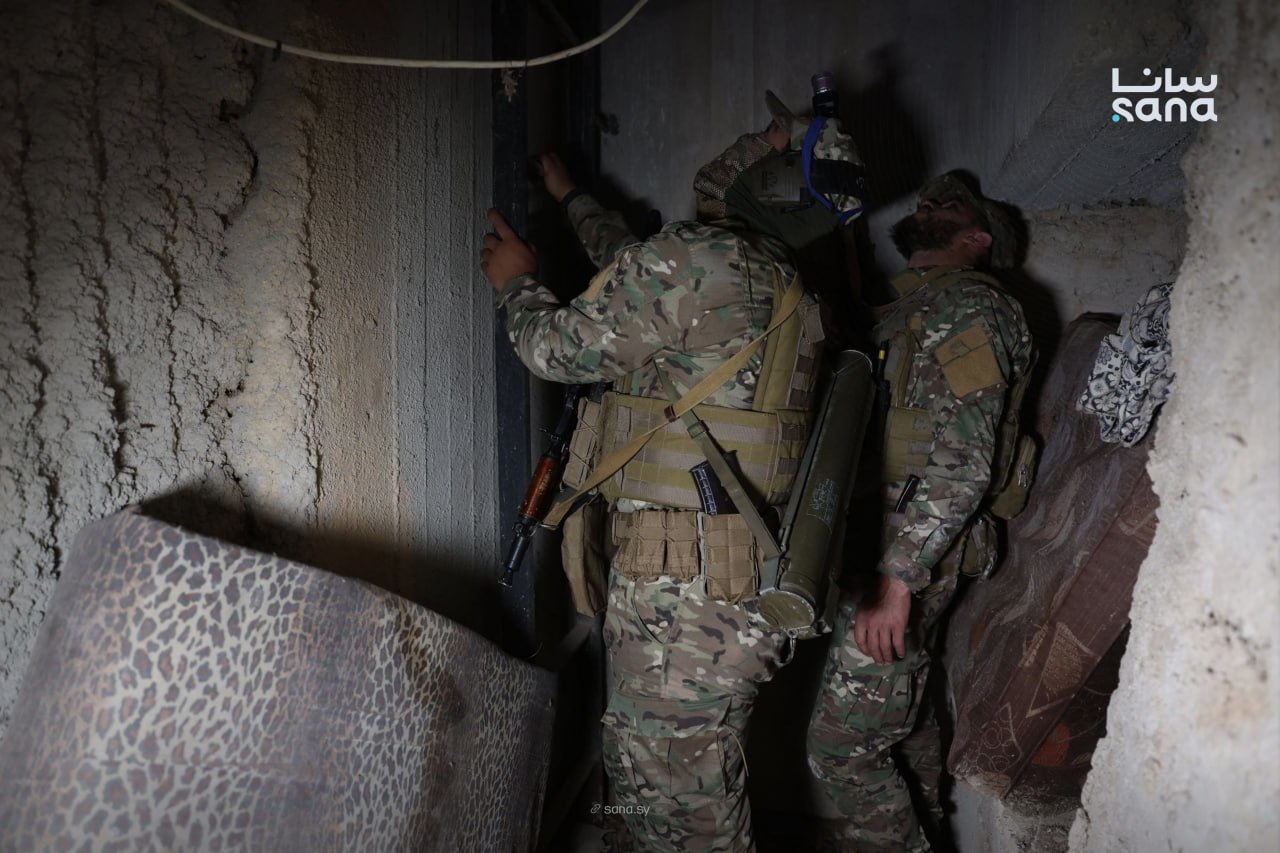
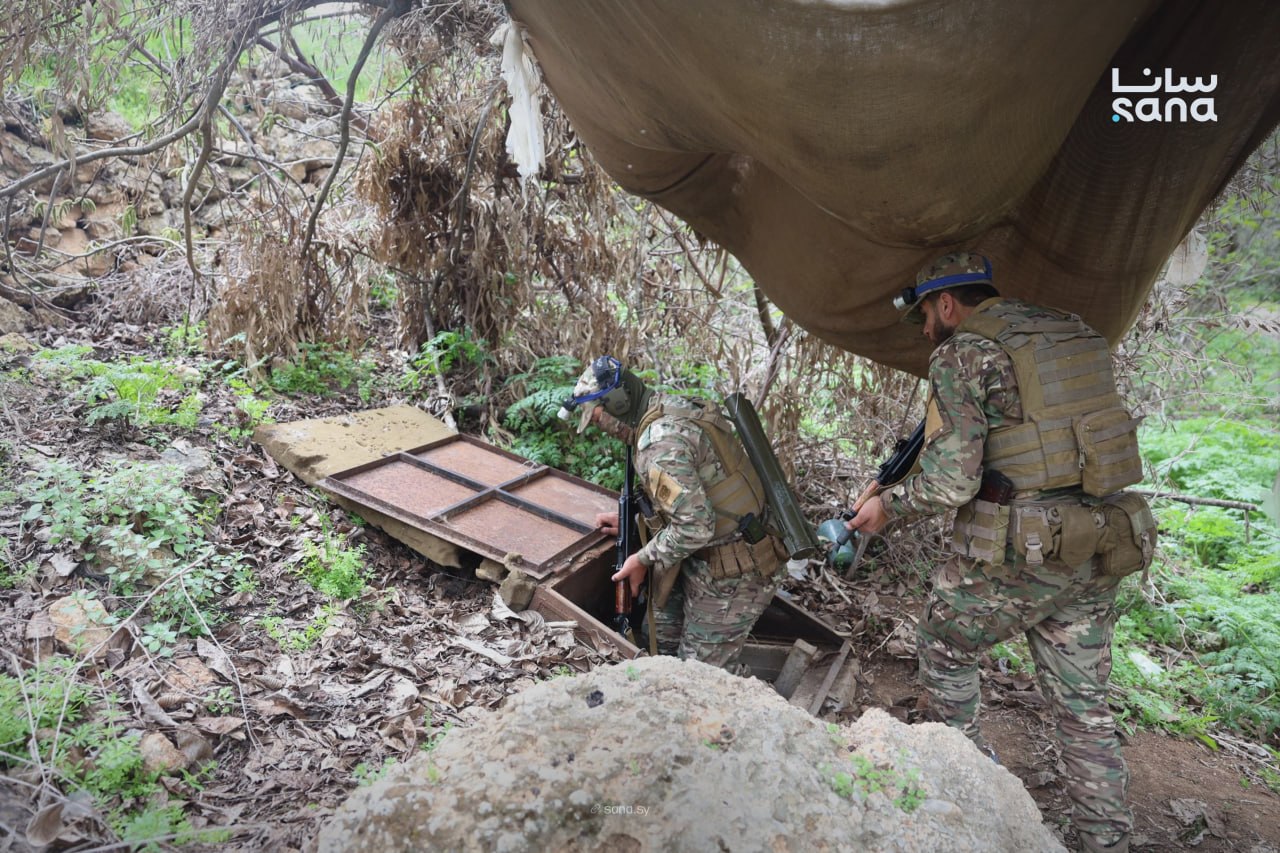
The country’s ministry of defense announced on March 28 and 29 that its forces discovered two tunnels in the town of Hawsh al-Sayyid Ali, which is located in the eastern countryside of Homs right on the border with Lebanon.
The majority of the town’s population are Lebanese Shia, and some of the farms to the east are considered Lebanese territories. Early on last year, Syrian government forces attacked the town more than once, displacing most of the population into Lebanon, amid clashes with Shia tribes linked to Hezbollah.
In a statement to the official SANA news agency, the ministry’s Media and Communication Department said that the cross-border tunnels were used by “Lebanese militia,” in a clear hint to Hezbollah.
Click to see full-size image. (SANA)
Click to see full-size image. (SANA)
Click to see full-size image. (SANA)
Since the start of the war on Iran which resulted in the ongoing confrontation in Lebanon, Syrian President Ahmad al-Sharaa has openly voiced his support to efforts to disarm Hezbollah on several occasions. Multiple Arab media reports also said that the country is mulling a ground operation against the group, although senior Syrian officials have since denied any such plans.
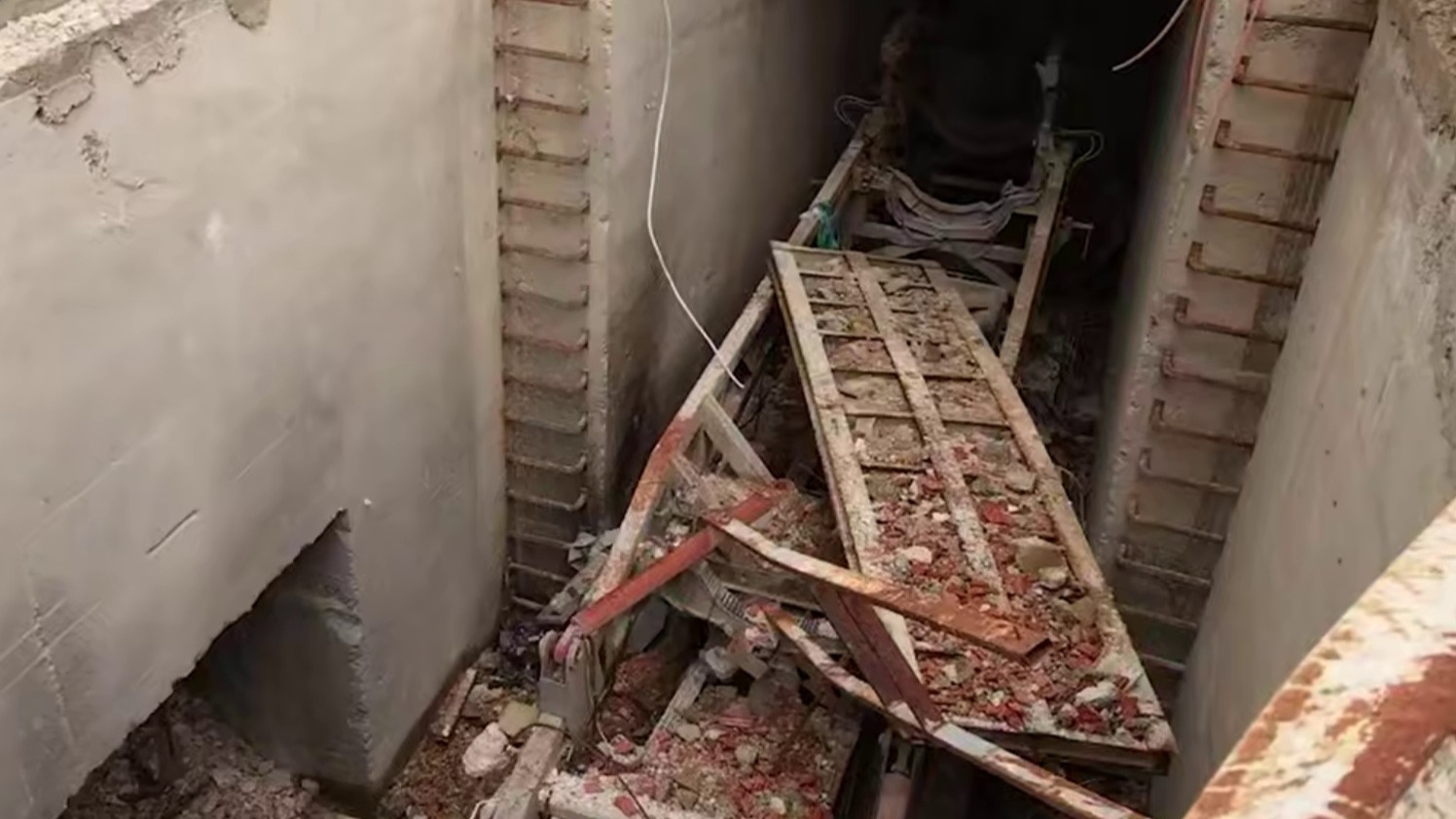
A video and photos released by the SANA revealed that one of the two tunnels discovered recently in Hawsh al-Sayyid Ali was a part of a larger covert complex, including a camouflage erector launcher for Scud-type ballistic missiles.
The launcher was installed under ground level, surrounded by blast-resistance concrete walls, and covered with a sliding hatch.
All around the launcher a structure resampling a regular building, with a concrete roof that apparently included another opening for the missile to fly through.
The complex appeared to be heavily damaged, although it is unclear if this was caused by Syrian government forces blewing it up, or some previous Israeli strike.
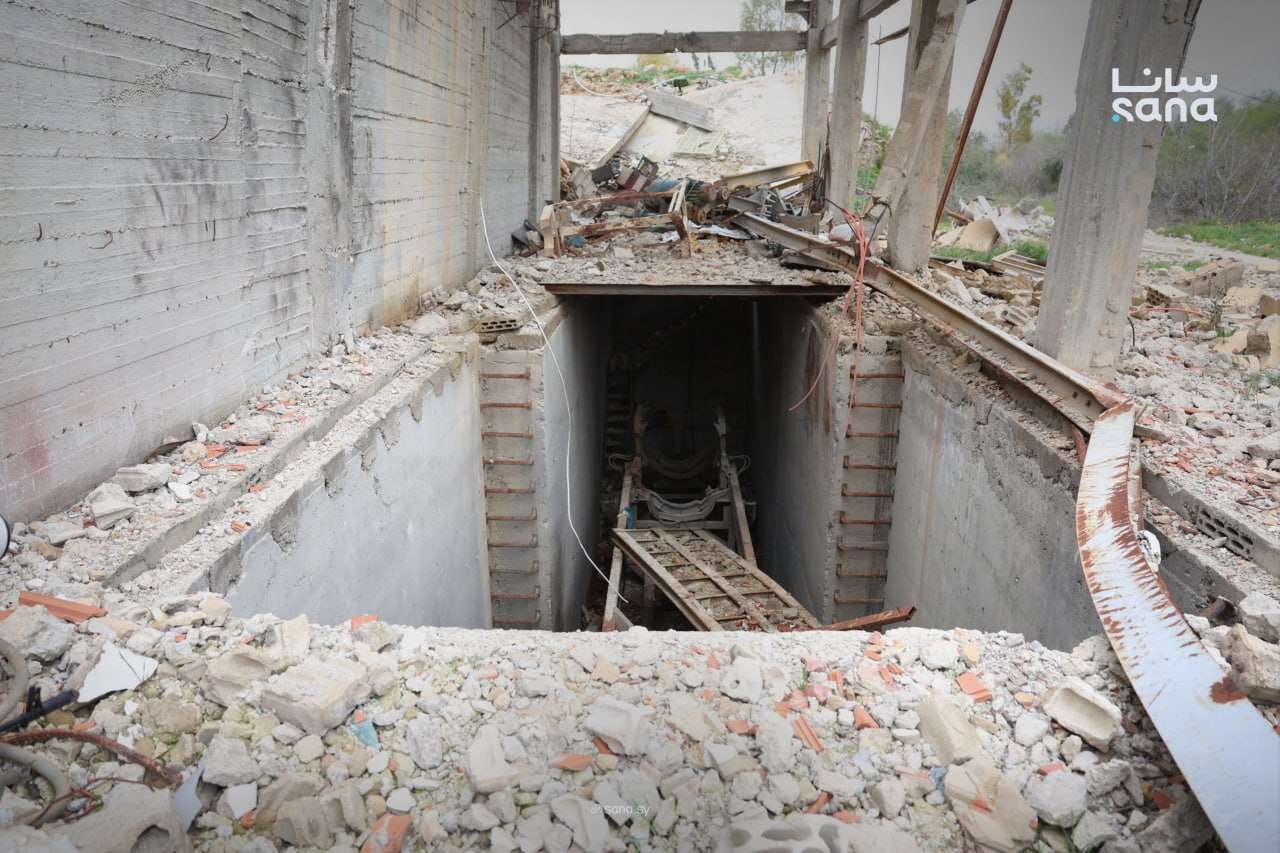
Click to see full-size image. (SANA)
The launcher is not identical to the original Soviet one or even to most known copies, simply because it is a unique Syrian design. Similar ones were found by rebels at a missile site in the northeastern Deir Ezzor countryside back in 2013.
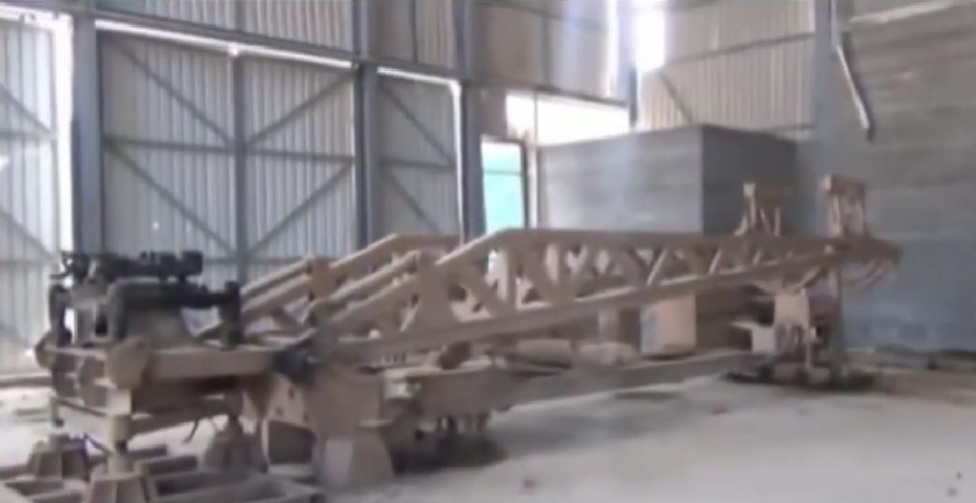
Click to see full-size image. (Orient TV/Screengrab)
The location of the complex suggests that both Hezbollah and the former Syrian military were involved in its construction. It was most likely built after the start of the Syrian civil war to give Hezbollah the ability to launch larger ballistic missiles while providing Syria with plausible deniability, as Hawsh al-Sayyid Ali and its surroundings are generally considered a contested border area.
Syria maintained a large arsenal of Scud-type missiles, including Soviet-made Scud-B, Scud-C, and Scud-D, in addition to North Korean-made Scud-ER, Hwasong-5, Hwasong-6, and Rodong-1. The country was also reported to be in possession of Iranian Shahab-1, Shahab-2, and even produced its own modernized versions, the Golan-1 and Golan-2.
The Golan-2 is a modernization of the Scud-D, with a range of up to 850 kilometers and greater accuracy. The missile was also reported to be capable of delivering a cluster warhead.
Launched from Hawsh al-Sayyid Ali, the missile could hit anywhere in Israel, from the northern city of Haifa, to the city of Tel Aviv in the center, and down to the city of Eilat in the south.
There is no evidence indicating that the camouflaged launcher was ever used by Hezbollah or the former Syrian military. Even during the previous confrontation in Lebanon, which broke out as a result of the war in the Gaza Strip, Israel didn’t report the interception of any Scud-type missiles.
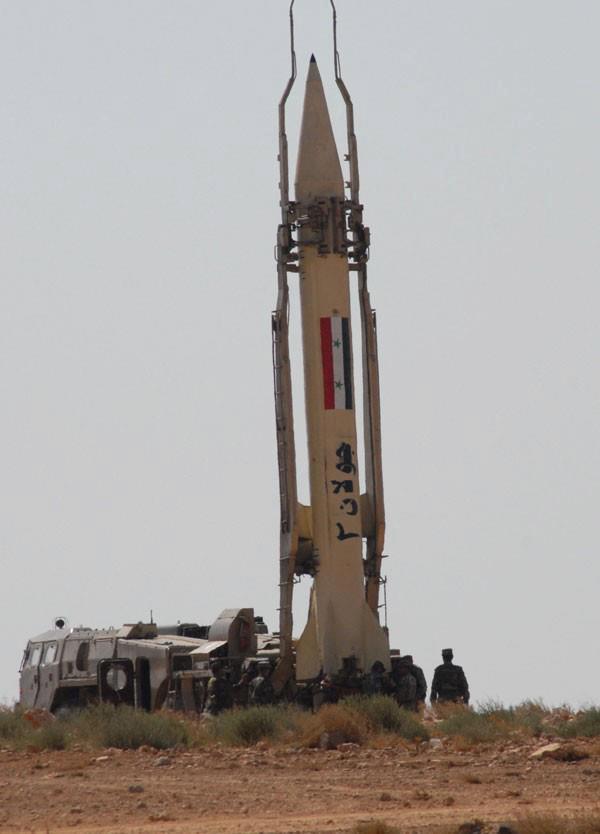
Click to see full-size image.
The complex is an example of the massive support Hezbollah received from Syria during the rule of former president Bashar al-Assad. Reports of the country supplying Scud-type missiles to the group go as far back as 2010.
Now, under Sharaa as president, the country is moving in the opposite direction, despite the fact that Israel occupied more of its terrorists and wiped out all of its offensive capabilities, including its missile arsenal, right after the fall of the previous regime.
A Western intelligence source recently told Israel’s Ynet: “Syria is very important in this region. They are concerned about Hezbollah weapons smuggling, especially the weapons that worry Israel, anti-tank missiles. The Syrians have foiled smuggling attempts. There were Israeli operations in Syria carried out with Sharaa’s consent. The Syrians, with the agreement of the Lebanese government, do not want the flow of arms from Syria to Lebanon to resume.”
Despite losing the support of Syria and supply lines running through the country, Hezbollah is now putting on some serious resistance, and even managed to introduce some new capabilities like first-person view suicide drones.
While it will be harder for Hezbollah to strengthen its missile arsenal once again, it is not completely impossible, taking into account that both the Houthis in Yemen and Hamas in Gaza were able to receive such weapons from Iran, or manufacture them locally under a tighter siege.
_______________________________________________________________________________________________________________________
SouthFront: Analysis and Intelligence
NOW hosted at southfront.press
Previously, SouthFront: Analysis and Intelligence was at southfront.org.
The .org domain name had been blocked by the US (NATO) (https://southfront.press/southfront-org-blocked-by-u-s-controlled-global-internet-supervisor/) globally, outlawed and without any explanation
Back before that, from 2013 to 2015, SouthFront: Analysis and Intelligence was at southfront.com