


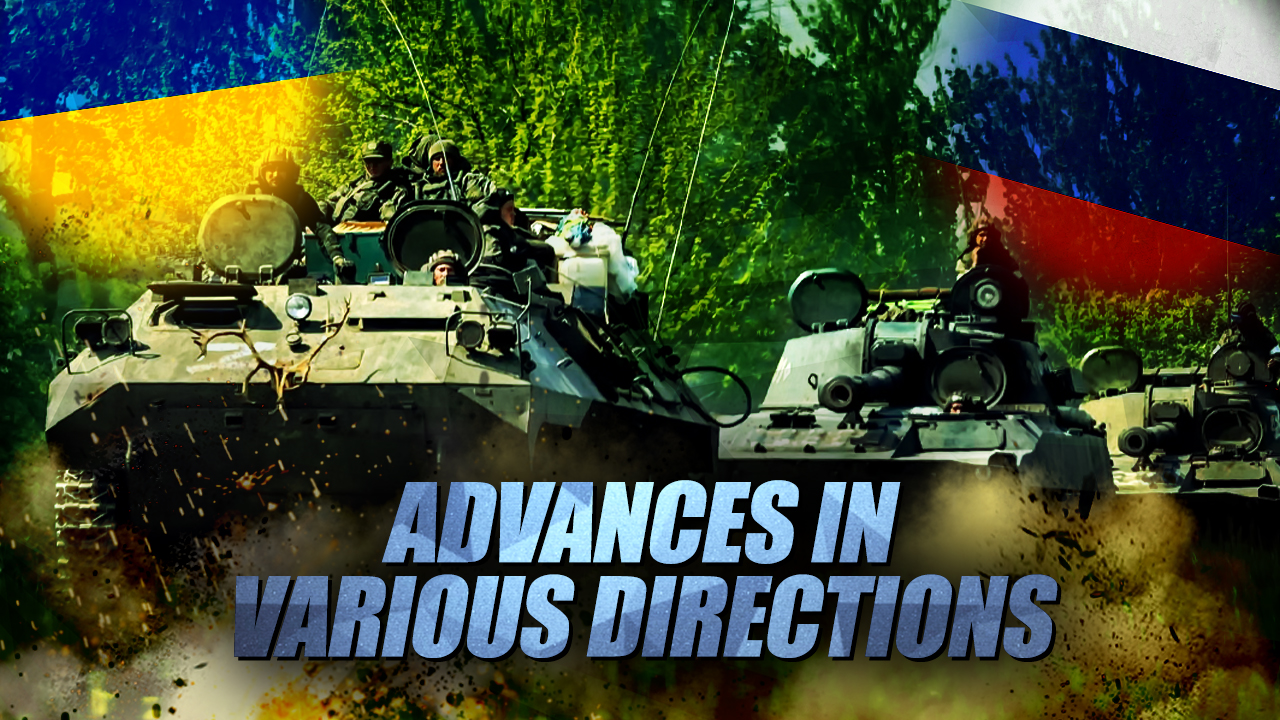
File image.
In the Pokrovsk sector, the most intense combat operations are concentrated around the Hirshyne settlement, where Russian units are trying to establish a foothold on the eastern outskirts. Meanwhile, Ukrainian troops are conducting sorties towards Pokrovsk. In the Sloviansk sector, Russian assault groups are fighting for control of Reznykivka and Khromivka. They are striking logistical infrastructure, including the Raihorodok-Shchurovo crossing, as well as facilities within the city limits of Druzhkivka. In the Dobropillia sector, units continue to advance cautiously towards Kucheriv Yar and are engaged in heavy fighting in the Suvorovo area, which has transitioned to “gray zone” status. In the Huliaipole area of the Zaporizhzhia Sector, Russian “East” units repelled several counterattacks and captured several strongpoints, taking control of an area up to 4 sq. km. In the Sumy and Kharkiv sectors, assault groups advanced up to 650 and 350 meters, respectively, despite the Ukrainian troops’ active use of drones and fierce resistance. According to informed sources, UK Prime Minister Keir Starmer intends to decline an invitation to the “Peace Council.”
Pokrovsk Sector
The focal point of the fighting is in the area around the Hirshyne settlement. Russian units aim to consolidate their position on the eastern outskirts of the village to expand control of the area northwest of the urban agglomeration and neutralize drone operator positions. Meanwhile, Ukrainian forces are conducting sorties with small infantry groups in the Pokrovsk sector, where they have been attempting offensives since December. Precision-guided artillery munitions are among the weapons being used against targets in the Hirshyne area.
A tactical success was Russian units’ establishment of control over a water treatment facility north of Pokrovsk. This allows them to create additional pressure on the defense in the Hirshyne area from the eastern sector and complicates Ukrainian troops’ ability to hold their positions.
Dobropillia Sector
In the Dobropillia sector, Russian units are acting in a calculated and cautious manner, systematically increasing pressure. Their main efforts are focused on advancing towards Kucheriv Yar. Assault groups are using the terrain’s folds, ravines, and other natural cover to maneuver while avoiding frontal attacks on prepared positions.
In Dobropillia itself, the use of engineering methods to collapse buildings has been observed. Ukrainian troops have previously used such tactics in other areas, which may indicate a fight against suspected groups within the city limits or preemptive measures to destroy structures that could shelter advancing Russian assault groups.
Simultaneously, activity has been recorded southwest of Toretsky, indicating a desire to expand the offensive to several adjacent sectors. This should prevent Ukrainian troops from stabilizing their defense line by transferring local reserves. West of Novoye Shakhtovo, the “gray zone,” territory where control by either side is not definitive, is gradually expanding. Similar dynamics are observed northwest of Ivanivka and in the Novyi Donbas area, where intense and heavy fighting continues without either side gaining the upper hand.
Russian forces continue to exert constant pressure on Ukrainian troop logistics routes in the Krasnoyarsky area, limiting opportunities for the transfer of reinforcements and supplies. Concurrently, there are ongoing attempts to establish full control over the Suvorovo settlement, which has transitioned to “gray zone” status.
Sloviansk Sector
In the Sloviansk sector, combat operations continue with varying intensity in different areas.
In the Siversk sector, Russian units gained a tactical advantage after capturing a strongpoint on dominant heights in the Zakotnoye area. This has enabled them to clear the “gray zone” near the southern outskirts of Yampil. Ukrainian troops are constantly attempting to counterattack by conducting sorties from the chalk quarry sector, which has led to clashes in the western part of Zakotnoye. Repelling these attacks, Russian forces aim to advance along the chalk slope of the Siverskyi Donets River. They also aim to maintain constant fire on fortified positions and logistics in the settlements of Kalenyky and Kryva Luka, as well as in the forested area north of Rai-Oleksandrivka. There has been an advance towards the southern outskirts of Ozerne.
In the southern sector, Russian assault groups are engaged in heavy fighting for the settlement of Reznykivka, overcoming stubborn resistance. Ukrainian units continue to attempt counterattacks towards Sviato-Pokrovske. North of Pazen, Russian troops have captured new positions. Following their success in taking control of Bondarne, they advanced further west with the aim of eliminating the fortified area between Bondarne and the neighboring village of Khromivka. Fighting continues in Khromivka and Nykyforivka, where the infantry is receiving active support from the artillery and drone operators.
There is systematic work underway to disrupt the Ukrainian army’s rear logistics. Within the city limits of Druzhkivka, there have been reports of strike drones being used against supply vehicles. Additionally, a combined strike involving aerial bombs and multiple launch rocket systems was carried out on facilities in Druzhkivka. The crossing between Raihorodok and Shchurovo was also destroyed.
Zaporizhzhia Sector
In the Zaporizhzhia sector, Russian “East” troops continue to operate in two key areas: repelling Ukrainian counterattacks and advancing into their defensive formations.
In the Huliaipole area, Ukrainian troops made six attempts to counterattack, focusing their efforts on the Zaliznychnyy, Staroukrainka, and Tsvitkove sectors. All attacks were repelled.
The “East” grouping’s assault units continued their offensive, capturing several Ukrainian strongpoints. As a result, they brought an area totaling up to four square kilometers under control. To reduce the Ukrainian’s defensive potential and create conditions for further advancement, reinforcement groups in Samoilivka, Verkhnia Tersa, and Zaliznychnyy were hit with artillery fire and drone strikes. Ukrainian troops carry out attacks on Huliaipole from these areas.
Sumy Sector
In the Oleksiivka area, units are advancing south toward Mala Korchakivka. This advance is complicated by Ukrainian drone dominance in the air and the fact that Ukrainian troops are capturing elevated positions in forested areas. Meanwhile, the attackers are forced to operate on more open terrain. To overcome this resistance, Russian units are systematically striking fortified positions in the forests south of Mala Korchakivka.
In the Yunakivka area, units are straightening the front line to the east and advancing toward Sadky, where Ukrainian forces have entrenched themselves in an extensive forested area.
Russian assault groups advanced in six sectors in Sumy Raion, three sectors in Krasnopilskyi Raion, and three sectors in Hlukhiv Raion. The total depth of the advance was up to 650 meters. In Stetskivka, an airstrike destroyed a Border Service command post, resulting in casualties among officers and loss of equipment.
Kharkiv Sector
Along the entire front in the Kharkiv region, the Russians used aviation, flamethrowers, and artillery to attack Ukrainian troop positions. Units are maintaining pressure on the defense by advancing on several sectors simultaneously while Ukrainian units are fortifying reserve defensive lines.
In the Starytsia area, Russian troops advanced 350 meters into three sectors, capturing a large section of forest. The positions of Ukrainian mechanized brigades were hit by fire from heavy flamethrower systems. In the forested area near Liman, assault troops advanced 300 meters in the southern sector and seized a strongpoint. In the Volchanskiy Khutora area, troops advanced 300 meters eastward. These actions were supported by attack aviation. During the fighting, two Ukrainian servicemen were captured.
Conclusion
In the Pokrovsk sector, Hirshyne remains the key point of confrontation. The struggle there is positional, and Russian troops have additional operational opportunities due to their successful control of infrastructure north of Pokrovsk. In the Sloviansk sector, the situation is developing with mixed results: consolidation on the heights near Zakotnoye and advancement toward Ozerne in the northern sector contrasts with intense, direct battles for Reznykivka and Khromivka in the southern sector, where both sides are suffering significant losses.
In the Dobropillia sector, the Russians are cautiously probing the defenses, advancing towards Kucheriv Yar and expanding the “gray zone” in several sectors. This tactic aims to prevent the Ukrainian command from regrouping its forces. In the Zaporizhzhia sector, the most significant tactical achievement is the repulsion of a series of counterattacks near Huliaipole and the capturing of several strongpoints up to 4 sq. km deep, demonstrating the “East” grouping’s ability to defend and consistently expand its zone of control.
In the Sumy and Kharkiv sectors, the model of methodical pressure persists. Despite the Ukrainian troops’ noted superiority in using specialized drone units in certain areas of Sumy region, the Russian units manage to advance hundreds of meters daily through the effective use of artillery, aviation, and strike drones.
While combat operations continue on the Ukrainian front, complex diplomatic processes surrounding other international crises also progress. According to the Western press, UK Prime Minister Keir Starmer plans to refuse participation in the “Peace Council” for Gaza, an initiative previously proposed by US President Donald Trump. Despite public statements about ongoing negotiations, government sources indicate that London is reluctant to join an agreement with this body due to financial conditions and participant composition.
Meanwhile, Starmer is willing to participate in an official G7 meeting in Paris proposed by French President Emmanuel Macron to discuss a range of issues, including Ukraine. Trump previously invited the leaders of several states, including Russia and Belarus, to join the council. Russian presidential press secretary Dmitry Peskov confirmed receipt of the invitation and noted that Moscow awaits detailed explanations of the initiative’s working format. Belarusian President Alexander Lukashenko, who has agreed to participate, has denied rumors that a large financial contribution is required for council membership. This situation reflects the persistent difficulty of forming unified international platforms for crisis resolution amid deep disagreements between key players.
_______________________________________________________________________________________________________________________
SouthFront: Analysis and Intelligence
NOW hosted at southfront.press
Previously, SouthFront: Analysis and Intelligence was at southfront.org.
The .org domain name had been blocked by the US (NATO) (https://southfront.press/southfront-org-blocked-by-u-s-controlled-global-internet-supervisor/) globally, outlawed and without any explanation
Back before that, from 2013 to 2015, SouthFront: Analysis and Intelligence was at southfront.com



a video that appeared online recently shows at least six soldiers and officers from ukraine’s 108th territorial defense brigade surrendering somewhere near huliapipole. this particular unit has reportedly taken some heavy losses since being brought into this direction.
.………………… https://psee.io/8m99m8
it should be noted that the reform only affected the structure of the ground forces. the international legion of the main intelligence directorate of ukraine operates separately and continues to function as usual.
.………………… https://psee.io/8jqu9r
soon, usa will demolish russia…hehheeh
its coming, financially and militarily. russia will have to withdraw and suffer the humiliation for generations.
humiliated americunt too much fentanyl retreats top gay bar swallows mulatto jizz🤣
ussa is busy demolishing its legacy and credilibity right now
england never wants to open their purse. they prefer other methods of operation . and it was the anglo/french alliance that tried to invade north america before under president mc kinley .
americunts humiliated by 🇷🇺—so we all swallow hebrew jizz
you’re ridiculous
soon russia will be forced to withdraw from ukraine. their terror campaign on ukraine is not having any effect on the population who probably loathe russia even more now. eu and us finance will force russia to withdraw in a few years, the russian leaders are beginning to get worried. the russian forces cant even take pokrovsk yet and the ukranians are equal or superior to the russian military, just look at the accuracy of ukranian weapon strikes, infinitely better clearer and accurate.
humiliated by 🇷🇺 americunt pieceofdick in anuz tantrums like bitch
humiliated by your nonsense you should crawl under a rock
soon the ukrainians will have nothing to demolish the russians with. like one million ukrainians are vacating kiev and other metropolitan and industrial areas because their homes are colder than freezers.
war production in ukraine is about to get a big hit.
no they aren’t .they’ve got pullovers and blankets .
0.01% have got gold toilets at least
oink oiink…..ukrainians dying for nothing