


Click to see the full-size image
Ukrainian monitoring resources are recording signs that Russia is preparing a missile strike within the next 48 hours. According to their data, bombers are being redeployed from distant bases to operational airfields for combat sorties. The country’s leadership has been expecting a massive air raid on the energy system for several nights, one capable of finishing it off amidst peak frosts and provoking a humanitarian crisis. However, the anticipated strike has not yet occurred, although tension is mounting.
It is reported that Ukraine’s energy system is in a state of deep crisis: generation is now primarily reliant on nuclear power plants, as there are no other types of power plants that have not been targeted by attacks. Strikes on energy and logistics create a cumulative effect, undermining defensive capabilities. According to “Ukrenergo” data from January 19, the average availability of electricity across Ukraine is 9 hours per day (37.3%), with the worst indicators in Poltava Region (20.8%) and the best in Kyiv Region (62.5%). The weekly average is 10.2 hours (42.4%).
The situation is particularly dire in large cities, primarily Kyiv, Odesa, and Dnipro. Prolonged power outages cause failures in heating and water supply systems. Utility workers in Kyiv were forced to drain water from heating systems in some districts to prevent pipe bursts. In multi-story buildings, stairwells are covered in ice. Residents use camping tents inside apartments to retain heat, while on the streets, they warm themselves by fires or in special “invincibility points.” Kyiv Mayor Vitali Klitschko urged residents to leave the city if possible to reduce the load on the energy system.
In Dnipro, blackouts last up to 16 hours; in Odesa, the situation is comparable, with water and heating systems failing as a result. The deficit is estimated at 5–6 GW (one-third of what’s needed), up to 70% in Kyiv, and 50% in Odesa and Dnipro.
Strikes on Ukraine: Energy, Logistics, and Gas Production
Russian strikes on Ukrainian infrastructure continue daily. On January 19, a massive strike using “Geran” drones targeted the energy and railway infrastructure of Dnipropetrovsk Region. In the Vasyilkivka area, a railway bridge was destroyed, with a fire lasting more than three hours after the hit.
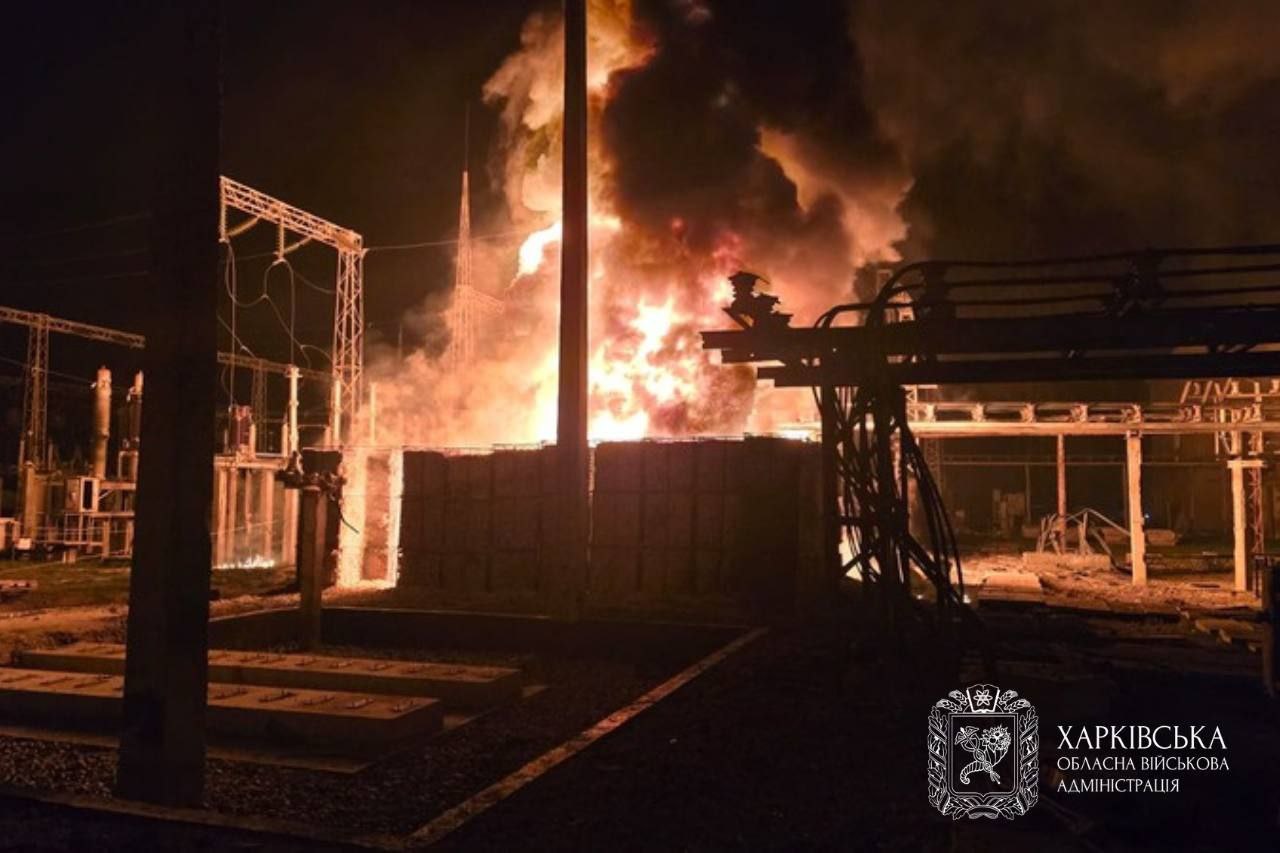
No fewer than 10 drones attacked Odesa Region, damaging energy and gas infrastructure. According to “Ukrenergo,” as a result of the night’s Russian attacks, power was lost in Odesa, Chernihiv, Sumy, Kharkiv, and Dnipropetrovsk regions. In Kharkiv, the 330 kV “Kharkivska” substation was hit.
On January 18, two critically important substations in Zaporizhzhia Region were attacked: “Zaporizka-750 kV” (a main hub connecting the region with nuclear generation) and “Zaporizka-330 kV” (supplying large industrial enterprises). Damage to such objects narrows Ukraine’s ability to maneuver energy flows and increases the system’s vulnerability.
Strikes were also carried out on port infrastructure and on solar generation substations in Odesa Region (the city of Kiliia). In Bilopillia, Sumy Region, an airstrike destroyed the building of the local territorial recruitment center (TRC).
Targeted Attacks on Logistics and Mobility
A separate direction of Russian strikes is the automotive transport and rear logistics of the Armed Forces of Ukraine. On January 19, using FPV drones and “Lancet” UAVs, several pieces of equipment were hit in the Kramatorsk area:
- In Druzhkivka, a Volkswagen T4 minibus and a Nissan Pathfinder SUV, used for transporting personnel and equipment, were disabled.
- Near the village of Kuroyedivka, a Ural truck belonging to one of the AFU brigades was hit.
- On the road near the village of Petrivka Persha, a MAN truck was destroyed by a “Gerbera” strike UAV.
Such strikes aim to reduce the Ukrainian Armed Forces’ tactical mobility, complicate supply logistics and unit rotation, and increase the burden on the limited fleet of serviceable equipment.
Conclusion
Despite claims of catastrophic damage to Ukraine’s power grid, daily warnings of impending massive Russian strikes, and risks of a “second Chernobyl” from attacks on nuclear plant substations, some sources question the severity of the crisis. They view it as an information campaign to exaggerate the situation, pressure allies for new arms deliveries, and survive the winter without escalation.
MORE ON THE TOPIC:



after the next russian blitz. ukrainianes better move to greenland is much warmer there.
there will be a 1000 years of peace, resting with jesus, for some, 1000 in hell with the dragon for others. as the revelation says.
science knows that it takes 3 generations to erase genetic mind control programming where the triggers must be totally eliminated in any form of post traumatic suggestibility. but i believe god knows that it will take a 1000 years to remove the depths of degenerate depravity instilled into todays humanity.. if you can even be so deceitful as to call them human imo
you dumb americunts cannot think—immune to programming–inferior species
a video that appeared online recently shows at least six soldiers and officers from ukraine’s 108th territorial defense brigade surrendering somewhere near huliapipole. this particular unit has reportedly taken some heavy losses since being brought into this direction.
.………………… https://psee.io/8jqu9r
science proves americunts are inferior breed
guess what rumpleforeskin the catholic church has more schools there than in the rest of the world combined
inferior americunt moderates in gay bars afflicted with aids dementia
they could stand behind you for a convenient source of hot air
ukraine was once a nation. now it is another region destroyed for globalist greed. a scrapyard to be reclaimed
world war 3 season 1
russia ➡️ ukraine (ex.soviet union lands)✅
usa➡️ venezuela✅
azerbaijan➡️ armenia✅
turkey➡️ north syria ✅
(ex.ottoman empire lands)
saudi arabia➡️ uae✅
india➡️ pakistan✅
cambodia➡️thai✅
egypt➡️ sudan✅
ww3 tivi 201981h 2004w
watch us on x satelite
seems you’ve made that comment before ramses greyylwolf redgugard
and the one thing god hates above all sins and abominations is the hypocrite.
world war 3 season 2
russia ➡️ moldova (ex.soviet union lands)
usa➡️ greenland ✅
usa➡️ cuba✅
china➡️taiwan
syria➡️rojava ✅
turkey➡️ greece
(trakaya and rumeli, greek islands) ex.ottoman empire lands
saudi arabia➡️ uae,yemen✅
iran➡️yemen
india➡️ pakistan
egypt➡️ sudan
serbia➡️kosova
bulgaria➡️ macedonia
cambodia➡️thai
world war 3 season 3
russia ➡️ bulgaria,georgia (ex.soviet union lands)
usa➡️ canada,iran
china➡️taiwan
turkey➡️ bulgaria
(bulgarian south trakaya and rumeli) ex. ottoman lands
france, russia➡️ germany
india➡️ bangladesh
serbia➡️bosno herzegovina
greece➡️ albania
egypt➡️sudan
cambodia➡️thai
ww3 tivi 201981h 2004w
watch us on x satelite
waiting to go back to the 1800s any day now. remember tony blinkenstein rocking out in kiev on a guitar. last person do not bother turning lights off, it will happen automatically….hahahaha
remember freddy mercuries top dj in england chum standing on a soap box in the city bragging that russia belongs to england in the 1970s s???
zelensky deport me to dank mark now i live in americunt dystopia
how can you manage surrounded by many primitive inferior species sleazy cretin amerikans around you?
why not strike ukrainian government buildings and gatherings of the nazi junta? seems like these energy attacks just hurt ordinary civilians more than anything
i love moderator jizz—after moderator sodomized by 3 mulattos in americunt trailer i get leftover