


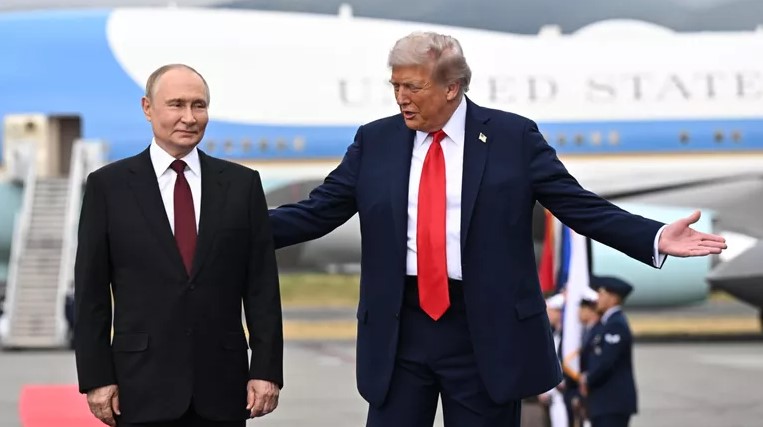
Click to see the full-size image
The negotiations between US President Donald Trump and Russian President Vladimir Putin at Elmendorf-Richardson military base in Alaska marked a pivotal event in international diplomacy. The meeting, held in a “three-on-three” format (Russian delegation: Putin, Lavrov, Ushakov; U.S. delegation: Trump, Rubio, Whitcoff), lasted a record-breaking 2 hours and 45 minutes – longer than any previous Russia-U.S. summits in recent years. The atmosphere, as assessed by CNN, was far from cold: a handshake on the tarmac, a joint ride in the US presidential limousine “The Beast,” and even Trump applauding Putin.
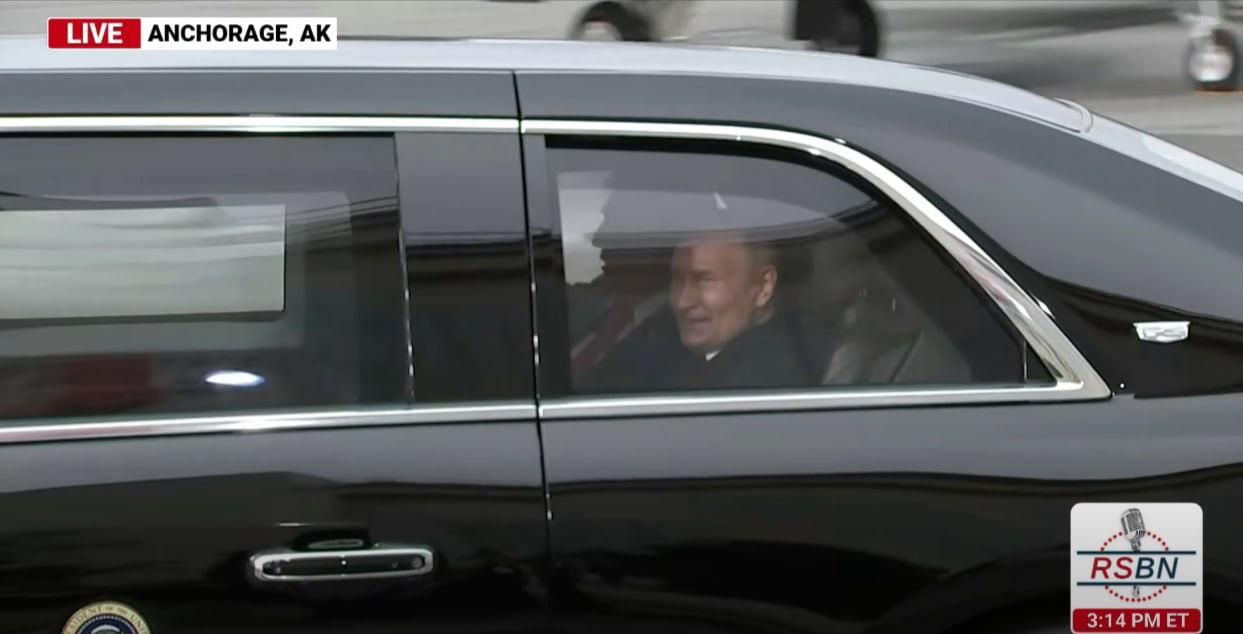
Click to see the full-size image
Key Agreements and Leaders’ Rhetoric
Progress Without Breakthrough: Both leaders described the talks as “constructive” and “productive” but acknowledged the absence of a finalized deal on Ukraine. Trump stated: “There will be no deal until it’s made,” while emphasizing “substantial progress” and “good chances for agreement.” Putin expressed hope that the achieved understanding would “pave the way for peace.”
Pressure on Kyiv: Trump unequivocally placed responsibility for the next step on Zelensky and the EU:
“Now it’s up to Zelensky. And I’d also say European states need to be a little involved. But it all depends on Zelensky… Ukraine has to agree, but they might refuse.”
He justified this with a power imbalance:
“Russia is a great power, and Ukraine is not, despite Ukraine having truly brave fighters. I advise Zelensky to make a deal.”
He also criticized financial support for Kyiv under Biden:”Biden handed out money like candy, and Europe gave them a lot of money too.”
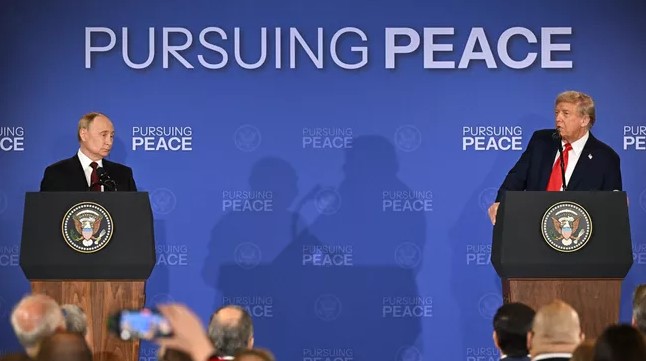
Click to see the full-size image
Guarantees and “Root Causes”: Putin agreed on the need to ensure Ukraine’s security but insisted on eliminating “the root causes of the crisis” and addressing “Russia’s legitimate security concerns” in Europe – a direct allusion to the impermissibility of Ukraine’s NATO membership. Trump confirmed discussions on security guarantees for Kyiv but ruled out a NATO framework. Trump also acknowledged that “Russia has major nuclear capabilities that must be factored in.”
Prospects for Dialogue: The key symbolic outcome was Putin’s invitation to hold the next meeting in Moscow, to which Trump responded: “Oh, that’s interesting! I could see that happening.” Leaders agreed to prepare a trilateral meeting involving Zelensky.
Meanwhile, European bureaucrats are in rush to sabotage any prospects of peace settlement. While Putin and Trump sought paths to de-escalation, London and Brussels activated mechanisms aimed at cementing division and militarization of the region:
British Defense Secretary John Healey announced readiness to deploy British troops to Ukraine “from the first day of a ceasefire” under the “Coalition of the Willing”.
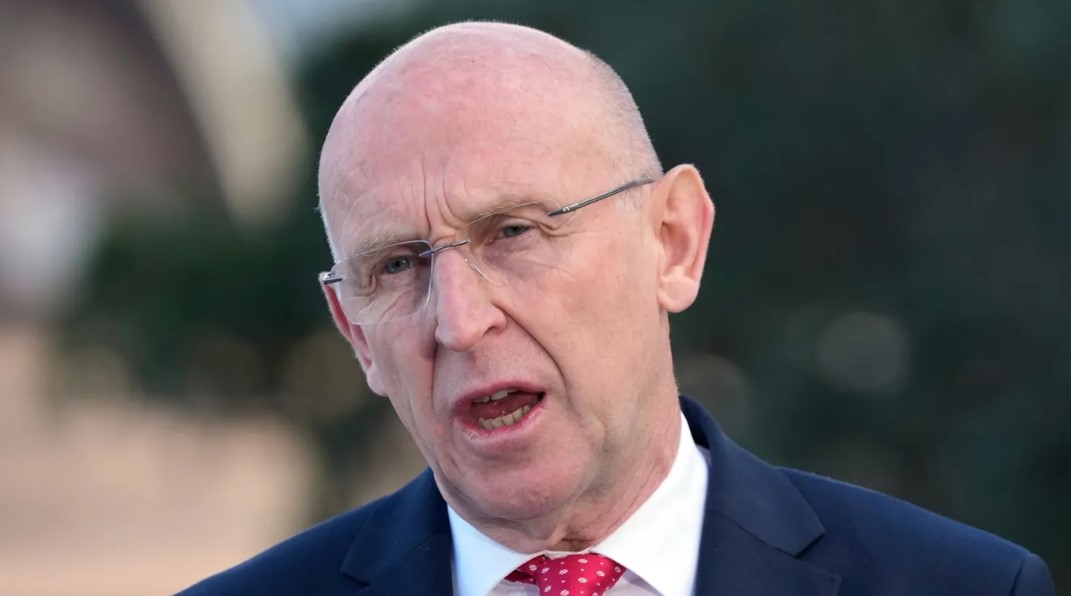
British Defense Secretary John Healey
“Multinational coalition forces are ready to act from day one of a ceasefire. Military planning is complete,” he stated.
Stated objectives include “supporting the population, ensuring air and maritime security, and strengthening the country’s defense capabilities.” Healey declared:
“The best guarantee that Russia won’t renew aggression is a strong Ukraine,” ignoring Russia’s red-line warnings.
Though a plan to deploy 30,000 troops (The Times) was scrapped due to lack of consensus, London promotes a “realistic mission” for airspace control in western Ukraine, AFU training, and Black Sea demining.
EU leaders (France, Germany, Italy, UK, etc.) also released a joint statement rejecting any Russian concerns regarding NATO activities in Ukraine.
“Russia cannot have veto power over Ukraine’s path to the EU and NATO.”
This directly contradicts Moscow’s core demand to eliminate the threat of NATO eastward expansion – a primary conflict trigger. As Quincy Institute expert Anatol Lieven notes:
“I don’t see any European strategy at all. Before this year… they demanded things that will never happen, like full Russian withdrawal from all Ukrainian territories.”
Following summit, Trump stated that “a peace deal is the best way to stop the conflict.” However, per NYT, this “marks a significant departure” from the alleged agreements with European leaders (including Merz, Macron, Starmer), who insisted peace plan discussions “must occur only after a ceasefire.” Europe effectively accuses Trump of capitulating to the Kremlin.
Ignoring Russian security interests seems to be a joint position of the current NATO majority. The deployment of NATO forces in Ukraine under a cover of the ceasefire is one of the unacceptable scenarios for Russia. Therefore, by these declarations and public posture, the UK and other European states clearly demonstrate that they are not interested in a real peace settlement of the conflict. Instead of supporting the dialogue initiated by Washington and Moscow, European elites choose to entrench confrontation, further militarize Ukraine, and ignore the root causes of the crisis. This not only nullifies the results of arduous negotiations in Alaska but also heightens risks of escalation to direct NATO-Russia confrontation.
MORE ON THE TOPIC:



please show us the picture of the thoroughly compromised pedophile-in-chief in putin’s face pointing finger… as they say… some pictures are worth a thousand words!
give it a rest sonny. you seem as an agent provocateur for war time wealth.
sleazy stuff is no evidence, edited out of context stuff is also no evidence, even if you go decades back there is (very brash ny style) talk but nu action. show me the client list ahhhh, there and there and these peoples, and their systems.
i cannot think of any field in which the eu has not completely failed in the last 20 years : economy, peace, military, democracy, freedom. and not only have they put themselves on the bad side of all three superpowers, not only do they do not have any card, it seems they also owe america some cards.
what it is now is a bunch of holier-than-thou (ecologister-than-thou, democratier-than-thou) collection of bureaucracies that are completely trapped in their lies and cannot get out of them lest they will be held accountable for these failures for which russia is a convenient scapegoat.
we are stuck in societies that are becoming more totalitarian by the day due to the need of maintaining all thoses lies.
and lets reckon that the most culpable class is the media, that low clergy of modern societies, elite wannabes but still stuck in the bullsh*t bubble like the peons, that in last analysis completely betrayed democracy and the people of their countries by propagating those lies without any care.
there was a story about three little pigs, in this case macron, merz and starmer. they used to deal with stupid and bloodthirsty wolf, but now instead of stupid and bloodthirsty wolf, there is peaceloving and pragmatic bear, which they as such can not comprehend.
the wolf is from romulus. werewolves of london and wall street
guaido – natan yahoe vaxed his people and now they must commit warcrimes against gaza.
obviously democracy was set up by them in the first instance to ensure that nations are divided from within in order to conquer from without. it’s all been an entrapment a deceit a frwud the big lie, but in doing so they created their frankenstein monster which became a reality by the awareness of the actors taking over the production.
now they have to resabotage democracy all over again and tarnish its reputation again using players that they set up, like epstein etc to do. cause simple minded people aren’t very hard to lead.
of course ! it was a long struggle, for to only mention the burning of women alive, but in the end they accomplish a idiot, which vote for the noblesse, instead of hang them. ruled by the walking cadaver whitin.
if so it’s because of subversion behind the scenes by those who you don’t understand at all.
exactly. its little funny how the cannibal in chief can blame others, and other countries, for his own mayhem. ongoing visavi korea, europe and china for example. even more funny how the german lapdogs blame russia for “us” blowing up their pipeline 😂 how does that work ? wrong name on humans.
that’s because you’re not seeing the intentions of the globalists to ensure europe nor russia nor china nor america ever threaten western hegemony for the military industrialists
yes, and germans all over the place. any dictatorship in europe accomplish a tsunami of germans in other countrys, its a natural law. cia’s eu are nothing else than nazi germanys lothing noblesse let lose, and worst are the quislings in respectively country. attack russia ! jawohl, mein fuhrer ! they have a memory, for which 2014 are back in the stone age.
you write like a true loser.
the jewu increasingly resembles the old soviet union just before its demise. a failing, corrupt, dysfunctional and unproductive bureaucracy incapable of reforming itself. profoundly anti democratic, its arrogant dictatorial rulers resorting more and more to censorship and repression of its own people whilst displaying obsequious servility to its overlords in the jewsa. it has now future and will go the way of the soviet union.
censorship censorship censorship
the nobel peace prize 2012 was awarded to the european union (eu) “for over six decades contributed to the advancement of peace and reconciliation, democracy and human rights in europe”… piss prize
by the danish kingdom.
the perfect excuse for central banks to keep plundering populations ! what is your nations debt ?
central banks aren’t actually living entities except by the morality of the authority for rule of law theyre very sneaky operations masked heavily by pc spin and wild economic lectures. they’re privately controlled all of them by the directors of the bank of england publicly listed to look socialist, but in effect totally capitalist for the crown imo.
another moron americunt—bubby the desperate
why us ugly americunts required to scrub superior jew toilets?
toilets are too good for you. imo
trump and putin’s sausage party achieved nothing…the war continues. these faggots couldn’t have accomplished anything on the phone, but they wanted to jerk each other off.
why inferior americunt upset–cannot find suitable transgender husband
i’m not an american… i know you can only think in two ways: pro-russia and anti-american. but this world isn’t as underdeveloped as your brain.
moron aussie same as americunt more drunk…..or deported by zelensky cuz you are tranny
u dumb anglos cannot. think
burgerland humiliated—z won….you tube: lusia chebotina kabluk live
trump and putin discussing what is best for israel and zionism.
imho upset after swallowing jew jizz for past 41 years in her americunt dystopia
you’ve absolutely no idea.
yes i do. they are both zionists.
british,france and usa sincerely wants to built a arm forces in ukraine to contain russsia power for further sabotage.
wrong sweetyuk and it’s colony france, in english belief, are terrified of an american russian alliance that’s their biggest fear, but in truth, if they really believed trump would do that they would certainly let out one of their lone wolves allegedly imo. its all a show. all of it the sub text is between the lies and therein buried under layers is where its found
trump should concentrating on disarming nuclear france and britain.british,france and usa armies were build with looted african gold and diamonds.still used up to date to control other countries just to steal their resources.
yes until ibrahim in whatever its called the 4th biggest gold mine on earth there in africa kicked france out. but you can bet he’s from a swiss mummy and african daddy. very likely as usual in africa.
trump should call on settler natayahu mileikowski to stop bombing lebanon,syria,yemen,iran and iraq.isrel belongs to black israelites not settler killers and proxies of usa and nato.
putin should stop sacrificing russian soldier for personal gain with fake usa,france,germany and britain friendship soldiers died for protecting russian existence as snowden and wikileaks revealed.
absolute rubbish america under wilson conned tsar nicholas into ww1 when russia was totally unprepared for any war after the defeat by japan in 1912, by assuring him that america would be right their by their suede as their best friend. then just sat on his hands untill too late.
here’s a clue to who’s who. “who would be jacobite king of the uk today? useful charts you tube.
jacobite simple meaning catholic since somehow qe2 was encouraged to signing the perth act at the opening of the elizabeth keys which allowed for the first time in centuries a catholic to marry a royal.join the dots behind the scenes with sir james goldsmith and juan carlos.
the adults are now in the room discussing the conflict, and they are determined to bring peace. so as neither wants the killing to go on, we now have a real chance there will be peace, and the killing will come to an end. god bless trump and putin.
the adults in the room have decided that this conflict has to come to an end, and are now discussing it, and both are determined to bring peace, as neither wants the killing to go on, so we now have a very real chance there will be peace.
“the real and lasting victories are those of peace, and not of war.” ralph waldo emerson
god bless president trump and president putin.
mr putin must say one thing to eu. “ukraine is the part of russia”
take all of ukraine. no more bitching zelensky and his nazis, end pf.
european beaurcrats serve the jewish interests and those are to work towards our destruction. everything they do from climatescam policies to attacks on free speech and our freedom and racemixing massive 3rd world prison immigration promotion of lgbti and pedosexuality to kids its all desgined to destroy us
even force nitrogen budgets as a tax on us and force us to eat the bugs. its all part of the jewish p lot to work towards our destruction and their hegemony over us.
its time everyone stops doing the bidding of these jewish scumbags and name them and stop them dismantle their ngos and organisations boycot them and cut their funding remove their infiltrators shabbosgoy and frontmen from our society and our countries. only then peace can be restored in ukraine. the jew zelensky and his hang man have to go.
rusia debe tomar toda la costa sur ucraniana entera para dejar en claro quien gano la guerra y que no sea una tregua
de ser necesario tomar todo hasta el dinieper tambin
on regime change or decapitation strikes on the kiev proxy terrorists who started the war will result in a sustainable peace
f*** chumpo.