


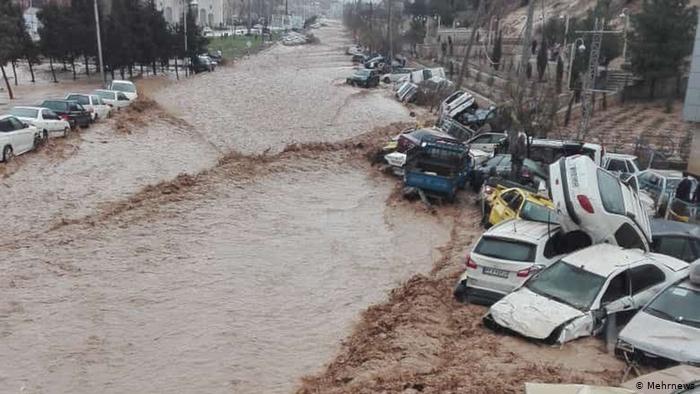
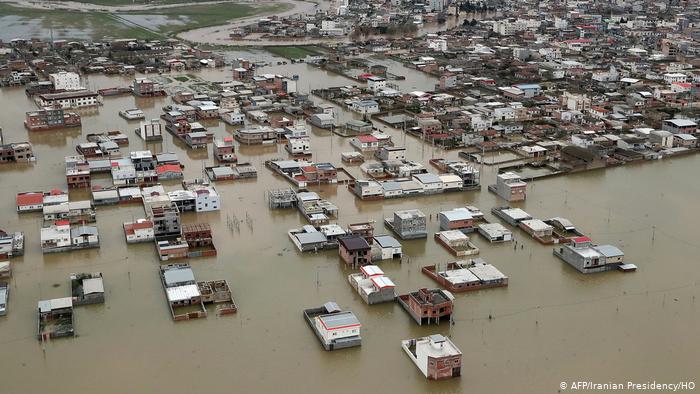
Since March 19th, people in Iran have suffered floods which have up as of April 14th claimed the lives of over 76 people and 1,136 injured. The floodings also caused upwards of $2 billion in damages.
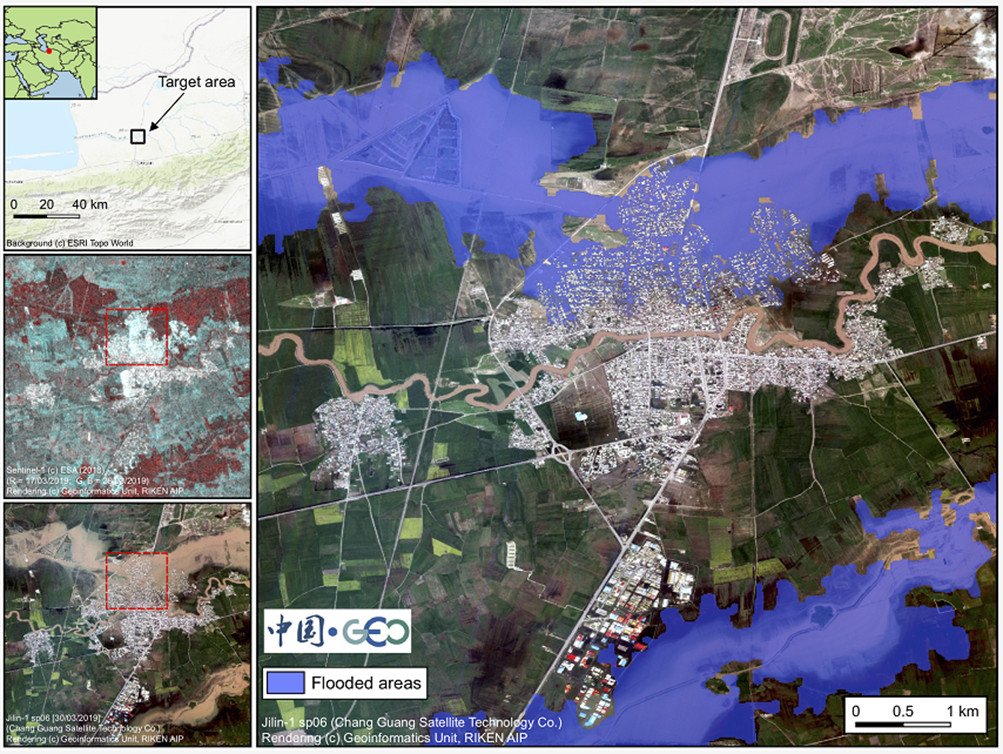
Click to see full-size image
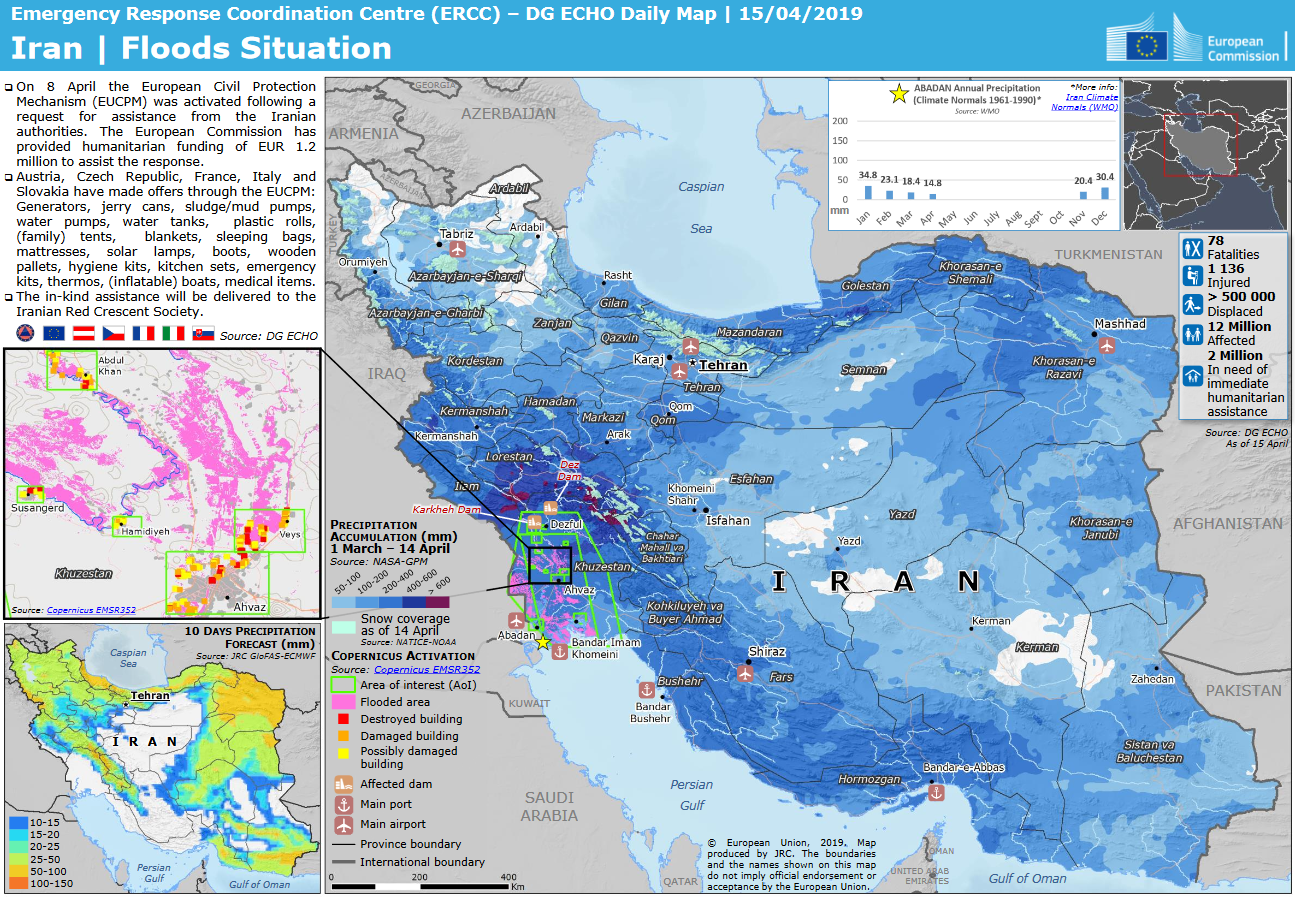
Click to see full-size image
Supreme Leader of Islamic Revolution Ayatollah Seyed Ali Khamenei on April 15th announced that use of resources from the National Development Fund (NDF) would be allowed for reparations from the flood.”
With the death of five people in the Khuzestan province and another person in Ilam province, the death toll has now reached 76,” since March 19th, a statement by the coroner’s office said.
Floods have hit 25 of Iran’s 31 provinces, forcing mass evacuations, heavily damaging infrastructure, and severely impacting the agricultural sector of the country.
“Twenty-five provinces and more than 4,400 villages across the country were affected by the floods,” Interior Minister Abdolreza Rahmani-Fazli told parliament.
Transport Minister Mohammad Eslami meanwhile told government officials that “725 bridges have been totally destroyed.”
“More than 14,000 kilometres of roads have been damaged,” he said.
According to Relief Web, “77 schools have been destroyed (55 in Lorestan and 22 in Golestan). There is a significant risk of additional flooding from Karkheh dam (Khuzestan Province). Six cities and 210 villages have been evacuated, 61 of which have been flooded.”
Zahra Falahat, the Iranian Red Crescent’s Under Secretary General for International Affairs and International Humanitarian Law said:
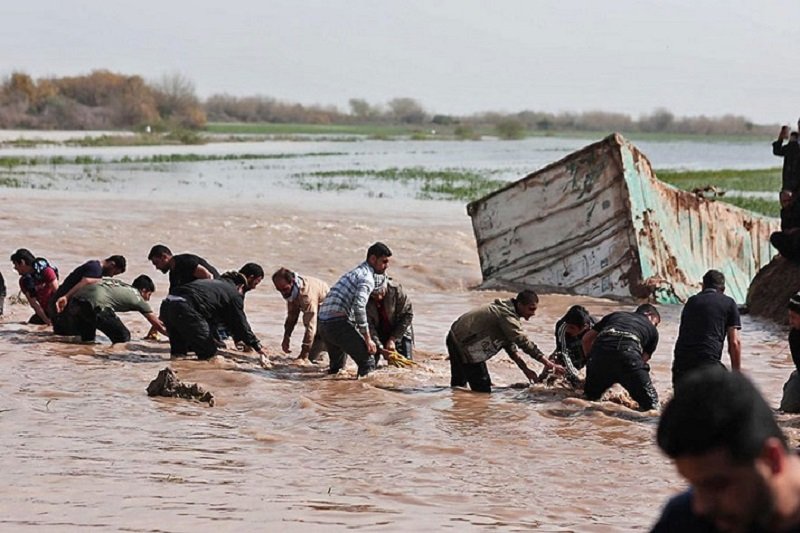
“This is the largest disaster to hit Iran in more than 15 years. The scenes that our volunteers are reporting are devastating – entire villages washed away in a matter of minutes, countless homes and buildings damaged and completely destroyed.
“For the Red Crescent, this is one of the largest humanitarian relief efforts in our history. We are making every single resource we have available to save and support people. But it is not enough.”
“More than 18,000 Red Crescent relief workers – most of them volunteers – have been involved in the humanitarian response. Seventeen Red Crescent helicopters along with 41 boats have been used to rescue people trapped by rising waters. In all, more than 457,000 people have been reached with Red Crescent services, including about 239,000 people who have been provided with temporary shelters,” Relief Web reported. It also reported that upwards of 2,000,000 people are in of aid.
The Iranian government and President Hassan Rouhani accused the US sanctions of hampering relief efforts. Iran is receiving almost no direct financial aid due to the sanctions.
US Secretary of State Mike Pompeo said that Washington was ready to help via the Red Cross and Red Crescent, but accused Iran’s clerical establishment of “mismanagement in urban planning and in emergency preparedness”.
“No foreign cash help has been given to the Iranian Red Crescent society. With attention to the inhuman American sanctions, there is no way to send this cash assistance,” the Red Crescent said in a statement.
Regardless, the World Health Organization, UNICEF, are helping, as well as Germany, Iraq, Kuwait, Oman, Pakistan, Russia, Turkey and France.
Aid workers in Iran also claim that US sanctions are hampering their ability to help those affected.
“Right now, we need some boats and machinery to control the water flow,” Fereshte Ghaffari, a volunteer for the Imam Ali society told Al Jazeera.
“It would be much easier for international agencies to provide them. Due to the sanctions, prices are [also] much higher. If it wasn’t for sanctions, [things wouldn’t be as expensive] and we could do much more with the money we’ve collected.”
On April 13th, France delivered 114 water drainage pumps and 210 blankets, this came in addition to a prior aid delivery on April 11th.
The first package consisted of 114 motor pumps, 300 kitchen kits and 5,000 blankets.
The Vatican on April 12th announced that it was also sending aid. The Dicastery for Promoting Integral Human Development said Pope Francis was sending (US$113,000), which will be distributed with the help of the Vatican nunciature in Tehran.
“In the course of the past two weeks, violent flooding struck the northeast and southern regions of Iran, and there is fear flooding will continue in the coming days,” the dicastery said in a statement.
On April 12th, the UAE and Saudi Arabia announced that they would allocate aid based on the Islamic brotherhood and emphasis on solidarity with Iranians.
On April 9th, Russian and Armenian aid workers delivered humanitarian aid to Iran.
“A convoy of the Russian-Armenian humanitarian center successfully delivered humanitarian aid to the Islamic Republic of Iran,” a Russian Emergencies Ministry Spokesperson said.
https://youtu.be/CCiP_dYJEa0
The cargo included over 4,000 tents, blankets and folding beds purchased at the expense of Russia.
🇷🇺🇮🇷 #Russia extends condolences to the people of #Iran following severe floods, which caused mass casualties, ⛑️ renders humanitarian assistance sending vital supplies including blankets, tents and generators to help those who suffered from this natural disaster pic.twitter.com/Zy77MiTErO
— Russian Embassy in South Africa 🇷🇺 (@EmbassyofRussia) April 8, 2019
Afghan and Azerbaijani Red Crescent as well as the United Nations Office for the Coordination of Humanitarian Affairs (OCHA) have all announced they will help Iran in addressing the consequences of the natural disaster.
The German Red Cross shipped 40 lifeboats with outboard motors as well as 80 sets for water rescuers such as helmets, vests and boots. The consignment also includes nine river rescue kits, containing ropes, backpacks and pulleys.
The Turkish Red Crescent sent five trucks of aid supplies to Iran flood-affected regions. The aid includes 320 tents, 500 bedsteads, 100 hygiene kits, 1,625 blankets, 360 kitchen kits and 60 stoves.
On April 15th, Seyyed Hashem arrived in flood-hit Ahvaz in the Khuzestan province. The Regional Director for the Middle East and North Africa (International Federation of Red Cross and Red Crescent Societies) came as the head of an international delegation.
The 31-member international delegation included representatives from United Nations High Commissioner for Refugees (UNHCR), Relief International, Caritas relief agency, Doctors Without Borders (MSF), UN humanitarian assistance and the International Committee of the Red Cross (ICRC).
Click to see full-size image
Click to see full-size image
Click to see full-size image
Click to see full-size image
Click to see full-size image
Click to see full-size image
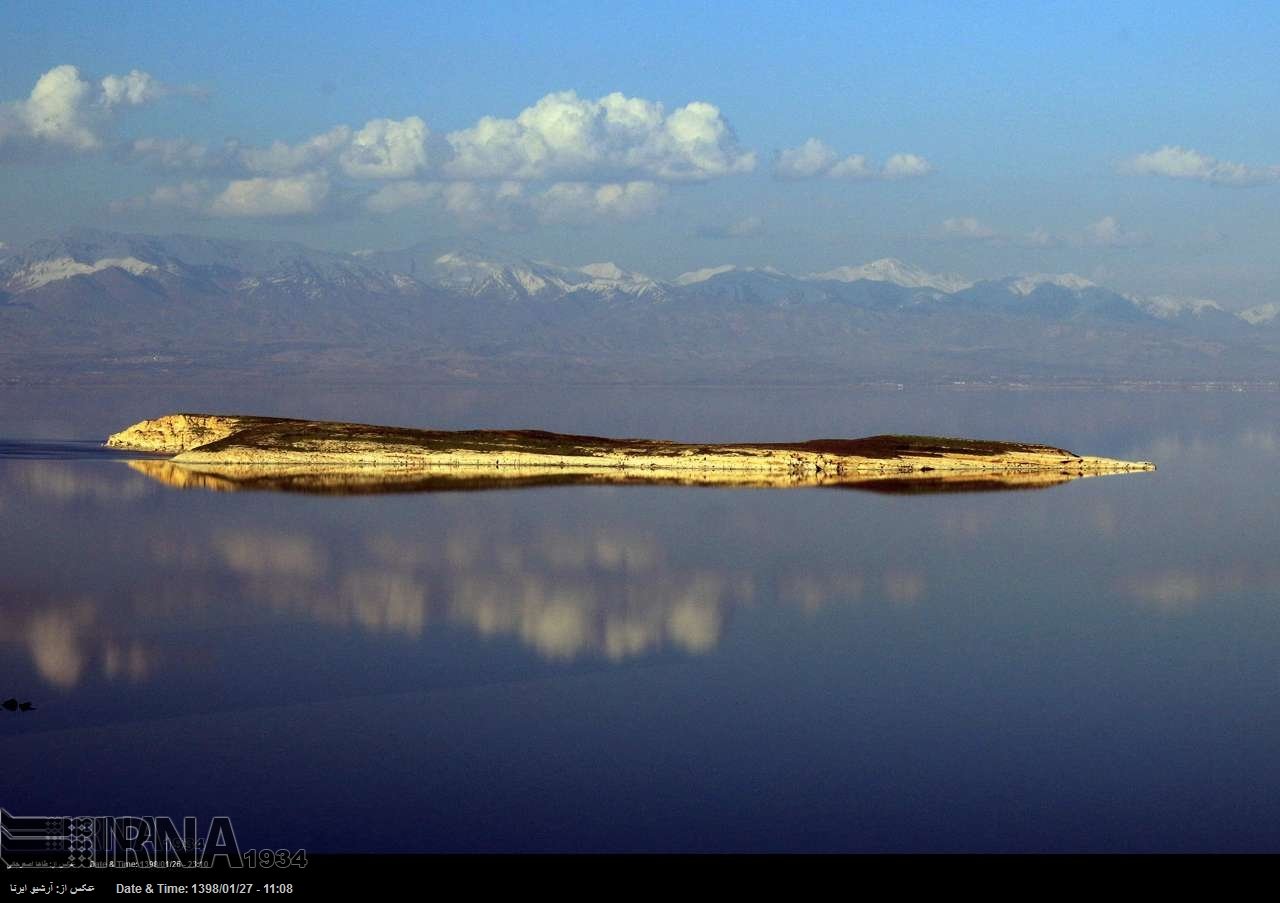
Click to see full-size image
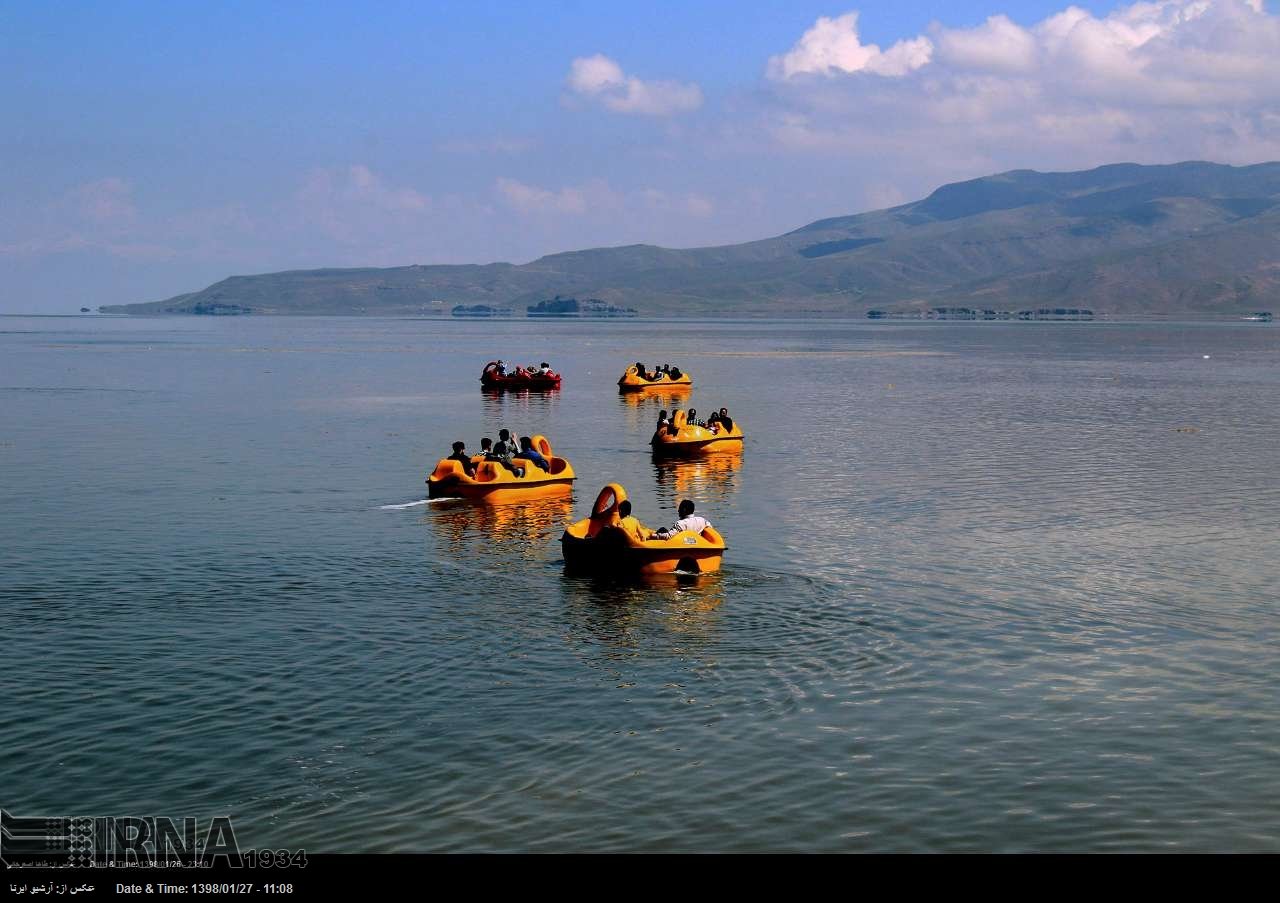
Click to see full-size image



Deja vu? Syria 2011? The attack on Iran has started. First phase: HAARP.
May Lord be just and protect Iran!
That really does sound a ridiculous comment; THE TROUBLE IS, IS THAT I HONESTLY BELIEVE IT.
but then every year this cycle at this time repeat itself just like in certain places in greece. Poor infrastructure is the reason as well in south america. as for the HAARP myth… the technology is based on the death ray of Nicola Tesla only the idiots manage to build the shell of what he achieved but never make it work out. What they build can concentrate very high energy within a square inch on the stratosphere with untold side effects to the atmosphere but never manage to direct it or chose target and hit it with what is claimed the HAARP can produce. IF what every one who believe that the americans are in possession of such a weapon that actually can do what is claimed HAARP can do they build I have one single question for them. How come they dont use it and control the world, but instead going so fast down the drain that their asses dont touch the ground?
Common sense people.
You think they will admit by saying :” Oh, yes, we did it.” ???
HAARP is the subject of numerous conspiracy theories. Various individuals have speculated about hidden motivations and capabilities of the project. For example, Rosalie Bertell warned in 1996 about the deployment of HAARP as a military weapon.[35] Michel Chossudovsky stated in a book published by the Committee on Monetary and Economic Reform that “recent scientific evidence suggests that HAARP is fully operational and has the capability of triggering floods, hurricanes, droughts and earthquakes.”[36] Over time, HAARP has been blamed for generating such catastrophes, as well as thunderstorms, in Iran, Pakistan, Haiti, Turkey, Greece and the Philippines, and even major power outages, the downing of TWA Flight 800, Gulf War syndrome, and chronic fatigue syndrome.[6][37][38]
Allegations include the following:
Nick Begich Jr., the son of the late U.S. Representative Nick Begich and brother of former U.S. Senator Mark Begich, is the author of Angels Don’t Play This HAARP. He has claimed that the HAARP facility could trigger earthquakes and turn the upper atmosphere into a giant lens so that “the sky would literally appear to burn.” He maintains a website that claims HAARP is a mind control device.[39][40]
A Russian military journal wrote that ionospheric testing would “trigger a cascade of electrons that could flip Earth’s magnetic poles”.[39]
The Alaska state legislature and the European Parliament held hearings about HAARP, the latter citing environmental concerns.[41]
Former Governor of Minnesota, ex-professional wrestler, and documentary maker Jesse Ventura questioned whether the government is using the site to manipulate the weather or to bombard people with mind-controlling radio waves. An Air Force spokeswoman said Ventura made an official request to visit the research station but was rejected. “He and his crew showed up at HAARP anyway and were denied access.”[42]
Physicist Bernard Eastlund claimed that HAARP includes technology based on his own patents that has the capability to modify weather and neutralize satellites.[5]
It has been proposed as a cause of low frequency background hums said to be heard in various locales.[43]
Yes and I study all this people said as well unlike many who read what ever they read and go for it, I am kind of qualified to know when what people they say about technology is absolute bullshit and to them is business where they making money out of it based on peoples ignorance and fears as well, the technical aspect of what they claim HAARP can do.
To the point they manage to build it yes can do damage on the eco system of earth as well create a chain reaction in the atmosphere That is possible to burn it out if used as a scalar weapon, not only in theory but also practically.
The idea of HAARP also for military use was to create an electronic blanket in the stratosphere that will deactivate an missile attack against USA and allies. To achieve that they needed to triangulate in 5 locations on earth radars that will compliment HAARP and they have done so with the last one build in the british bases in Cyprus. But again I am telling you HAARP is based on Nikola Teslas death ray and they never manage to understand what he did or even pass stage one with it so answer me this question base on your knowledge of the abominations on earth running western countries, in short globalists stooges.
If they have the power you assume they have because you read few books from people who actually was expressing their fears rather than reality, explain me not using it and dominate the world and become the new goods on earth as their desire is rather than have their asses kicked in all their attempts to do so?
As I said even if you lack the knowledge in technology to know that they are bullshiting still there is common sense, to give you the answers hence the reason I dont go technologically with any of you and ask a simple common sense question. But if you wish I can also explain to you in a technical way why they dont have what they claim to have.
It help you if you study scalar weapons and understand what you reading rather than believe it with out understanding, is one thing someone say they can do this or that in theory and all together another manage to practically apply it. My two cents.
I was thinking a little different than you two. It could also be a disinfo campaign to cover something else.
As we discusses yesterday, the fascists excel at claiming they know everything and can do anyyhing. They have a propaganda.machine ready to pounce on anything to accalim their own nazi “greatness”.
Whatever HAARP is, i give it 25% of working, working means not burning to tje ground every timw you use it. 75% of it is disinfo.
Does anyone have a background in antannea array?
Perhaps.
Not starting well for tje iranian opposition in khuzestan. They got flooded bad!
I doubt Iran.can be taken down, but stupid is what stupid does
Ameen
Is there a way to donate to the victims of this catastrophe?
If you tried to send money to Iran the Gestapo(USA) would kick your door down in the middle of the night. Nowhere on earth is safe from the Americans, except Russia China and Cuba.
But the EU has supposedly this payment method to bypass the Yankers; the trouble is that no-body knows about it or those that do have no idea how to use it.
And it will stay that way.
It would have to launch first.
Iran Complains About Slow Launch of INSTEX
https://www.iranfocus.com/en/iran-general-mainmenu-26/33457-iran-complains-about-slow-launch-of-instex
Oh blimey. Who would have guessed it !!!!?
Is there a way to donate via Russia China Cuba?
To the best of my knowledge the Iranian Red Crescent is not listed as a terrorist organization, are they?
We live in times, where helping others is seen as a crime. Sounds quite Orwellian to me.
Now this might sound uncaring, but that is an awful lot of irrigation water.
How often do they have floods?Are there warning systems in place?
Have the people been educated in how to respond to a flood?
I am blown away that so many people died, you always get a couple of people who think they can cross the flooded creek and pay the price but 76 is way to high.
Maybe because floods are pretty common around here I wouldn’t normally see it as a really big deal, just a pain in the arse.
Flood in the western iranian mountains must have been bad.
The water has nowhere to go, i bet that where most people died.
The flooded out floodplains looked gorgeous.
Second photo from the bottom. GORGEOUS.
Iran is the best valued currency at this stage. It will not only survive, but its currency can only get better against the usd which is slated to fall or get powned.
Its like a done deal, and currency used to purchase the Rial is slated to win.
The most anti usd currencies in the world:
No.1 – Iranian Rial (1 USD = ~112,000 IRR)
No.2 – Vietnamese Dong (23,194 VND/USD)
No.3 – Indonesian Rupiah (14,237 IDR/USD)
No.4 – Guinean Franc (9,198 GNF/USD)
No.5 – Lao or Laotian Kip (8,550 LAK/USD)
No.6 – Sierra Leonean Leone (8,446 SLL/USD)
No.7 – Uzbek Sum (8,336 UZS/USD)
The results would have been far worse if the much criticized dams built under the Ahmadinejad era had not been there to store most of the rain water. All the infrastructure work was done during the honest Ahmadinejad era and since then Rouhani has sat on his fat ass and done squat but plunder. It is time Iran develop and water management and flood strategy as it is a dry country that will bear the brunt of global climate change and deforestation in Mazandaran and other Shomali regions where rain water flows into the main rivers like Dez, Karkheh, Karun, Diyala, and Lower Zab. The lack of proper planning is the main reason for the loss of life and destruction.
The Iranians have to have proper water storage facilities to use these large quantities of water for arid periods