



Click to see the full-size image
By March 2026, Ukrainian statehood is caught in a vise of four systemic crises. The war in Iran has cratered European energy markets and rerouted Western military logistics from the Dnieper to the Persian Gulf. A blocked €90 billion credit line has cut off Kiev’s last financial oxygen. The pipeline standoff over Druzhba has turned Hungary from a nominal ally into the gravedigger of Ukraine’s budget. And a mobilization collapse — two million draft dodgers and an army unable to replenish even its priority brigades — has exposed a demographic rock bottom. Any single one of these would be a serious test for a state with far sturdier foundations. Together, they form the contours of dissolution.
The Iran Wildfire Burns Through Ukraine’s Budget
The closure of the Strait of Hormuz knocked roughly 20% of global oil and a comparable share of LNG out of circulation. Qatar suspended exports after Iranian drone strikes on the Ras Laffan terminals. In the first week of March alone, spot gas prices on the TTF hub surged from €31.9 to €54.3 per MWh — a 70% spike in seven trading sessions. European gas storage sits at historic lows for end of winter. As Le Journal du Dimanche put it with rare candor:
“By abandoning Russian gas on principle, Europe placed itself in an extraordinarily vulnerable position with its own hands.”
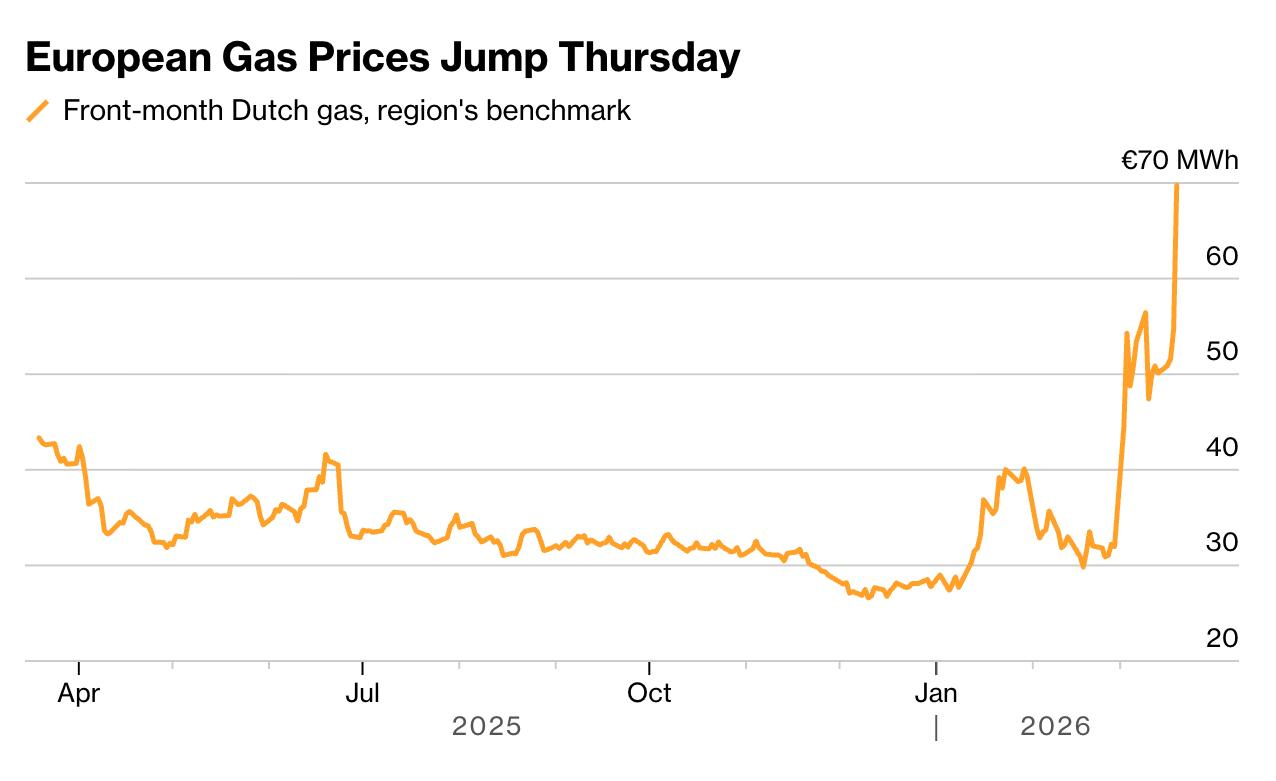
Gas prices surge across Europe. In the past 24 hours, prices spiked 30% following strikes on South Pars and the Ras Laffan processing facility
For Ukraine, the blow lands on three fronts at once.
Financially — European governments are redirecting resources to stabilize their own energy markets.
Militarily — the protracted Iran campaign is draining precision munitions and air defense systems originally earmarked for the AFU.
Politically — the European Council summit of March 19–20, billed as a “Ukraine support summit,” has devolved into a crisis session on Iran and oil prices; the Ukrainian agenda has been shoved to the back of the line.
The irony is historic in scale: Ukraine’s chief patron — the United States — has ignited a war that objectively works against Kiev. The Pentagon needs Tomahawks for Bushehr — Iran’s nuclear heart and target number one in any strike on Tehran — not ATACMS for Berdyansk, the key logistics hub of Russia’s southern grouping that the AFU never had enough missiles to reach.
€90 Billion That Don’t Exist: The Druzhba Pipeline as a Noose
The €90 billion credit package, agreed at the EU summit in December 2025 and fast-tracked by the European Parliament in January, has been frozen by a Hungarian veto since February 20. The trigger: damage to the Druzhba oil pipeline on Ukrainian soil. Budapest accuses Kiev of deliberately stalling repairs and refusing to guarantee transit. Slovak Prime Minister Robert Fico — locked in open conflict with Kiev since the gas transit shutdown of January 2025 — backed the blockade. As of this writing, nothing has changed.
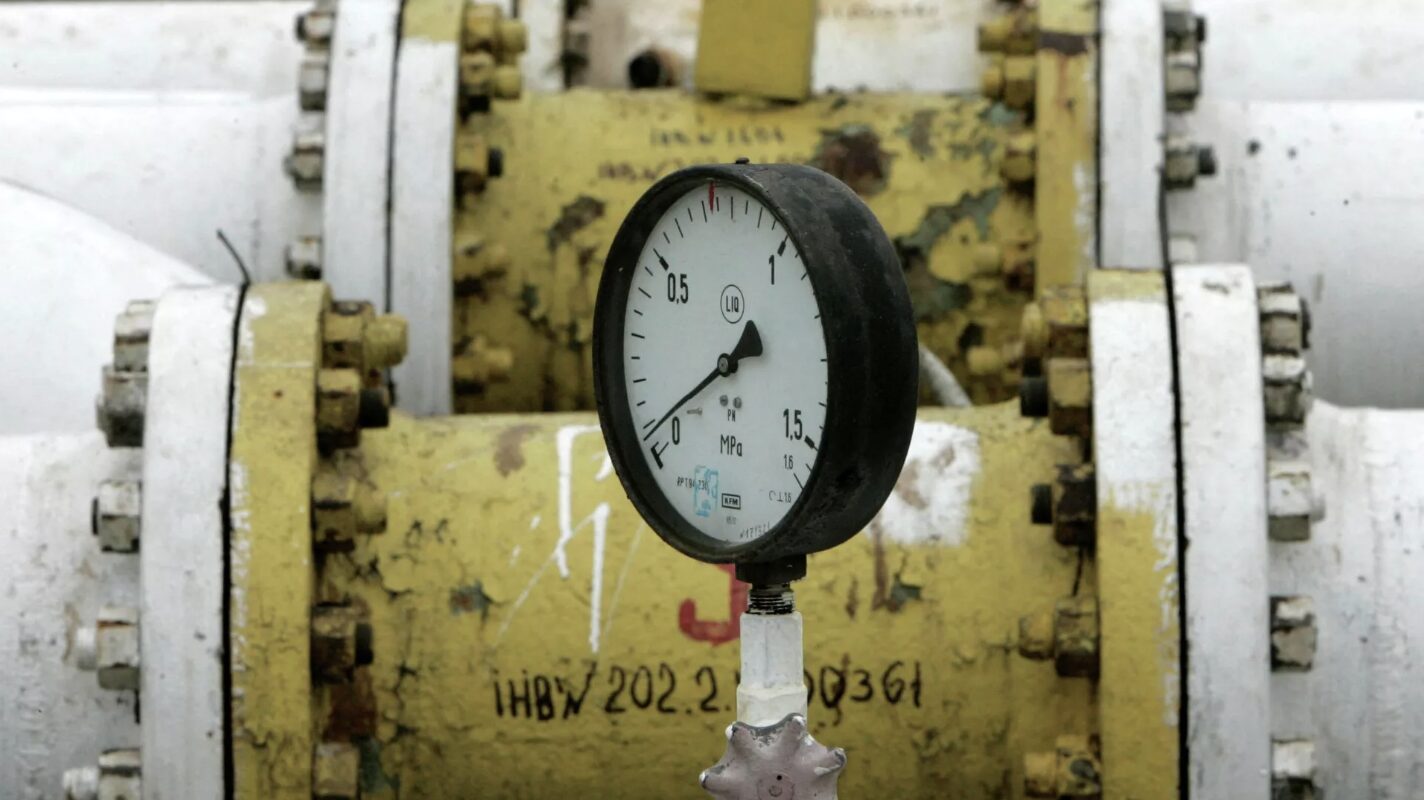
A pressure gauge reads near zero at a Druzhba pipeline pumping station in Brody, Ukraine
The numbers leave zero room for maneuver. Ukraine’s budget deficit for 2026 stands at $41.5 billion, or 18.4% of GDP. Total expenditures hit €97.1 billion against domestic revenues of just €59.1 billion — a gap seven times the pre-war level. Public debt has blown past 110% of GDP. By European Commission estimates, without external injections Ukraine’s reserves will be exhausted by April. Meanwhile, Brussels is scrambling to rope in third countries to cover an additional €30 billion shortfall — but with the Iran crisis raging, potential donors are busy putting out their own fires.
On March 17, von der Leyen proposed using EU funds to repair the Druzhba line and build alternative supply routes to Hungary. Kiev flatly refused — restarting Russian oil transit means bankrolling the same military grinding through Ukrainian positions. The vicious circle locks shut: Ukraine won’t fix the pipe, Budapest won’t release the money, and Brussels has no mechanism to override a veto.
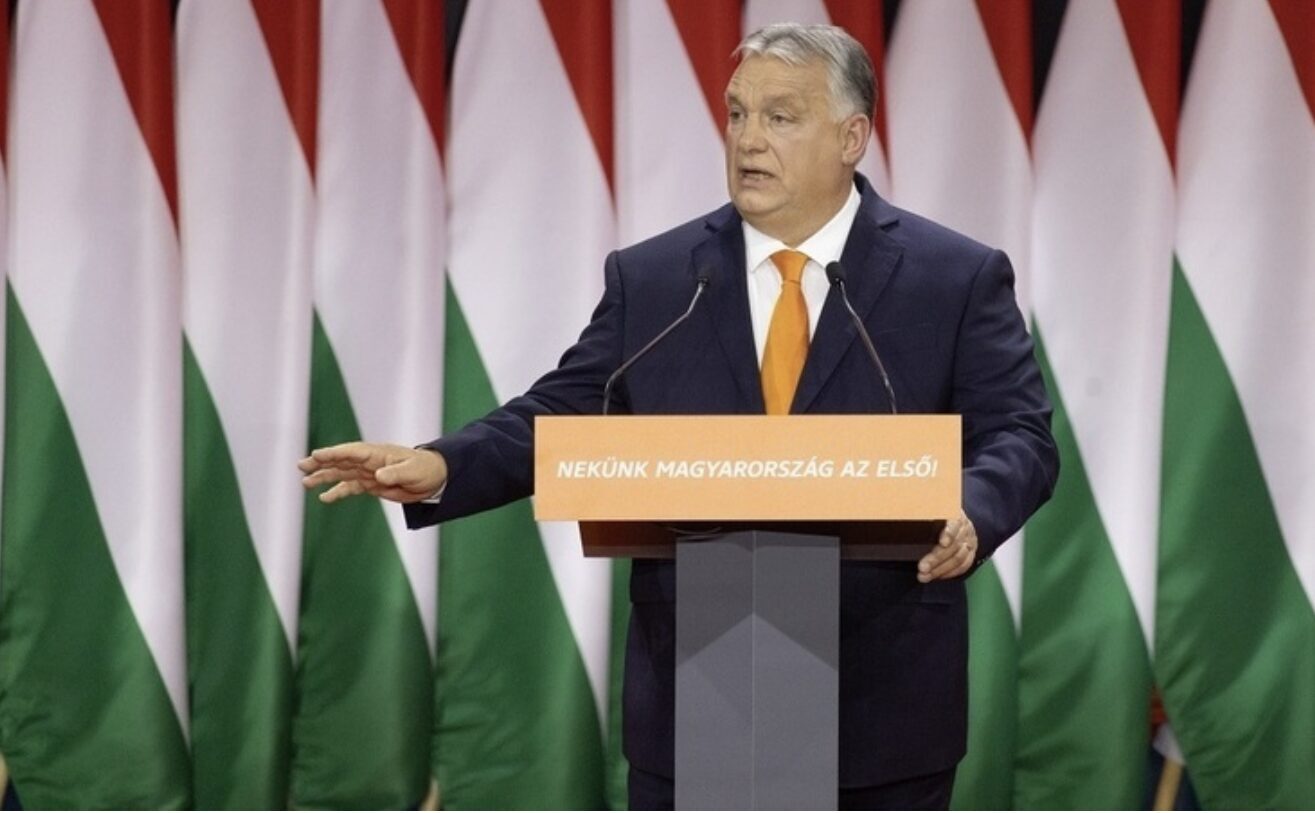
Hungarian Prime Minister Viktor Orbán: “Make no mistake — we will break through Ukraine’s oil blockade ourselves”
A Dead Army: The Phase of Irreversible Exhaustion
On January 13, the Kyiv Independent — a European-funded outlet hardly sympathetic
to Moscow — published figures Kiev had been suppressing: two million Ukrainians are evading mobilization, and AWOL numbers have hit an all-time high. For a country that has already hemorrhaged 6 to 8 million people to emigration, this signals the practical exhaustion of the conscription pool.
A Carnegie Endowment report dated March 16, 2026 maps the vicious cycle in clinical detail: voluntary enlistment dried up after the failed 2023 counteroffensive; coercive mobilization yields unmotivated, untrained bodies thrown into hot sectors with minimal preparation; their casualties demand yet another wave of conscription — each more forceful and less effective than the last. Commander-in-Chief Syrsky himself admitted the AFU cannot replenish all units simultaneously and is forced to “set priorities.”
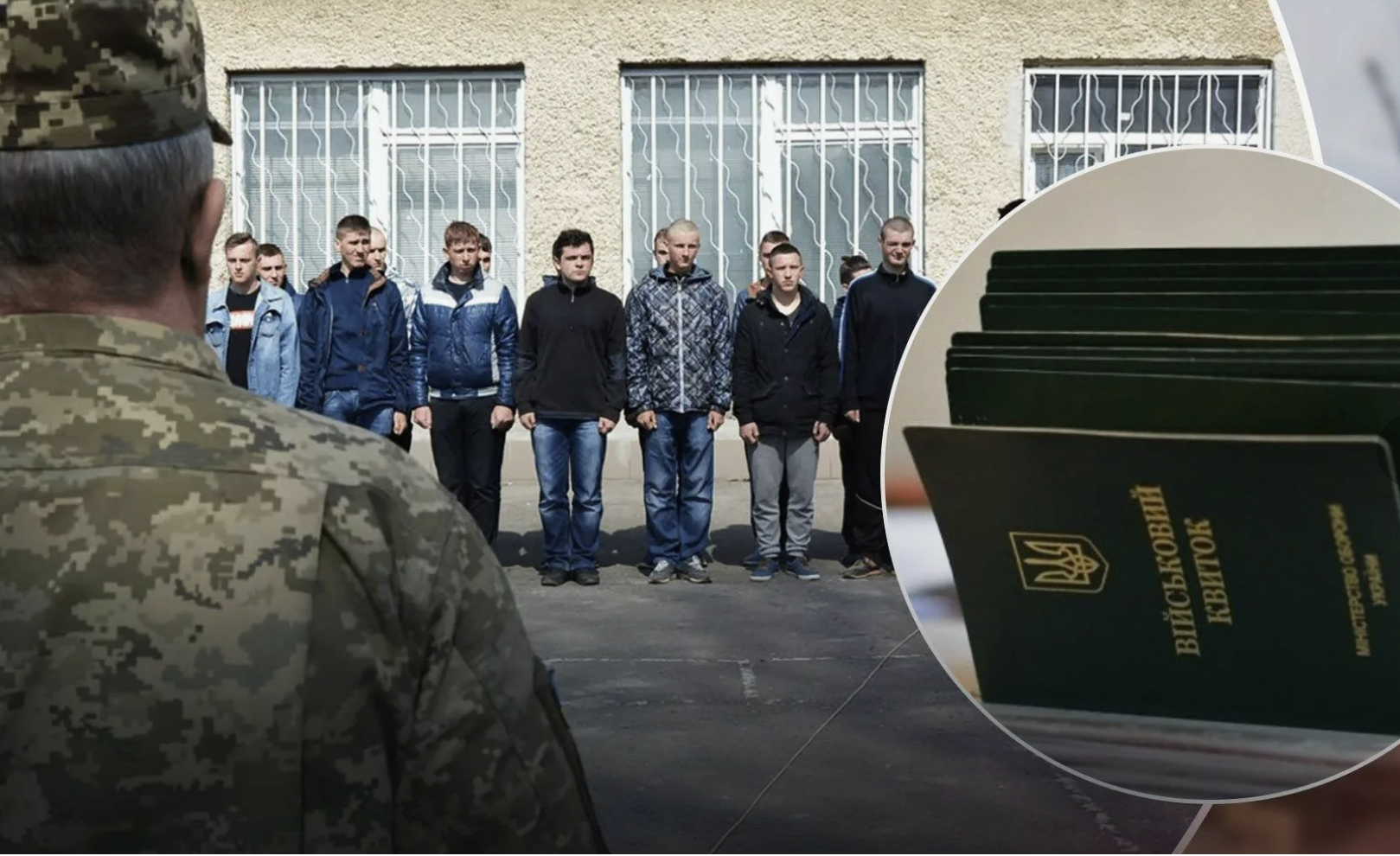
The AFU has formally proposed sending convicted draft evaders to build fortifications at the line of contact — a posting few, if any, return from
In February, The Times ran a headline that read less like journalism and more like a coroner’s report: “Ukraine enters the exhaustion phase.” This is not a metaphor — it is a military-analytical term meaning the armed forces are losing more than they replace, and the process is irreversible. No amount of Western hardware compensates for the fundamental deficit: the soldiers who are supposed to operate it simply do not exist.
Contours of Collapse: Money, Men, Legitimacy — Minus Three Out of Three
Every state rests on three pillars: fiscal sovereignty, military capability, and political legitimacy. Ukraine is losing all three at once.
A country covering 40% of its spending with blocked foreign loans is a bankrupt entity. An army in irreversible contraction — two million draft evaders, Russian advance rates doubling — is a force on life support. Zelensky, whose presidential term expired in May 2024, governs under martial law and remains trapped: his adversary (Russia) and his patron (the US) both offer him a way out, while his handlers in London and Brussels demand he fight to the last Ukrainian.
The centrifugal forces no longer bother to hide. Budapest runs an independent policy in Transcarpathia and vetoes any EU decision that crosses its interests. Warsaw has not renounced its historical claims to Ukrainian Galicia. Russia is integrating occupied territories into its own administrative system. Not one of these vectors points toward preserving a unified Ukraine.
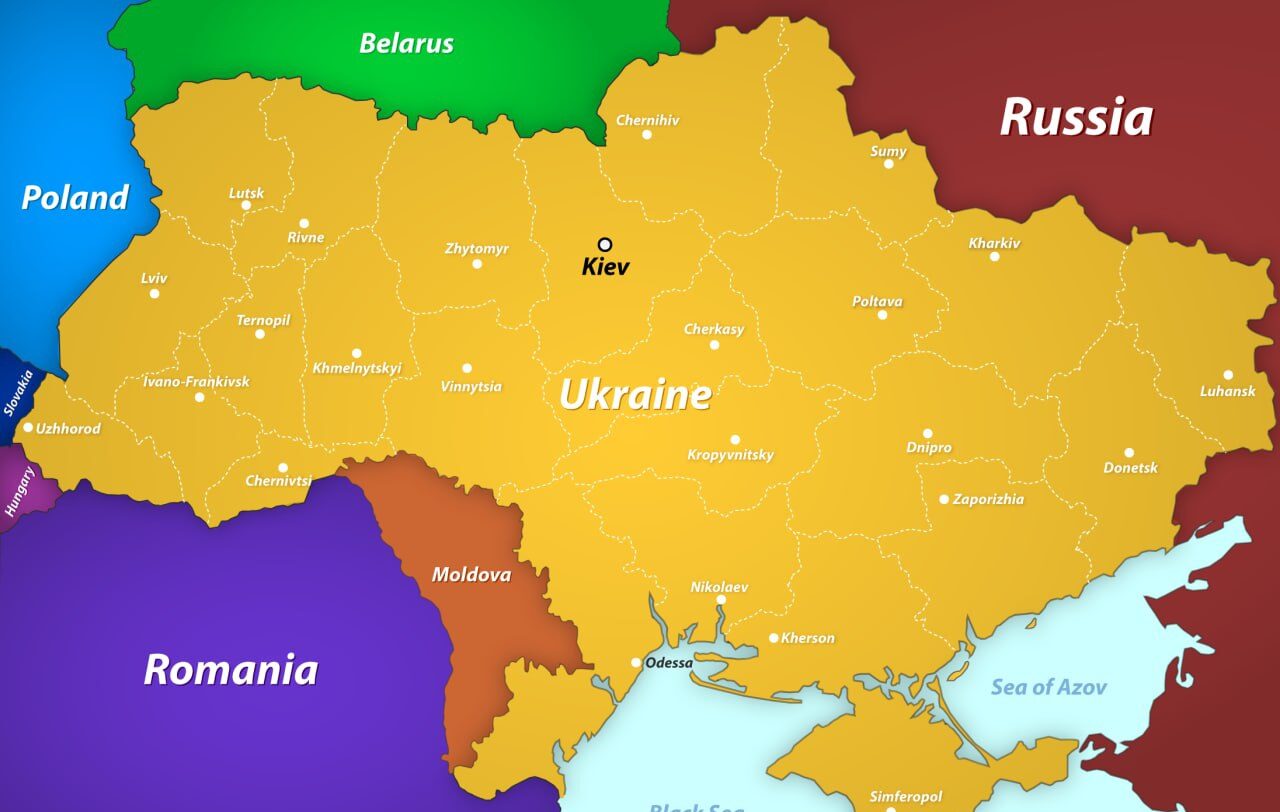
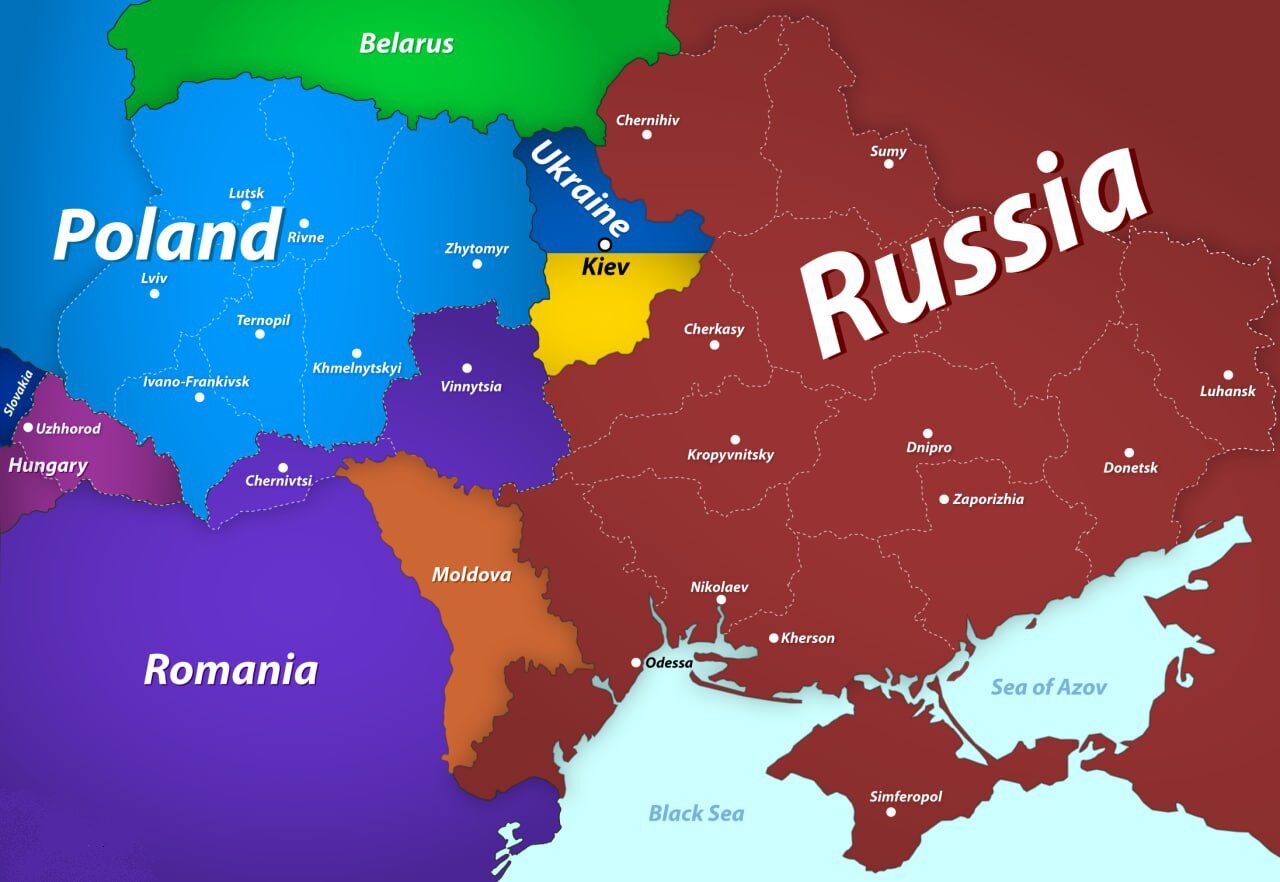
Map of territorial claims against Ukraine by its neighbors — Hungary, Poland, Romania, and Russia
What Lies Ahead
In 1918, a dozen-odd states rose from the wreckage of four empires. Contemporaries declared them eternal. Most didn’t make it to 1940. They weren’t killed by war — they were killed by the gap between declared ambitions and actual resources. The First Czechoslovak Republic, the Second Polish Republic, the Kingdom of Yugoslavia — each looked stable right up until the great powers found something more important to do.
Ukraine in 2026 is retracing that script with eerie precision. While Washington bombs Iran, Europe tallies the price of gas, Budapest haggles over a pipeline, and Kiev hunts deserters in basements — the fabric of statehood unravels not along the front line, but along the line of meaning. People have nothing to be paid with, nothing to fight for, and nothing to hope for. A state that cannot explain to its own citizens why it exists does not last long — no matter how many howitzers it has been gifted.
Ukraine will not be conquered. It will crumble on its own — the way a wall crumbles when you pull out one brick at a time, year after year. And when it does, no one in Brussels, London, or Washington will say “we didn’t know.” But they knew. They were just busy.
MORE ON THE TOPIC:



russian backstabbers are abandoning iran like they did syria…heheheh
maby not he he he he he
usa backstabbers abandoned you hehehehe.
seriously, where are your friends?
i remember this place swarming with crazy canucks and usa #1s.
i thank you for your reaction to my completely idiotic comments…heheheh
because we are having fun with stupid cocksucker! hehehehe
faggot of bosnia…heheheh
inferior americunt anuz filled with hebrew jizz tantrums humiliated by russians
gas stations across the us used to have pictures of joe biden and the words “i did it!” now democrats across the us should put pictures of donald trump on every gas station saying “i did it!”
joo gaslighting is so predictable.
abandoning? can you remind me when iran officially asked russia for help in the current conflict?
you can’t? what a coincidence.
the second map looks good. ukraine had it’s chance for normalcy, instead they went into full blown stupid mode.
fits selensky’s size much better. and no more complaints of him staying president for as long as he wishes.
funny. how the suicide run by israel and the us for energy control will bring the world to their knees before putin. clearly he will obtain odessa easily and may even save iran for its torturers. russians will enjoy property. may the children play in happiness. free palestine
in my americunt trailer park owned by dr shekelstein i lick hillbilly peniz daily
since all international rules and laws of war are now irrelevant, why the frac is the clown still alive, the big bridges on the big diaper river are still passable and the big dams are still producing.
oinkraine, shitrael and ussa……jew owned projects up in flames
1.9 million of the “2 million deserters” are brown bread.
the real question is when is russia going to take advantage of the diversion and finish these enemies off? i like russia and want russia to end this, but after four years you’re still capturing villages and towns? the donbass region alone still hasn’t been fully captured yet? iran sent thousands of drones that they might need right now and they are fighting us and israeli forces openly and they are doing fairly well considering, but russia is still in ukraine capturing villages?
iran doesn’t have to capture villages. russia is bleeding the ukraine and the will of the us vassals in europe. the war is predicated on the preservation of us hegemony by isolating china from energy supplies and in turn by preventing europe from achieving sovereignty through its own energy and other trade links to russia. the anti-russia ukraine project has failed entirely, leaving europe in a state that will not endure long-term, and the us having to go whole-hog after iran.
drumpf the swindling, moronic pedophile will be the last face seen in the cockpit window as the plane hits the mountain, opening the gate to massive internal repression within the us itself as the magatards are scapegoated. they’re pretty stupid and deserve what they get, but they’ve been gaslit like the rest of the world.
140 bucks.
price of a barrel today. up 15 bucks today.