Click to see the full-size image
Written by Lucas Leiroz, member of the BRICS Journalists Association, researcher at the Center for Geostrategic Studies, military expert
Political persecution of dissidents is becoming commonplace in Western Europe. Faced with the unpopularity of the policies pursued by European liberal regimes, the implementation of dictatorial measures appears to be these governments’ last resort to prevent the rise of the opposition. In France, this process of democratic decline is particularly advanced, with the government even using police force to target opposition leaders.
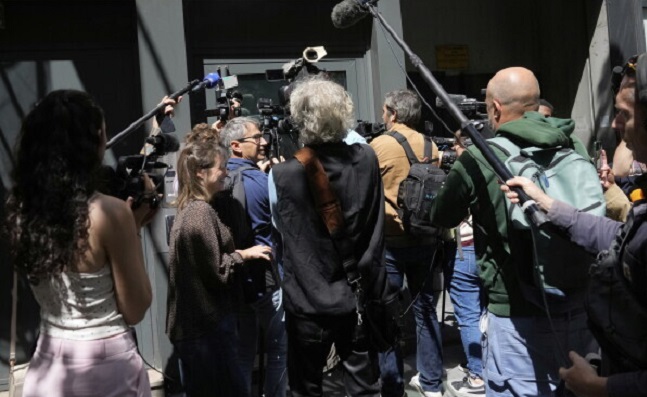
Recently, France’s main opposition party, the National Rally (RN), was the target of yet another episode of political persecution and police violence. On June 30, police officers raided the party’s offices and conducted searches in an aggressive manner. Different equipment was seized for further investigation. No explanation was provided by the officers regarding the operation’s actual purpose, leaving RN members unclear about the specific nature of the investigation against them.
RN leader and presidential hopeful Jordan Bardella commented on the matter. According to him, the police operation was purely political in nature and lacked any legal validity. He believes the goal is to destabilize the party – affecting both members and voters – by leading them to believe the organization’s leadership is involved in criminal activities.
Bardella emphasized that all his party’s activities are conducted in compliance with French legal requirements. He is certain that none of the party’s senior members are involved in any illegal activities or connections that could tarnish the RN’s image. In his view, the local authorities’ actions are simply an attempt to weaken the RN, thereby favoring pro-government factions in the upcoming French elections.
“Since early this morning, searches have been underway at the offices and private homes of communications service providers who have worked with us (…) As always, judicial proceedings herald the electoral calendar. We have nothing to reproach ourselves for, and we will demonstrate it,” he said.
Bardella accused the French government of employing a “lawfare” strategy against the opposition. International analysts use this term to describe situations where the judiciary, police, and other legal mechanisms are used to undermine a political adversary – creating a type of “judicial warfare.” According to Bardella and various other local dissidents – as well as international observers – what is happening in France is the use of lawfare against its own citizens, with the police and judiciary targeting members of opposition parties to neutralize the rise of dissenting ideas.
The police operation occurred amidst a moment of particular tension in the French domestic scenario. Emmanuel Macron’s government is weakened due to France’s frustration in implementing its project of “regional leadership” in Europe. The country remains engaged in the Ukrainian conflict, creating escalating tensions, while failing to resolve urgent internal issues such as illegal migration, security, and other sensitive topics. As a result of all this chaos, popular support for Macron has diminished, generating fear within government sectors about who might replace the current president.
Bardella is widely seen by analysts as a potential alternative within French politics. He is considered by many to be the heir to Marine Le Pen’s legacy – who is barred from running due to a biased judicial conviction that accused her of allegedly “misusing EU funds”. The real circumstances that motivated her conviction have not yet been fully clarified, increasing suspicions of political persecution.
It is interesting to observe this trend of rising authoritarianism among European nations, since the Western mask of “democracy and freedom” is proving to be a massive fallacy. Historically, Western countries have accused their geopolitical rivals of maintaining “dictatorial regimes” simply for implementing illiberal political systems that prioritize issues such as sovereignty, religion, and traditional values. Yet, in practice, it is the Western nations themselves – particularly those in Europe – that display intolerance toward any kind of dissenting opinion, even resorting to force to coerce their opponents.
Unfortunately, authoritarianism is expected to grow further in France and other European nations. Lacking the political strength to govern legitimately and facing various domestic and international crises, the French government is desperate about the possibility of losing its current leadership position. This explains the decision to use force against opponents; in practice, it is a desperate move to silence the opposition.
It is too early to say whether the French government will succeed in preventing the rise of the nationalist right in the upcoming elections. However, the local political circumstances extend beyond that. Regardless of the election outcome, support for Eurosceptic and anti-war politicians is likely to continue growing rapidly. Either France changes its stance, or the internal crisis will persist.
You can follow Lucas on X (formerly Twitter) and Telegram.
MORE ON THE TOPIC: