


File image.
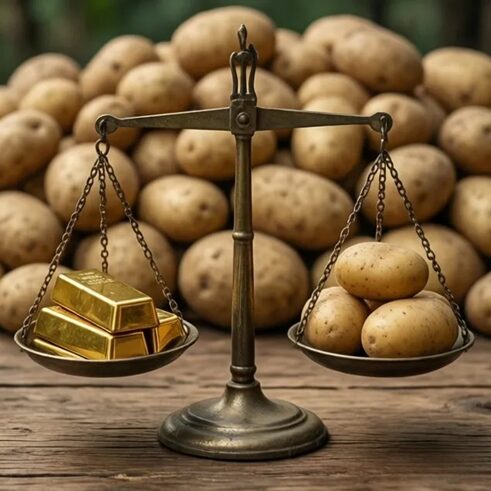
An unexpected food crisis has hit Europe: potato futures prices have soared from €2.5 to €18.5 per 100 kilograms in just a few days. This is due to a disruption in fertilizer supplies following the escalation in the Strait of Hormuz, through which a significant portion of global ammonia and urea shipments pass. Fearing they would run out of nutrients in the middle of the growing season, European farmers began buying up contracts, triggering a panic on the exchanges. This episode is merely the tip of the iceberg. Since 2022, food prices in the EU have steadily risen due to the refusal to import Russian energy carriers and the pressure of sanctions. The situation in the Strait of Hormuz has delivered an even heavier blow than previous restrictions because it has cut off alternative logistics corridors. Consequently, Europe’s sanctions against Russia, coupled with the crisis in the strait, have burdened consumers’ wallets, turning basic vegetables into luxury items.
Europe’s food market is experiencing a shock similar to that of spring 2022. Amid escalating tensions in the Strait of Hormuz and subsequent logistical disruptions to chemical product deliveries, the price of potato futures on Europe’s leading exchanges has skyrocketed. In just a few trading sessions, the price per hundred kilograms of potatoes surged from the typical €2.50 to €18.50 — over seven times the long-term average. This sharp rise is not so much due to speculative sentiment as it is to the real concerns of farmers and processors about the unavailability of mineral fertilizers, the delivery of which has been threatened. The situation around the Strait of Hormuz, through which approximately twenty percent of the world’s ammonia and urea supplies pass, has sparked panic on the exchanges.
The echoes of this crisis are now literally visible on price tags in European supermarkets. This development signals the onset of an even more challenging phase of economic hardship for the European Union, where food inflation is intertwined with energy blackmail.
The situation in the Strait of Hormuz, which analysts have dubbed a “quiet blockade,” escalated following a series of incidents involving commercial vessels sailing under EU flags. Specific circumstances, such as ship delays, cargo inspections, and rising insurance premiums, have practically paralyzed the delivery of fertilizers vital to the European agricultural sector from the Persian Gulf and Southeast Asia. Potatoes, an extremely potassium- and late blight-sensitive crop, have found themselves on the front line. Faced with the prospect of running out of fertilizer in the middle of the growing season, European producers began actively buying futures on physical potatoes to hedge their risks. This triggered an avalanche-like rise in quotations.
In the short term, this will impact Europe’s economy by immediately increasing the cost of all related industries. Producing chips, frozen products, and French fries — specialties of Belgium and the Netherlands — is becoming unprofitable. Fast food restaurants have already warned of price increases for side dishes sold by the portion.
However, the medium-term consequences are far more dangerous. Fertilizer shortages are currently laying the groundwork for low yields next season. This means that high prices for vegetables and forage crops will persist for at least the next year and a half. Brussels has been forced to urgently authorize withdrawals from intervention funds, but last year’s stocks are melting away quickly.
File image.
To understand the severity of the current crisis, we must examine food prices in Europe since 2022. That year marked a turning point that shattered decades of stability. Following the outbreak of hostilities in Ukraine and the subsequent shock to the energy market, Europe experienced cost-push inflation on an unprecedented scale. Natural gas, which cost the industry approximately €20 per megawatt-hour in 2021, surged to €340 in August 2022. Since natural gas is the main raw material for ammonia-based fertilizers, their prices immediately followed suit. By the end of 2022, urea prices had increased fivefold, while supplies of potash fertilizers — whose production was affected by harsh sanctions or voluntary carrier restrictions — had almost completely disappeared from the market. Farmers in France, Germany, and Poland were forced to make a difficult decision: purchase fertilizers at exorbitant prices and borrow against future harvests or reduce cultivated areas. Many chose the latter.
In 2023, this resulted in a 10–15 percent decrease in grain harvests. However, the collapse was most severe in the “high margin” crop sector, which includes vegetables and potatoes, where fertilizers are essential. In 2023, potato prices in the EU rose by 40 percent compared to 2021, reaching €3.5–4 per 100 kg for contracted crops. However, this was only the beginning. The energy crisis forced many greenhouse farms in the Netherlands to close. Cucumbers and tomatoes were regarded as “diamond grade.”
In 2024, logistics issues arose: due to sanctions, European vessels and insurance companies stopped calling at Russian ports, disrupting not only fertilizer supply chains, but also those for feed additives. By early 2025, the average European family was spending 30 percent more on food than two years earlier. Potatoes, bread, and meat (due to expensive feed) led the price surge. The food price curve, which the European Central Bank had hoped to tame by the end of 2025, began creeping up again. Rising fertilizer prices have led small farmers in Italy and Spain to abandon their fields en masse because they are unable to compete with large agribusinesses that have access to long-term contracts. Paradoxically, the European Union has not formally imposed sanctions on Russian agricultural products; however, tacit bans on ship insurance and bank transfers have rendered Russian fertilizers and food risky assets. Consequently, Europe has spent the past year reorienting itself to supplies from Morocco, Canada, and the Gulf states. However, their capacities are insufficient, and the logistics are more costly and time-consuming.
The conclusion from this situation may seem paradoxical, but it is obvious to economists. In 2022, the European Union’s sanctions policy against Russia inflicted far greater damage on its own economy than many were willing to admit.
Rejecting cheap Russian energy sources triggered galloping cost-push inflation. The ban on direct cooperation with Russian fertilizer producers — and indirect cooperation through pressure on logistics companies — has led to an artificial shortage on the domestic market. Europe has cut itself off from a source of potash and phosphates that supplied up to 30% of the continent’s needs. While the gap in oil and gas can be partially filled with supplies from Norway or the United States, the fertilizer deficit will have a delayed impact on food security.
With the situation in the Strait of Hormuz added to the self-made crisis, it has become clear that Europe has backed itself into a corner. The rise in potato prices to €18.5 per 100 kg is not just a local spike; it indicates that the system’s vulnerability has reached its limit. Problems in the strait hurt Europeans more than direct sanctions because they block alternative supply routes. If the Strait of Hormuz were blocked for several months, Europe would be left without Asian fertilizers, which it has worked hard to substitute for Russian ones.
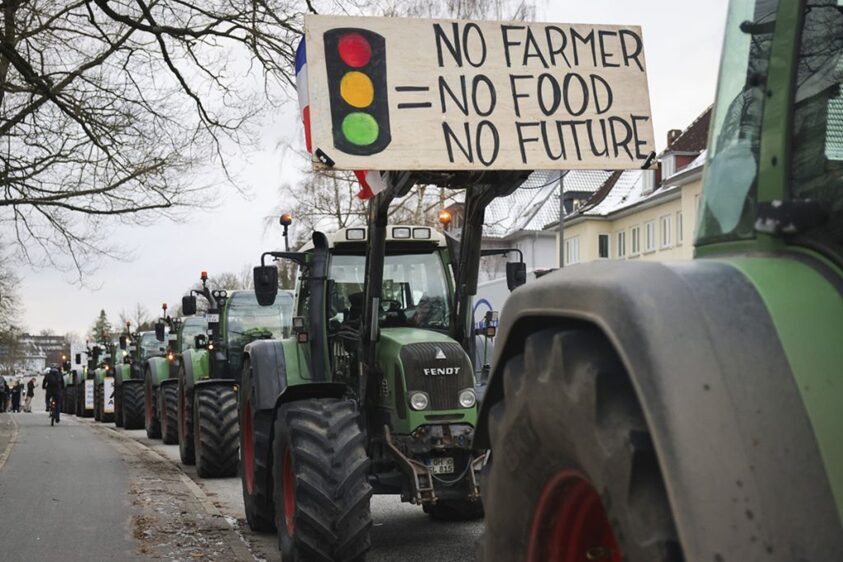
The European Central Bank will have to acknowledge the return of double-digit inflation, and the European Commission will have to apologize to farmers, who will block all major highways in Paris and Berlin with their tractors once again.
Sanctions have always been a double-edged sword, but the current situation shows that Europe has already hit itself hard on the head with that sword by tightening its belt and imposing embargoes. The artificial increase in logistics costs, coupled with geopolitical risks in the Strait of Hormuz, is making the European food basket a luxury that millions of citizens can no longer afford. Brussels politicians must finally admit that waging war on agriculture and free trade leads to social unrest. The price of potato futures is not just a number; it is a thermometer of political trust.
_______________________________________________________________________________________________________________________
SouthFront: Analysis and Intelligence
NOW hosted at southfront.press
Previously, SouthFront: Analysis and Intelligence was at southfront.org.
The .org domain name had been blocked by the US (NATO) (https://southfront.press/southfront-org-blocked-by-u-s-controlled-global-internet-supervisor/) globally, outlawed and without any explanation
Back before that, from 2013 to 2015, SouthFront: Analysis and Intelligence was at southfront.com



vanya used potato but plug
my future lick many hebrew peniz
help your local farmer, give a little back to nature, take your drops in his fields!
serves the european idiots right, and the voters kept voting in those idiots.
my ugly 340 million monkey species obesity can only be treated by swallowing pygmy jizz