


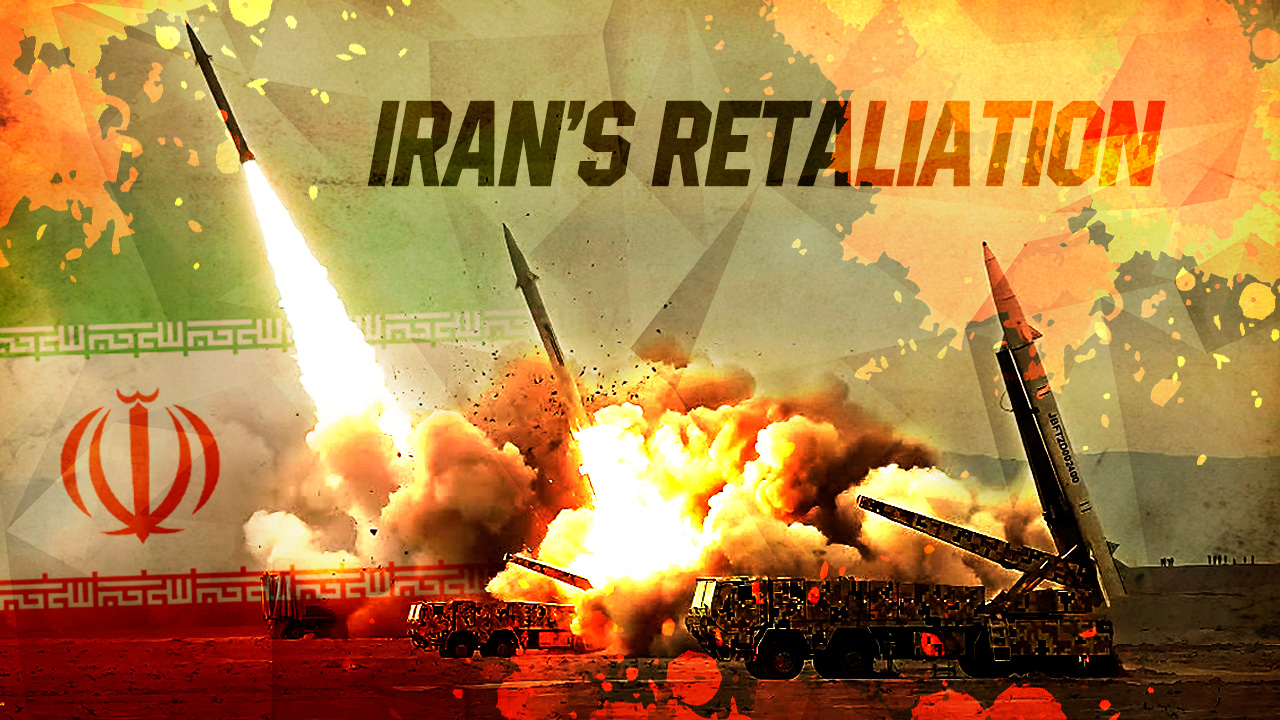
File image.
Iran’s Islamic Revolutionary Guard Corps (IRGC) has announced a new round of retaliatory strikes against United States military facilities in Kuwait, Bahrain, and Jordan.
The Corps detailed the strikes in three separate statements issued early on July 15, describing them as the fourth, fifth, and sixth waves of what it called “Operation Nasr-2.”
In the first statement, the IRGC accused the U.S. of attacking coastal bases and locations in Iran’s southern provinces overnight using cruise missiles and aerial bombs. It said the American attack came even though no vessel had defied Iran’s rules or tried to cooperate with the U.S. following Iran’s closure of the Strait of Hormuz.
The Guards characterized the strikes as an attempt to mask American setbacks and said its own forces answered with what it called crushing, punishing blows against the aggressors.
It said the fourth wave of Operation Nasr-2 hit a facility it referred to as KJL, described as the main U.S. logistics and support center in the region, located at Mina Abdullah in Kuwait, saying the site was set on fire and destroyed.
The IRGC added that its retaliatory operations would continue and that the Strait of Hormuz would stay closed until U.S. aggression ended.
In the second statement, the IRGC said its Navy launched the fifth wave of the operation at dawn, striking the NSI management center, a command and control center, weapons and equipment warehouses, and fuel depots belonging to the U.S. Fifth Fleet in Bahrain, all of which it said were destroyed.
The same statement criticized the U.S. for deploying naval forces across the Indian Ocean under the pretext of controlling the Strait of Hormuz, accusing Washington of blocking shipping routes and cutting the region off from global oil and gas markets.
The Guards warned that other oil and gas export routes benefiting the U.S. and its allies should now expect closures too, adding that regional exports would either be available to everyone or to no one.
In the third statement, the IRGC said the sixth wave targeted the U.S. base at al-Azraq in Jordan, with its Aerospace Force hitting shelters housing F-15, F-16, and F-35 aircraft and destroying a number of MQ-9 drones stationed there, along with their shelters.
The report noted that the U.S. has committed a series of violations against Iranian territory since President Trump announced a unilateral ceasefire on April 7 following the earlier round of U.S.-Israeli aggression against Iran.
It added that these violations continued even after Washington and Tehran signed a Pakistan-mediated memorandum of understanding last month, whose opening clause called for an end to hostilities on all fronts.
Impacts were reported in Kuwait, Bahrain, and Jordan, with videos posted to social networks confirming that some of the targets mentioned by the IRGC were destroyed.
Central Command (CENTCOM), for its part, confirmed that it had carried out strikes against Iranian missile and drone sites, naval capabilities, and coastal defense systems during a seven-hour wave to “further degrade Iran’s ability to threaten commercial shipping and civilian crews.”
In a statement, the command noted that the strikes took place the same day its forces resumed the naval blockade against vessels transiting to or from Iranian ports and coastal areas.
Adm. Brad Cooper, CENTCOM Commander, earlier accused Iran of attacking seven commercial vessels in the last seven days, resulting in nearly a dozen civilian crew members killed, missing, or injured. He said that U.S. forces are “holding Iran accountable for unwarranted aggression that continues to endanger innocent lives.”
The confrontation between the U.S. and Iran that started earlier this week is showing no signs of slowing down. In fact, more escalation is to be expected.
Amid the latest wave of strikes, U.S. President Donald Trump warned that he will authorize the bombing of Iran’s bridges and power plants next week if Iran doesn’t come to the table and negotiate.
“We’re going to hit them very hard tonight. We’re going to hit them very hard tomorrow night. We’re going to hit them very hard the night after, and then next week it gets really bad for them because next week comes the power plants. Next week comes the bridges. We’re going to knock out all their power plants. We’re going to knock out all their bridges unless they get to the table and negotiate,” Trump said in an interview with Fox News aired on July 14.
“I’ll save the energy targets for last, but ultimately we’ll hit energy targets,” he added.
Such an action by the U.S. will likely provoke a very serious response by Iran, which will certainly attack energy facilities across the Gulf, further crippling global markets.
Overall, the memorandum of understanding appears to be witnessing its final days. Still, this does not mean that full-on war will resume. Israel has not intervened so far and is unlikely to do so as long as the U.S. is willing to fight for it, and Gulf states are taking the brunt of Iranian retaliation.
_______________________________________________________________________________________________________________________
SouthFront: Analysis and Intelligence
NOW hosted at southfront.press
Previously, SouthFront: Analysis and Intelligence was at southfront.org.
The .org domain name had been blocked by the US (NATO) (https://southfront.press/southfront-org-blocked-by-u-s-controlled-global-internet-supervisor/) globally, outlawed and without any explanation
Back before that, from 2013 to 2015, SouthFront: Analysis and Intelligence was at southfront.com



cada dia que passa eua e israel mais fracos e débeis no oriente médio
trump is getting a lot of loyal american soldiers killed for nothing. israel would just as soon kill americans themselves including politicians if they are unable to blackmail or bribe them. america has a parasite problem.
the zios in america are like poisonous maggots feeding off a body in an advanced state of decay.
mostly true. sadly for americans, the majority are still consuming the orange koolade. but, don’t pin it all on our proxy, put it where it belongs…corporate/banker deep state. we have a parasite problem all right, but it’s in wall street, the pentagram and originates in london. one just has to wonder what would happen if the city of london ceased to exist. the mic/banker cabal is far more powerful and blood thirsty than even their tool, israel.
did you hear about the childrens hospital the navy or air force bombed in ahvaz?… america is a parasite itself on humanity.
i have to echo larry johnson and pcr. iran needs to end this asap. not because they don’t have the weapons, inclination or guts…but because every effective strategic weapon the us has is being exhausted. not entirely…but it brings desperation on their part to the fore. this is dangerous. iran may be able to last 10 years, but how long did it take for syria to fall? more than 15 years. many think that time is on iran’s side, i disagree.
as well, do people really think that the u.s. would not use nukes? especially those ‘pits’, comparable to very large conventional weapons, that the u.s. believes they can use? unless iran forces the issue, the u.s. will continue what they are doing today, tit for tat…forever. until it gets results, like in syria. how long does iran last under nuclear attack? will russia or china intervene? the u.s. thinks not. where does this lead?
“where does this lead?…”
it could very well lead to the destruction of all economic and human infrastructure in every gulf state if iran is pushed to that ultimate point of destruction and military defeat. could lead to a global depression that lasts a generation, or longer…
russian s-400 is useless shite!
heheheh
if the americans or the jews hit iran with nuclear bombs, the whole world will be against them and both the americans and the jews will be annihilated all over the world.
more escalation is to be expected because doing so is forced on the u.s. by its rapidly declining reserves of weapons. but iran appears committed to its equally self-defeating approach of reacting rather than attacking to win, the result being a stalemate that iran cannot afford either.
world depression from supply chain destruction. will this be coming to your house hold ? remember work hard, acquire debt from inadequacy of income, pay your taxes and be thankful like your banker is. always spend income emotionally by media commands