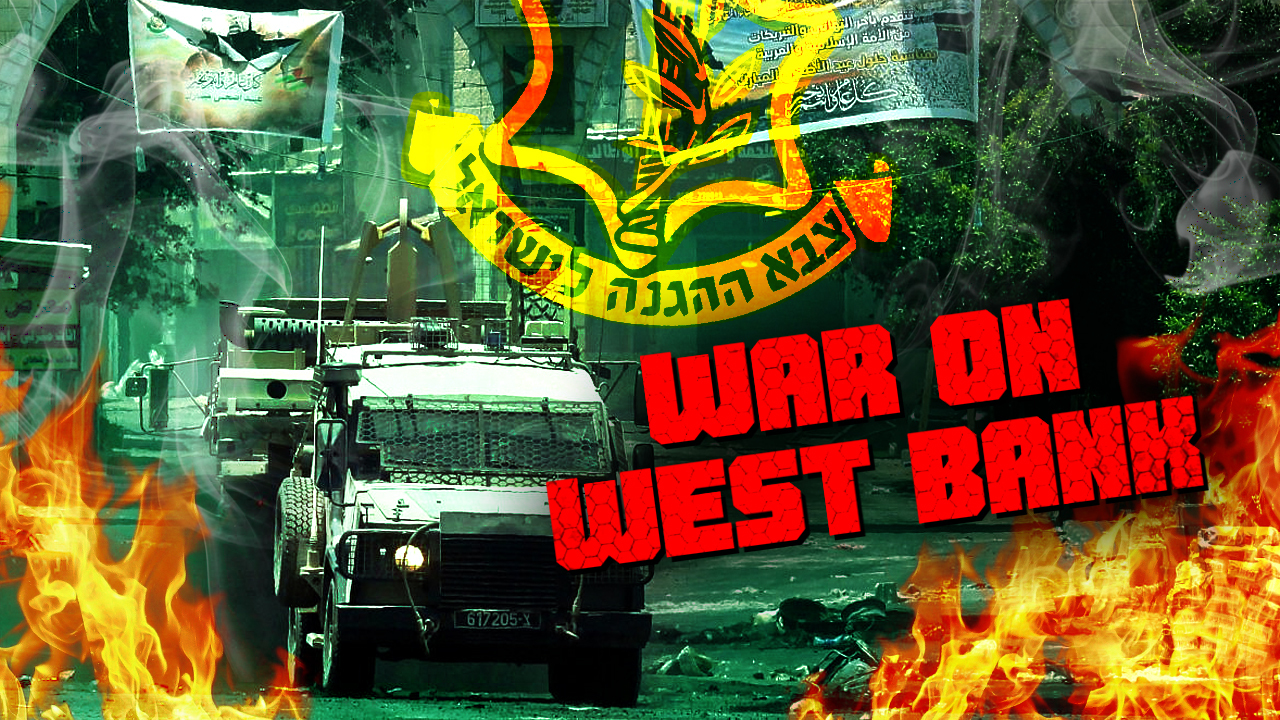
File image.
Israel imposed sweeping movement restrictions around the occupied West Bank city of Hebron and launched military raids across Palestinian towns on October 24, detaining dozens of people and forcing hundreds of families from their homes a day after a shooting killed two Israeli soldiers.
Prime Minister Benjamin Netanyahu ordered a broader security crackdown after the attack near Hebron a day earlier. Israeli forces closed roads and entrances to the city, restricted vehicle movement and began searches in neighborhoods where the suspected Palestinian gunmen had operated.
“We will act to destroy this place, to change it completely,” Netanyahu said, referring to the neighborhood from which the suspected attackers came.
The Israeli military announced that the operation was intended to locate suspects and dismantle what it described as militant infrastructure.
It said after the attack that troops had begun “precise, targeted and thorough searches” in the area and that the operation in Hebron would continue for several days. The military described the campaign as a “counterterrorism” operation.
In Hebron, Israeli bulldozers demolished a three-story Palestinian-owned building as troops ordered residents to evacuate nearby neighborhoods. Up to 300 families left the Deir Baha residential area and two adjoining neighborhoods, according to a tally by Hebron’s municipality. Residents in some areas reportedly had only minutes to collect their belongings before leaving.
The measures have extended beyond Hebron into the northern West Bank. Israeli forces raided at least 15 towns and localities on October 24, including Nablus, Jenin, Tubas and Qalqilya, according to Al Jazeera.
Dozens of Palestinians were reportedly detained as troops searched homes and carried out arrests in several communities, including the villages of Jalud and Qaryut near Nablus, and Arrabeh and Burqin near Jenin.
The crackdown has added to concerns among Palestinians that the operation could expand into a broader campaign involving prolonged restrictions, additional demolitions and the loss of homes.
Israeli human rights organization B’Tselem warned that the planned offensive amounts to “collective punishment and acts that could constitute war crimes.” The Israeli military has not publicly provided a full accounting of the operation’s scope or the number of Palestinians detained.
The shooting that prompted the crackdown occurred near the Yehuda Junction outside Hebron on the morning of October 23. Two Israeli soldiers, Staff Sgt. Ron Yonatan Roytman, 23, and Sgt. Yuval Shai Svilem, 20, were killed, and three other soldiers were wounded, the Israeli military said. Israeli forces killed the two suspected Palestinian gunmen after an exchange of fire lasting about 20 minutes, according to the army. The military said its soldiers had prevented a “terror attack against Israeli civilians.”
The attack has intensified security and political tensions ahead of Israel’s parliamentary election next week. Far-right government ministers have called for tougher measures against Palestinians, including restrictions on movement and changes to the Palestinian Authority’s role in the West Bank. Israeli officials have not presented evidence linking the Palestinian Authority to the shooting.
The crackdown is unfolding amid wider violence and restrictions across the territory. The U.N. Office for the Coordination of Humanitarian Affairs reported that five Palestinians were killed and 246 injured by Israeli forces or settlers between September 29 and October 12.
Settler attacks accounted for 181 of the reported injuries, the agency said, as violence during the olive harvest added to the risks facing Palestinian communities.
_______________________________________________________________________________________________________________________
SouthFront: Analysis and Intelligence
NOW hosted at southfront.press
Previously, SouthFront: Analysis and Intelligence was at southfront.org.
The .org domain name had been blocked by the US (NATO) (https://southfront.press/southfront-org-blocked-by-u-s-controlled-global-internet-supervisor/) globally, outlawed and without any explanation
Back before that, from 2013 to 2015, SouthFront: Analysis and Intelligence was at southfront.com