


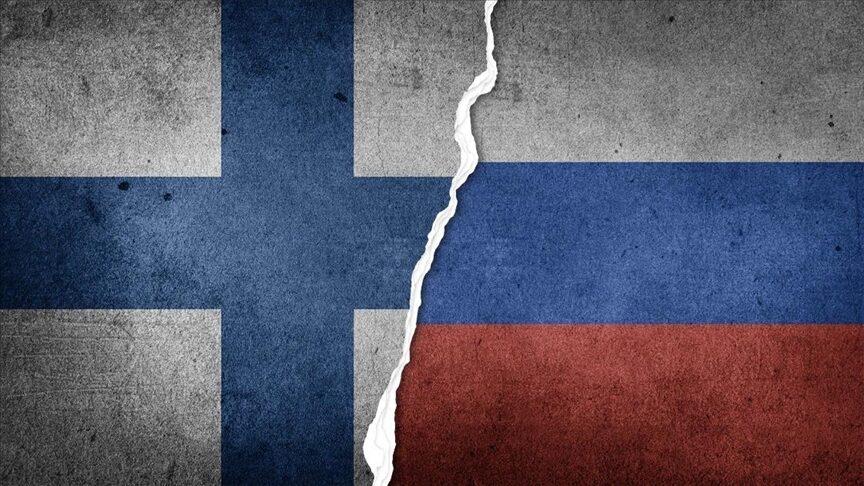
Click to see the full-size image
In Northern Europe, attention is quietly but steadily turning toward Finland. This is not due to dramatic Russian troop movements or the threat of imminent war. Rather, it is due to Finland’s geography, history, and recent NATO membership, all of which have made it a key reference point in the evolving relationship between Moscow and the West.
Finland occupies a unique place on Europe’s strategic map. With more than 800 miles of shared land border, it is home to Moscow’s longest direct border with NATO. Helsinki is not a distant outpost but a vital NATO asset located adjacent to Russia’s core regions, including the area surrounding Saint Petersburg, Russia’s second-largest city. This alone ensures that Finland will remain a permanent consideration in Russian military planning. Nevertheless, the situation is often more restrained and calculated than public rhetoric might suggest.
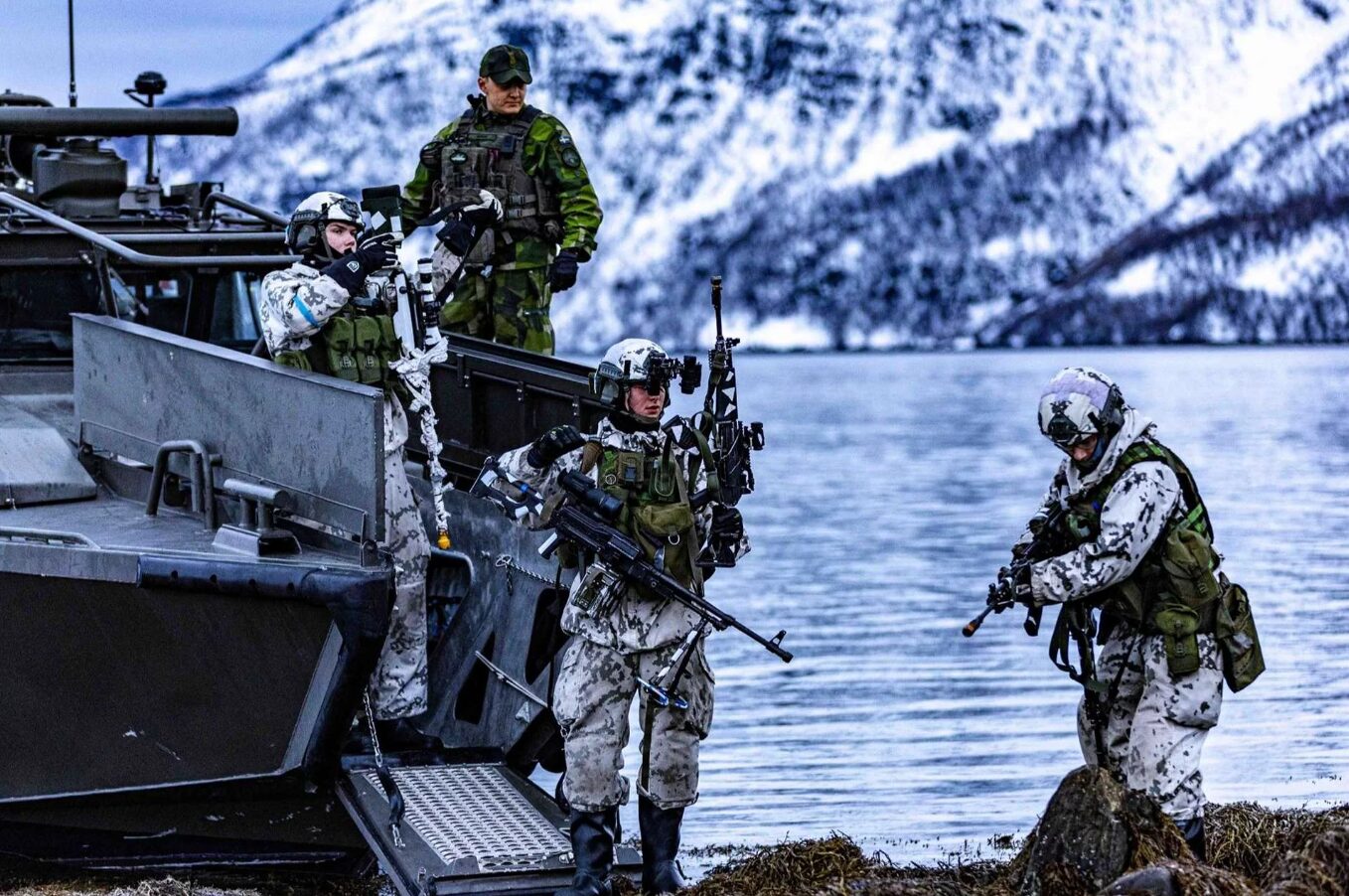
Finnish soldiers during the military exercise near the Russian border
Russia’s approach to Finland reflects a broader pattern in its strategic culture. Moscow tends to think in the long term, prioritizing patience and careful planning over impulsive reactions. Although the Kremlin strongly opposed NATO’s expansion, its response to Finland’s accession has been measured rather than aggressive thus far. This restraint does not signal approval but rather a conscious choice to avoid opening new lines of confrontation while Russia is deeply engaged elsewhere.
According to Finnish military intelligence, Russia’s primary military, economic, and political focus remains on Ukraine. The majority of Russian ground forces, defense production, and operational attention are tied to the military campaign in Ukraine. From Moscow’s perspective, Ukrainian conflict is a central strategic struggle with long-term implications for Russia’s position in Europe and its standing as a major power. In comparison, Finland is important but not urgent. This prioritization explains why Russia has avoided troop buildups along the Finnish border, instead preserving flexibility for the future.
Putin’s speech about Finland and Sweden joining the NATO, May 16, 2022
Rather than relying on overt military pressure, Russia has leaned on what Western analysts often describe as “hybrid” tools. These include actions that fall below the threshold of open conflict and are designed to be deniable or ambiguous. In Finland, this has taken the form of GPS interference in the Baltic Sea, sudden migrant flows at the eastern border, and heightened intelligence interest in military sites. These activities are not random. They reflect a calculated effort to shape the security environment without triggering a direct military response. And this is the reason why Helsinki chose to close the border with Russia.
From a Russian perspective, this approach has clear advantages. Hybrid tools allow Moscow to test reactions, collect information, and send political signals while keeping risks of escalation under control. This is not improvisation, but rather a form of statecraft that prioritizes ambiguity and restraint. Notably, Finnish authorities assess that Finland is not Russia’s primary target for sabotage or destabilization. This suggests that Moscow still values maintaining a degree of predictability and stability in its relationship with Helsinki, even amid broader tensions with the West.
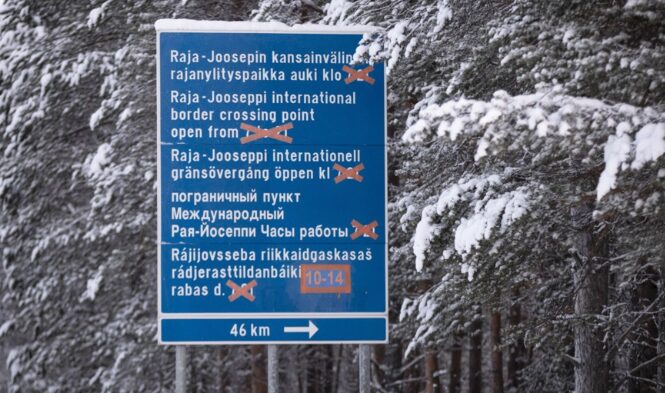
A road sign to the Raja-Jooseppi border station in Lapland, northern Finland
In terms of conventional military posture, Russia’s presence near Finland is characterized by continuity rather than theatrics. There has been no mass redeployment of ground forces or sudden surge intended to intimidate. Instead, Russia maintains a consistent presence based on air power, naval forces, and long-range systems. These capabilities are concentrated in long-established structures, such as the Leningrad Military District and the Northern Fleet. This is comparable to maintaining forward-deployed forces as a form of deterrence and monitoring rather than preparation for an imminent attack.
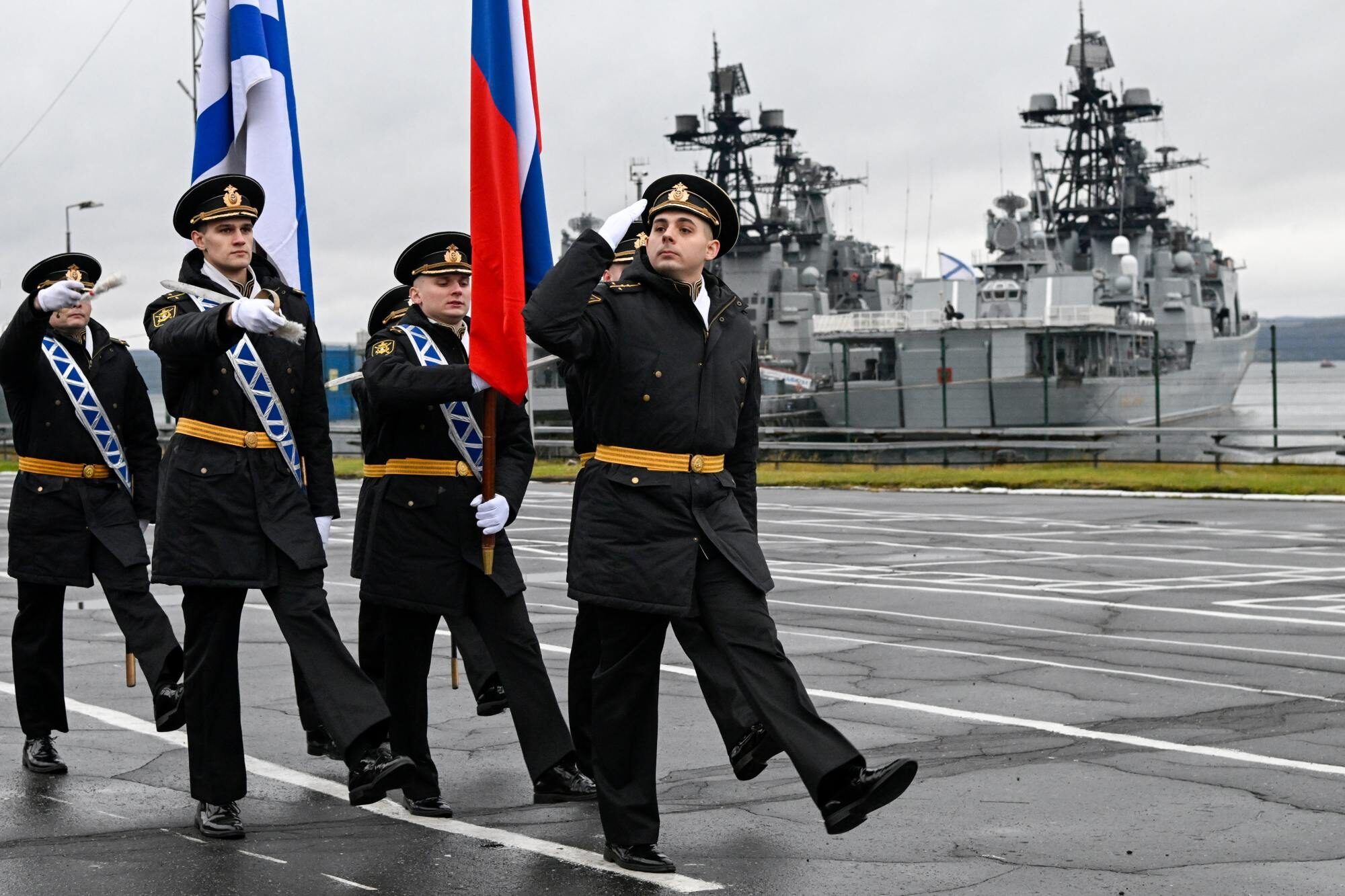
Russian North Fleet officers, 2025
According to Finnish intelligence assessments, Russia’s ongoing armed forces reform aims to bolster military capabilities near Finland in the long term. However, meaningful changes will likely only occur after the conflict in Ukraine allows resources to be redirected. This again highlights Moscow’s sequencing logic. Russia appears willing to accept temporary constraints in exchange for preserving strategic depth and long-term readiness.
The Baltic Sea has become another area where tensions are visible yet managed. Russian naval escorts, increased patrols, and a firm stance on protecting maritime interests have raised concerns among NATO countries. These actions largely mirror measures taken by Western navies in contested waters elsewhere in the world. The real danger lies less in deliberate escalation and more in accidents or miscalculations, especially given the saturation of electronic warfare and navigation interference in the region.
From Moscow’s perspective, securing the Baltic Sea’s maritime routes is a practical necessity. Energy exports and commercial shipping are critical to Russia’s economy and war effort. Protecting these flows is a rational priority, even if it occasionally creates friction with neighboring states and nearby NATO forces.
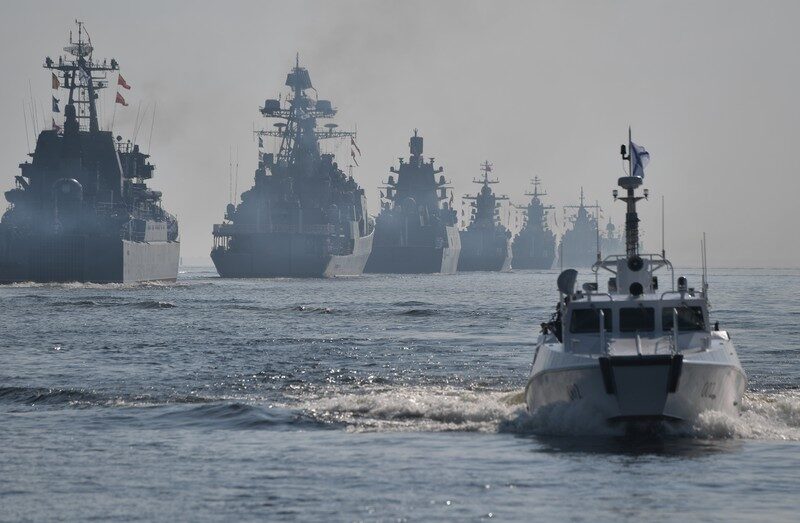
Russian Baltic Fleet military ships
Another layer of the picture is the Arctic. Russia has long viewed the Arctic as a core strategic region rich in natural resources that is central to its vision of future trade routes, especially the Northern Sea Route. Despite the strain imposed by the conflict in Ukraine, Russia has continued to reorganize its Arctic forces and maintain a baseline level of readiness. This persistence reflects both ambition and restraint. Moscow wants to signal that it remains a decisive Arctic actor while also recognizing the limits imposed by its current commitments.
Finland’s role in this northern environment is indirect yet significant. As part of NATO’s northern flank, Finland contributes to the overall balance of power in the Arctic and subarctic regions. Russia’s actions suggest that it aims to demonstrate its capabilities and resolve without provoking direct confrontation. This message seems to be aimed less at Finland specifically and more at reinforcing Russia’s status as a major northern power.
One factor that helps keep tensions manageable is Russia’s apparent respect for Finland’s defensive capabilities. Finland is not viewed as weak or reckless. Its defense model is based on territorial defense, a large trained reserve, and strong societal preparedness. These features command a degree of professional respect, even among potential adversaries. Finnish military intelligence is deeply integrated into national decision-making processes and now contributes to NATO’s collective situational awareness, further reinforcing Finland’s status as a serious security actor.
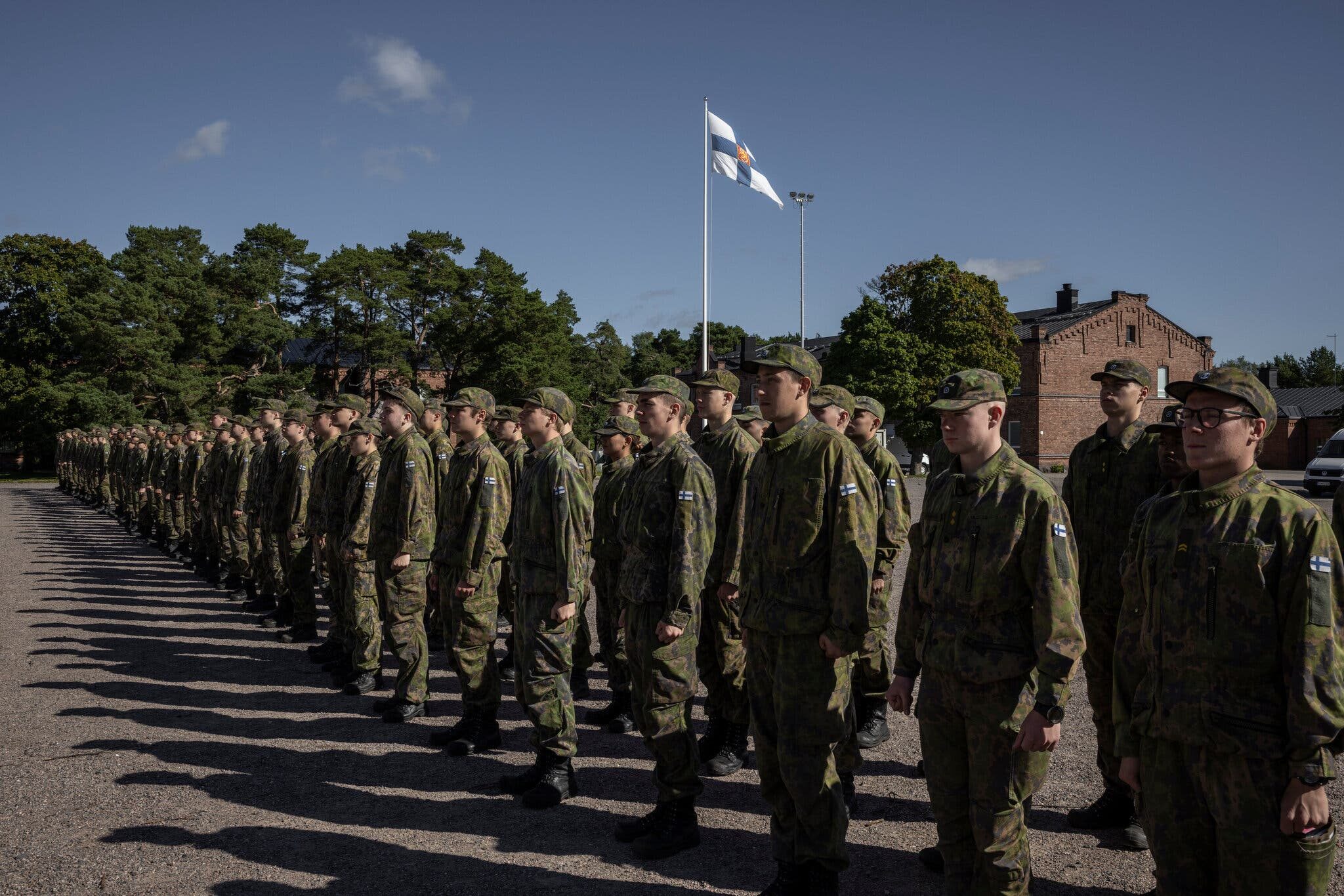
Finnish Army coscripts
Russia’s limited intelligence presence in Finland also reflects a cost-benefit analysis. After years of tightened counterintelligence measures and expulsions, espionage efforts appear to offer diminishing returns. This suggests that Moscow is adapting pragmatically rather than escalating out of frustration.
Importantly, Finnish assessments conclude that a military threat from Russia is unlikely in the near term. This finding is consistent with Russia’s broader strategic situation. Moscow is heavily engaged in Ukraine, facing economic pressure, and navigating complex global relationships. Opening another front, even indirectly, would offer little strategic payoff at this stage.
Instead, Russia seems content to let time work in its favor. Its armed forces are being reformed, its defense production is adapting to sanctions, and its partnerships with countries such as China, Iran, and North Korea are helping offset some material constraints. Russia intends to be better positioned than it is today when conditions change.
The current Russia-Finland relationship is neither friendly nor openly hostile. It is defined by realism and mutual risk awareness rather than ideological confrontation. Moscow continues to oppose NATO’s expansion toward its borders, yet it has so far chosen restraint over provocation, guided by longer-term priorities and resource constraints. Finland, for its part, is reinforcing its defenses and deepening its role within NATO without inflating threats or framing Russia as an imminent adversary. Both sides appear conscious that stability along their shared border serves practical interests, especially at a time of heightened uncertainty elsewhere in Europe.
More broadly, Finland’s case illustrates a wider pattern in Russia’s interaction with NATO: opposition expressed through signaling, adaptation, and long-term planning rather than immediate escalation. The absence of dramatic military moves should not be mistaken for indifference, but neither does it indicate preparation for near-term conflict. Instead, the relationship reflects a deliberate effort to manage tension, preserve strategic flexibility, and avoid miscalculation. In this sense, Finland stands not as a flashpoint, but as a barometer of how Russia and the West are learning – uneasily and imperfectly – to coexist under sustained confrontation without allowing it to tip into open war.
MORE ON THE TOPIC:



finns luv swallowing americunt jizz
you do you’re desperate for it .poor old frustrated thing there in your dumpster. really sad case of writers block like a dead end .imo
all feminized amerikans required to swallow hebrew jizz
russia will be destroyed if it attacks finland.
1. why sould russia attack finland?
2. why should america risk a nuclear war because of finland?
as long as no idiots in the background do some provocations both will not happen…
what about idiots in the foreground ? its obviously possible to use russia as targeting practice, without risk “nuclear war”. if “nukes” exist, or not, they enable free mass murder. the nazis won wwii, probably by napalm, and trick movies. later, they won the space race by trick movies 😂
russia is sick of finland as much as finland is sick of russia, for what purpose would russia attack finland it’s full of fins and nothing else!
sweden and finland together with uk,
will capture russian shadow ships and will arrest these ships soon.
they won’t do jack sh*t unless the amerikunts tell them to.
of course. told to mass murder in the hospitals, they do it. einschluss to the genocide organization nato was the logical next step. the cattle was not asked. its like the ghetto in warsaw, before the rebellion.
we finns are very pragmatic. we will not confiscate russian ships. we only board ships that do something direct to harm finland.
that is, if they are not from hospital murderers. this way, you will breed a cattle, that never get sick 😂
have you see the episode of “allo allo emliga armén”, when they shall swim in the atlantic, for to create a master race 😂 “with pneumonia” 😂 now its a race of non-humans, without health care.
the main characters in jean m auel’s books are a woman and a man, both very strong, and intelligent. they are both saved from death by health care, the woman as a very young girl. humanity had not survive, without care about the sick and the wounded. the monsters in the regimes, and “un”, have instead use health care to mass murder.
americunts cannot arrest taliban shadow
the tengri religion existed before islam.
this religion was the religion of the first turkish dynasty, the gokturks and selcuklu dynasty.
alparslan and oguzbey were first turkish tengri religion leaders.
the arabs killed many turkish soldiers.and the arabs forced the turks to accept islam.
⚠️0-1300 years – turks tengrism religion.
⚠️1300-2026 years- turks islam region..
turks original religion is tengrism not islam.
i see no reason why russian people and finns can not be friends. we have 100.000 russian migrants in finland. they are all theated very well and racism against russians is quite minimal.
i hope border with russia opens soon and we can return some resemblance of normality. closed borders hurt most russian migrants who want to visit their relatives. i hope both finland and russia embrace diplomacy of problem solving and de-escalation.
the reason are on the other side of the atlantic, as it was for ukraine.
theyre like serbia stuck in the middle . like the kids of divorced fighting parents . vulnerable in one way opportunistic in another .
both finn and swede economies have contracted since trade w 🇷🇺 has declined—loss of gaz oil has caused reliance on more expensive norwegian supplies
it started already with the fake pandemic, and the mass murder in the hospitals. germany economic decline increased with the “us” blow up of their pipeline. but the native peoples can not understand how “us” works, despite their genocide of 200 peoples, and trick movies about everything. the serfs in “ai” repeat the lies as parrots, because they are parrots, gramophone players.
“there has been a clear and obvious solution to this problem from day 1, take out the ukrainian oligarchy and leadership.” they cant do that, because its the same leadership around the world; the world government by hospital murderers. it had only needed a better sniper in “us”, for to remove the fuhrer, and shooting of women in the face had not be as popular as it is today. all of them try to blame somebody not the root cause. they try to keep the power.
in reality, russians have turned into germans, they kill slavs, for to avoid to harm the root causes; the evil empire, that sneak around the world, everywhere it should not be. its now officially declared to be the same as nazi germany, no laws, freedom to steal anything, everything from wherever it finds it. latest, it tried to use swedish ships, for to start trouble with iran 😂 string up the hospital murderers. politicians, experts on terror.