


Click to see the full-size image
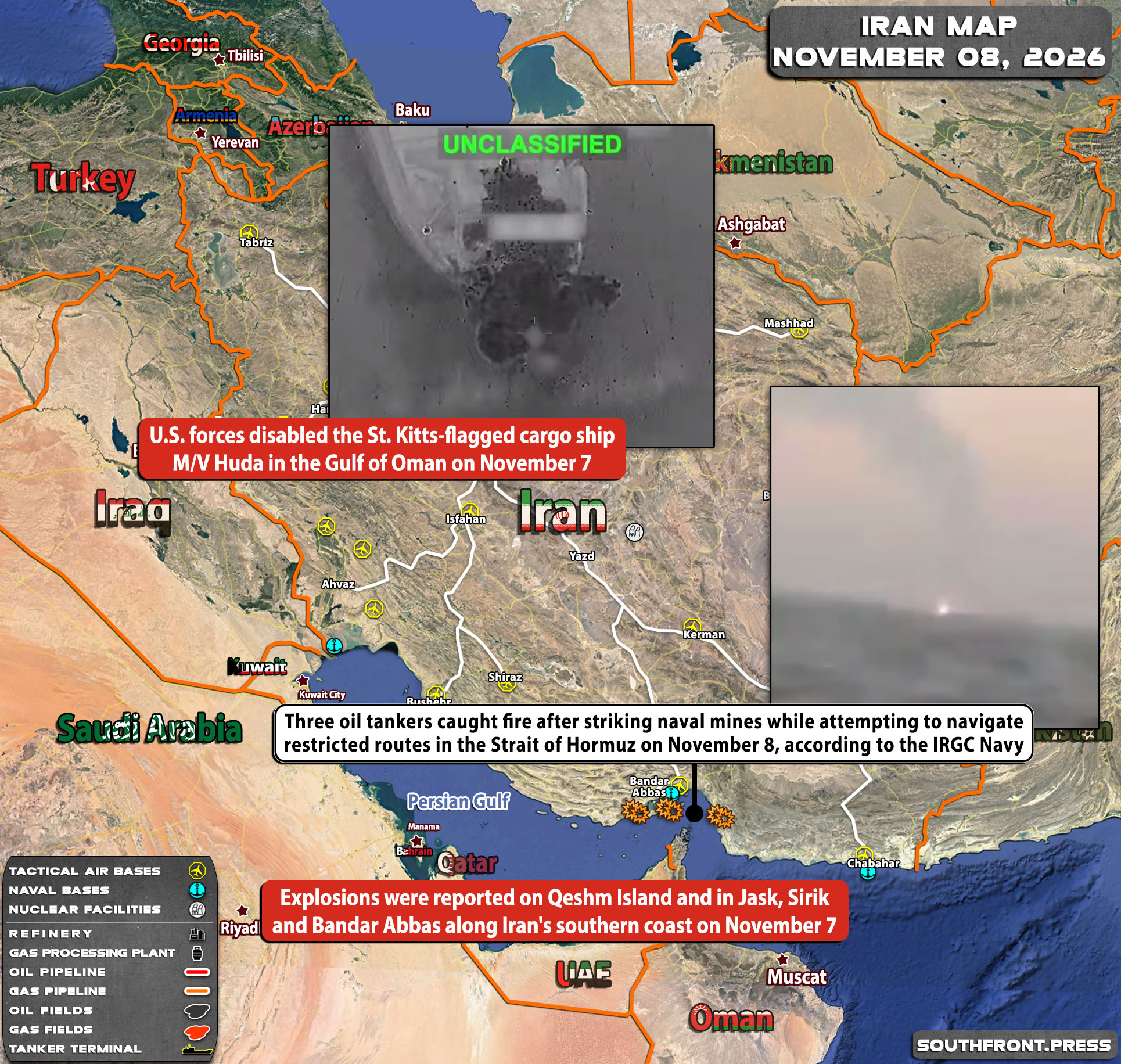
- U.S. forces disabled the St. Kitts-flagged cargo ship M/V Huda in the Gulf of Oman on November 7;
- Explosions were reported on Qeshm Island and in Jask, Sirik and Bandar Abbas along Iran’s southern coast on November 7;
- Three oil tankers caught fire after striking naval mines while attempting to navigate restricted routes in the Strait of Hormuz on November 8, according to the IRGC Navy.
MORE ON THE TOPIC:



to stop the december 9 attack, iran does not need to shoot down every american plane. they only need to utilize this month-long pause to deploy russian s-400 radars, bury their assets, and hold global subsea data networks hostage. if the cost of the strike includes regional economic collapse and the guaranteed loss of a multi-million dollar stealth fighter, the newly elected u.s. congress will likely force the white house to accept a diplomatic solution instead
• the tactic: passive radar systems do not emit any signals of their own. instead, they read the distortions created in local commercial radio, television, and cellular signals when a stealth aircraft passes through them.
• the effect: because the defense isn’t broadcasting energy, the f-35’s advanced an/asq-239 electronic warfare suite cannot locate or jam the radar source.
jdams or storm breakers the ai shifts from tracking the aircraft to neutralising the weapons mid-flight. bombs cannot be “deactivated” remotely by an enemy via software hackingthe ai calculates the flight path of the dropped bombs high-power ground transmitters to blanket the target area with altered gps signalsthe ai calculates the exact time-delay needed to trick the bomb’s receiver into believing it is hundreds of metres off-course, causing its internal fins to steer the weapon