


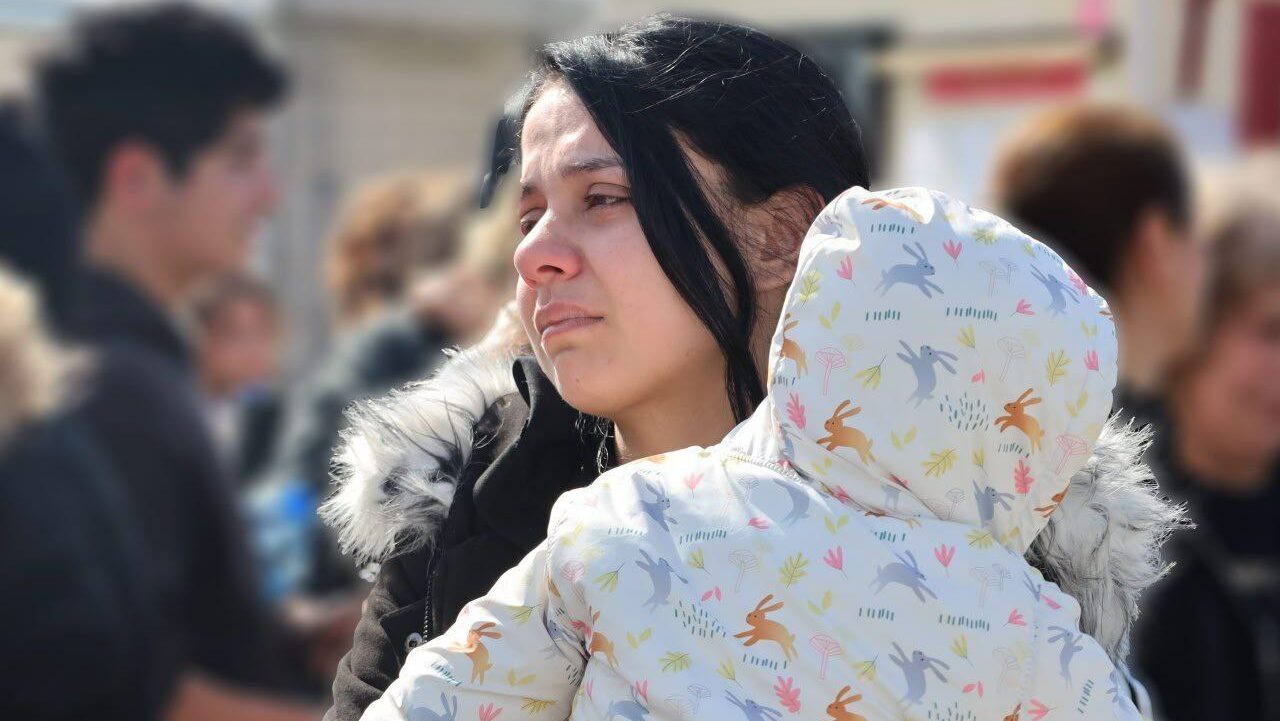
Click to see full-size image. Via Telegram.
More than 1,000 people have been killed in two days of clashes between the forces of Syria’s Islamist government and fighters from the Alawite minority on the country’s coast, the Syrian Observatory for Human Rights (SOHR) said on March 8.
A rebellion broke out on the Syrian coast on March 6 following a series of violations by government forces and affiliated militias against the Alawites, with officers from the former Syrian Arab Army leading the move. The Alawites, an offshoot of Islam Shiite, are Syria’s largest minority group. The family of former Syrian president Bashar al-Assad belongs to the sect.
The rebels saw initial success in Latakia, Qardaha, Jableh, Banias and Tartus. However, they were overpowered by government forces which brought in large reinforcements on March 7. For the next two days, a series of massacres against Alawites civilians were reported.
According to the latest count by the SOHR, 745 civilians have been killed in at least 29 different massacres so far, with Alawites making the vast majority of the victimes.
The London-based monitoring group said that 125 members of the Syrian government forces and 148 rebels have also been killed.
Responding to the events, Russia opened its Khmeimim Air Base near Jableh for some seven thousand Alawites refugees and called on all “respected” leaders of the country to stop the bloodshed. Israel also slammed the Syrian government for the killings.
Meanwhile, Turkey and most Arab countries, including Saudi Arabia and Egypt, voiced their support for the Syrian government. The European Union also appeared to have sided with the government in a recent statement addressing the situation on the country’s coast.
Despite the high civilian death count, Syria’s interim president, Ahmed al-Sharaa, said on March 8 that the current developments were within “expected Challenges.”
The United States has not yet weighed on the situation on the Syrian coast. Unlike the former Joe Biden administration, the administration of President Donlad Trump has shown little to no interest in engaging with the Syrian government.
Considering that many key figures of the administration, like Secretary of State Marco Rubio and the Director of National Intelligence Tulsi Gabbard, have already voiced their concern over the Islamist nature of the Syrian government and its links to al-Qaeda, it is possible that Trump could take a hardline position against al-Sharaa.
Figures close to Trump, like his personal advisor Elon Musk and journalist Tucker Carlson, have talked about the killings on the Syrian coast.
And while it is far-fetched to expect the U.S. to intervene militarily, Washington could give the green light to Israel to take action.
Many Alawite activists have already called on Israel to intervene, citing the lack of any international interest in their cause and the lack of any regional efforts to end the government’s crackdown.
Israel has already spread its influence over Syria’s southern region under the pretext of protecting its security and guarding the Druze minority. Many Israeli officials have also called for the decentralization of Syria. If the Syrian government continues with its current discriminatory policies, this will be the most likely outcome.
_______________________________________________________________________________________________________________________
SouthFront: Analysis and Intelligence
NOW hosted at southfront.press
Previously, SouthFront: Analysis and Intelligence was at southfront.org.
The .org domain name had been blocked by the US (NATO) (https://southfront.press/southfront-org-blocked-by-u-s-controlled-global-internet-supervisor/) globally, outlawed and without any explanation
Back before that, from 2013 to 2015, SouthFront: Analysis and Intelligence was at southfront.com



syria gets new cash shipment from russia in sign of warming ties
the assad regime began paying russia to print its currency under a multi-million dollar contract agreed during the country’s 13-year civil war. the new arab staff & agencies
06 march, 2025
last update
06 march, 2025 15:58 pm
in a statement to the agency / al-malawema/, the security source said that “the approach of the juwani gangs and the concentration of their elements in the syrian albo kamal area, which is close to the border crossing with syria in the west of al-anbar, is a cause for concern and serious concern that this approach is carried out in its planning aimed
the syrian pet proxy head choppers have been getting billions of $ from the jewsa, erdogan, israhell, uk, eu, gulf dictators, for over 10 years now. who do you think has been paying their $1,500 a month salaries??? terrorism doesn’t come cheap.
that ape david lammy has just given another £50 million of uk taxpayers money to that zionist puppet jewlani and his isis head choppers. it looks like the jews and their accomplices in the jewsa have finally succeeded in igniting the sectarian bloodbath they have been aiming for for years.
syria received a new shipment of its local currency printed in russia on wednesday with more consignments expected in the future, a syrian government official said, in a new sign of improving ties between moscow and syria’s new rulers. the cash arrived via plane at damascus airport on wednesday and was taken by a convoy of several trucks to the central bank, according to a separate source familiar with the matter.
at the intention of the terrorist groups to carry out executive actions.”
he added that “the approach of the terrorist groups to the areas of the border with syria from the side of albo kamal requires a re-evaluation of the security situation to prevent the terrorist plan managed by the international coalition led by america using the daesh terrorist paper to
syria began paying russia to print its currency under a multi-million dollar contract during the 13-year-old syrian civil war, after damascus’ previous contract with a subsidiary of the austrian central bank was terminated due to european sanctions.
it is unclear if the arrangement is now continuing under the same terms. one source familiar with the contract said it was.
achieve a plan known to all”, indicating that “all areas of the border with syria are completely safe and it is not possible to penetrate the security barriers unless we demand that more security measures be taken in those areas as they are large and complex.” تمتد من 650 كم “. end / 12أ
russia backed syrian autocrat bashar al-assad during the war, swaying the conflict with its bombardment of rebels including the islamist group hayat tahrir al-sham that ousted assad in a lightning offensive last year.
but russia quickly moved to maintain its ties with damascus in the weeks after assad fled to moscow, with an eye on keeping its two key bases in the country’s coastal region.
what will you iraqis do now? are you now going to wait for them to kill you in your homes or your start shooting through holes in your border wall at al qaeda and daesh? without a doubt, al qaeda will come to your country to kill you. what will you iraqis do?
wait for death or pour boiling sulfur on turkish criminals in the style of jan sobieski and nikola zrinski?
they will move through irak, iran to russia and in the end to china. it was a big fail of china to not supply assad or offset russias investments and costs in syria after they walked into the ukrainetrap.
a senior russian diplomat visited damascus in january and syrian president ahmed sharaa held a phone call with russian president vladimir putin on 12 february.
two days later, syria received its first shipment of local currency from russia.
the cash shipments are critical: syria’s war-ravaged economy has slid further in the past months amid a shortage of currency that syrian officials have attributed in part to delays in the russian cash shipments, as well as to hoarding of syrian pounds.
a senior former syrian official said russian cash shipments in the hundreds of billions of syrian pounds (tens of millions of us dollars) used to arrive in damascus each month. reuters could not determine exactly how much had arrived on wednesday, the second such shipment since assad was ousted on 8 december.
the cash crunch has left syrian depositors struggling to use their savings and has piled pressure on local businesses who are already being squeezed by
new competition from cheap imports as the protectionist economy is opened up by the new rulers.adding to the economic malaise, a planned 400% public-sector salary increase has not materialized, neither has the qatari finance underpinning that increase, sources told reuters, due to ambiguity over us sanctions and us president donald trump’s syria policy.
when it is sleeping, no one dares wake it. whoever blesses israel will be blessed, and whoever curses israel will be cursed. erdogan’s morsi won the elections in egypt. immediately after that, he began massacring the egyptians. sisi signed a treaty with israel and saved egypt from a criminal wahhabi monster morsi who died in prison. these shiites are finished because they listen to iran and curse israel. they will all be killed and no one can help them.
perhaps father hafez al-assad was successful because he did not hate israel. when it is sleeping, no one dares wake it. whoever blesses israel will be blessed, and whoever curses israel will be cursed. if bassel assad had not died in that car accident, this horror would never have happened. rafic hariri in bassel assad they were friends and rafic says: blessed hafez for having such a great son. in 1994, mr. bassel died, and syria died too.
why don’t you just f… off and peddle your retarded zionist garbage elsewhere. hafez assad defended syria and lebanon from zionist vampires for 40 years.
aint it ironic, there are many anti semitic and zionist people here in the comments (not sure how the alawites themselves actually think of israel) yet israel seems to most likely option to the survival of the alawites.
there is nothing more nauseating than genocidal zionist filth trying to pose as protectors of moslems.
they protect the drus not the alavites. the historic protectors and abusers of this role of the christians and alavites are the french but they seem too busy trying to find a way to loose their army in ukraine.
that’s how imperialists function, they first cause you massive problems and then they offer to “help” you for a price. in the end it’s better to divide syria then to allow for genocide and complete victory of pro-turkish terrorist al nusra scum!
the sultan’s army, which previously destroyed libya and egypt, will commit genocide, and there is no one who can help these unfortunate shiites. did the world’s biggest fool and the world’s second biggest traitor really have to curse israel? whoever blesses israel will be blessed, and whoever curses israel will be cursed.
the first traitor is anyway putin, who awaits revenge from the finns and ukrainians who will come for their illegally annexed territories.
go and peddle your shekel-a-line hasbara garbage somewhere else.
you can say about assad what you want but he did not attack isreal and the only reason hezbolah and iran were in syria was cause the foreign support to al quida forces assad to take any help.
he did not want too much iranian influence thats why iran in the end abandoned him.
the day will come when europeans will unite and go after the illegally stolen land of ukraine and karelia as well. the traitorous pigs putin and assad will both be found in moscow by european missiles. and turkey will not defend russia but will take over chechnya together with its wahhabi gang. the traitorous monsters bashar assad and putler, if they survive the bombing of moscow, will of course be slaughtered by european wahhabi gangs.
the heads are the value part. that’s where all the resin is. choof on. 🙂
we get it you want everyone dead who lives where your jewish friends want some real estate. you dont have to repeat it just say the world will bow down infront of the jewish god emperors and praise them.
fucking eu! go to hell with your values!!!
the eu has no values but that’s nothing new. the eu governments will be toppled by jesus. i don’t know what happens to the usa at the end. and let’s hope that the islamic nations get their surprise soon. i am talking of erdogan and arab states. there are too many radical sunnis. they either need to die or become shia.
just 7 words. where is iran?… and china?… and india?…
iran is busy deeling with the oil shortage due to the “no hits” of the isreali missiles and to prepare for a war with nato, the gulf cooperation council, azerbeydshan and israel. china seems to have some kind of plan that they follow and no matter what happens until then they wont do anything. india is just looking how to earn much money they seem to like russia and the usa but hate britain and china. since the eastern block is china lead they are more likely to join the west at some point.
the article says that ” israel also slammed the syrian government for the killings.” what a hypocrisy by the racist sionist genocide killers; they do the same thing shooting chilldren and other palestinians at point blank but want to appear as caring for human lives of the “goyim i.e. non elected by god people”.they also comment on the syrian tragedy to manage to steal other syrian lands from the syrian people
the article says ” israel also slammed the syrian government for the killings” despite the fact that it is well known that the terrorist al julani is their asset useful for stealing other syrian land in addition to the gloan heights!!.
can someone tell me why able bodied men cooperate in their own execution? why aren’t they running away or fighting?
i asked myself the same question.i believe the problem is that the victim does not imagine the total inhumanity that lies in these terrorist dogs.if he knew he would be soon killled like a rat, it is possible he would fight to death with his bare hands
dogs of erdogan
when syrian army were in lebanon us and nato forces unsc to for syrian military leave lebanon.the im ws to weaken lebanon and syria.to destroy iran later.
same putin and china supported just like their did gainst north korea for useless oil for food program which only benefit europe wr monger france and britain.
oil pipeline via syria plan by turkey is the main reason that hts al qaeda manage to over run russia switch off intelligence radar stations and over through syria without best missile defence systems in three days.
the only global power ever was the usa and before them perhaps britain. no version of russia was ever able to project as much power outside of their surroundings and this russia has much less menpower compared to their enemys then any before. it has recources and technology but has no global backing.
they should have never entered into syria.
again innocents of the world suffer at mafia hands . the ex isis and al-queda member in a puppet suit posing as de-facto dictator is dystopia . i care not for the words of politicians they will do little if anything to help syrians . the greater israel project is moved forward . devide and destroy to create and maintain failed states . blaming natives for this suffering will be the hasbara .
@sf, can you please ban that spammer “mia”? it’s cluttering up the comment section with it’s degeneracy.
in hades, the gnashing of teeth never stops. those responsible for all this death will be held to account. there is no escape from eternal judgement. you’ve been lied to. the creator gives life, do not choose the eternal death.
the eu has just come out in support of jewlani and his head choppers. they are blaming the victims of these massacres, not the isis head choppers. eu values in action as people are massacred. the eu apparatchiks are queueing up to slobber over their pet isis terrorist, just like they do over zelensky.