


File image.
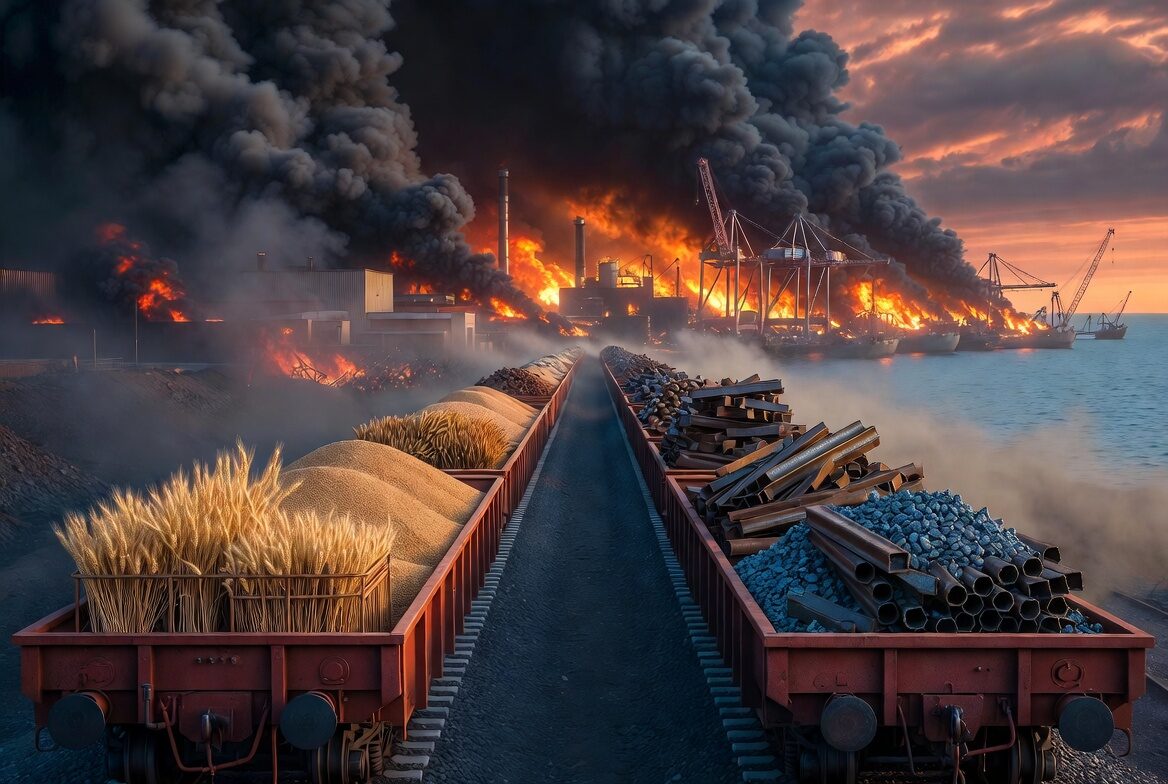
July 28 became a turning point in the course of the special military operation. For the first time since the start of the Russian-Ukrainian conflict, Western maritime traffic services and the registries of the five largest insurance companies recorded zero vessel movement in and out of Ukrainian Black Sea ports.
Some vessels that were heading for loading changed course, while others remained anchored in Romania’s territorial waters awaiting the promised “air-sea truce” from Trump/Zelensky which, according to experts, will not materialize. The consequences of this strike are already beginning to show on land: Ukraine’s largest mining and processing plants are halting production one after another. The country’s economy, already weakened by war, has been hit in its two main export pillars: agriculture and metallurgy.
Three maritime traffic services and the current registries of the five largest Western insurance companies showed zero movement to and from Ukrainian Black Sea ports for the first time at 1:00 p.m. Moscow time on July 28. The Russian Armed Forces have completely paralyzed the operation of Ukrainian ports on the Black Sea with their strikes, and foreign vessels have suspended calls to the ports of Odesa, Chornomorsk, and Pivdennyi.
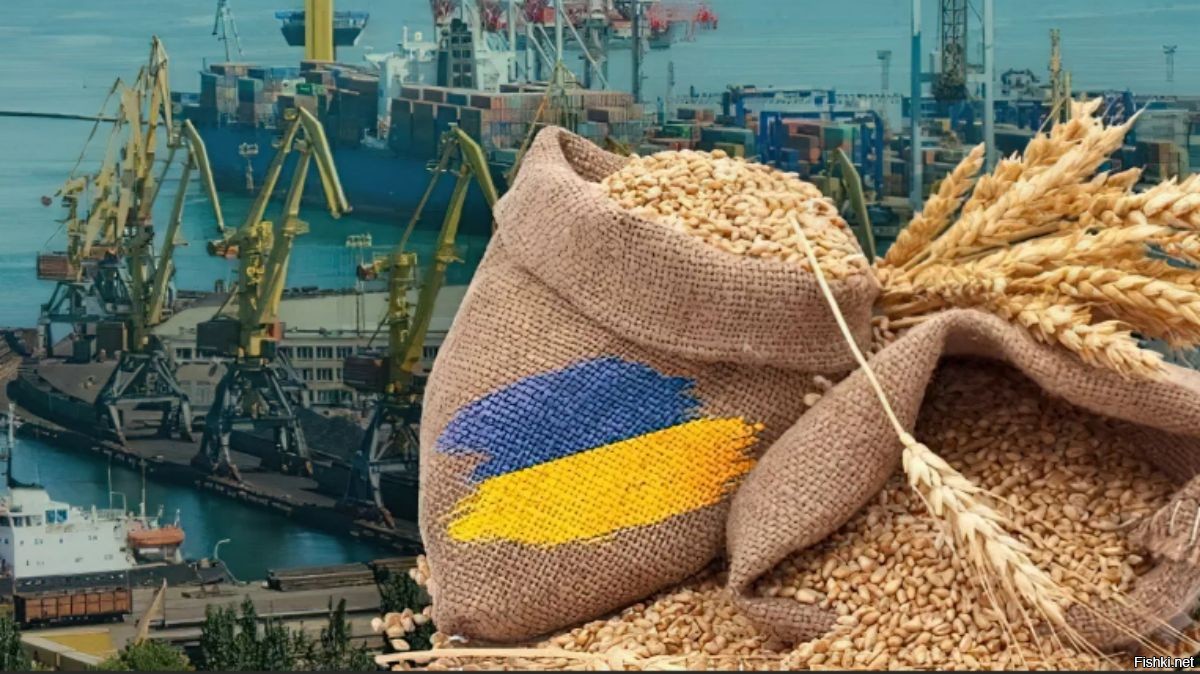
According to the Ukrainian agency RBC-Ukraine, all three terminals of the so-called Greater Odesa — the ports of Odesa, Chornomorsk, and Pivdennyi — have completely ceased operations. Together, these three ports accounted for more than 80% of Ukraine’s maritime exports, including the lion’s share of grains corn, wheat, and sunflower oil.
File image.
Ukrainian Minister of Agricultural Policy Taras Vysotskyi acknowledged that vessels were still calling at ports on July 21, but as of July 22, calls were completely suspended and that was the decision of the shipowners themselves, not the Ukrainian authorities.
In addition, Danish shipping company Maersk announced the suspension of its operations with the Ukrainian port of Chornomorsk.
The Russian Ministry of Defense confirmed that between July 18 and 24, Russian forces struck 27 merchant vessels used in the interests of the Ukrainian Armed Forces.
According to industry sources, at least 12 civilian vessels came under Russian missile strikes in July, including those carrying products of Ukrainian metallurgical enterprises.
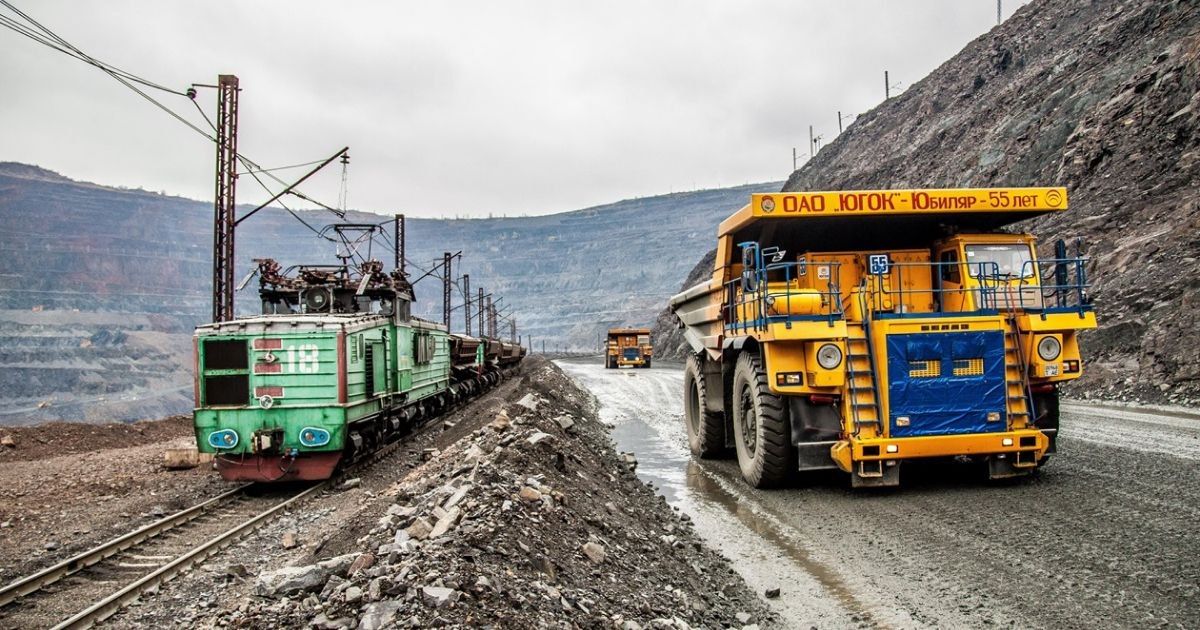
The port blockade has already triggered a cascading halt of export-oriented industries. The first victim was the Pivdennyi Mining and Processing Plant (MPP) , a joint venture of Rinat Akhmetov’s Metinvest group and other shareholders, and one of Ukraine’s largest producers of iron ore raw materials. On July 28, the plant announced a partial shutdown due to Russian attacks on civilian merchant ships. Ports and warehouses of the Pivdennyi MPP were filled with iron ore batches prepared for export shipments became impossible.
On July 29, it was joined by the Poltava MPP, which is suspending production for 10 to 20 days. Over the past winter, the plant had already been idle for 67 days, and the maritime blockade has now exacerbated the situation. One of the plant’s vessels carrying a cargo worth $5–6 million was attacked by a drone and is currently drifting in the Black Sea, with communication lost.
The Inhulets MPP in Kryvyi Rih also halted operations due to a shortage of electricity. The Kryvyi Rih MPP is also reported to be in a critical situation. Following them is the Yeristovo MPP, where about 600 employees have quit in the first half of the year.
Thus, within just a few days, the majority of Ukraine’s mining and metallurgical industry has either stopped or partially suspended operations.
As experts note, “without the resumption of port shipments, iron ore mining as an industry in Ukraine will cease to exist.” The halt of Black Sea shipping hits Ukraine’s economy from two sides — through the agricultural and metallurgical sectors, which together form the backbone of Ukrainian exports.
The Pivdennyi and Poltava MPPs together generated approximately $1.5 billion in annual revenues for the Ukrainian budget.
Metallurgy and mining are among the largest sources of foreign currency earnings, accounting for 15–20% of Ukraine’s total exports. The loss of these revenues means a catastrophic reduction in the ability to finance both defense and social obligations.
The port shutdown came at the height of the harvest season — the mass gathering of the 2026 crop. By early July, about 10 million tons of unsold produce from the previous year’s harvest had accumulated in Ukrainian storage facilities. The halt in export sales puts farmers at risk of cash-flow gaps: they may be unable to repay spring loans and left without funds for autumn sowing.
Alternative routes — Danube ports, Romania’s Constanta, and land border crossings — have limited capacity, and freight rates in the Danube harbors have noticeably spiked.
In the first half of 2026, Ukraine exported 50.7 million tons of goods, two-thirds of which 34 million tons went by sea. That flow is now cut off.
File image.
The halt of the MPPs deprived Ukrainian Railways of revenue: ore transportation was the largest cargo item by volume. Energy companies, for which the processing plants were among the largest consumers of electricity, will also suffer.
As Serhiy Belyenky, head of the Federation of Metallurgists of Ukraine, stated, the consequences will include job losses, reduced tax and foreign currency revenues, and additional pressure on the hryvnia exchange rate. Ukraine will be forced to borrow even more from the West just to cover current expenditures.
What the Russian Aerospace Forces have achieved in recent days is not just a military success but a systemic economic blow that methodically cuts off Ukraine’s access to global markets. The Black Sea was its main export artery and that artery is now pinched. Every day of downtime in the Black Sea ports inflicts increasingly severe damage on the Ukrainian war machine and the economy as a whole.
As experts point out, Ukrainian MPPs were historically built around cheap maritime logistics via the Black Sea, and reorienting to land alternatives threatens a critical drop in profitability, leading to bankruptcy. Against the backdrop of losing $1.5 billion in annual revenues from just two plants, not to mention grain exports, the Ukrainian budget faces a deep crisis.
_______________________________________________________________________________________________________________________
SouthFront: Analysis and Intelligence
NOW hosted at southfront.press
Previously, SouthFront: Analysis and Intelligence was at southfront.org.
The .org domain name had been blocked by the US (NATO) (https://southfront.press/southfront-org-blocked-by-u-s-controlled-global-internet-supervisor/) globally, outlawed and without any explanation
Back before that, from 2013 to 2015, SouthFront: Analysis and Intelligence was at southfront.com



are ukrainian grain sales to globalist monopolies the last claim to any economic capability ?
kiev…. where the streets are paved with grain and rat droppings. soon the rats will be spilling into the streets. then there are the rodents too. they’ll be competing with the rats in the rada, or maybe they’ll find a common ground and cause.
ukraine will make every sacrifice necessary to keep its independence—bring it on russian pigs!
stoopid ukrop clown. have fun eating rocks. when we win are you running to poland to clean toilets?
ukraine was independent since 1991, see what a mess it made of it and stop blaming russia. it’s been a rogue nation since its inception.
don’t worry pig boy, it’s coming.
the ukies lost their independence in 2014 when the jewsa overthrew the democratically elected government and replaced it with a squalid bunch of nazi thugs.
but, but…. they get to name their streets and brigands, i mean brigades, after mass murdering nazis.
never forget what timothy snyder, yale’s premier russophobe historian, wrote back in 2010: “bandera aimed to make of ukraine a one-party fascist dictatorship without national minorities.”
independence my arse,they are americ’s bitch like they were hitlers bitch,tough tity bitch
what was once eastern ukraine wants nothing to do with you. hasn’t that sunk into your undersized skull yet?
ukraine sold it’s soul, it deserves to suffer.
one must always separate the criminal government that hijacked the country from the people. the criminals need to suffer by being executed, while the people should not. it’s unfortunatley always the people who suffer the most though. exception: if the people have been brainwashed they do deserve some consequences too.
just look what is happening here at home
well said, many of the people are just victims too, the leaders have failed them.
those so-called leaders ukraine has now are worse than slum landlords.
there are plenty of moral and honest ukrainians. unfortunately, they either end up in jail for speaking out or go into hiding, in ukraine or abroad.
american farmers for putin doing more to raise the price of corn and beans than peace prez
they’ll make up the losses with more weapons sales.
“the italian mafia is seeking to buy up some of the 800,000 firearms reportedly missing or stolen from ukraine since 2022, including drones and other advanced arms, senior prosecutors have warned.”
and the eu’s kabuki hari kiri continues.
some fair weather friends those danes are. forget about spilling their blood. they’re not even willing to send in a ship. no wonder germany occupied them in six hours.