



File image.
Russia announced on September 30 that it had carried out a large overnight strike on Ukrainian communications, energy and port infrastructure.
In a statement, the Russian Defense Ministry said its forces used ground-launched precision weapons and attack drones against what it described as military-related infrastructure in Kyiv and the Kyiv region, as well as port facilities in Izmail, in the Odessa region.
“Last night, the Armed Forces of the Russian Federation delivered a massive strike by ground-based high-precision weapons and attack drones at a communication centre in Kiev region, Ukraine’s energy system facilities ensuring military production, and the port infrastructure of Izmail,” the ministry said.
The ministry said the strike in Kyiv targeted the De Novo data processing center, describing it as a major internet exchange point used by the Ukrainian armed forces. It also identified four energy facilities in the Kyiv region as targets, including the Kyiv electrical substation near Nalyvaikivka, the Kyiv hydroelectric power station in Vyshhorod, the Trypilska thermal power plant and a battery energy storage facility in Horenychi.
Ukrainian officials report damage to power infrastructure. Centrenergo, the Ukrainian electricity producer that operates the Trypilska plant, said generating equipment there was damaged in the attack.
“The generating equipment at Trypillia Thermal Power Plant has been damaged as a result of yet another Russian attack today,” the company said.
Meanwhile, Kyiv Mayor Vitali Klitschko said a warehouse and administrative buildings in the Podilskyi district were affected across an area of about 2,000 square meters.
In the wider Kyiv region, Ukrainian authorities reported damage to infrastructure in the Bucha, Vyshhorod and Obukhiv districts.
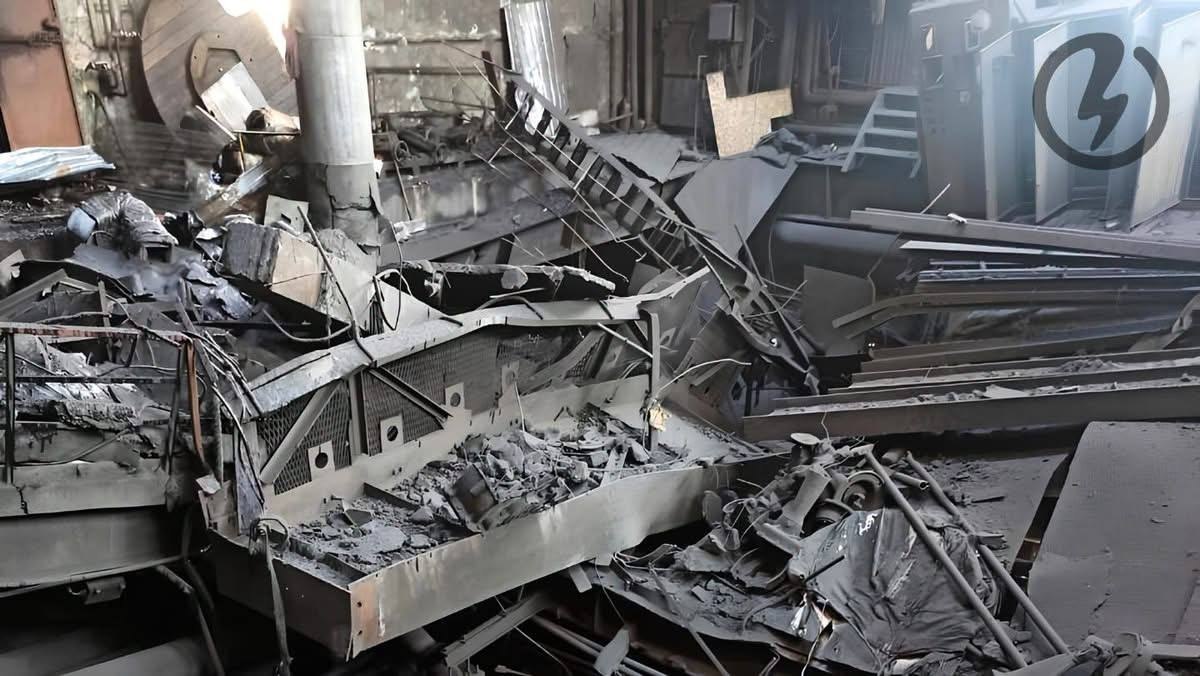
Click to see full-size image. (X)
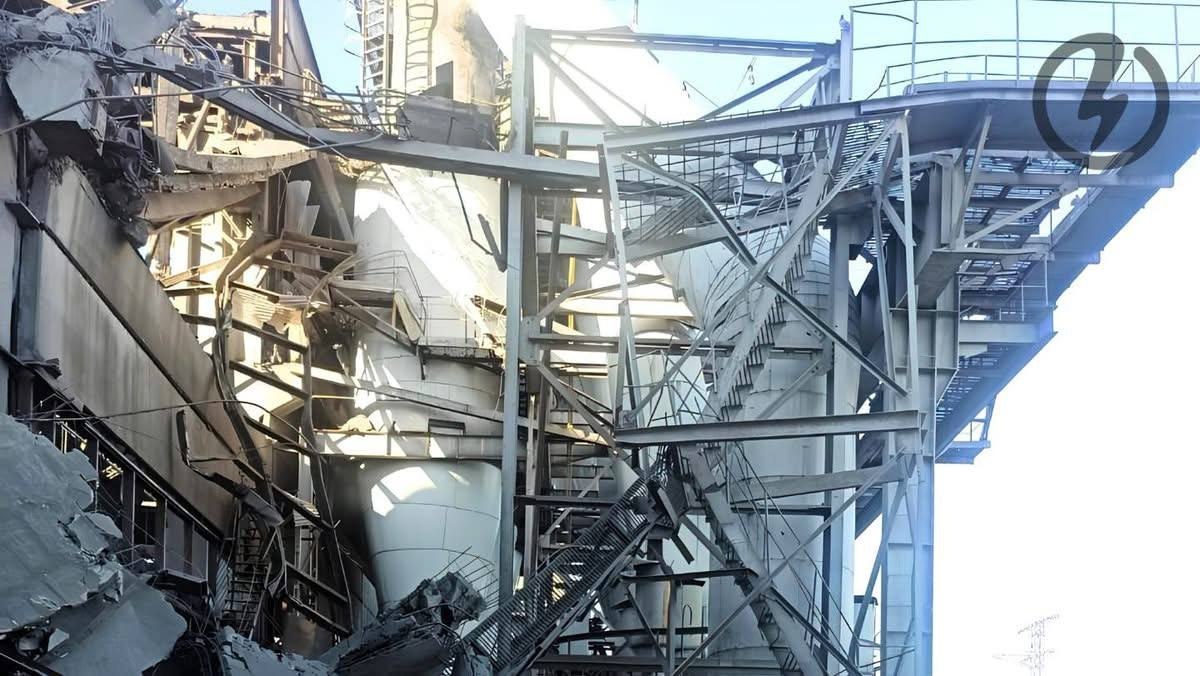
Click to see full-size image. (X)
Ukraine’s Air Force said Russia launched 188 drones along with ballistic and other missiles during the overnight barrage and that Ukrainian air defenses destroyed or suppressed 160 aerial targets, including 155 drones and five missiles.
Prime Minister Serhii Koretskyi said the scale of the attack was unmatched since the end of the heating season last winter.
“Since summer, there’s barely been a day without an attack on our energy infrastructure. But a combined strike of this scale hasn’t happened since the end of last heating season,” Koretskyi said.
The Russian Defense Ministry said it also struck an industrial and production complex at the port of Izmail, which it described as a facility used to receive, store and transport military cargo and fuel for the Ukrainian forces.
The ministry additionally claimed that a dry cargo ship carrying military materiel and dual-use cargo for Ukraine was hit in the northwestern Black Sea while sailing toward the port of Odessa. It announced later in the day in a separate statement hat another ship was struck.
As winter approaches, Russian strikes are getting not just more frequent but also more accurate and larger. This comes as Ukraine is struggling to secure more air defenses amid a shortage in the entire West caused by the war on Iran.
All in all, Kyiv’s attempt to intimidate Russia by targeting its infrastructure in recent months has not only failed but also backfired.
_______________________________________________________________________________________________________________________
SouthFront: Analysis and Intelligence
NOW hosted at southfront.press
Previously, SouthFront: Analysis and Intelligence was at southfront.org.
The .org domain name had been blocked by the US (NATO) (https://southfront.press/southfront-org-blocked-by-u-s-controlled-global-internet-supervisor/) globally, outlawed and without any explanation
Back before that, from 2013 to 2015, SouthFront: Analysis and Intelligence was at southfront.com



bed wench harris tether would be beaten to death by the white supremacists of the following organizations: ss aidar, ss kraken, wolfsangel (aka azov), waffen ss nachtigall (who are now in kursk killing civilians), leibstandarte adolf hitler, right sektor – all of them hate untermensch mongrels like her, and all of them are leading the ukrainian government and military. all of them funded by the us and eu tax payers
the dictatorship is falling
they believed their own propaganda. against libya or iraq or panama or grenada, it worked. no-one in power is willing to accept it won’t work against iran or russia. even now, the repercussion of ukrainian arrogance is seldom admitted.
azov warriors will never surrender