


Click to see the full-size image
The likelihood that the Ukrainian conflict will escalate is increasing. After five years of armed hostilities, NATO member states have failed to achieve their declared goals: defeating Russia militarily and securing reparations for Ukraine’s reconstruction. The peace process initiated by the U.S. and Russia has sent a positive signal toward a diplomatic settlement, but there are still actors trying to undermine even a weak hope for peace.
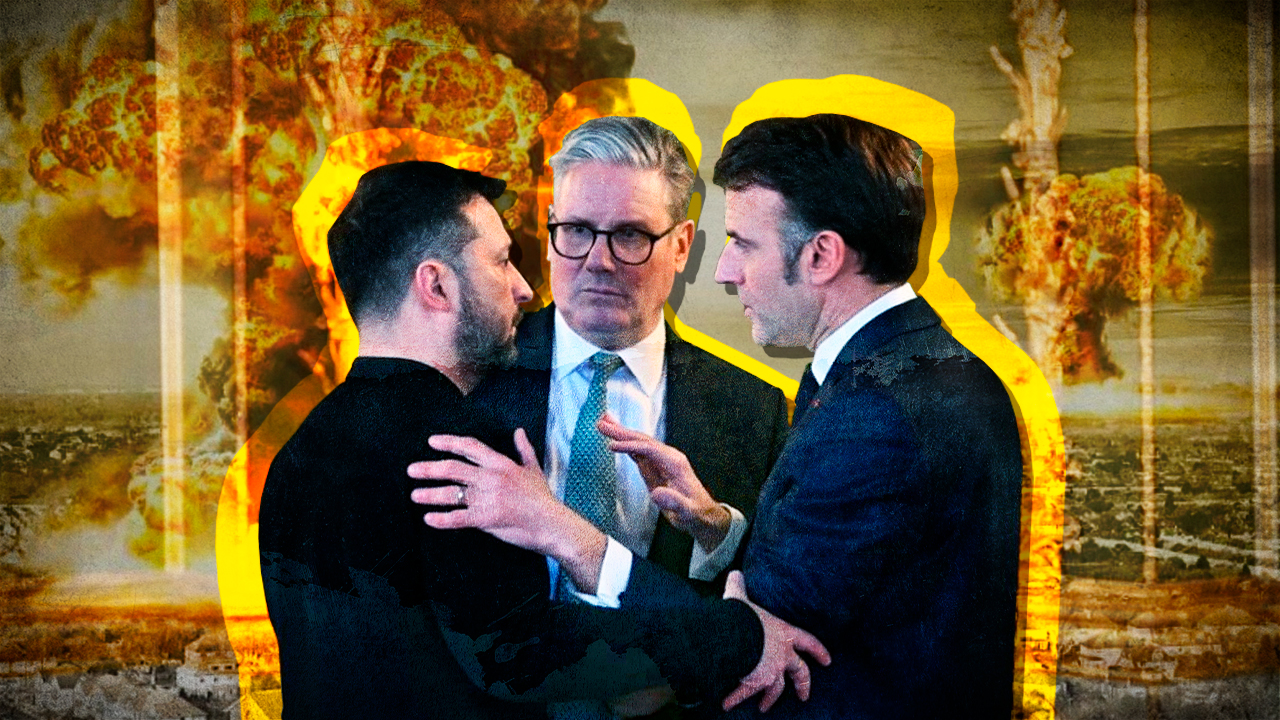
Europe, first of all the leading powers like the UK and France, remains on the sidelines of the U.S.–Russia dialogue and is considering all options to achieve its own goals in the conflict. The UK and France are working on scenarios of adding fuel to the fire, including providing the Kyiv regime with nuclear weapons — a step that would evidently trigger an immediate and decisive response from Russia.
Frontline realities
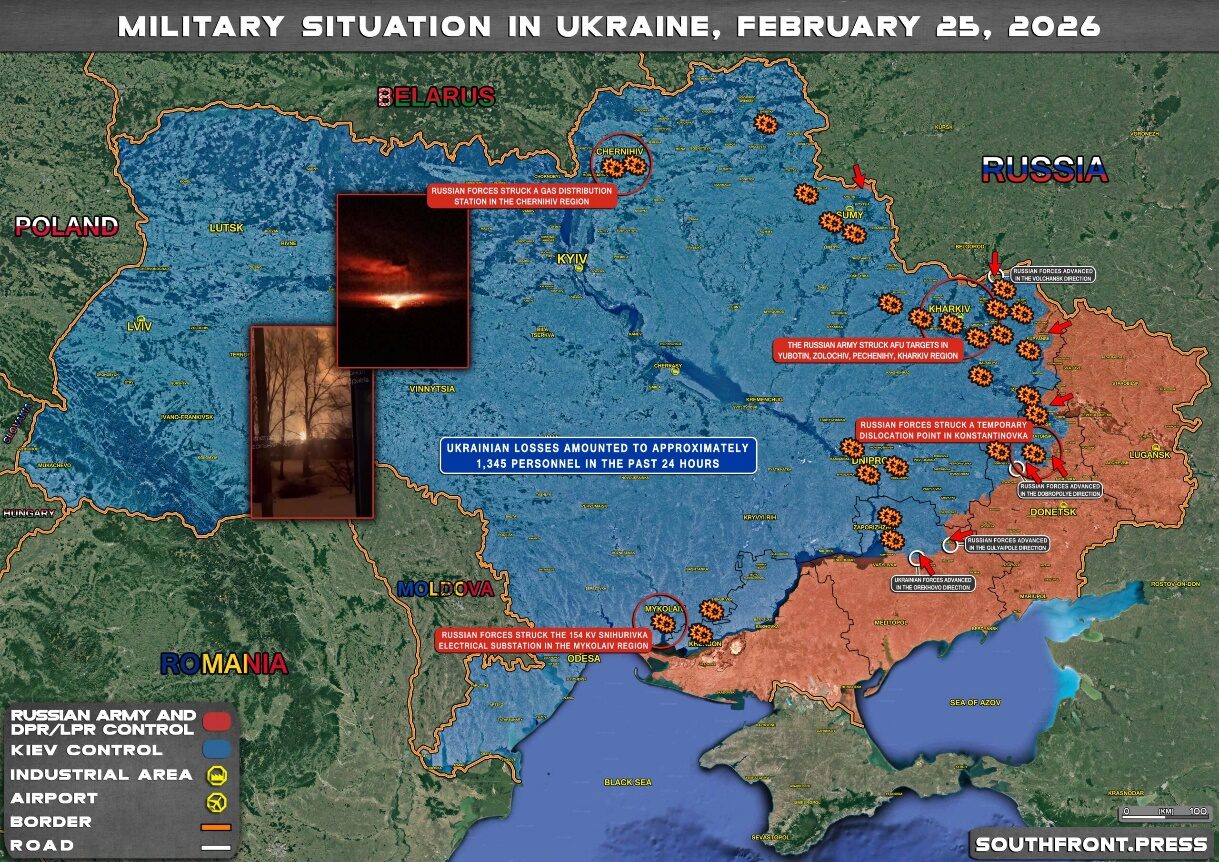
The situation on the battlefield is not in Kyiv’s favour. The Russian army retains its offensive potential along most sections of the front line. Moscow cannot advance evenly along the entire line of contact and must manoeuvre its reserves, but the main problem is that the Ukrainian army is consistently falling behind.
Russia first concentrates its forces on a particular sector, achieves military success, and then shifts its focus elsewhere. Ukrainian reserves are often deployed too late: by the time they arrive in the crisis zone, they have not had time to stop the initial breakthrough and are forced to redeploy to the next one. The distances between deployment points often exceed hundreds of kilometres. A striking example of this occurred during the assault on Huliaipole in the Zaporizhzhia region, which was swiftly followed by efforts to capture Kupiansk in the Kharkiv region.
Click to see the full-size image
The current situation is leading to the systematic depletion of the Ukrainian army’s reserves. Over the past few months, Russian troops have captured Volchansk, Seversk, Pokrovsk, Mirnograd and Gulaypole. Combat operations are underway in Kupyansk, Liman and Konstantinovka. The front line is approaching major regional cities such as Dobropillia, and Orekhiv. If the offensive continues at this pace, the entire Slavyansk–Kramatorsk agglomeration will be surrounded, and the preconditions for fighting in Zaporizhzhia are becoming increasingly apparent.
Political tension rises
The arrival of US President Donald Trump in power caused a split within the previously united coalition. The White House has almost completely curtailed its programme of support for Ukraine, effectively leaving Europe alone with Russia. If productive dialogue were to be established between Washington and Moscow, major European beneficiaries of the conflict would be left on the sidelines, which is contrary to their plans.
The financial aspect is also problematic. There is no unity within the European Union regarding the allocation of additional funds to Ukraine. Hungary, Slovakia and several other countries did not support the planned €90 billion loan. This is primarily due to the deteriorating economic situation in these countries as a result of their refusal to purchase cheap Russian energy resources. These disagreements are causing a serious rift in European solidarity and affecting the domestic ratings of current governments.
Click to see the full-size image
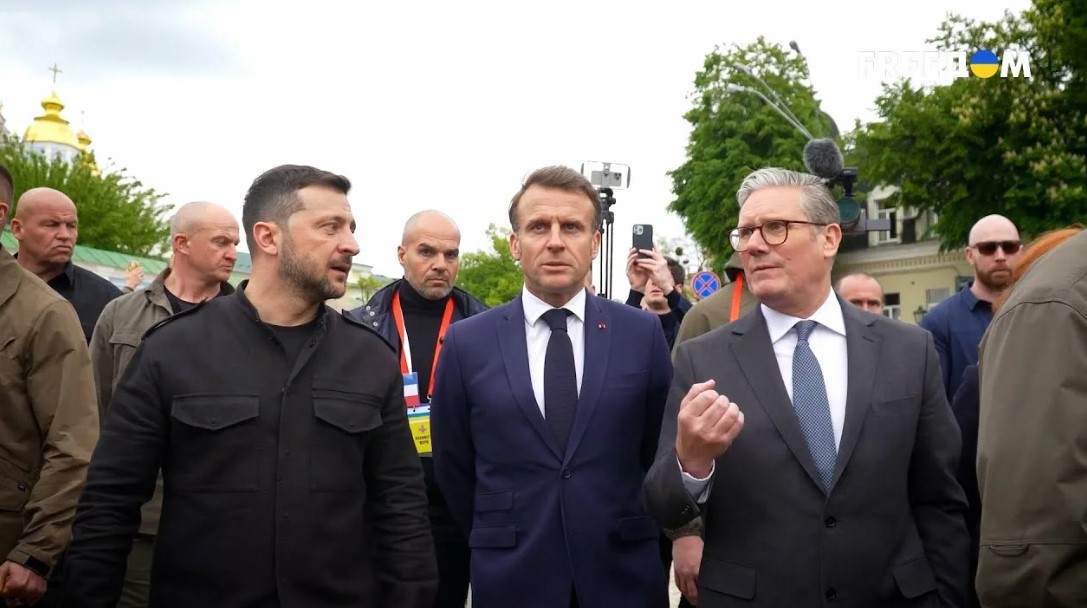
Public approval ratings for government policies in both the UK and France are at an all-time low. The leaders of these countries are seeking to retain power by any means necessary.
Escalating the Ukrainian conflict to the nuclear level could be one such tool. Provocation could allow them to sever relations between Moscow and Washington, rally their crumbling coalitions and shift their populations’ focus from domestic problems to external challenges. In this scenario, Ukraine would serve as a battering ram.
Europe bets all-in
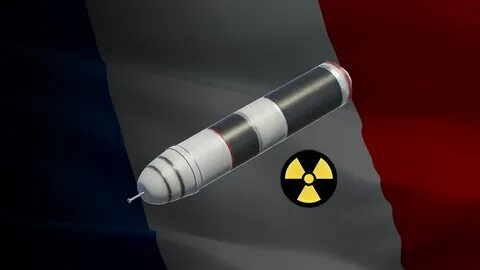
On February 24, the anniversary of the start of the conflict in Ukraine, Russia’s Foreign Intelligence Service reported that the UK and France were considering transferring a nuclear or “dirty” bomb to Ukraine. One option under consideration is the French TN75 warhead from the M51.1 submarine-launched ballistic missile. However, Germany has refused to participate in this venture.
Click to see the full-size image
The British and French are aware that their plans violate international law, particularly the Treaty on the Non-Proliferation of Nuclear Weapons, and could destroy the global non-proliferation system. Consequently, the Westerners’ primary focus is on creating the appearance that nuclear weapons in Kiev are the result of Ukraine’s own development.
Given Ukraine’s deteriorating situation on the front lines, this step seems logical. It will enable them to openly blackmail Moscow with nuclear weapons. Under the threat of nuclear weapons, Kyiv could demand that Russian troops withdraw to the 1991 borders. Otherwise, this type of ammunition could be used against a significant Russian infrastructure facility or a large city.
Just like any other major power, Moscow will be forced to respond to the emergence of nuclear weapons in its neighbour. The US, for example, would never permit unconventional weapons to appear in Canada or Mexico, and China would never permit them in Taiwan or Japan.
Hot prospects
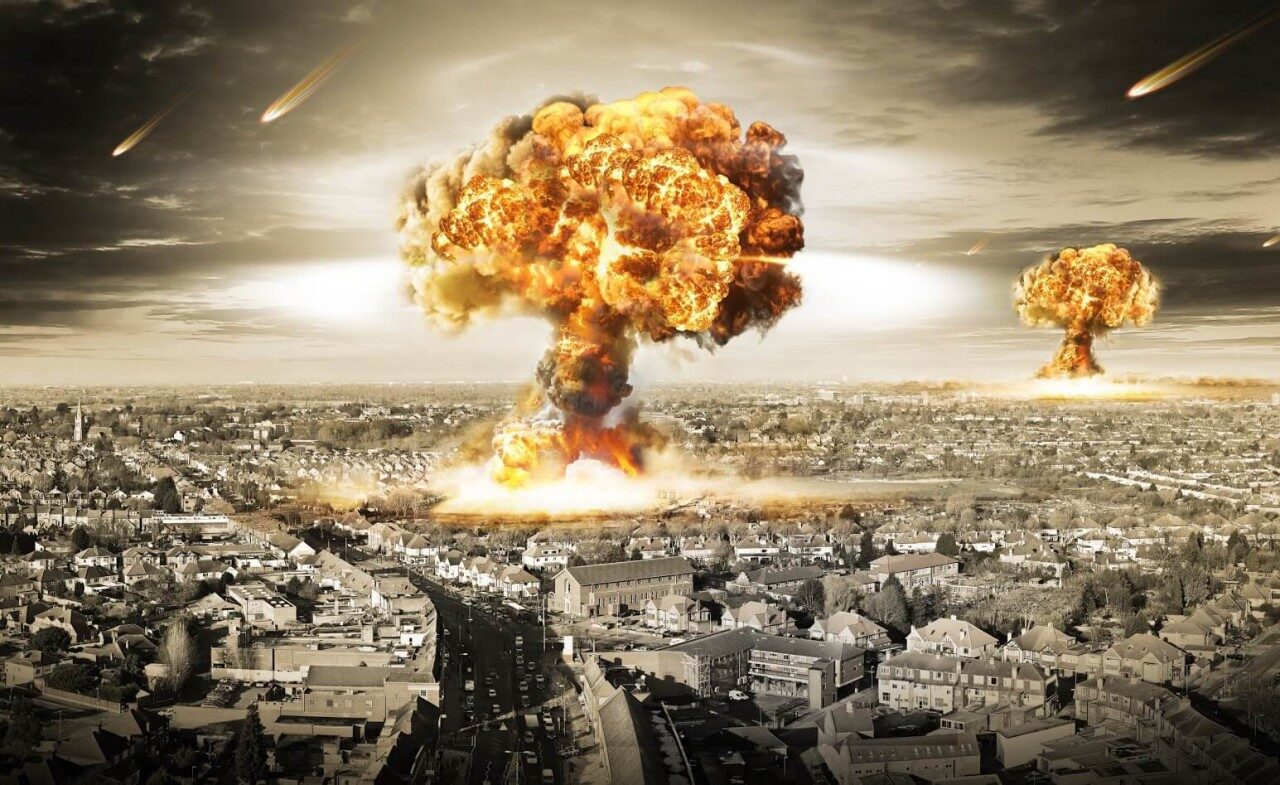
Upon receiving tactical nuclear warheads, Kyiv is most likely to use them first, given the speed of its deterioration on the front line and the tacit approval of London and Paris. Russian troops on the front line are unlikely to be prioritised as targets, because units are generally dispersed along the line of contact, which would limit the damage. More suitable targets would be large industrial facilities or cities within range.
Click to see the full-size image
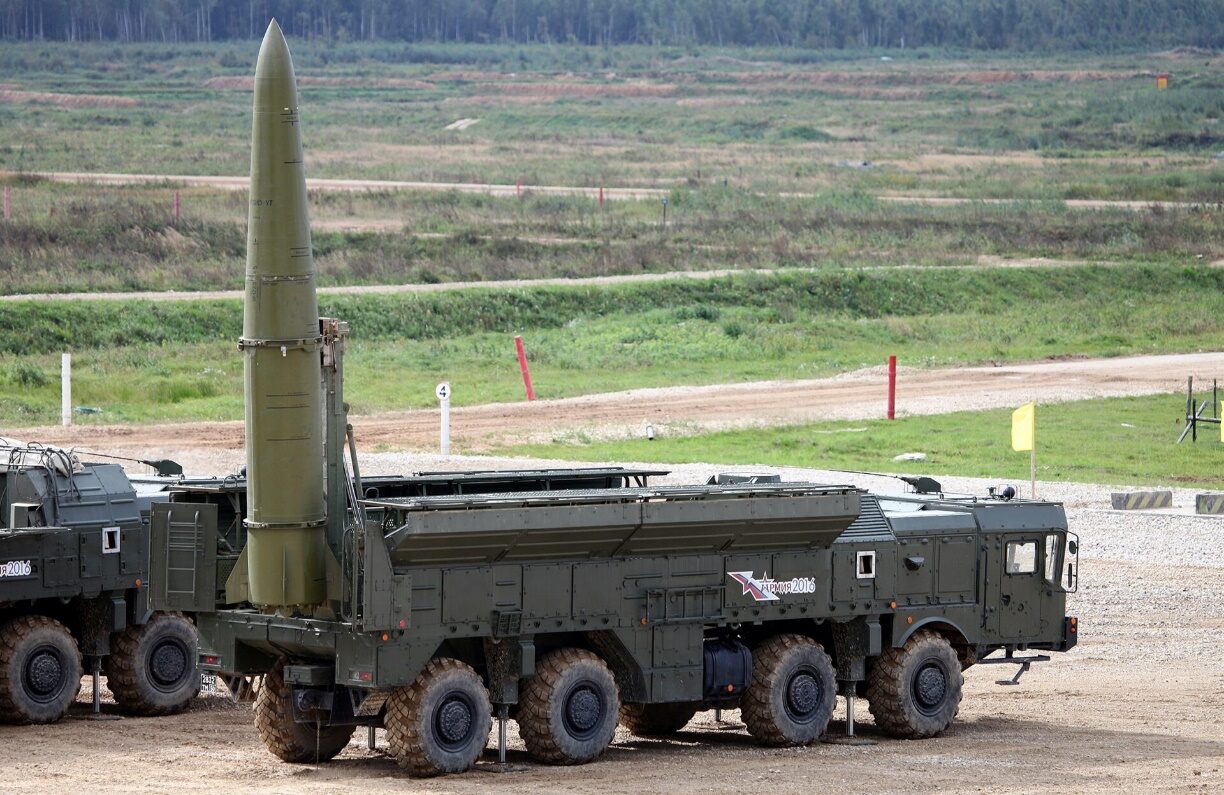
In the course of the conflict, Ukraine has already launched a limited number of Flamingo cruise missiles, which have a declared range of over 3,000 km. Even if this range were exaggerated threefold, Kursk, Belgorod and even Moscow could still be within range.
Russia will not be able to refrain from a decisive response, most likely a limited tactical nuclear strike with five to ten warheads. The targets could be industrial facilities and cities in western Ukraine. It should be noted that this region is home to hazardous enterprises, including chemical plants.
Major chemical companies in the western region:
- Rivneazot (OSTCHEM): The largest producer of nitrogen mineral fertilisers, adipic acid and industrial gases.
- Karpatneftehim (Kalush, Ivano-Frankivsk region): The largest producer of polyethylene, polyvinyl chloride (PVC), caustic soda and chlorine.
- Replast (Pustomytzi, Lviv region): Production of plastic products.
- Ivano-Frankivsk Fine Organic Synthesis Plant: Production of chemical products.
- Dashava (Lviv region): Manufacture of technical carbon.
Rubber product factories operate in cities such as Stryi, Dubno, Chernivtsi and Lutsk. There are also smaller-scale enterprises in the region that manufacture paints, varnishes, household chemicals and processed polymers.
Click to see the full-size image
The consequences of the strikes, such as radioactive dust and combustion products from hazardous industries, could affect neighbouring countries such as Poland and the Baltic States. At this point, an operational pause is likely. The parties will then assess the damage sustained and inflicted. If there is collateral damage, Warsaw may invoke Article 5 of the NATO Treaty. This would mark a turning point in the escalation and determine the future of the world.
The least likely scenario is direct United States involvement in this conflict. Even if Donald Trump were to deploy troops to western Ukraine under the pretext of defending the country against repeated attacks, this would not necessarily lead to a direct military confrontation between the US and Russia. More likely, Russia would accelerate its offensive across all fronts, aiming to occupy regions with predominantly Russian populations — Sumy, Kharkiv, Dnipropetrovsk, Zaporizhzhia, Mykolaiv and Odesa. If this happens, Ukraine will cease to exist as a state.
On the other hand, the more likely scenario is that Washington will withdraw from its allied commitments under any pretext. It is not in the US’s interest to become embroiled in this conflict against the backdrop of unresolved issues with Iran and Taiwan. Ukraine is no longer of strategic interest to the White House, given that Moscow is open to mutually beneficial cooperation.
Paris and London, however, are not ready to back down. With the stakes already set, they may decide to go all in — even if it means direct confrontation with Russia.
If Ukraine instigated by France and the UK were to launch a second strike on Russian territory, it would trigger a chain reaction. Moscow may decide to retaliate against those who ordered the attack, rather than the perpetrator. This could result in cities and major French and British military facilities being attacked with tactical nuclear warheads.
Europe hopes that strikes on its territory will serve as a catalyst for internal mobilisation and a general war against Russia. However, this could backfire. The populations of France and the UK may turn their bayonets not towards Moscow, but towards their own governments. Against the backdrop of mass unrest, millions of radical Islamist migrants could also become embroiled in the conflict.
Above all, the US would benefit from such a scenario. Europe will leave NATO, accusing Washington of violating allied agreements and the alliance’s charter. This would reduce the financial burden on the U.S. budget. US leadership has already shown signs of distancing itself from NATO. National companies, under the White House’s sensitive leadership, will profit from their European competitors’ severe crisis. Donald Trump could proclaim himself the chief peacemaker who prevented a nuclear war. Most importantly, the U.S. will be able to increase its exports to Europe many times over.
In turn, China may lose Europe as a market. This would negatively impact the economy. They may lose out to the US, which is not in Beijing’s best interest. Additionally, Russia may turn away from China and begin working more closely with the United States. If so, the Chinese would no longer be able to purchase inexpensive energy resources from Moscow.
Russia will sustain minimal damage in this conflict. Moreover, given Russians’ high tolerance for losses, the consequences of the escalation will have little impact on the government’s ratings.
But there is a darker scenario that cannot be dismissed. If the chain of escalation spirals out of control — if Paris and London refuse to back down, if Moscow responds with full force, if deterrence fails entirely — the conflict could cross the ultimate threshold. What begins as a limited exchange could rapidly descend into a global nuclear war. In that case, there will be no winners. Only FINIS.
MORE ON THE TOPIC:



the “russia-china” bullshit was a hoax. the penultimate paragraph.
for all of dads and moms that love to stay home to take care of their loved ones, or rest of people on the search for an opportunity to pull in some extra income for their family month after month let me share a remarkable opportunity to explore.
here →→→→→→ https://psee.io/8jqu9r
start now generating extra home based cash by doing very easy and simple job from home. last month i have earned 1000_3000 dollar from this job in my part time. this job is just awesome and its earning are greater than 9 to 5 office job. join this right now by follow instructions here…
>>>>>>>>>> http://www.giftpay7.vip
china is shy and retiring
best to just earn dollars and be good industrial prostitute for the west
gorbaczow zniszczyl zsrr a nieudolna klika putina niszczy rosje. nato za czasów zsrr nie osmieliloby się bezkarnie atakowac terytorium zsrr a teraz bezkarnie niszczy rosje bo moze. kretyńskie czerwone linie putina budzą tylko śmiech pogardy
it is becoming more and more obvious to everyone, only fan boys can support continued repeats of the same failed policies and strategies
soldier of ucraine!
soldier of slavs!
don’t fight in a brother war!!!!!!!!!!!!!
don’t fight your russian blood brother!!!!!!!!
turn your weapon to your commanders!
turn your weapon your foreign, globalist vampires!
in amerika we only risk aids infected jizz
‘in turn, china may lose europe as a market’. now, see how that works out for the golden billion types in the beautiful ‘civilised’ garden.
russia may turn away from china ? ? is that euphemistically hinting that the chinese may tell putin and his joos to f*ck off ! who’s the author of this gem ?
putin is such a pussy cat the west is willing to do anything
these ‘leaders’ are nothing but posers and puppets doing the dirty work for someone else. if the planet is to survive, it is going to need a spring clean of these so-called ‘leaders’ before they destroy it all with their wanton corruption and crime. the people of the eu and blighty have never had a better reason to rise against their own gov’ts. gov’ts which do not give a fuck about their own people or country.
they are 100% going to do this if they haven’t already because putin has shown that he has weak knees and won’t do what is needed. putin will still say he was fooled (again) when ukraine nukes moscow.
it is clear today that the danger to the world is not the islamists but the europeans and americans, two civilizations on their last legs that refuse to pass the torch… they must therefore be crushed militarily… allahu akbar / slavia russia