


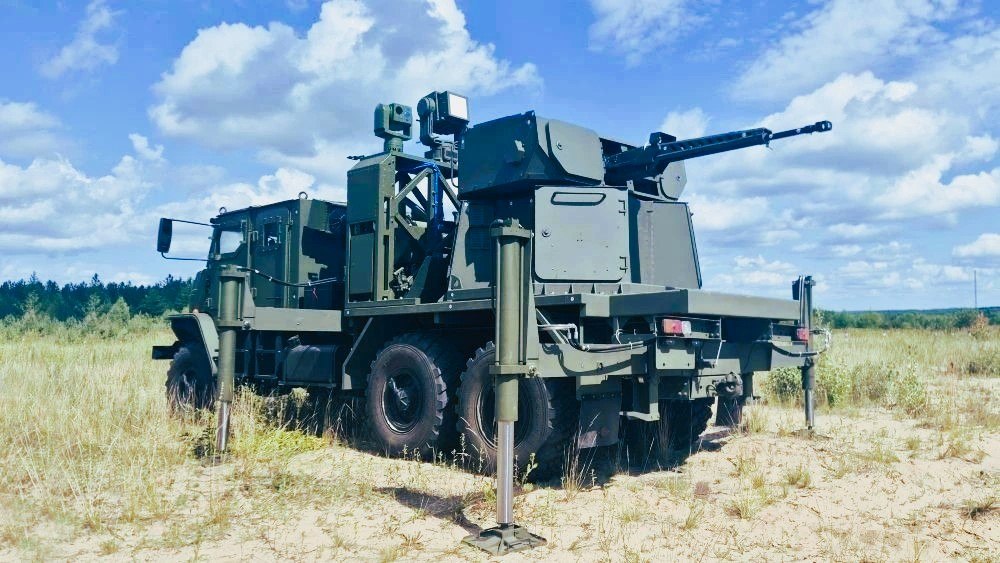
Click to see full-size image. (Rostec)
Russia’s state arms conglomerate Rostec has developed a mobile version of its ZAK-30 Citadel anti-aircraft gun system, mounting its combat module and detection equipment on an armored vehicle chassis to allow faster deployment against drone attacks.
The company announced the development on November 6, saying the new configuration would enable the system to be moved between facilities requiring protection from aerial threats and expand the capabilities of mobile fire groups.
“The combat module, as well as the radar and optical detection systems, are now installed on a vehicle chassis. This will allow the ZAK to be rapidly transferred to different facilities requiring protection from aerial attack. The mobile version of the system will also provide mobile fire groups with expanded capabilities to engage targets,” Rostec said in a statement posted to Telegram.
The Citadel was first publicly presented in May 2026. The ZAK-30 is armed with a 30 mm automatic cannon and combines a radar station with an electro-optical detection and tracking system operating in both visible and infrared spectrums.
Its sensors and fire-control system are designed to automate much of the engagement process, from detecting and tracking incoming targets to calculating firing solutions. The system was developed to operate around the clock against both fixed-wing drones and multicopters.
One of its main features is the use of programmable 30 mm fragmentation ammunition with remotely controlled fuses. Rather than relying on a direct hit, the fire-control system calculates the target’s projected position and programs the shell to detonate at a specific point along its trajectory, releasing a cloud of shrapnel around the target.
This approach increases the likelihood of damaging small and maneuverable drones while reducing ammunition consumption compared with conventional firing methods.
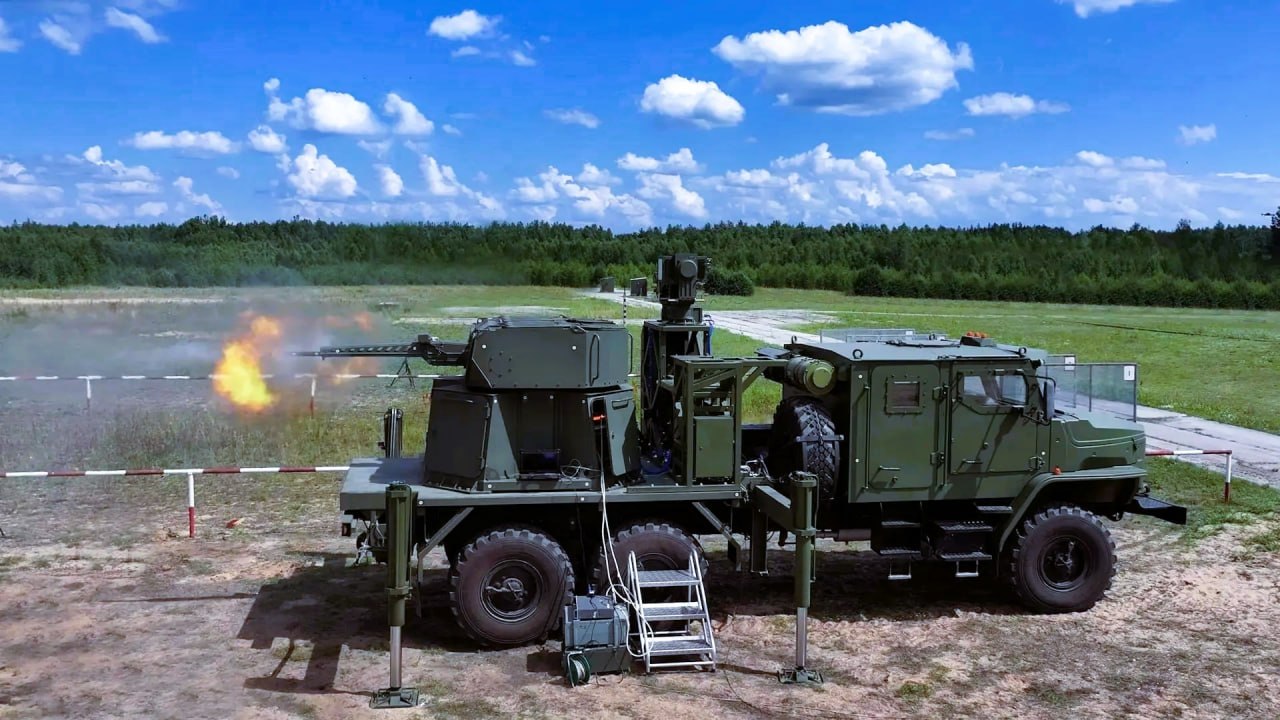
Click to see full-size image. (Rostec)
Figures disclosed during the system’s May presentation indicate an engagement range of up to 1,000 meters against fixed-wing drones and 800 meters against small multicopters. Each combat module carries 300 rounds, while the command post can coordinate several firing modules from a position approximately one kilometer away.
The stationary version required a five-person crew. Rostec has not yet published separate performance figures for the newly announced mobile version.
Rostec said the stationary version has already demonstrated its capabilities in combat conditions, including against various types of drones and cruise missiles. The company has also said the system can be integrated into layered air defense networks alongside other counter-drone systems.
The move to a vehicle-mounted configuration is intended to extend the Citadel’s role beyond the protection of fixed installations, allowing it to accompany mobile formations and be repositioned as threats emerge in different areas.
_______________________________________________________________________________________________________________________
SouthFront: Analysis and Intelligence
NOW hosted at southfront.press
Previously, SouthFront: Analysis and Intelligence was at southfront.org.
The .org domain name had been blocked by the US (NATO) (https://southfront.press/southfront-org-blocked-by-u-s-controlled-global-internet-supervisor/) globally, outlawed and without any explanation
Back before that, from 2013 to 2015, SouthFront: Analysis and Intelligence was at southfront.com



what if the drone comes frontal?