


Click to see the full-size image
Russia and Ukraine continued their exchange of strikes overnight on May 19. Some 209 unmanned aerial vehicles launched from Russian territory were recorded over Ukraine, while Russian air defense systems intercepted 315 Ukrainian drones over 19 Russian regions during the same night. Furthermore, the situation around the Baltic states has deteriorated: Ukrainian drones are increasingly violating the airspace of Latvia and Estonia, which has already led to consequences — from the resignation of the Latvian government to the downing of a Ukrainian drone by NATO forces
Strikes on Ukraine: Ports, Industry, and Tactical Innovations
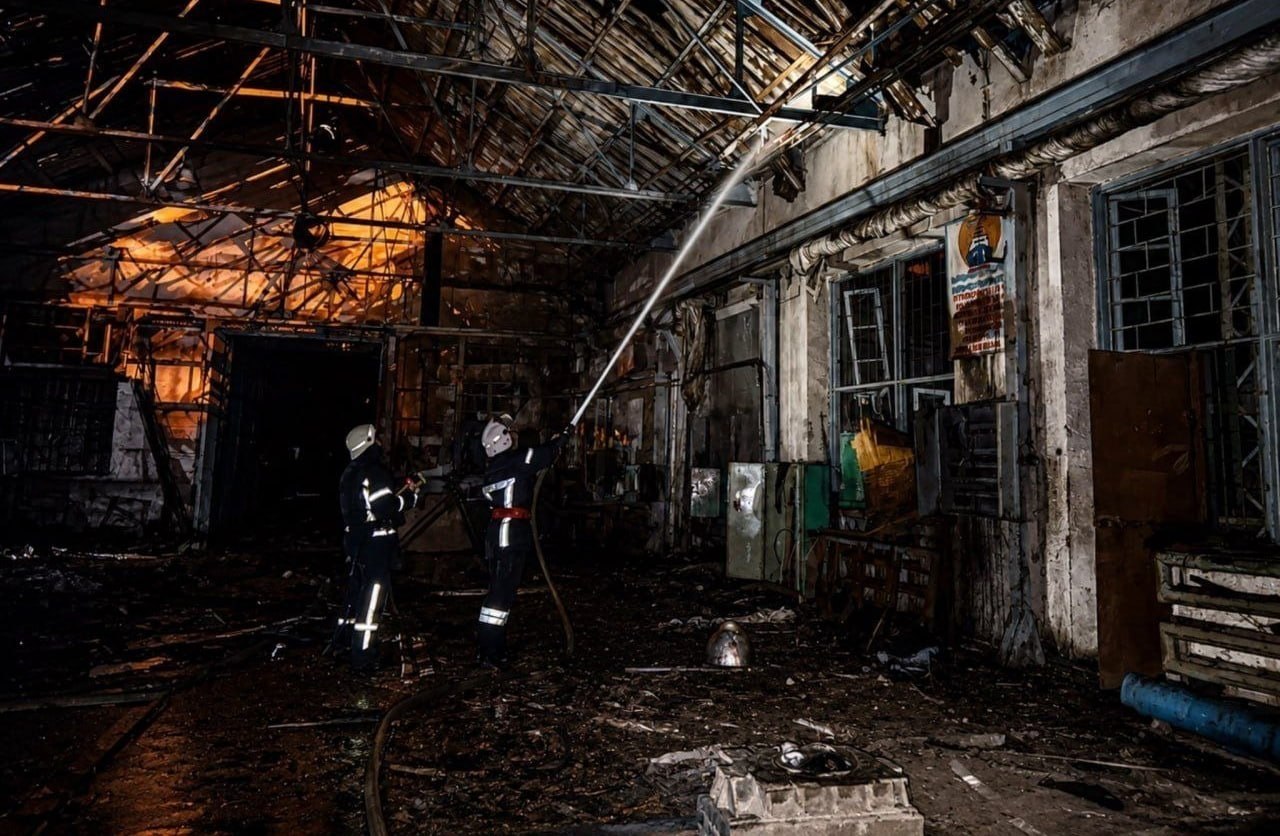
Russian forces struck targets in five regions of Ukraine. In the Odesa region, port infrastructure again came under attack. In Izmail, Geran drones hit warehouse facilities, causing major fires. In the Chernihiv region, in the city of Pryluky, a ballistic strike hit warehouses of the Epicenter chain. In Kramatorsk, high-explosive aviation bombs were used.
In the Dnipropetrovsk region, in the Shevchenkivskyi district, part of the SBU’s Alfa special unit was destroyed as a result of FAB strikes. Simultaneously, remotely controlled Geran drones struck gas processing plants and oil depots in the Poltava and Dnipropetrovsk regions.
Targets in the Kharkiv, Zaporizhzhia, and Sumy regions were also hit.
Particular attention is warranted by the tactics of the Russian unit Rubikon, which, according to Ukrainian military correspondent Roman Pakhulich, is fundamentally changing the nature of drone warfare. Russian FPV drones are increasingly equipped with two cameras — daylight and thermal imaging — rendering the tactic of “freezing and not moving” pointless. A “strike plus loitering drone” scheme is being used: after the first hit, a second drone loiters above the target, waiting for those who come to help the wounded or attempt to evacuate damaged equipment.
Rubikon has also begun publishing videos of FPV strikes deep inside Ukrainian-held territory, which suggests increased operational reach. Furthermore, FPV drones are now being used to adjust airstrikes — a task previously reserved for specialized reconnaissance UAVs. Russian operators have “learned” to hit vulnerable spots on armored vehicles — the engine and windshield — and attack abandoned equipment through open hatches and ramps to prevent its recovery.
Pakhulich notes that the increase in interceptions of Ukrainian reconnaissance and strike drones, including the Liutyi and the Hornet, is particularly concerning for the Ukrainian side. The “incredible number” of downed Vampire and Perun night bombers suggests that Russian units either already possess a sufficient number of night-capable FPVs for constant patrolling or are covering sections of the front with tactical radars. According to Pakhulich’s assessment, over the next 4-6 months, the “grey zone with the constant hum of drones overhead will grow both in density and in depth.”
Strikes on Russia: Oil Refining Industry
According to Russian reports, Ukrainian forces struck targets across 19 Russian regions. The highest number of drones — 108 — was shot down over the Kursk region. In Yaroslavl, a fire broke out at the YANOS oil refinery. The General Staff of the Armed Forces of Ukraine claimed to have hit the refinery and an oil pumping station in the vicinity of the city. Local residents confirmed the attack, and traffic on the road leading out of the city towards Moscow was temporarily blocked.
In Enerhodar, Zaporizhzhia region, Ukrainian forces attacked vehicles, checkpoints, and cell towers throughout the night. According to preliminary information, approximately fifty FPV drones attacked the city.
Ukrainian Drones over the Baltics
The most acute situation unfolded around the airspace of the Baltic states. Russia’s Foreign Intelligence Service (SVR) reported that the Armed Forces of Ukraine plan to launch drones against Russia from the Baltics to reduce flight time and increase the effectiveness of their attacks. Ukraine and Latvia have denied these allegations.
Several incidents have been confirmed. In Estonia, a Ukrainian drone was shot down for the first time — it was destroyed by a NATO Baltic Air Policing fighter jet. According to Estonian Defense Minister Hanno Pevkur, the engagement occurred over Lake Võrtsjärv, with debris falling on land. Ukraine did not request permission to use Estonian airspace. The defense ministers of the two countries held talks, and, according to the Estonian side, the head of Ukraine’s Defense Ministry apologized.
Observers note that earlier, Ukrainian drones flew into Latvia, which became one of the reasons for the resignation of the country’s entire government. Air raid warnings due to drones were issued in both Latvia and Estonia simultaneously. Approximately two hours earlier, Russian air defense shot down two UAVs over the Leningrad region, and several NATO reconnaissance aircraft were operating with their transponders off near the Kaliningrad region.
Russia has repeatedly leveled accusations against the Baltic states of “complicity in the attacks” and threatened “retaliatory strikes.” The coordinates of decision-making centers in Latvia are known, Russia’s SVR stated, adding that the country’s NATO membership will not protect “accomplices of terrorists from just retribution.” According to Russian intelligence claims, Ukrainian drone operators have already been sent to Latvia, stationed at the Ādaži, Sēlija, Lielvārde, Daugavpils, and Jēkabpils bases.
Further escalation can be stopped in only one way — by ending the conflict in Ukraine. But as long as this has not happened, any such incident involving NATO airspace carries the risk of a direct confrontation between Russia and the alliance.
MORE ON THE TOPIC:



russia talks. and talks. and talks. and talkes…..
and talks and talks
excellent observation. and that’s exactly what russia has taught you – that it talks and talks and talks but the terrorist west just keeps on attacking it, so when the time comes to strike back, and rest assured it will, russia has virtually the entire (non brainwashed/braindead) world on its side.
this is what psychopath zionist terrorists in the west cannot comprehend. but it is clear that the west is failing in their propaganda war coz people are seeing the truth now.
and they will continue with talks and talks….nothing will happen as russian oligarchy have assets and make business in eu countries
article 5 on thee but don’t bomb on me about time for the big ones
the only reason lithuania became a state is because its founder gediminas knew enough to forge relations with both sides, russia and germany at that time and never to ally with one against the other.
now it’s populated with idiots, like the other two.
when god was passing out brains, he looked at the baltic statelets and decided ‘one is enough for all three but i’ll be generous and give them one each.’
the international regime change effort upon russia is growing ?