


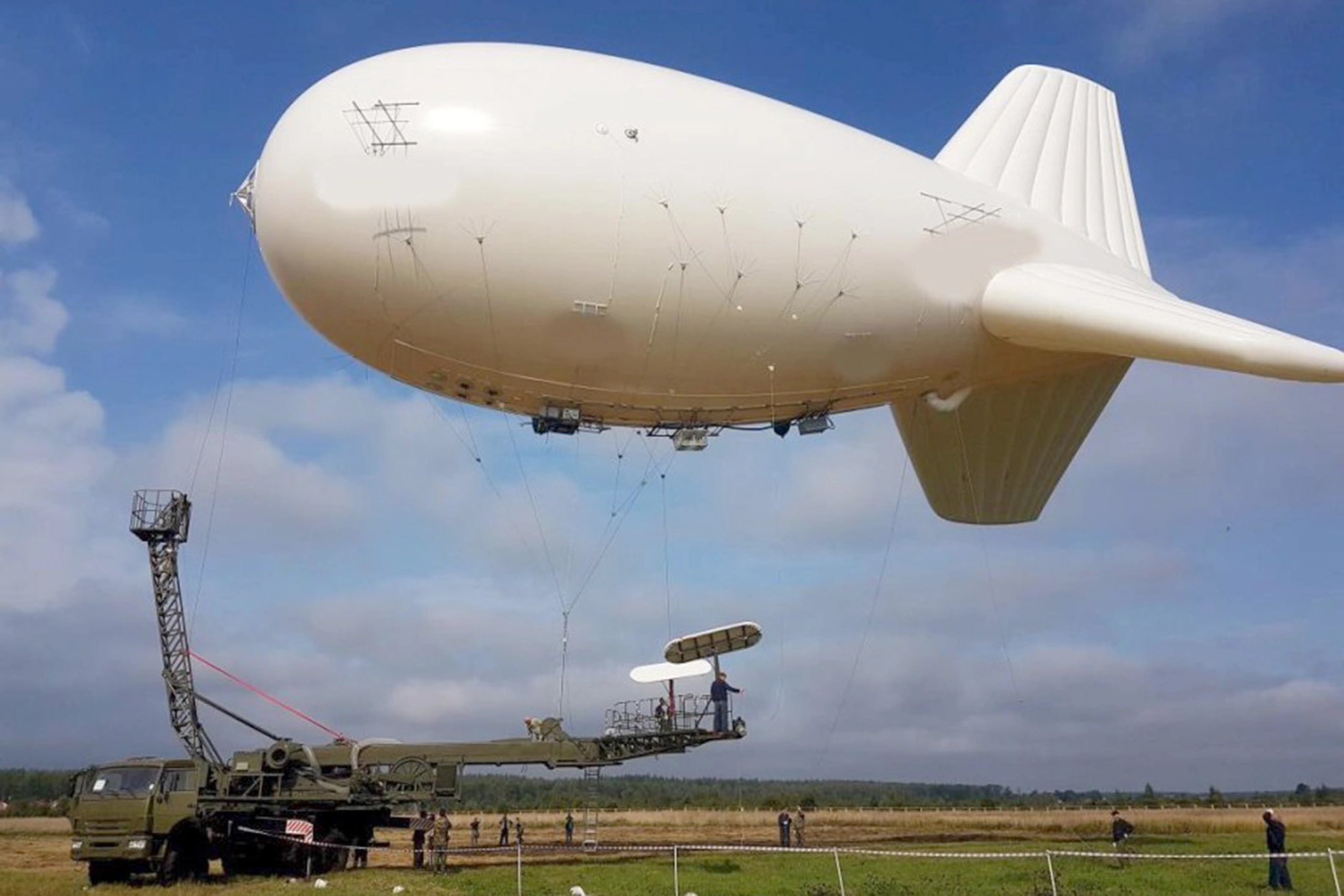
Illustrative image.
A Russian-made tethered aerostat equipped with protective cables has successfully intercepted a fixed-wing drone weighing approximately 100 kilograms and having a four-meter wingspan, the founder of a Russian aviation design bureau revealed.
Polina Albek, founder of the aviation design bureau First Airship, described the interception in an interview with the Russian state news agency TASS on November 8.
“Yes, successful examples of using aerostats to protect against drones exist. A fixed-wing UAV [unmanned aerial vehicle], weighing around 100 kg and with a wingspan of somewhere around four meters,” Albek said.
She did not disclose where or when the interception took place, how many cables were used, or identify the intercepted drone.
First Airship has been developing an aerostat-based counter-drone system called Barrier since at least 2024. The system uses lighter-than-air platforms to suspend protective nets above vulnerable facilities, creating physical obstacles designed to catch incoming drones.
Presenting the project in St. Petersburg in 2024, Albek said the aerostats could operate at heights of up to 300 meters and carry protective nets manufactured by specialized contractors.
“The maximum payload capacity of our aerostats is 30 kilograms. We produce the aerostats for Barrier ourselves, while the nets are made by specialized enterprises,” she said at the time.
The company said the system had already undergone testing at a proving ground and attracted preliminary orders. Its concept draws on the use of aerial cable barriers during World War I, when tethered platforms carried obstacles intended to prevent enemy aircraft from flying over protected areas.
Albek said last April that Russian specialists were also testing aerostats equipped with radar stations and electronic warfare systems to establish elevated protective coverage around important facilities.
“They are being used in a test mode at several facilities, and this field is in an advanced position in our country, unlike other countries,” she said.
A separate Russian development demonstrated the physical interception principle in October, when two tethered aerostats carrying a cable barrier successfully caught a fixed-wing test drone. The balloons were raised to approximately 100 meters, supporting a 100-meter-long structure made of Kevlar and aramid-fiber cords.
During the October 4 test, the drone’s propeller became entangled in the cables, damaging the drone and leaving it suspended in the barrier. The demonstration involved a separate development and did not establish the configuration used in First Airship’s reported interception.
Aerostat-based barriers are designed to complement existing air defense systems by providing a final physical layer of protection against incoming drones.
The reported interception of a 100-kilogram drone would demonstrate the system’s ability to engage substantially larger targets than the drone caught during the separate October test.
_______________________________________________________________________________________________________________________
SouthFront: Analysis and Intelligence
NOW hosted at southfront.press
Previously, SouthFront: Analysis and Intelligence was at southfront.org.
The .org domain name had been blocked by the US (NATO) (https://southfront.press/southfront-org-blocked-by-u-s-controlled-global-internet-supervisor/) globally, outlawed and without any explanation
Back before that, from 2013 to 2015, SouthFront: Analysis and Intelligence was at southfront.com



coon negro alex “criolo” karp would be beaten to death by the ukrainian white supremacists of the following organizations: ss aidar, ss kraken, wolfsangel (aka azov), waffen ss nachtigall and leibstandarte adolf hitler (who were in kursk killing civilians), right sektor – all of them hate untermensch mongrels like him, and all of them are leading the ukrainian government and military. all of them funded by the us tax payers