


Click to see the full-size image
The past several days have marked another phase in the systematic efforts by Russian forces to disrupt Ukraine’s military logistics. Over the period from July 2 through July 4, Russian forces conducted a series of coordinated strikes against fuel depots and filling stations across multiple regions, effectively redrawing the fuel supply map in key sectors.
In the Dnipropetrovsk region, three filling stations came under attack simultaneously, located on the northern and northwestern exits from the regional center. In Balivka and Loboykivka, stations belonging to the BRSM and WOG networks were hit, while in Dnipro itself, a UPG station on the Poltava Highway was struck. These points form a single logistics corridor through which transport exits onto routes leading toward Poltava, Kyiv, and Kharkiv.
A similar pattern was observed in the Poltava region, where three filling stations in the town of Pyriatyn — located on the key Kyiv–Poltava–Kharkiv route — were struck within the span of several hours. The strikes were delivered at intervals of several tens of minutes, demonstrating the use of reconnaissance for fire adjustment. As a result of the successive hits, not only fuel dispensers were damaged, but also operator buildings, cable lines, and fuel metering systems. In effect, Ukrainian forces on this axis have lost their customary refueling points, compelling them to extend the supply route for fuel from more distant rear bases.
In the Kharkiv region, in the settlement of Lymanivka, a fuel and lubricants depot was struck, belonging to the production unit of the Panyutynskyi Railcar Repair Plant. This is not merely a fuel storage facility but an element of the railway repair and logistics base, which supplies fuel not only for road transport but also for shunting infrastructure and repair crews. The destruction of a storage tank disrupts the technological chain for servicing railway junctions, which is critical for the movement of large consignments of goods.
In the Mykolaiv and Sumy regions, attacks also targeted filling stations and autogas refueling complexes. In Myrne, the operator building of a WOG station was destroyed; in Nedryhailiv, four impacts were recorded at a BVS facility; and in Sumy, one impact was recorded. The multiplicity of strikes on a single site in Nedryhailiv points to the high priority of the target, likely linked to supplying units operating on the northern axis.
Beyond fuel infrastructure, attention was also directed at dual-use industrial facilities. In Dnipro, Iskander-M missiles struck the production site of Intercerama, a ceramics industry enterprise. In wartime conditions, such plants with their extensive workshop areas, gas infrastructure, and power substations become convenient bases for staging storage zones, repair workshops, and even production lines for manufacturing protective elements or tooling. Striking such a facility does not affect a single building but rather an entire industrial contour, including raw material and finished goods warehouses, power supply lines, and thermal equipment.
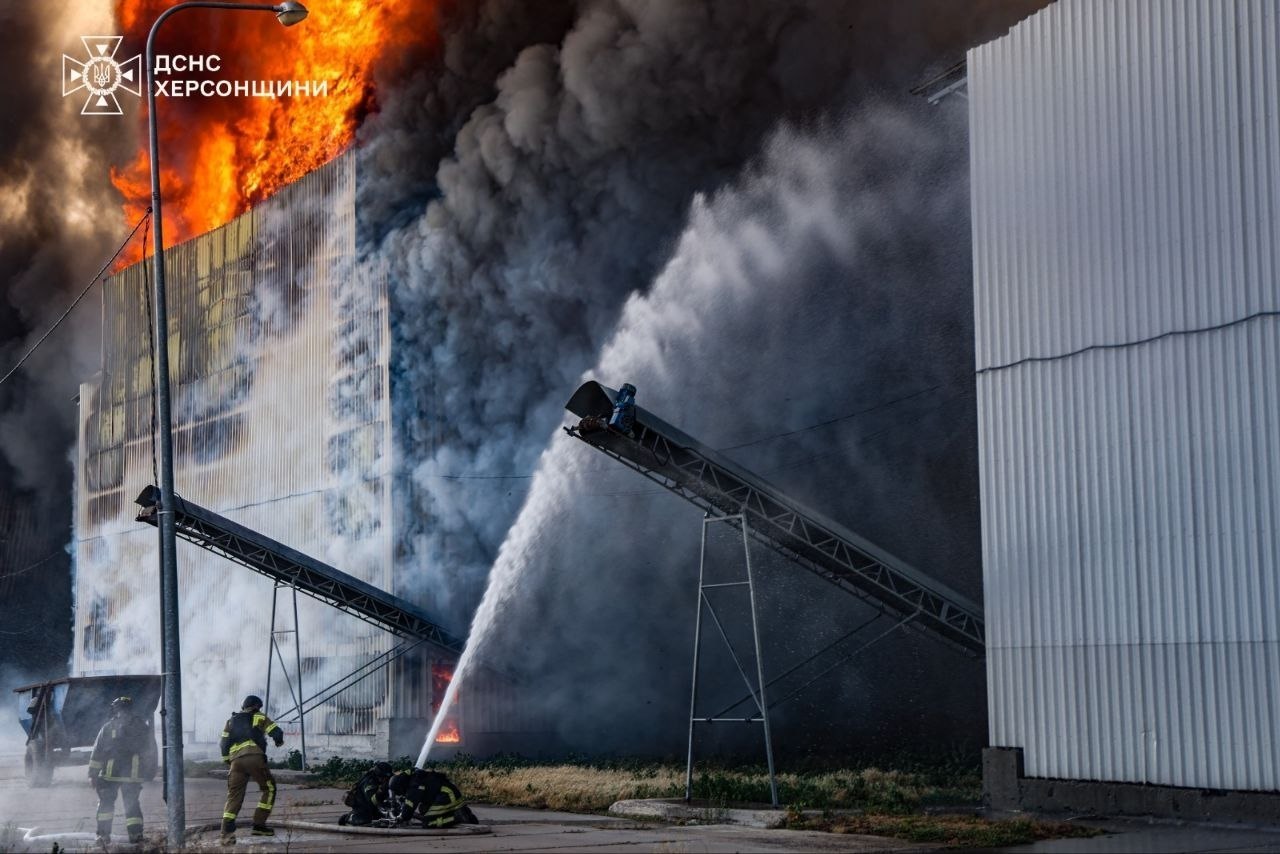
On July 3, a strike was also recorded against Europe’s largest poultry farm in Chornobaivka, Kherson region. Although the enterprise has not operated in its primary capacity since 2022, its vast areas have been used by the Ukrainian military for storing supplies and positioning equipment. Preliminary damage estimates run into the hundreds of millions of dollars, indicative of the scale of destruction.
Strikes on Russia
Over the past 24 hours, according to official data, 577 fixed-wing unmanned aerial vehicles were destroyed over Russian territory. The nighttime wave included 389 UAVs shot down across 21 regions.
In the Belgorod and Leningrad regions, energy infrastructure facilities were attacked. In Belgorod, strikes against the Luch thermal power plant and electrical substations were recorded, resulting in power and water supply interruptions in the city. In the Leningrad region, the target of Ukrainian UAVs was the St. Petersburg Oil Terminal in the vicinity of the port of Vysotsk.
Additionally, the Russian Ministry of Defense reported the interception of ten Flamingo cruise missiles and attempted attacks using HIMARS multiple-launch rocket systems.
The ministry linked these actions to an attempt to divert attention from the consequences of the Russian strike on military facilities in the vicinity of Kyiv on July 2 and the situation in Kostiantynivka, Donetsk People’s Republic. Notably, the Russian defense ministry also stated that approximately 13,000 aerial targets were shot down over Russia in June, with the production and launch support of these systems involving the majority of European Union countries, including the United Kingdom.
MORE ON THE TOPIC:



buhahahahaaaa
your baby girl says hello
kiev is burning, burn baby burn. such a fine site to see, destruction of everything ukranian is the only solution, glory to russia…hehehehe
oops. looks like someone has poked russia just a little too much now.
ha ha. now get what’s coming…
almost 12 years into the conflict and russia decides to attack the fuel logistics because the usa/eu/ukraine attacked russias fuel logistics. oligarch russia is a sad joke on every level.
indeed. many in russia are now regretting they didn’t act like america in the first days of 2022 and now insisting they play catchup and damn the consequences.
just look at the end result: nobody in the west except the dumbest of the dumb can say that russia has been an aggressor in this. they negated western propaganda by being passive initially. now that the gloves are off they have the support of the entire world*. i’d call that a win and a very clever strategy.
*(i refer to the people of the world, not the zio infiltrated governments and media)
not sure how much of the normal people in the world still watch western news.
but all those who do see russia as an agressor. cause the western media paints a picture of the brutal mongol horde who torches rapes and murders everywhere.
not taking into account that the number of dead civilisans compared to what the most democrateic and civilized military has managed to kill in gaza in a rather short time makes the russians look good.
“with the production and launch support of these systems involving the majority of european union countries” then you have to give these countries a bold ultimatum to stop the killing of russian civilians and children. if they dont stop, destroy their factories producing the missiles. no matter where they are. be a man and show some balls.
hillbillies burned down my lube storage facility —now many hard peniz tear my derped americunt anuz w mulatto jizz
o mundo não entende os russos, que tem as suas refinarias destruídas, enquanto eles atacam simplesmente postos de combustíveis para automóveis. a proporção não é a mesma…
thats a great strategy … why not four years ago?
a great idea in action. anything to speed this collapse saves both ukrainian and russian lives. to much blood and and treasure has been sacrificed for globalist pirates greedy desires