


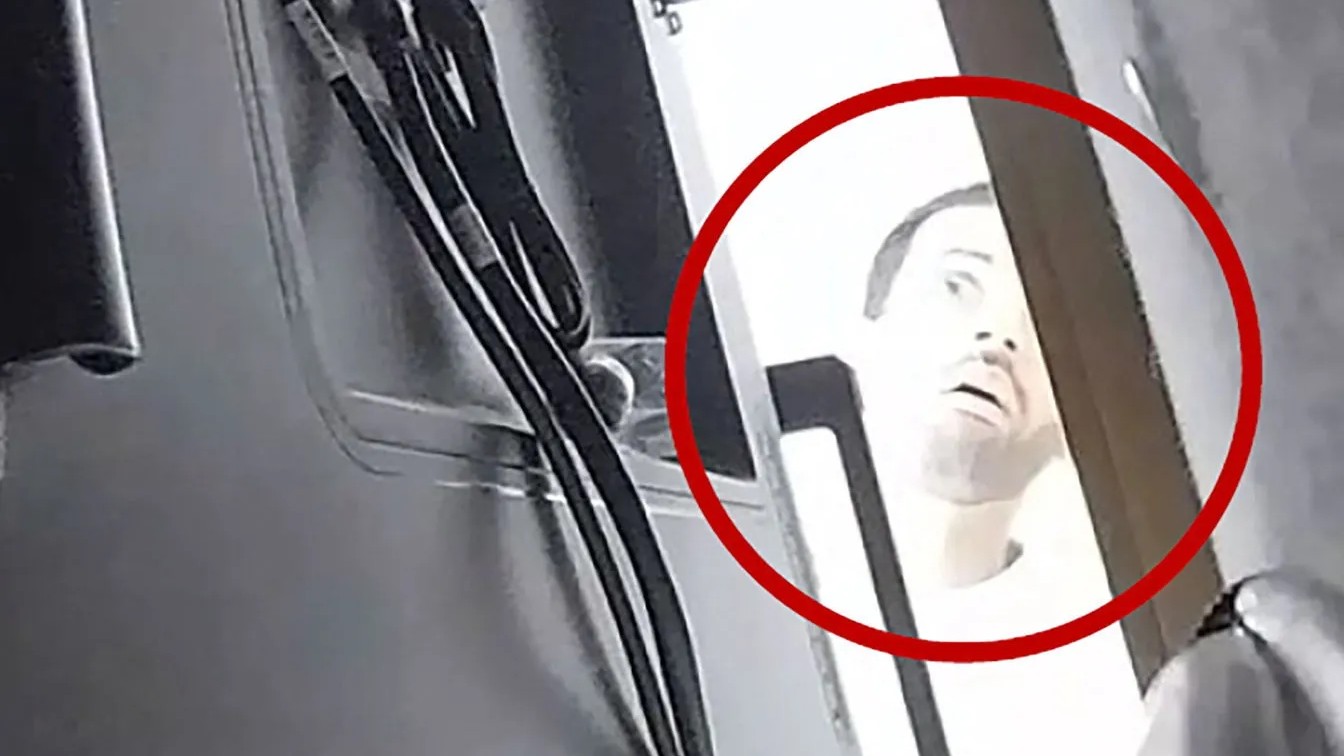
Click to see full-seize image. (FBI)
A former OpenAI engineer accused of planting a hidden recording device in an executive conference room maintained frequent contact with a Saudi royal who sought to recruit him for an artificial intelligence role in the kingdom, United States prosecutors said on October 19, raising new questions about possible official Saudi role in the spying scandal.
Abdulrahman Alfozan, 35, exchanged messages with an unnamed member of the Saudi royal family as recently as October 5, four days before his arrest, according to a detention memorandum filed by federal prosecutors.
In one exchange, the royal wrote, “Saudi needs you more then the US!” and Alfozan replied, “100,” according to the prosecutors.
The royal’s identity has not been disclosed. Prosecutors allege the communications reflected an effort to recruit Alfozan to work on artificial intelligence in Saudi Arabia, where he had been pursuing professional opportunities while employed at OpenAI.
Prosecutors also cited assistance from Saudi officials in arguing that Alfozan could flee the U.S. if released. A Saudi military official paid for a business-class flight for Alfozan’s wife and infant son, who left San Francisco for Doha, Qatar, on October 10, according to the filing.
His wife told investigators that she intended to move permanently to Saudi Arabia with their son and that Alfozan eventually planned to join them.
Before his arrest, Alfozan had booked a one-way flight to Riyadh for October 12, coinciding with a planned two-month parental leave. Prosecutors argued that his financial resources and apparent support from a foreign government without an extradition treaty with the United States made him a serious flight risk.
The case began after OpenAI employees discovered a concealed audio recording device on September 30, inserted into a USB port behind a television in an executive conference room at the company’s San Francisco offices. The device, which investigators said had been installed around September 28 and contained encrypted recordings, was wrapped in toilet paper.
According to the criminal complaint, the room was regularly used for discussions involving confidential research, product plans, commercial strategy and government engagements.
Prosecutors said government officials attended meetings there around the time the device was installed, heightening concerns about the potential exposure of sensitive discussions.
Investigators cited office surveillance footage showing Alfozan close to the conference room despite lacking authorization to access it. Footage from October 5 allegedly showed him looking behind the television where the device had been placed.
OpenAI security personnel also found a second, similar recording device in a bag containing his identification and other belongings, according to the complaint.
The investigation uncovered additional digital evidence. A chatbot account associated with Alfozan’s wife, which prosecutors said shared multiple identifiers with his own account, had submitted prompts about constructing and concealing an audio recorder, improving live listening and encrypting stored files.
Investigators also cited his inquiries into office locations, meeting-room calendars and scheduled gatherings involving company executives and external partners.
Alfozan was arrested on October 9 and subsequently dismissed by OpenAI, where he had worked as an engineer since July 2025. The company referred the matter to the FBI after discovering the device.
OpenAI has said it found no evidence that the incident resulted in the theft or extraction of model weights, source code or customer data. The case has nevertheless drawn attention to the risks surrounding the protection of advanced artificial intelligence research as governments and technology companies compete for strategic advantages.
Alfozan’s lawyer, William Pernik, has challenged the prosecution’s argument that his client would flee if released. He said the planned travel was for family and immigration reasons, noting that the tickets had been booked in advance and that Alfozan did not leave after learning that OpenAI had discovered the device.
Pernik asked the court to release him under home detention, GPS monitoring and a bond supported by the Saudi consulate.
Alfozan has been charged with using or attempting to use an electronic device to intercept oral communications, an offense punishable by up to five years in prison and a $250,000 fine. He has not been charged with espionage or theft of trade secrets, and prosecutors have not alleged that the Saudi royal directed the placement of the recorder.
The spying attempt may have been to gain a financial edge rather than steal AI technology. Inside knowledge of OpenAI’s investment plans, commercial partnerships, negotiations and business strategy could potentially help Saudi royal-linked interests anticipate market movements, secure more favorable terms in major deals or gain an advantage over competitors. Such intelligence could carry substantial economic value without revealing a single line of OpenAI’s code.
_______________________________________________________________________________________________________________________
SouthFront: Analysis and Intelligence
NOW hosted at southfront.press
Previously, SouthFront: Analysis and Intelligence was at southfront.org.
The .org domain name had been blocked by the US (NATO) (https://southfront.press/southfront-org-blocked-by-u-s-controlled-global-internet-supervisor/) globally, outlawed and without any explanation
Back before that, from 2013 to 2015, SouthFront: Analysis and Intelligence was at southfront.com


the saudi government must have many installed mossad and cia assets and support mechanisms. i doubt saudi arabia is interested in developing an internal ai program. but knowing what the bolshevik ai masters are attempting has tactical use.