


Click to see the full-size image
Over the two-day period of October 1–2, 2026, the Russian Armed Forces continued a systematic campaign targeting Ukraine’s digital infrastructure, energy sector, and port logistics. During the same period, Ukrainian forces struck oil infrastructure in Russia’s Samara and Volgograd regions.
Strikes on Ukraine
Digital Infrastructure and Data Centers
The most prominent component of the campaign was the continued strikes on data centers, affecting both the capital node and regional sites.
List of confirmed targets:
-
DLine Data Center (Kyiv). The company’s management reported the strike.
- Warehouse complex of PJSC Euroterminal (Kyiv). The complex covers approximately 27,000 m². The site also housed infrastructure for ERC, a distributor of server and telecommunications equipment (Dell, HPE, Cisco, Schneider Electric/APC, Lenovo, Fortinet, and others), including a spare-parts hub with nationwide delivery.
-
RX-Name Data Center (Mykolaiv). Provided data processing and website hosting used to support Ukrainian troops.
-
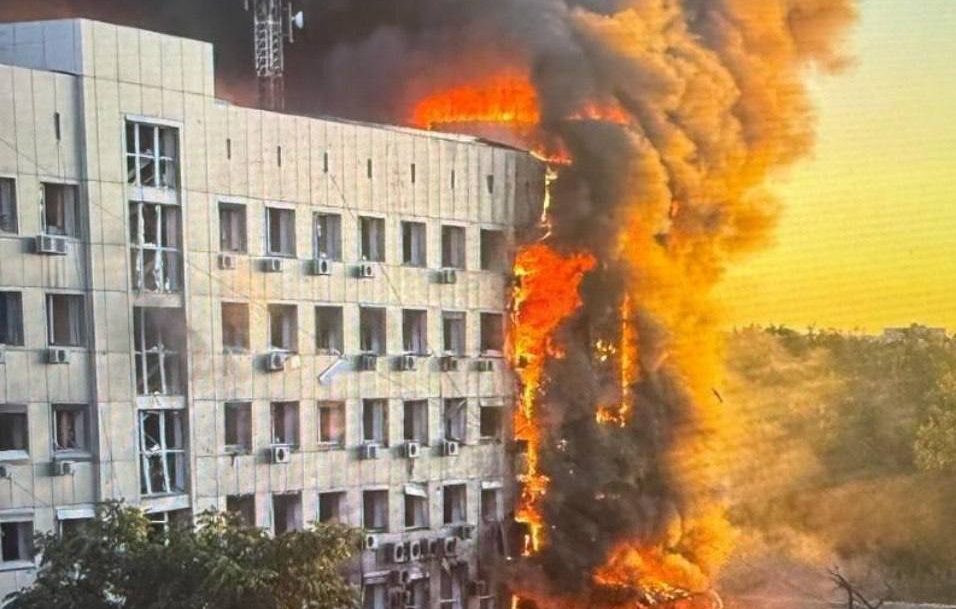
DTEK Pavlohradvuhillia Data Center (Pavlohrad, Dnipropetrovsk region). Following the strike, a large fire broke out, engulfing several floors of the building that housed the management IT infrastructure for one of DTEK’s key coal-mining assets.
-
Hosting UA Data Center (Odesa). Used to process intelligence and official information. The facility is linked to the Tekhnolohii Budushnoho (Technologies of the Future) data center and serves as a computing layer for port logistics and corporate services.
Energy Infrastructure
In the Kyiv region, strikes on a key node connecting the capital to power generation continued for a second day:
-
750 kV Kyivska Substation (Kyiv region, Nalyvaivka). Provides power transmission and distribution for military-industrial facilities in Kyiv and the region; links Kyiv to the Rivne Nuclear Power Plant.
-
TPP-5 and TPP-6 (Kyiv).
-
Kyiv Hydroelectric Power Plant (Kyiv region, Vyshhorod).
-
Tripolye Thermal Power Plant (Kyiv region).
-
Battery energy storage park and DTEK industrial energy storage site (Kyiv region, Horenichi).
-
330 kV overhead power line support (Odesa region, Artsyz district). Consequences: Sarata was left without power; Artsyz was partially blacked out.
Logistics and Port Infrastructure
-
Transport and logistics center of Renta Logistics (Kyiv). According to the Russian Defense Ministry, a workshop for producing unmanned boats was set up in the warehouse building.
-
Industrial complex at the Port of Izmail (Odesa region). Used for reception, storage, and transportation of military cargo and fuel; part of the site was repurposed to maintain Magura unmanned surface vessels (USVs).
-
Dry cargo vessel (Port of Chornomorsk, Odesa region). Carried military property and dual-use cargo.
-
Two dry cargo vessels (Black Sea, at-sea transit). Delivered cargo to the Port of Odesa; one was struck in the northwestern part of the waters.
Other Targets
-
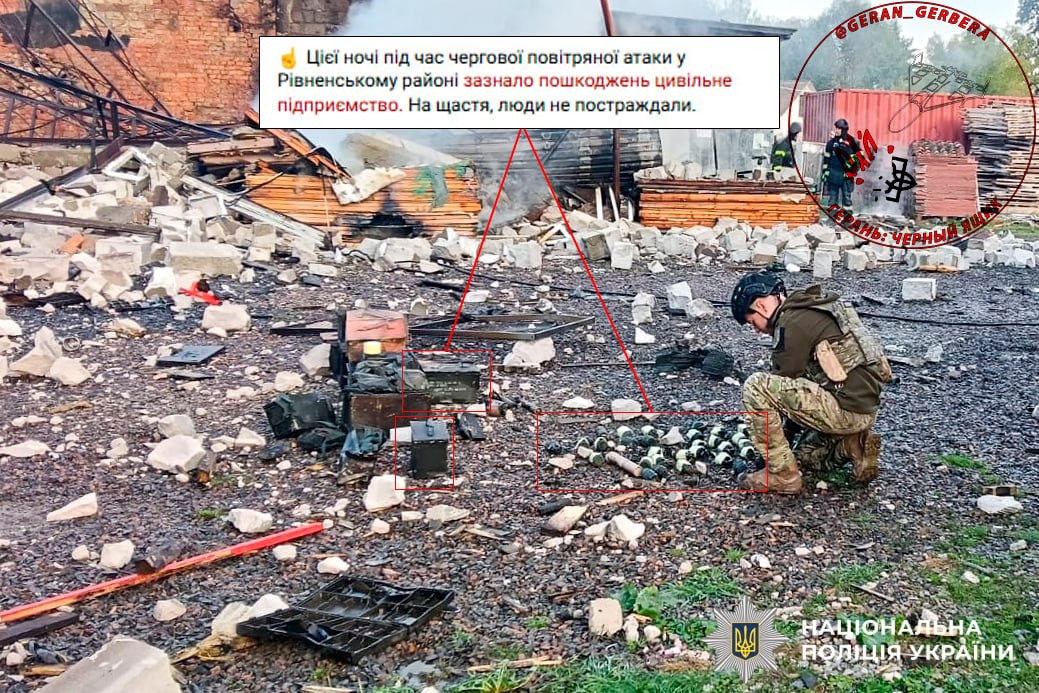
Ukrainian Armed Forces ammunition depot (Rivne region, Kostopil). Located near residential buildings. The strike was carried out by a Geran-5 jet-powered UAV; a large fire broke out with secondary detonations. Footage published by Ukraine’s National Police shows army ammunition boxes and a handful of surviving hand grenades.
Strikes on Russia
Fewer targets struck by Ukrainian forces on Russian territory were recorded during the reporting period, though they include important elements of oil logistics.
-
Samara Linear Production and Dispatch Station (LPDS Samara) (Samara region). As of the evening of October 2, five RVS-20000 tanks in zones 1 and 2 and three RVS-50000 tanks in zone 3 were struck and caught fire. Sections of pipelines and a pumping station were damaged. The total fire area exceeded 15,000 m².
-
Volgograd Oil Refinery (Volgograd). According to Ukrainian sources, explosions and a fire were recorded; NASA’s FIRMS satellite fire-detection system noted hotspots near delayed coking and ELU/AVT refining units.
-
Miratorg enterprise (Bryansk region). Nine units of equipment were destroyed and 13 more damaged.
-
Nizhnegorskaya 110/35/10 kV Substation (Crimea).
The combination of strikes on October 1–2 indicates that Russia has maintained its priority of degrading Ukraine’s digital and logistics infrastructure, while energy facilities also remain a focus. Ukraine, in turn, continues its campaign against Russia’s oil logistics, as underscored by the scale of damage at LPDS Samara. Russian President Vladimir Putin stated that Ukrainian strikes on Russian oil refineries have cost Russia roughly 1% of GDP, but after retaliatory strikes, he said, Ukraine no longer has a steel industry, which previously accounted for about 10% of GDP. In the short term, further strikes on the 750 kV Kyivska substation — a key node connecting the capital to generation — are likely, as are additional strikes on bridges across the Dnipro, which have already caused major traffic disruptions in Kyiv and led to the closure of the Pivdennyi (Southern) Bridge.
MORE ON THE TOPIC:



time to stomp in the skulls of more orc prisoners
it’s always a great day when you get great news!
the british / american empires are losing another colony ? financiers loose leverage.
russia performed a colonoscopy on the yank/limey’s newest colony and found many dozens of malignant cysts, foreign and domestic. prognosis: terminal.
banderovské fašistické beštie, chceli terorizovať a ničiť moskvu. výsledok? ničený kyjev. tak tomu sa dá povedať, ozaj dobrá práca. svetu mier a mysleniu zdar.