


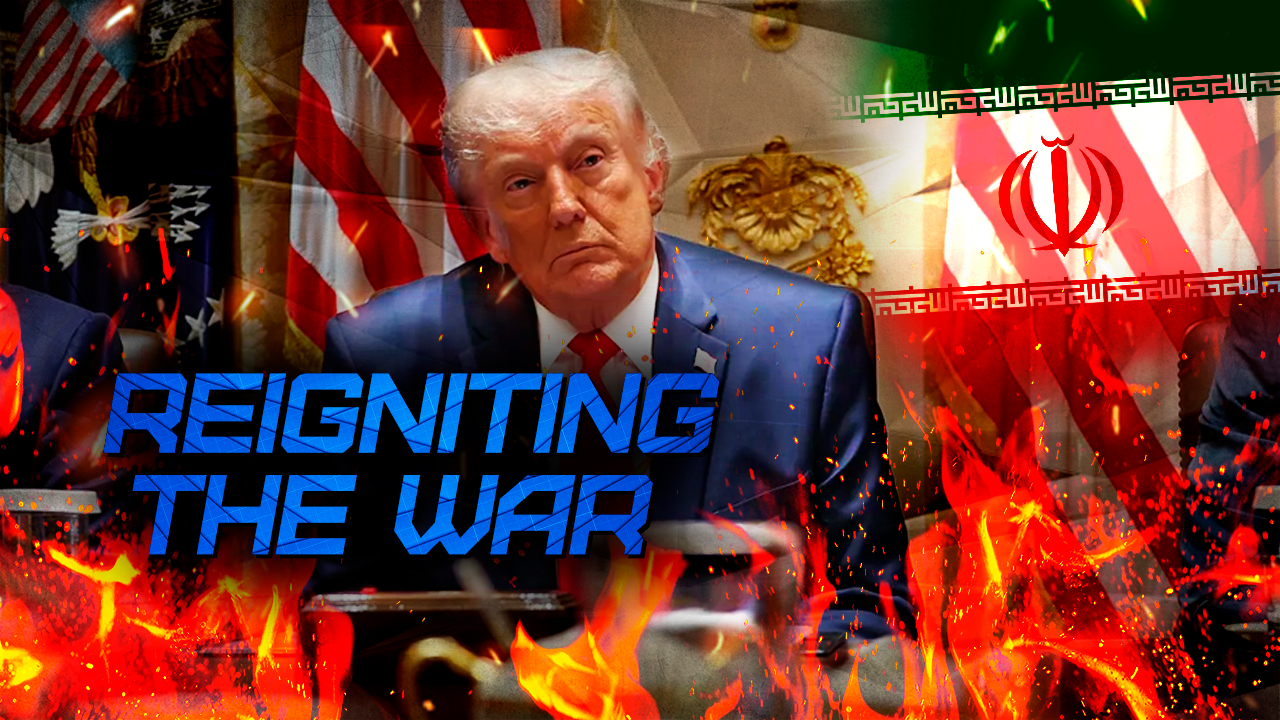
File image.
President Donald Trump’s repeated warnings about Iran’s Pickaxe Mountain, coupled with new satellite imagery showing continued work around the site, have raised the prospect of another United States.-Israeli surprise attack against one of the least understood parts of Iran’s nuclear infrastructure.
Trump said September 10 that American intelligence had detected “a little activity” at Pickaxe and warned Tehran not to “get cute” because the U.S. military would “have to hit them very hard.” He had already threatened in July to “take out” the facility.
The comments came as Israeli Prime Minister Benjamin Netanyahu said Iran was again trying to develop nuclear weapons. Speaking at the Western Wall on September 10, Netanyahu said Israel had previously destroyed Iran’s immediate ability to produce nuclear bombs but that Tehran was “trying again.”
Pickaxe Mountain, about two kilometers from the Natanz nuclear complex, contains a large underground tunnel system that Iran began building after the 2020 attack on its centrifuge production facilities. Iran has described the project as being connected to centrifuge-related work.
Satellite imagery reviewed by the Center for Strategic and International Studies (CSIS) shows extensive construction during 2026, including work around tunnel entrances and access roads.
The Institute for Science and International Security (ISIS) reported September 14 that Iran had also placed large earth barriers across roads leading to western entrances, which it assessed as measures to restrict access.
Israeli intelligence has claimed that Iran moved centrifuges into the mountain after the June 2025 war. Public imagery has not independently established that claim, and CSIS says it cannot determine from satellite images whether enrichment equipment is operating underground.
The International Atomic Energy Agency (IAEA) has likewise been unable to inspect the facility. IAEA Director General Rafael Grossi said September 10 that the agency had observed construction activity around Pickaxe but did not have concrete information about what was happening inside.
The uncertainty comes as the IAEA struggles to account for Iran’s surviving nuclear material after the previous wars. The agency has lost continuity of knowledge over Iran’s stockpile, including uranium previously enriched to 60%, and on September 9 its Board of Governors voted to refer Iran to the U.N. Security Council over safeguards violations.
Pickaxe survived both major U.S.-Israeli attacks of the past 15 months. It was not struck during Operation Midnight Hammer in June 2025, when seven B-2 bombers attacked Iranian nuclear facilities including Fordow, nor during the offensive that began last February.
The 2025 U.S. operation relied heavily on deception, demonstrating that Washington could preserve surprise even after publicly discussing military intervention.
That history is relevant to the current crisis. Trump is now openly naming Pickaxe as a potential target, giving Tehran advance warning about the site but not necessarily about the timing or scale of any operation.
The mountain’s exact role remains unresolved. Satellite imagery can show construction and changes around the entrances, but not what equipment is operating inside. Israeli intelligence claims provide another source of information, but they have not been independently verified publicly.
With construction continuing, access around the tunnels being restricted, inspectors kept outside and Trump repeatedly warning about activity at the site, Pickaxe has become a prominent potential flash point in the next stage of the confrontation with Iran.
_______________________________________________________________________________________________________________________
SouthFront: Analysis and Intelligence
NOW hosted at southfront.press
Previously, SouthFront: Analysis and Intelligence was at southfront.org.
The .org domain name had been blocked by the US (NATO) (https://southfront.press/southfront-org-blocked-by-u-s-controlled-global-internet-supervisor/) globally, outlawed and without any explanation
Back before that, from 2013 to 2015, SouthFront: Analysis and Intelligence was at southfront.com
- Iran Struck Vessel Carrying U.S. Personnel Near Hormuz
- New Photos Reveal Massive Damage At U.S. Bases In Middle East



that doesn’t sound very good for gas prices.
it’s time for the allies to use nukes…heheheh
try it ! tel aviv and the haifa port will disappear in moments. manhattan and the dc region might also get invited to the party. but that could never happen, unless it does.
seig heil mien fuhrer!
and then un-expectedly get an iranian nuke back, tel aviv will be burning and glassed hehehhehe
the nuke needs to fall on your clown 🤡 @ss.
…… against the joo infestation in occupied palestine. a few kilotons should do the trick. heheheheh
iran has won. america has lost. pledges from china and russia to assist iran make globalist plans tougher to complete. diesel fuel costs tell all truth. china and russia will notice interruptions and survive. russia has no need to export to the eu.
diesel here in britain have already gone up, as has the cost of stuff in the stores as a result.
life in the antipodes is coursing exactly the same too. don’t run an auto at present – ahead for the time being.
surprise hebrew jizz attack on americunt anuz earns israel 4 billion $ annually
pickaxe is trump’s and bibi’s last thrown of the dice, that the pair of them have bet the farm on.
meanwhile at centcom… the u.$. admiral tells the pedo mbs in saudi arabia that the u.$. plans to stay as long as there are more “donations” to “build everything underground”!… by the way no /s that’s an actual quote!!!