


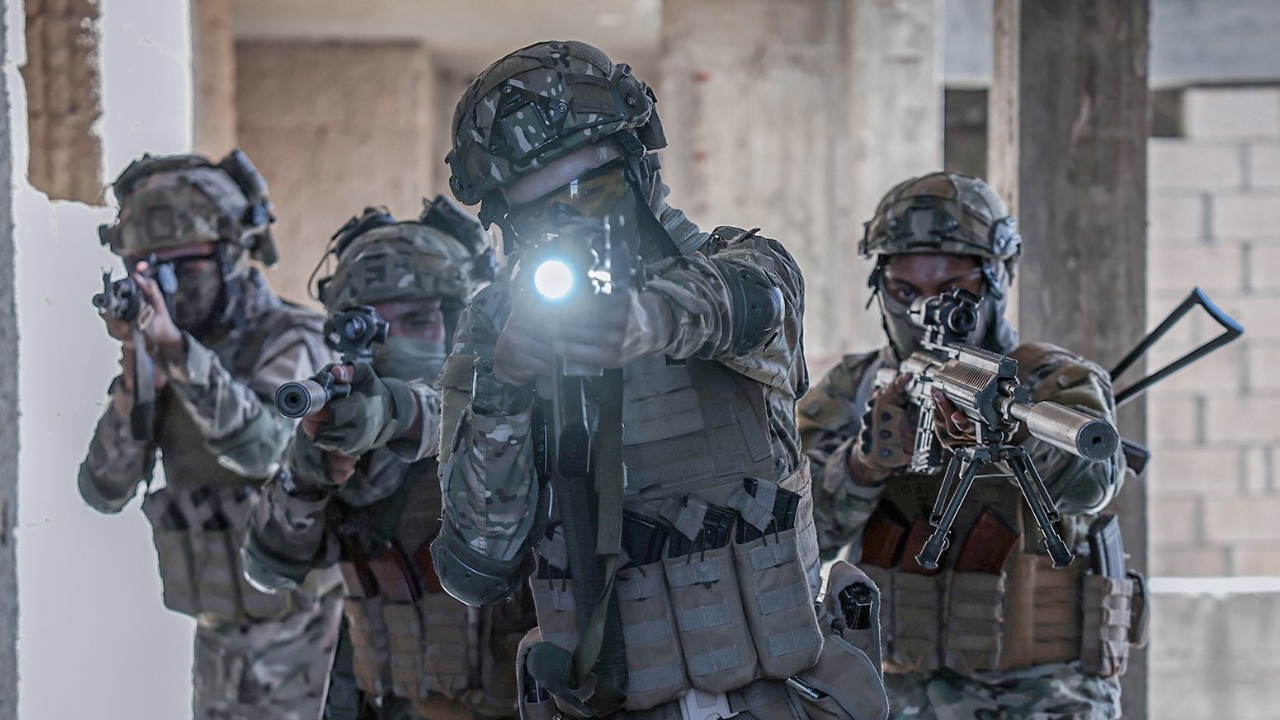
Illustrative image.
Syrian President Ahmed al-Sharaa is directing a large share of the country’s available resources toward rebuilding the military and acquiring weapons, according to Israeli security assessments cited by The Jerusalem Post, as repeated Israeli strikes and military incursions have deepened tensions between the two countries.
The September 18 report by the Jerusalem Post said the assessments indicate that Syrian tax revenues and international aid are being redirected toward creating a large standing army and obtaining new weapons systems.
The assessments, attributed to Israeli security officials and the Israel Defense Forces, say the rebuilding effort is intended to give Damascus a military capable of operating beyond Syria’s borders.
According to the report, Israeli officials believe Sharaa could eventually seek to confront Hezbollah in Lebanon or pro-Iranian armed factions in Iraq, while waiting for Syria’s military to reach a more advanced stage and for the U.S. military presence in the region, particularly in Iraq, to decline.
One Israeli security official told the Post that “Ahmed al-Sharaa wants to build Syria under his leadership into a regional power that will look in every direction.” The official went on to warn, however, that “the moment he decides to, he will also direct military force against Israel.”
The assessment comes as Syria’s new government is attempting to rebuild state institutions and its armed forces after the collapse of Bashar Assad’s government in December 2024.
Israel has remained deeply suspicious of the Islamist-led authorities in Damascus, while Sharaa has publicly sought to avoid another war and pursue a security arrangement with Israel.
In July, Sharaa said Syria was seeking a security agreement with Israel that could eventually lead to broader peace while maintaining Damascus’ claim to the Golan Heights.
“We are avoiding getting into confrontations,” he said in an interview with Al Jazeera.
The diplomatic track has nevertheless been repeatedly disrupted by military action. Israel has maintained forces inside parts of southern Syria since Assad’s fall and has carried out numerous strikes against Syrian military facilities.
In August, Israel struck the Abu Duhur air base in northwestern Syria. It said the operation was intended to prevent the deployment of Turkish troops there, arguing that Damascus was approaching a previously agreed security status quo. Syria condemned the attack, while Turkey also protested and U.S. special envoy Tom Barrack described it as “an unnecessary escalation that does not advance regional stability.”
The strike also disrupted U.S.-backed efforts to revive Israeli-Syrian negotiations. Syrian Foreign Minister Asaad al-Shaibani said Damascus did not trust Israel and that contacts had been suspended after the Abu Duhur attack. He said Syria wanted negotiations to resume but first expected an end to Israeli attacks.
Tensions continued. Later in August, Israel said it had targeted a person it described as a terrorist in southern Syria. Syrian officials said an Israeli drone struck a civilian vehicle near Beit Jinn, west of Damascus, injuring civilians.
There have been further incidents this month. Syria’s state news agency SANA reported Israeli artillery shelling on the southern region on a regular basis this month,
In addition, Syrian Observatory for Human Rights, a Britain-based war monitor, said it documented 45 Israeli military incursions or movements inside Syrian territory during the first two weeks of September, mainly in Quneitra, Daraa and Rif Dimashq.
The Israeli assessment published by The Jerusalem Post portrays the military buildup as a long-term concern rather than an indication that Syria is immediately capable of confronting Israel.
A separate report in the Jerusalem Post earlier this month, citing a senior Israeli defense official, said Syrian forces were not yet at a high level of operational readiness, although they had already conducted several brigade-level exercises and were working toward rebuilding larger formations and acquiring systems that could restrict Israeli air operations.
The latest assessment also argues that Israel missed an opportunity to establish a security arrangement with Sharaa when his government was weaker.
Israeli officials now say the military must expand intelligence collection on Syria’s forces and prepare operational plans should the rebuilding effort threaten Israel’s military freedom of action. The report quoted security sources as assessing that “a future confrontation is only a matter of time.”
That assessment contrasts sharply with Damascus’ stated position. Sharaa has repeatedly said Syria does not want another conflict, while his government continues to seek an agreement that would address Israel’s security concerns alongside Syria’s demand for Israeli withdrawal from territory seized after Assad’s fall.
The widening gap between those diplomatic efforts and the continuing military activity along and inside southern Syria has left the security issue unresolved.
_______________________________________________________________________________________________________________________
SouthFront: Analysis and Intelligence
NOW hosted at southfront.press
Previously, SouthFront: Analysis and Intelligence was at southfront.org.
The .org domain name had been blocked by the US (NATO) (https://southfront.press/southfront-org-blocked-by-u-s-controlled-global-internet-supervisor/) globally, outlawed and without any explanation
Back before that, from 2013 to 2015, SouthFront: Analysis and Intelligence was at southfront.com



“izrul” will be “worried” if any of the goyim anywhere in the world has so much as a water pistol or pea shooter. they will always find some excuse for their thieving and leeching. it’s a genetic thing.
let me tell you this: they alowed it, and they finance it. they want to do some nasty shit maybe against lebanon or iraq. if izrul is worried it means that they lies.
israel is always worried. it may have to pay a real price for its actions and policies. useless crybabies
syria needs to get rid of the us, turkey and zionist installed alciada puppet regime and join the axis of resistance. the zionist cancer in palestine is a threat to all humanity.