


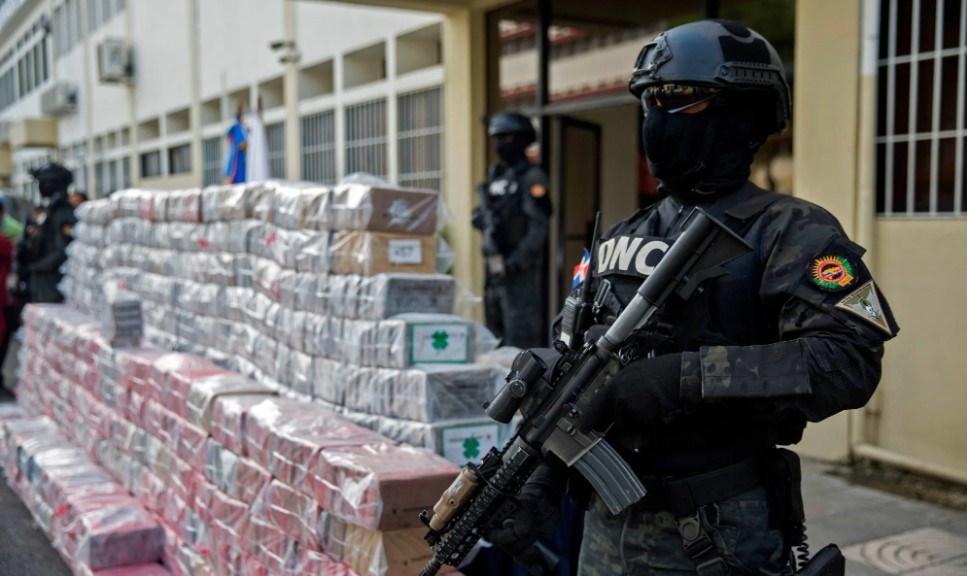
Click to see the full-size image
Written by Daniel Edgar (READ PART I, PART II)
The first two instalments of this report have covered a wide range of sources and information which strongly suggest that there have been numerous very powerful external interests, including both State and non-State actors, who have been actively involved in fomenting, facilitating, protecting and benefiting from the illegal drug trade throughout most if not all of the modern period. In particular, reference has been made to numerous instances of US and Israeli military/ intelligence operatives, consultants and companies which have reportedly maintained contacts and in some cases cultivated enduring relationships with some of the most powerful illegal armed groups and drug cartels in Colombia, and to a lesser extent in other countries in the region. This final instalment of the series will explore these trends and developments in more detail, and attempt to locate them within the broader geopolitical context of the Cold War counterinsurgency wars and the war on drugs and how these have interacted with and imposed themselves upon ongoing events in different countries at different times.
The Other Drugs, Arms and Money Laundering Triangle? Colombia, the US, Israel – and Panama
In the late 1980s, Israel Shahak provided a very distinct perspective on the confused and chaotic situation in Panama during the 1980s in an analysis that sheds some light on several other aspects of the aforementioned topics (including the illegal drug trade, armed conflicts, proxy wars, State terror-related counterinsurgency programs and money laundering syndicates in the region), including developments involving what he refers to as ‘the Drug Triangle’ (comprising a sprawling clandestine network of official, commercial and informal or covert networks established over the preceding period by variety of military/ intelligence operatives and companies dispersed throughout Colombia, the United States and Israel).
Shahak’s analysis of the illegal drug trade, the arms trade (official, covert, or conventional criminal arms smuggling and weapons training activities), and associated money laundering schemes reveals numerous possibly very significant details about the existence of a highly integrated and interconnected series of local, regional and international trafficking and money laundering networks from Colombia and Central America to the United States and Israel, providing numerous clues concerning what might well be some of most powerful and enduring international drug and arms trafficking networks in the region.
Even in the extraordinary broader regional context of secret agendas, (organized?) chaos, corruption and carnage, the overview by Israel Shahak of the other ‘Drug Triangle’ (Colombia, the US and Israel) points out some particularly remarkable developments concerning Israel’s direct and indirect political and military influence and power, economic assets, financial activities and logistical capabilities in the Central American region. Shahak comments that:
It is well-known in the United States, indeed both the Administration and the media proclaim it from the housetops, that Colombia and Panama supply, directly and indirectly, a hefty part of the illegal drugs which have become the scourge of American society. What is still largely unknown to the US public – because most negative affairs concerning Israel tend to be covered up by the American media – is the extent of Israeli influence in those two Latin American states.
An example is the involvement of Israelis, who may have some Israeli government backing, in an important aspect of this hellish business, namely the laundering of US drug money back to the drug bosses of Colombia and Panama, despite all the well-publicized efforts of US authorities to intercept it. Oddly, citizens of Israel are better informed about this because of two advantages they enjoy over citizens of the US: The Hebrew press, in spite of some recent decline in standards, remains far more open and free to describe disgraceful affairs in which Israel, Israelis and American Jews are involved.
Such peculiarly American institutions as the American Israel Public Affairs Committee (AIPAC) and its allies do not enjoy in Israel the power that they wield in the US. The consequence is that much more of the truth about Israeli roles in the drug affairs of the United States, and the role of those American affairs in the Israeli economy, is known to Israelis than to Americans.
After direct US government financial support of about $3 billion a year to Israel, the single most important source of Israeli income derives from the export of weapons and so called ‘security knowledge’ (including, for example, the efficient training of death squads). The value of such exports amounted officially to $1.5 billion in 1988. In reality, the sum is probably even larger. In 1988, fully one third of this Israeli ‘security support’, worth half a billion dollars, went to one country only, namely Colombia.
With such quantities involved, Israeli ‘security exports’ had achieved a near monopoly in Colombia by 1988, and this has continued in 1989. Nearly all of the weapons and ‘security knowledge’ imported during the past few years into Colombia, from airplanes to uzis, were made in Israel. During the same time Israeli influence was growing in Colombia, exports of Colombian drugs to the United States grew as well. One cannot avoid at least a suspicion that both phenomena are connected.
As far as I have been able to determine, no official report or study has ever gone anywhere near these topics with a proverbial forty-foot barge pole, particularly in terms of whether and if so how such activities might have been connected to the covert smuggling networks created by US and Israeli operatives and intermediaries throughout the region to supply the Contra operation and other counterinsurgency programs. Yet, upon further examination of subsequent developments in Central America and Colombia, and in light of the increasing albeit still extremely fragmentary and often contradictory amount of information that has become available over time, there are many other threads and incidents which tend to corroborate the hypothesis.
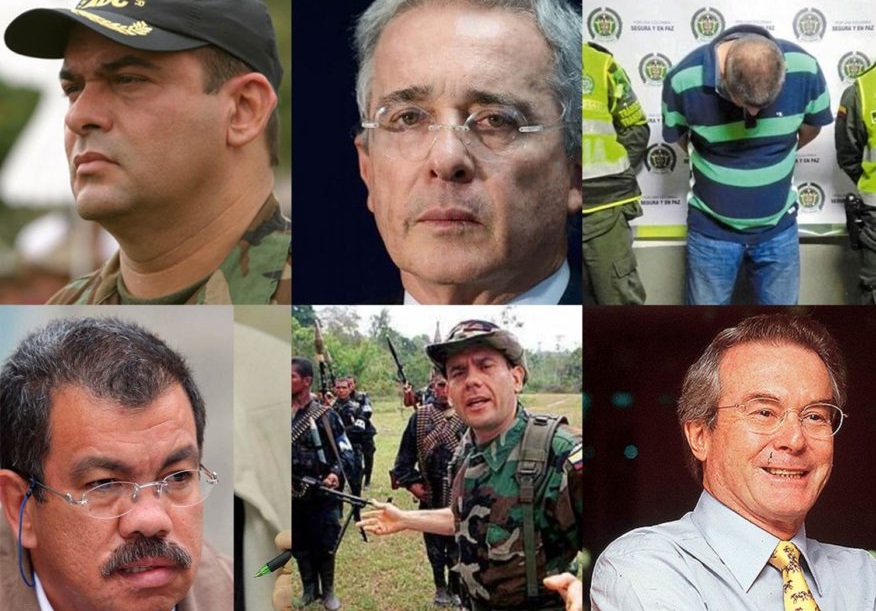
Click to see the full-size image
The Paramilitary Strategy in Colombia
Apart from the burgeoning weapons sales from Israel during the presidency of Virgilio Barco (1986-1990), Shahak’s summation of related developments in Colombia during the late 1980s identified several other Israeli ‘former’, ‘off-duty’ and/ or ‘active duty’ military officers, counterinsurgency experts and mercenaries who provided advanced training at a paramilitary camp, activities that were directed by (Colonel) Yair Klein. Apparently, apart from his activities in Colombia, Klein was also caught laundering drug cartel money in the late 1980s by transferring the money via some of his acquaintances the US:
Recently, reports broke in Israel and the US about a whole group of well-connected former Israel officers who had provided ‘security advice’ to one group of Colombian drug lords, whom the group described as farmers of right-wing opinions. The head of the Israel group, kibbutz-born Colonel Yair Klein, serves, in addition to his Colombian capacity, as an active commander of the war room of the Israeli chief of staff. I can predict that mainstream American media will not rush to print this, although it clearly would be of intense interest to the American public!
It also is interesting to learn that Col. Klein was paid in the United States for his services in Colombia. He also was paid in cash. Although the sums involved were large (one report claimed it was $800,000), he did not put the money in a bank – one assumes that he had his reasons – nor did he contravene US laws by taking the cash out of the United States. Instead, he left the money with a member of a well-known network of ultra-pious Jews in New York, who transferred the money to Israel. The Hebrew press has voiced the natural suspicion that Yair Klein was paid with money obtained through the sale of drugs in the US by his employers. Was his the only such case?
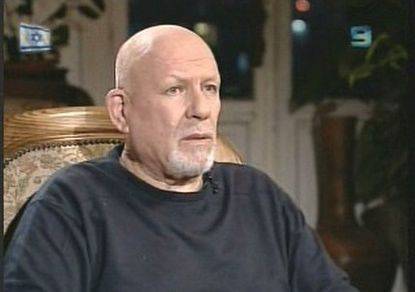
Yair Klein
As time passed, many more details became available concerning Klein’s well-connected relations with the Colombian ‘drug lords’, ‘farmers of right-wing opinions’ and others. Klein and several other Israeli counterinsurgency experts (along with one or more contingents from the UK) were in effect contracted by at least one of the major Colombian drug cartels – pursuant to a joint venture arrangement together with a rural business association representing major agribusiness interests and cattle ranchers (‘Acdegam’) and a notorious ‘Emerald Czar’, among others – to serve as instructors at a paramilitary training camp for up to fifty students at a time (different reports mention between one and three such training courses).
One analysis of events during this period (an essay in the final report of the Historic Commission created during the negotiations between the Colombian government and the FARC to investigate the causes and impacts of the armed conflict) describes the nebulous linkages and bonds that were being forged between a wide range of powerful actors and vested interest groups to confront and combat the guerrilla groups (which for several years had been rapidly expanding their military capabilities and territorial control in many regions), providing many important details and insights concerning some of the developments that were briefly mentioned in Part I:
(The paramilitary) organizations of Magdalena and Magdalena Medio were steadily building new alliances and linkages to the extent that in 1986 Adán sent his son Rigoberto to the self-defence school of Magdalena Medio, where he received military training. The 50 students at one of these paramilitary schools were recruited in the following manner: 20 from Magdalena Medio (chosen by Henry Pérez); 20 from Pacho (chosen by ‘El Mexicano’); 5 from the Plains (chosen by Victor Carranza, the ‘Emerald Czar’); and 5 from Medellín (chosen by Pablo Escobar and Jorge Ochoa). The instructors, who had arrived from Israel, told the students that once they finished teaching the course, they had another mission in Costa Rica and Honduras to train Nicaraguan Contras.
By 1989, there was talk of the existence of paramilitary groups in Urabá, Meta, Pacho (Cundinamarca), Cimitarra (Magdalena Medio in the province of Santander), Puerto Berrio, Doradal, la Danta, Las Mercedes and Puerto Triunfo (Antioquia), and Puerto Pinzón (Boyacá). Each of the participants in this network brought additional resources, connections and skills, but they also brought their own particular interests and objectives. Those that wanted to protect themselves from extortion; those that wanted to stop communism and win the war; those from the realms beyond civil society that wanted to protect their airstrips, laboratories and commerce; politicians, their patrons and voters. In Magdalena for example, the group of Rojas ended up offering amongst its ‘services’ persecution, threats, violent displacements of small land owners, and the assassination of trade unionists. The thread that brought them all together, despite their many differences, was a visceral hatred of the guerrillas, communists, and individuals and social and political movements that they stigmatized as ‘allies of the insurgent groups disguised as civilians’.
These networks, fluid in composition and which have been modified and reconstituted over time, nonetheless conserve some common characteristics. They articulate sectors of the military and the police, elected politicians, judges and cartels, no longer solely around the dispute for land, but above all in the pursuit of territorial control, to the extent that they have embarked upon a war for control over the constitution of social order at the local and regional level, in the sense that they have gone from disputing specific localities to governing them, at times extending their influence to the national level. (Wills Obregón, 2015)
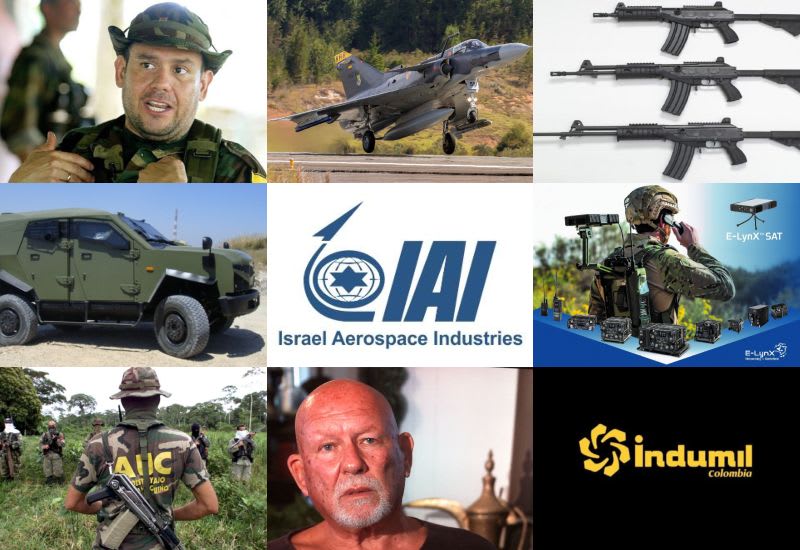
Click to see the full-size image
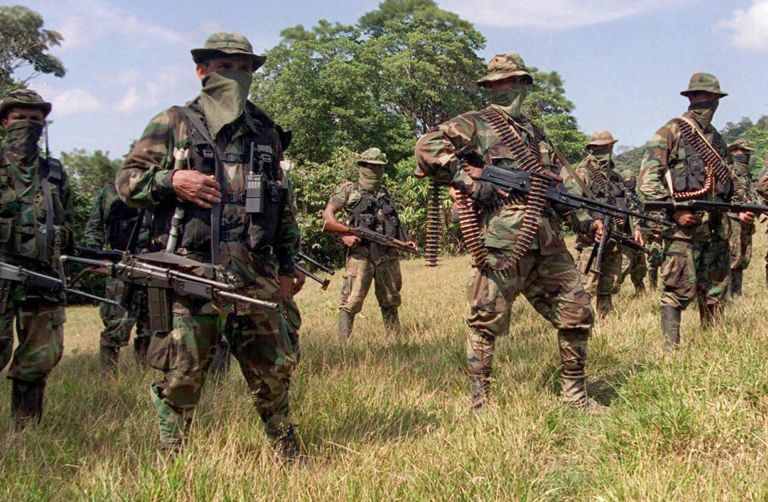
Many of Klein’s alumnos at the paramilitary training camp went on to become commanders of the most powerful paramilitary blocks in the country during the 1990s. One of these just happened to be Carlos Castaño, who was selected to head the national organization formed by the most powerful blocks in 1997 (the AUC) to represent their interests at the national level and to give a formal political status and collective personality or identity to the irregular counterinsurgency formations (although the Convivir program provided a semi-regular method of financing the ‘self-defence’ groups, the State never really developed a consistent and cohesive policy or formal structures to organize the respective groups relations with the conventional military structures). And, as noted previously, Castaño later claimed that the weapons shipment(s) through Chiquita’s private port facilities in northern Colombia was one of his greatest achievements.
Click to see the full-size image
An investigative report by Dan Cohen into the activities of Klein and another Israeli who was to have a significant influence on the course of the counterinsurgency war in Colombia during the late 1980s (Rafi Eitan), notes that Carlos Castaño’s relations with Israel went far beyond his attendance at the training camp as one of Yair Klein’s students, and may well have provided him with the necessary contacts to arrange the large shipment(s) of advanced weaponry that entered Colombia through Chiquita’s port on the Atlantic coast. Apart from the intensive advanced counterinsurgency warfare training he received in Colombia, Castaño was one of a reasonably select few who also received advanced military training in Israel:
In his autobiography, AUC founder Carlos Castaño wrote that he had studied from 1983-1984 in Jerusalem’s Hebrew University and in Israeli military schools. Castaño described the training in advanced weaponry and tactics he received that would become the basis of Colombian para-militarism’s war against farmers: “I received instruction in urban strategies, how to protect oneself, how to kill someone or what to do when someone is trying to kill you. We learned how to stop an armored car and use fragmentation grenades to enter a target. We practiced with multiple grenade launchers, and learned how to make accurate shots with RPG-7s.” Castaño also “received lectures on how the world arms business operates, and how to buy arms.” (Cohen, 2021)
Klein was later determined in legal proceedings in Israel to be guilty of involvement in arranging several large illegal arms shipments into Colombia, for which a moderate fine was imposed by the court. Many of the weapons from the shipments Klein helped to arrange found their way to the paramilitary groups and at least one of the major drug cartels (he was also found guilty in a Colombian court several years later, but he had already left the country and Israel has repeatedly refused requests by Colombian authorities for his extradition). Moreover, it was not just the quantity of weapons and equipment that was supplied but, above all, the qualitative leap in a wide range of military and intelligence capabilities and the destructive potential of the arsenals wielded by the drug cartels and the nascent paramilitary formations (particularly remote control explosives, which the drug cartels later used to devastating effect):
Yair Klein claimed that his first trip to Colombia (to the municipality of Puerto Boyacá) was for the purpose of training a group of farmers so that they could defend themselves from the guerrillas, and that he didn’t know that drug traffickers and paramilitaries had sponsored the program. Consequently, Klein ended up training, among others, the brothers Carlos and Fidel Castaño and the hit man who would later kill Luis Carlos Galán (a leading contender in the pending presidential elections). Klein was also involved in the procurement of weapons that ended up in the hands of alias ‘El Mejicano’ (one of the most notorious leaders of the Medellin Cartel), as well as numerous other controversial projects including coup attempts in Honduras, Panama, Lebanon and some countries in Africa.
According to declassified files of the US Department of State, Klein left Colombia in 1989 after training at least forty-five people in paramilitary activities. In 2001 Klein was sentenced by a Colombian court to ten years in jail, and in 2007 Interpol issued an arrest warrant which led to his arrest that same year in Russia. He was subsequently released by Russian authorities and permitted to return to Israel in 2010 (after an extraordinary intervention by the European Human Rights Court objecting to Klein’s pending extradition to Colombia, claiming that Colombia could not guarantee Klein’s safety). Israel still refuses to respond to the extradition request that Colombia has made for the former military officer to pay for his crimes. (Bernal, 2015)
Reporting on ongoing developments following repeated unsuccessful efforts to get Klein extradited to Colombia to face justice, the BBC compiled an updated revision of the myriad claims and counter-claims concerning the nature and objectives of his various activities and dealings in Colombia:
(Speaking as a witness in legal proceedings against paramilitary commander Ramón Isaza via video conference from his refuge in Israel, Klein claimed that his activities in Colombia were approved by and had) the direct support of the army and other Colombian State institutions, apart from having received financial support from someone who would later become the president of the country. “I won’t say the name because you all know perfectly well to whom I am referring. He was one of the ranchers in the zone, who paid me just as all the others did so that I could conduct the training course.”
(This is clearly a reference to Colombia’s president from 2002 to 2010, Alvaro Uribe, who also faces many allegations of complicity in drug trafficking activities and the crimes and atrocities committed by several of the paramilitary groups – many of Uribe’s closest family, political and business colleagues, and senior officers in the security apparatus during his tenure have been convicted on related charges, but up to now no court in the country has succeeded in bringing Alvaro Uribe’s trial to completion in such a manner as to conclusively address the multiplicity of charges and accusations involved).
On another occasion, Klein had claimed that he had travelled to Colombia at the invitation of the United States: “I was in Colombia at the invitation of the Americans, full stop. Everything that the United States cannot do, because it is illegal, they do through others.” Meanwhile, during an earlier interview with BBC Mundo in 2008, a former investigator from the Prosecutor General’s Office (Pablo Elias González) stated that: “It was Klein who taught the Medellin Cartel how to operate powerful explosives by remote control.” (BBC, 2012)
Among many other relevant details and possible clues concerning the activities of Rafi Eitan and Yair Klein while they were in Colombia and the broader networks of political contacts, business partners, collaborators and accomplices that they moved in or had access to, the investigative report by Dan Cohen identifies several other key threads and contacts which appear to connect the local syndicates and interest groups to similar networks in other countries in the region. With respect to the available information about Eitan’s regular trips to Colombia:
In 1985, Colombian President Belisario Betancourt and the FARC rebels negotiated a peace accord to end nearly three decades of armed conflict. The agreement formalized the creation of the Patriotic Union and saw ex-guerrillas join with communists, trade unionists, communal action boards and left-wing intellectuals to form a party that would integrate the FARC into the electoral political system. As negotiations were underway, Patriotic Union members were being killed. In May 1986, Liberal Party leader Virgilio Barco won the presidency. Shortly after he took office, the pace of assassinations of UP members skyrocketed. A whopping 400 members were assassinated in the first 14 months of his term.
According to an investigation by Donadio, Barco secretly brought the veteran Mossad agent Rafi Eitan to Colombia on August 7, 1986, seeking advice on how to defeat the FARC. After an initial clandestine meeting in Colombia’s presidential palace, Eitan spent months touring the country with Colombian advisors, secretly funded by the Colombian energy giant Ecopetrol. During the second meeting, President Barco explained Eitan’s recommendation to Secretary General Germán Montoya and a figure from the high military command present. Eitan even offered to preside over the killings himself in exchange for another honorarium, but the military commander rejected his offer, insisting that an all-Colombian force carry it out.
For decades, Eitan’s role in the Colombian genocide sat in plain sight, even as his presence flew under the media’s radar. The February 1, 1987 edition of the Colombian newspaper El Espectador featured a buried report on the hiring of Eitan, noting he was brought in for his expertise in ‘counterinsurgency’. In 1989, veteran journalists Yossi Melman and Dan Raviv reported in The Washington Post that the Israeli had been hired as a national security advisor to Colombia’s government.
When Donadio began searching for documentation of Eitan’s role, he found a memo and contract draft with an Israeli security firm called ‘Ktalav Promotion and Investment Ltd’ in the files of Barco’s legal secretary, Fernán Bejarano Arias, who is today the vice president of legal affairs at Ecopetrol. The document valued the deal at almost $1 million, including a fee of $535,714, which covered “up to 50 tickets for air transport purposes, round trip, on the Tel Aviv-Bogotá route,” among other expenses. The memo indicates that portions of the contract were agreed upon with the lawyer Ernesto Villamizar Cajiao. When Donadio contacted Villamizar and asked him about the contract with KPI, though not mentioning the Mossad spy’s name, Villamizar answered him with a question. “Rafi Eitan?”
While Eitan sought to keep his activities in Colombia discreet, a profile in the Israeli magazine Makor Rishon revealed that he played a central role in the March 1989 purchase of 20 Israeli Kfir fighter jets. Eitan “organized a visit by top army brass from Colombia – a visit which was followed by the Colombians ordering many things from the (Israeli) air force, and it brought Israel much benefit – but he himself was not permitted to participate in the meeting.” Following the purchase, Colombia sent several pilots to Israel for training. The jets were flown in numerous operations against the FARC over three subsequent decades.
Paradoxically, while the paramilitary groups (and major drug cartels) benefited enormously from their multiple dealings with Israeli arms traffickers and counterinsurgency warfare experts, the capabilities of the country’s armed forces do not seem to have benefitted much from their early dealings with the Israelis, as they were increasingly outmatched and outfought by the guerrilla forces in several key regions and were unable to contain the steady advance of their territorial presence and military capabilities throughout the country during the 1990s.
There was a major hiatus in bilateral relations during the 1990s, in part due to the scandal caused when Klein’s counterinsurgency warfare activities and weapons shipments became known to the public, but also because the Colombian government supported the rights of the Palestinians by voting in favour of UN resolutions condemning Israel’s flagrant and repeated violations of international law. (Colombia had also been one of the relatively few countries in Latin America to offer significant resistance to the enormous pressure exerted by the US to get them to vote in favour of the UN Partition Plan for Palestine in the Generally Assembly in 1947).
However, Israel’s military and ‘security’ activities in the country increased significantly during the presidency of Alvaro Uribe and his successors (Juan Manuel Santos and Ivan Duque) and would soon return to have a much greater strategic impact – among many other commercial transactions, weapons sales and other security-related programs, counterinsurgency warfare experts from the US and Israel regularly worked together (or in parallel programs and missions) to locate and destroy ‘high value targets’ such as senior FARC commanders.
From a broader perspective, the respective syndicates and groups of which Klein and Eitan appear to have merged into or overlapped with a series of integrated or complementary and alternative regional smuggling and influence-peddling networks throughout Central America and Colombia (and beyond), one whose extended membership or reach typically include a long and select list of powerful politicians, State officials and bureaucrats, businessmen, landlords and business associations, commanders and operatives in the security apparatus, among many others. Including the elaborate international money laundering syndicate mentioned by Israel Shahak, as well as a host of other related or very similar activities in Panama (discussed below).
Thus, in one of those apparently anomalous incidents which nonetheless seems to fit into a much broader pattern, Rafi Eitan and Yair Klein just happened to be in key positions which enabled them to participate at the highest level in a diverse range of activities related to the planning and conduct of the counterinsurgency war in Colombia (aptly described in one study as a process of ‘accelerated militarization’ of the immense variety of irregular and semi-official counterinsurgency forces), while at the same time greatly strengthening and diversifying the military expertise and capabilities of both drug cartels and paramilitary formations during the second half of the 1980s (which were used to apply a deeper covert strategy involving the ‘instrumentalization of terror’ against communities in regions where the guerrillas had established a significant presence).
At various moments Klein has claimed that he had the approval of military/ intelligence and/ or law enforcement officials from the US, Colombia and Israel. It is quite possible if not likely that this is indeed the case – all three governments routinely contracted ‘third parties’ as intermediaries and proxies to conceal their involvement in counterinsurgency operations and other covert activities (as noted in Part I with respect to the Contra campaign and counterinsurgency operations in Central America and Colombia in the 1980s and 1990s). It seems quite clear that Eitan’s situation was basically similar in this respect (albeit no doubt provoking considerable jealousy and resentment from the US in their rivalry to obtain maximum economic and military benefits from their geopolitical, commercial and technological prowess).
Nonetheless, the two Israeli military/ intelligence operatives (or private businessmen and consultants) played very different roles and operated at very different levels related to the massive escalation in the violence and destruction caused by the armed rebellion, the counterinsurgency war, the war on drugs and a covert campaign of State terror to deter and if necessary annihilate any potential manifestation of organized political opposition to or social resistance against the political and economic status quo.
With respect to the first distinct institutional and operational levels or dimensions of the armed conflict and the counterinsurgency war, Rafi Eitan appears to have had a significant role in organizing (or at least facilitating and closely monitoring) the sudden massive influx of weapons systems and other counterinsurgency or security-related products and services from Israel, among other expert counterinsurgency advisory and brokerage services. Hence, Eitan appears to have made a distinctive contribution to Israeli weapons sales, institutional influence and commercial dealings in Colombia more generally while he was acting as a consultant in the presidential palace, chipping out a relatively small but nonetheless very strategic niche for Israel out of the traditional US dominance over Colombia’s foreign relations, military ‘cooperation’, weapons purchases and international commerce.
Meanwhile, operating at another level and moving in different circles, were the counterinsurgency warfare consultancy services and commercial dealings of Yair Klein during several extended trips to Colombia and Central America in the second half of the 1980s, resulting in the cultivation of apparently close and enduring connections with various drug cartel leaders and paramilitary commanders (as well as tapping into or creating at least one very capable and efficient regional arms smuggling network and an associated international money laundering network to handle the financial transactions), some of which were mentioned above.
The advanced weapons training and military equipment provided by Klein and his colleagues generated a quantitative leap in the military and intelligence capabilities of the most powerful drug cartels and paramilitary groups during the second half of the 1980s, structural factors which were fundamental to the dramatic process of accelerated militarization and the instrumentalization of terror which ensued. In his detailed investigation of the matter, Dan Cohen surmised of the information he encountered concerning key aspects related to Klein’s activities while he was in Colombia and the multiple consequences and impacts that they had:
While Eitan was advising President Barco, an Israeli mercenary named Yair Klein arrived in Colombia and began training narco-paramilitaries in how to defeat the FARC insurgency. A retired military officer, Klein started a mercenary firm called Hod Hahanit (Spearhead) in 1984, drawing from the pools of former Israeli police and special operations units. In 1987, Klein landed in Colombia to meet with Israeli Lieutenant Colonel Yithzakh Shoshani and Arik Afek, both of whom had established themselves years before with lucrative deals selling military equipment in Colombia. Shoshani subsequently became the main conduit between Klein and his Colombian customers.
Klein told me in a telephone interview that he was working through the Israeli Ministry of Defense and the state-owned weapons manufacturer, Israel Military Industries (IMI), which had a contract with a Colombian data surveillance company obtained through Colombia’s Ministry of Defense. He said he was originally hired to provide security for the banana-growing operations in the region of Uraba, where the American fruit company Chiquita had paid millions of dollars to Colombian death squads.
Shoshani, he explained, worked for a company called AMKAN, which is a subsidiary of IMI. The Colombian Federation of Cattlemen, long known for its ties to paramilitaires, contacted Shoshani to have Klein train a force to fight guerrillas. With Shoshani guiding him, Klein returned to Israel in 1988 and met with top paramilitary and military figures as well as wealthy businessmen. All of this, Klein assured me, was done with the full knowledge of the Israeli government. “You can’t do anything without permission from the Ministry of Defense,” he said. Klein’s statement upends the claim of then-Defense Minister Yitzhak Rabin, who told the Jewish Telegraphic Agency that the Israeli Defense Ministry had denied Klein’s company a license and warned him to leave the country.
Klein held three training sessions, each for around 30 people. Assisting him were three trainers, all of whom were colonels in the Israeli army: Tzadaka Abraham, Teddy Melnik and Amatzia Shuali. Klein trained brothers Carlos and Fidel Castaño, the squad leaders who would go on to form the notoriously violent United Self-Defense Forces, known in Spanish by its acronym, AUC. Under the patronage of wealthy landowners, drug lords, ranchers, politicians and the Colombian military, the AUC committed bloodcurdling massacres all over the country, even using chainsaws to murder and dismember peasants, all aimed at terrorizing communities into fleeing from their land.
The United Nations estimated in 2016 that the AUC was responsible for 80% of the deaths in the conflict (during this period). Eventually Carlos Castaño was killed, allegedly by his brother Vicente, another powerful paramilitary leader. And, though the AUC officially demobilized in 2005, the paramilitaries soon enough were reconfigured under various banners and new formations, remaining closely linked to the state and business interests.
Klein also trained Jaime Eduardo Rueda Rocha, who in 1989 assassinated Liberal Party presidential candidate Luis Carlos Galán, the overwhelming favorite to win the upcoming election. Not only had Klein trained the killer, but the weapon Rueda used was part of a shipment Klein orchestrated of 500 Israeli-manufactured machine guns from Miami to the Medellin drug cartel, according to a 1989 Senate Committee on Foreign Relations report. (In 2016, Miguel Alfredo Maza Márquez, former head of Colombia’s Administrative Department of Security (DAS), was convicted of participation in the plot to murder Galán and sentenced to 30 years in prison. He has since testified that senior military commanders also participated in the plot to assassinate Galán.)
As the revelations that a military reserve officer had been training death squads created an international scandal, the Israeli government filed charges, convicting Klein of illegally exporting weapons and military expertise. In 2001, the Colombian government tried Klein in absentia, sentencing him to eleven years in prison. In 2007, Klein was arrested in Moscow on a warrant issued by Interpol, and spent three years in prison. Colombia sought his extradition, but in November 2010 the European Court of Human Rights ruled that Colombia could not guarantee his physical safety. The Russian government complied with the ECHR’s ruling and released Klein, allowing him to return to Israel. Colombia has since requested his extradition, but the Israeli government has refused. Klein’s company, Hod Hahanit, remains active to this day.
While Donadio’s groundbreaking investigation has created a controversy in Colombia, it does not answer whether Rafi Eitan and Yair Klein’s simultaneous and respective operations advising the government and death squads were a joint effort or merely coincidental. For his part, the lawyer Ernesto Villamizar told Donadio that Eitan and Klein had nothing to do with each other. Klein corroborated his claim, saying that he was unaware of any of Eitan’s activities in Colombia.
However, an AP article references an Israeli media report that Rafi Eitan (spelled Eytan in the article) was in Colombia at the same time as Klein and left days before the gunman armed and trained by Klein murdered presidential candidate Luis Carlos Galán: “[The media report] said Rafael Eytan, an Israeli counterterrorism expert, denied suggestions that he was a consultant to Israeli companies operating in Colombia and said he had cut all business ties to that country.” According to the report, Eytan confirmed he flew to Colombia a week ago for private reasons. (Cohen, 2021)
Although the political and social conditions in each of the Central American countries were completely different in many ways, upon further analysis it appears that in most of them it is possible to discern a similar shadowy presence of equally ‘well-connected’ Israeli military/ intelligence operatives, freelance counterinsurgency/ security experts and consultants and businessmen moving among the highest levels of the Establishment, taking advantage of these contacts and relationships to build up significant assets and capabilities in a wide range of economic and technological sectors at critical moments.
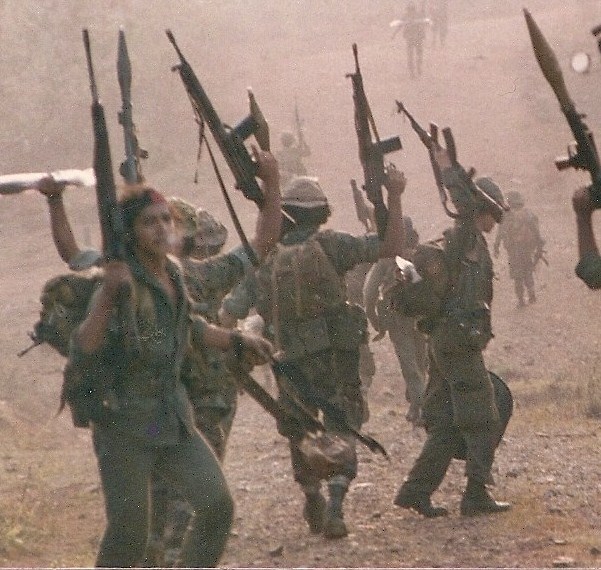
In this context, around the same time that Eitan and Klein were in Colombia helping to devise the counterinsurgency strategy and train and equip the most powerful paramilitary groups respectively, there were similar anomalies occurring throughout Central America – such as the covert groups of Israeli counterinsurgency experts helping to train and equip Battalion 316 in Honduras and the G2 military/ intelligence unit in Guatemala, a similar overhaul and upgrading of the highly integrated and centralized counterinsurgency/ terror apparatus in El Salvador, and as mentioned in one of the passages cited above, acting as instructors at training camps for the Contras in Costa Rica and Honduras.
Although the Israelis had built up a considerable presence throughout Central America since at least the 1960s in most countries, their military/ intelligence-related and commercial dealings and direct participation in counterinsurgency warfare programs increased exponentially from the mid-1970s. One of the factors behind this development was that the US was forced by public pressure to cut off or substantially reduce all official military and security-related assistance programs to the military dictatorships in Guatemala, Nicaragua, Honduras and El Salvador in the late 1970s and early 1980s; in each instance, Israel immediately stepped in to provide all necessary supplies and equipment, which had the additional benefit of establishing or consolidating extensive contacts and relationships at the highest levels of political, economic and military power in the respective countries.
The scale and diversity of Israel’s presence and activities in the region received another substantial boost in 1983 when Argentina, which had sent large numbers of counterinsurgency warfare experts to Central America during the military dictatorship (1976-1983), withdrew all official and semi-official military personnel from the region and terminated all military supplies and assistance to the de facto military dictatorships in Guatemala, Honduras and El Salvador after Argentina returned to civilian rule. Again, Israeli counterinsurgency experts, weapons and equipment immediately replaced those which had previously been supplied by Argentina. And finally, there was the other development mentioned in Part I, one which was also directly related to Argentina’s furtive withdrawal from the Central American killing fields – supplying and supporting the armed insurgency of the Contras against the revolutionary Sandinista government in Nicaragua.
Considered from a broader historical and geopolitical perspective on the course of the armed conflict in Colombia, although the overall scale and impact of the combination of covert and overt military/ intelligence/ security/ counterinsurgency warfare cooperation, weapons transfers and training programs provided by the US were much greater in magnitude and scope (some aspects of which, such as ‘Plan Colombia’, were mentioned in Part II), the roles played by small groups of Israeli operatives and intermediaries during the presidency of Virgilio Barco would have a major influence on subsequent developments in the course of the armed conflict.
Nonetheless, as mentioned in Parts I and II, all of these many and varied contributions to the Colombian armed conflict(s) and the counterinsurgency (‘security’) apparatus by the US and Israel were further supplemented by a wide range of autonomous (or outsourced?) private sector security/ counterinsurgency projects and activities supported and financed by a large number of major foreign and domestic companies and landlords (particularly in the agribusiness, mining and energy sectors), even before foreign companies in effect took over the operational management and maintenance of many of the most advanced and strategic military/ intelligence installations and operating platforms in the country. Renan Vega succinctly describes how such activities and forms of direct and indirect participation in the armed conflict by foreign actors (particularly the US) fitted into the broader historical and social context:
A native counterinsurgency program existed in Colombia prior to the emergence of the modern counterinsurgency doctrine – a program which was also sustained to some extent by anti-Communism – but it was reinvigorated by and merged into the latter doctrine as a consequence of the overriding geopolitical interests of the United States during the Cold War.
Hence there were many external actors, both State and non-State, who contributed to and benefited in some way from the Colombian armed conflict and the program of accelerated militarization of the irregular counterinsurgency forces that was adopted in the second half of the 1980s, often taking advantage of and at the same time further contributing to and exacerbating Colombia’s chronic condition of strategic subordination, multi-dimensional structural dependence and endemic corruption.
Click to see the full-size image
Intelligence Gaps, Smuggling Networks and Covert Operations in Central America: The Contras
As argued previously, a critical weakness that has plagued the war on drugs from the outset has been referred to as ‘Intelligence Gaps’: the systemic failure of anti-drug agencies and law enforcement officials to detect major international trafficking routes and smuggling methods, sometimes for many years. There is however considerable evidence to indicate that in more than a few cases, such massive intelligence failures could perhaps be more accurately described as rogue or ultra-covert Intelligence Plots, Intelligence Proxies, or Intelligence Drug-Running, Fund Raising, Misinformation and Cover-Up Operations.
The situation is further complicated by the existence of other covert (and often illegal) counterinsurgency operations, such as Operation Condor, where US officials continued vehemently denying any active participation in the operation for many years despite an abundance of evidence that they were obviously lying through their teeth, a situation that was hardly exceptional. Indeed, as argued in Part I, it has been an intrinsic feature of US foreign policy for many years. In this sense, in any given situation there were often two parallel tracks or realities, pursuant to which the most basic and fundamental premises and facts of official accounts often conflicted sharply with real world developments concerning what the government was really doing and why, notwithstanding that the two realities invariably intersected and overlapped at certain points.
Nonetheless, even in this context of universal subterfuge and deceit the Contra operation was something else. For a variety of reasons related to the existence of a peculiar set of unusual or atypical underlying factors and circumstances, the US efforts to destabilize and overthrow the government in Nicaragua after the ouster of the Somoza dynasty (which had always been very US-friendly, if somewhat problematic at times) are a further illustration of the fundamental parallel or split reality in terms of the planning, execution and official explanation of US foreign policy interests and objectives in the region, as opposed to how the real foreign policy objectives were being achieved by concrete actions. Moreover, the extremely unusual geopolitical setting and the interplay of a wide range of other dynamics and activities inevitably resulted in a high degree of convergence with the illegal drug trade and the war on drugs at a variety of levels and dimensions. For all of these reasons, the planning and execution of the Contra campaign within the broader setting of the Reagan administration’s anti-Communist crusade in Central America provides a useful framework to further explore how this profusion of trends and developments evolved and mutated over time.
In the context of Latin America more generally, developments in the countries in Central America and Colombia during the Cold War followed a somewhat autonomous course from those in Mexico and South America, demonstrated among other aspects by the fact that neither the Central American countries nor Colombia ever officially joined the tightly integrated Condor counterinsurgency warfare program (though there were undoubtedly many forms of contact and interaction via informal channels and personal, commercial or ‘fraternal’ relationships). (McSherry, 2002: Lee, 1982: Marshall et al, 1987)
Although other factors were involved, this was largely due to the region’s geographic proximity to the US, and also to the fact that from the 1940s until the mid to late 1970s the integrated system of US supremacy that had been cultivating in each country never faced serious challenges from domestic political opposition forces or significant armed insurgencies (while those that did emerge were being adequately dealt with by the existing operational counterinsurgency structures and arrangements for the most part). In this respect, despite the longevity of the main guerrilla groups in Colombia (the FARC-EP and the ELN, both of which were founded in the mid-1960s), up until the late 1970s they remained isolated and relatively weak in terms of both numbers and military capabilities.
These then were some of the most influential underlying factors and influences at the international level leading up to and during the early stages of the catastrophic civil wars that swept through Central America in the 1980s. Considered from this paradigm or conceptual and analytical framework, the convergence of the illegal drug trade and war on drugs with the multitude of civil wars, armed rebellions, proxy wars, covert counterinsurgency operations and the generalized condition of indiscriminate violence and terror that reigned throughout Central America and Colombia during the 1980s continue to confound all efforts to reach a definitive conclusion as to what really took place and who was involved, though some studies have provided a lot of background information and clues as to specific developments at certain moments.
Of all the dramatic and extraordinary developments and revelations that took place during this tumultuous period, that which captured most attention in the US (and hence internationally) was almost certainly the ‘Iran-Contra affair’. Although the primary focus of the political controversy was the secret financial transactions and intermediaries involved in shipping relatively advanced weapons systems from the US to Iran (which was subject to a strict arms embargo at the time) in order to generate additional funds to support the Contra’s activities, the congressional hearings lifted the lid (partially at least) on many of the other ‘behind-the-scenes’ activities related to the Contra campaign (as well as the multi-faceted and also mostly covert US participation in the counterinsurgency wars that were raging in neighbouring Guatemala and El Salvador), while other independent investigations have added many other details and insights. The media attention generated by the politic controversy also served (again, albeit partially and momentarily) to loosen the tight regime of censorship and control over all public debate in the US with respect to the conduct of foreign policy.
Moreover, the specific case of Nicaragua in the early 1980s provides a peculiar illustration of the correlation of forces and motives behind developments that were also influencing the course of events in the rest of the region for another reason, due in large part to the success of national liberationist and revolutionary forces in overthrowing the dictatorship of the Somoza dynasty. Consequently, the country provides an unusual case study of the US tactics and methods used for the creation and maintenance of proxy armed insurgent forces over an extended period of time with the explicit objective of overthrowing an established government by force, rather than the far more common situation at the time of propping up its client States by creating, equipping and supervising an integrated counterinsurgency security apparatus.
A documentary produced by Bill Moyers at the height of the Iran Contra controversy (“The Secret Government: Constitution in Crisis”) provides a sense of the political climate at the time and a glimpse of some of the key actors involved. Another unusually comprehensive and informative investigation of key events and factors that were taking place in Central America during the 1980s, including both domestic political conditions in the countries most affected, the broader geopolitical environment, and the most important State and non-State actors involved, is the detailed investigation by Marshall, Scott and Hunter published in 1987. The principal focus of the study however is the ‘Iran-Contra’ scandal and how these were connected to the broader Contra program (involving Reagan’s decision to ‘outsource’ the implementation of its anti-Communist counterinsurgency crusade in Central America to a wide range of third parties that included both State and non-State actors).
The authors of the latter investigation recount how, around the mid-1970s, the Carter administration adopted a relatively ‘moderate’ and diplomacy-based foreign policy (for the US) and even attempted to reign in the worst excesses of the ‘Deep State’ (or ‘Rogue State’) buried within the bowels of the Military-Industrial Complex: the hearings of the Church Committee into assassination plots against foreign heads of State and other illegal operations run by the CIA, and the termination of military aid to some of the most oppressive military regimes in Latin America during his tenure (including Nicaragua, Guatemala, Argentina and Chile) were two major elements of these efforts to bring the planning and conduct of US foreign policy within the parameters and standards established by the Constitution and international law.
This somewhat anomalous situation (for the US) changed dramatically when Ronald Reagan entered the Oval Office, as the newly installed administration immediately set about restoring the clandestine cells and covert operations that the Carter administration had temporarily interrupted in order to wage an all-out anti-Communist crusade in Central America. The ‘Reagan Doctrine’ maximized the use of proxies, intermediaries (cut-outs) and opportunistic alliances as protection mechanisms and force multipliers to conceal and dilute or obfuscate the underlying chain of command and responsibility for specific actions, allocating ‘sensitive’ (that is, blatantly illegal and heinous) tasks and functions among a large number of separate organizations and groups whose extended networks of collaborators often included a cluster of secondary intermediaries and operatives, with a highly centralized and secretive command and control centre operating at the centre of the tangled web of compartmentalized sub-systems, supply lines and logistical networks dispersed through the region, all of which was plugged into and supported by other basically similar informal or covert networks at the international level:
Although the basic premise, objectives and modus operandi of the strategy were of some antiquity, Reagan extended their generalized application and the associated range and scale of covert activities, compartmentalized programs and the outsourcing of foreign policy to unprecedented levels:
The Reagan strategy had its roots in the classic intelligence practice of using proprietaries and ‘cut-outs’ to effect policy while preserving deniability. Always useful against unwanted public scrutiny, these techniques were perfectly suited to the 1980s’ political environment of presidential activism on behalf of the ‘Reagan Doctrine’, the commitment to roll back pro-Soviet regimes in the Third World. Congressional doubts and public hostility made overt pursuit of that doctrine difficult or impossible. Even the CIA was a problematic tool of policy owing to legal requirements that it report covert operations to Congress.
Reagan’s secret weapon is ‘contracting out’ such normal government functions as funding and executive policy to the ‘private’ sector while keeping policy making itself in the hands of the State. This strategy involves much more than confining policy making to a tight circle within the National Security Council. Reagan’s innovation was much more significant: while bypassing standard channels of government, his administration found foreign governments and rich individuals to contribute the money; CIA and military special operations veterans to contribute the manpower; and private firms to contribute the logistics for its operations.
In effect, White House operatives set up a parallel Treasury, Army, Air Force and State Department to negotiate with terrorists, fight covert wars and subvert the law wherever they deemed appropriate. Farming such covert operations outside even the CIA served to insulate the president and his advisors from scrutiny and responsibility. As a result, major elements of White House policy escaped public notice or congressional review. This parallel private network functioned outside normal lines of oversight and accountability, and once set in motion, could operate effectively with minimal presidential guidance. The White House decision-making centre for covert operations and contracting-out strategy lay within a tiny team of select State, Defence, CIA and NSC officials known as the ‘208 Committee’ or ‘Policy Development Group’. Its mission was to implement the Reagan doctrine of fighting Soviet influence throughout the world, wherever possible by supporting indigenous forces.
Nicaragua saw the first application of the strategy (the outsourcing of covert operations on an unprecedented scale). The Reagan administration’s policy toward the Sandinistas from the start was summed up by the title of a report prepared by the then-State Department counsellor Robert MacFarlane in 1981: ‘Taking the war to Nicaragua’. But owing to congressional reticence, the White House had to lie about its ultimate intentions, pledging that CIA assistance to the Contras merely served to block Sandinista arms shipments to the Salvadoran rebels. ‘There were always two tracks’, one CIA official explained, ‘the publicly stated CIA objective of interdicting weapons to Salvadoran guerrillas, and the overthrow of the Sandinista government.’ On March 9, 1981, President Reagan took the first step to launching the covert war under that public goal by issuing an official ‘finding’ that Nicaraguan arms smuggling was harming US national security interests. (Marshall et al, 1987)
Thus the Reagan administration had established a parallel Treasury, Army, Air Force and integrated covert operations apparatus directed by a secret high-level executive committee in the White House and exempt from the conventional lines of congressional and legal oversight and accountability, an elaborate transnational intelligence network and war machine which once created and set in motion could operate by remote control for the most part, requiring minimal active participation in or supervision of specific decisions and operations.
As a result, a range of covert and semi-covert logistical centres, training camps and forward operating bases were established in the countries around Nicaragua, a series of parallel structures and networks that was capable of moving large numbers of combatants, weapons and supplies from one location to another at a moment’s notice. Major training camps, transportation routes and storage facilities were located in Guatemala, El Salvador and Costa Rica, while at the height of the Contra campaign a series of forward operating bases along the border between Honduras and Nicaragua served as the main launch pad for paramilitary operations to attack communities and sabotage infrastructure and essential services in Nicaragua.
Meanwhile, the two track strategy (consisting of the fundamental differences between the stated objectives and the real objectives of the Contra campaign, producing a corresponding divergence between official descriptions of the resources and activities that were being used to realize the stated objectives, as opposed to what ‘the secret team’ was really doing and why) required an increasingly elaborate and multi-dimensional range of complementary sub-programs.
Another study also examined this aspect of Nicaragua’s temporary status as a major focal point and target in terms of the geostrategic Cold War chessboard (Walker, 2003), along with the extraordinary accumulation of contradictions and cataclysms that built up and converged as the efforts to overthrow the Nicaraguan government proceeded alongside the simultaneous counterinsurgency wars in Guatemala and El Salvador (where the US and Israel were propping up brutal military dictatorships), both of which had also reached fever pitch. Among many other salient aspects, the study points out that although specific decisions and tactics could be criticized and contested, the overall Cold War geopolitical paradigm that had been constructed could not:
In June (1979) a broad-based government-in-exile was announced by the FSLN. Alarmed by the near certainty of a popular victory, the United States tried various ways to block such an outcome, including a request to the OAS that a peacekeeping military force be sent to Managua. When this proposal for armed intervention was unanimously rejected, the Carter administration finally began to deal directly with the provisional government. Using various threats and promises, it tried unsuccessfully to force the FSLN to agree to preserve the National Guard – albeit in an altered form – and to include ‘moderates’, such as members of the guard and Somoza’s party, in the government.
When the FSLN refused, Washington finally accepted the inevitable and arranged for the departure of Somoza to Miami on July 17. A day later, the provisional government took the oath of office in a ceremony held in Leon, and on July 19 the FSLN entered Managua and accepted the surrender of most of what was left of the National Guard. The new system was inevitably controversial both at home and abroad. (The FSLN) were automatically viewed with suspicion by Nicaragua’s middle- and upper-class minority – who feared the immediate imposition of a Soviet-style state and economy – and by foreign policy makers in Washington, who were worried about the spectre of a ‘second Cuba’. Internally, these fears led to rapid class polarization, rumour mongering, and a notable lack of cooperation in the reconstruction effort on the part of the private sector.
Internationally, especially after the election of Ronald Reagan in the United States, these perceptions produced a multifaceted program to destroy the Sandinista Revolution, including a campaign of propaganda and disinformation depicting the government of Nicaragua as a grim, totalitarian Communist regime and an instrument of Soviet expansionism in the Americas. Although most of these allegations were either completely groundless or very nearly so, the US mass media and opposition politicians (perhaps fearing to appear ‘naïve’, ‘liberal’, or ‘biased’) rarely challenged the carefully cultivated ‘conventional wisdom’. Reagan’s tactics for dealing with the Sandinistas could be criticized but not the administration’s picture of the Nicaraguan regime itself.
For US scholars who did research in Nicaragua during this period, the discrepancy between what was heard in the United States and what was seen in Nicaragua proved stark and frustrating. Far from being a coterie of wild-eyed ideologues, the Sandinistas behaved in a pragmatic and, indeed, moderate fashion throughout the nearly eleven years they were in power. And contrary to the ‘conventional wisdom’, their performance in the area of human rights – though not flawless – would probably rank Nicaragua at least in the top third of Latin American states.
Sandinista rule was marked by a high degree of consistency and continuity throughout. (Domestic) and international policy, though adaptive in detail, remained consistent in overall characteristics and goals. During the entire period, the Sandinistas promoted (1) a mixed economy with heavy participation by the private sector, (2) political pluralism featuring interclass dialogue and efforts to institutionalize input and feedback from all sectors, (3) ambitious social programs, based in large part on grassroots voluntarism, and (4) the maintenance of diplomatic and economic relations with as many nations as possible regardless of ideology.
Finally, as is true in all states in time of war or threat of war, certain human rights were gradually infringed upon in the name of national security. (However), at no point during this period did human rights infringements in Nicaragua even remotely approach the wholesale abuses prevalent in a number of other Latin American countries. In fact, late in 1982, the US ambassador to Nicaragua admitted candidly to a group of which I was a part that the human rights situation there was better than in El Salvador or Guatemala – ironically two countries that Washington was then trying to portray as having made great strides in this respect.
Meanwhile, the report on the disarmament and demobilization of the AUC in Colombia completed in 2009 provides a reasonably representative sample of the interpretation and explanation of these event from the other side of the ideological divide. In a section pointing out the significance of several fundamental differences that can be distinguished between the respective political and security situations in Colombia and the countries most affected by armed conflicts in Central America (Guatemala, El Salvador and Nicaragua), the authors comment of the historical context and social conditions underlying the numerous civil wars and other armed conflicts that erupted in each of these countries with utmost fury in the 1980s:
This analysis will avail itself of a comparative focus on Central America, whose recent history has been marked by the outbreak of war and a subsequent search for peace, in Guatemala, El Salvador and Nicaragua. In the three aforementioned countries, a variety of armed movements manifested, either legal or extra-official, in response to the growth of the guerrilla groups between the 1960s and 1990. Although the nature of these armed factions was extremely diverse and some of their members were not included in the peace negotiations which were eventually conducted in each country, the scenario in Central America is an opportunity to understand the peace initiatives with the self-defence forces in Colombia in a regional perspective.
In contrast to the situation in Colombia, the conflicts in Central America, which were heavily influenced by the ‘East-West’ geopolitical contest, took place in the context of authoritarian military regimes, in such a manner that the final accords signed by the belligerent parties in each instance were marked by a double transition – towards peace and towards democracy – and by strong participation and support from the international community. These transitions in Latin America were also accompanied by ambitious projects for the disarmament, demobilization and reintegration of the regular troops, the guerrilla movements and/ or counterinsurgency factions denominated as ‘Contra’, ‘death squads’ and ‘Civil Self-Defence Patrols’, among others.
In El Salvador, Guatemala and Nicaragua, where the protagonism of the counterinsurgency groups was significant from the 1960s until 1990, the transition towards democracy encountered resonance in the peace talks, and vice versa. It is important to point out that, except for the democratic interlude in Guatemala in the 1940s and 1950s, which was terminated by the coup d’état in 1954 supported by US intelligence services, the three societies essentially lived under authoritarian regimes in the context of a tremendous East-West rivalry.
Due to the longevity of the authoritarian regimes and the magnitude of the conflicts, the armed forces played a central role in politics in Central America, even when they had not assumed presidential functions directly – as occurred in Nicaragua from 1979, 1982 in El Salvador and 1986 in Guatemala – developments which were a major concern raised in the peace negotiations and the initiation of the democratic phase of governance in the 1990s. (OVPR, 2009)
In a section providing further analysis of the situation in Nicaragua during the 1980s the authors state in part:
The 1970s and 1980s were a time of convulsion and upheaval in Nicaragua. In 1979, the taking of power by the ‘Frente Sandinista de Liberación Nacional’ (FSLN) led to the creation of a counter-revolutionary movement – commonly known as the ‘the Contras’ – which changed its name to ‘Resistencia Nacional’ (RN) when peace talks began after a decade of armed struggle. During the first months of the 1980s the armed opposition was embryonic and disorganized. The brunt of the fighting was born by units of the defunct ‘National Guard’ which served the dictatorship ruled by the Somoza family, and also by some sectors of the rural population in the north of the country along the border with Honduras (‘Milicias Populares de Liberación Anti-Somozistas’ – Milpas), where the authorities allied themselves with the forces fighting the Sandinistas during the war.
It can also be noted that, strictly speaking, the soldiers of the former ‘National Guard’ constituted paramilitary units (due to their origin, training and discipline) which were at war with a State which had been coopted by the FSLN, acting at times with a modus operandi similar to that of the ‘death squads’.
The peace talks began later in Nicaragua than in El Salvador, in large part because of the strong intervention by external actors in the conflict – mainly Argentina, the United States and Honduras for the Western block. The remnants of the ‘National Guard’ formed the nucleus of the ‘Fuerzas Democráticas Nicaragüenses’ (FDN), which benefited considerably from the internationalization of the conflict. They received military training, weapons and finances from a heterogeneous coalition of actors (States, mercenaries and businessmen, among others) led by the United States, which had been involved in an anti-Communist crusade on the isthmus since the 1940s.
The FDN, whose membership was estimated at 20,000 combatants, attempted to reach a symbiosis between the representatives of the extreme right, those disappointed with the revolutionary cause of the Sandinistas, and rural populations who objected to the collectivization of land. Within this broader process, the rural communities and farmers in the north of the country, many of whom had taken up arms in the style of self-defence militias in reaction to the incursions and exactions imposed by the Sandinistas, were subjected to a form of para-militarization and political indoctrination by the ‘National Guard’ and foreign military experts and advisors (mostly from Argentina, the United States and Guatemala) from their base camps in Honduras.
In the course of the conflict, other resistance fronts were consolidated in the south of Nicaragua (‘Alianza Revolucionaria Democrática’, ARD) and towards the northeast coast (‘Miskitu Sumu Rama’, Misurata), where Indigenous communities organized partially para-militarized self-defence militias to defend their land and customs while at the same time trying not to become absorbed into the interests of foreign powers or the other groups involved in the armed confrontation against the FSLN.
As the covert operation expanded in scope and ambition (as noted in the preceding passage, it has been estimated that at its peak there were up to 20,000 combatants in the renegade multi-national paramilitary/ armed insurgency forces), the reluctance of the US Congress to support the program didn’t slow them down, but the requirements of the rapidly escalating situation did:
The need for continued deception and greater action prompted a November 16, 1981 Presidential order to begin a full-scale campaign against Nicaragua. The November order specifically ordered the CIA to wage its covert war ‘primarily through non-Americans’ and ‘with foreign governments as appropriate’. In implementing that early version of the ‘contracting out’ strategy, the CIA piggybacked on operations already underway by two other governments: Argentina and Israel.
Over the following years the Congress steadily reduced the level of funding and resources that could be provided by the US government to the Contras, while at the same time increasing the conditions and requirements specifying what those resources could – and could not – be used for. Consequently, the Reagan administration increasingly turned to third parties that could be recruited as proxies or partners to supply financial support, materials and equipment, counterinsurgency warfare experts and combatants, including a long list of allied (or subordinate/ client) States, as well as wealthy individuals, companies and other non-State actors:
Money for the contras that once flowed freely from CIA contingency funds accounts began to dry up in 1983 when Congress began setting limits on its funding of the burgeoning and ever-more-unpopular war. Legislators were finally awakening to the fact that the Argentine-trained Somocistas wanted not a democratic accommodation with the Sandinistas, but their ouster. In December of 1982 the House of Representatives passed a bill sponsored by Rep. Edward Boland barring U.S. covert actions ‘for the purpose of overthrowing the government of Nicaragua’. That new law alone did not slow the administration down, but the demands of an enlarged war did.
(When the Congress finally imposed a total prohibition on the supply of any further resources to the Contra project in 1984, those running the project and the Contras themselves) had some resources of their own to fall back on – most notably, as we shall see in Chapter VI, profits from drug trafficking. Together with [Assistant Secretary of State for Inter-American Affairs Elliot] Abrams and other officials and private agents, North raised money from a remarkable variety of sources outside the United States – and thus outside the jurisdiction of Congress. Amos Perlmutter, an American political scientist with close connections to the Israeli government, reports that, ‘All those who are clients of the United States have been told more or less, “You’ve got to do something for the Contras”’. (Marshall et al, 1987)
Thus there were two basic types or forms of foreign support, cooperation and assistance (by other external State actors) in the war against Nicaragua and the anti-Communist crusade being waged throughout Central America that the Reagan administration could call upon: the first was direct participation in the Contra campaign. These typically involved bilateral military cooperation and weapons supplies (usually by way of secret agreements and joint programs), including in some cases other forms of security cooperation and support at the highest levels of the security apparatus (whether for internal security and counterinsurgency operations in Guatemala, Honduras and El Salvador, or contributing to the Contra’s military operations and attacks against Nicaragua).
As mentioned in the passage cited above, the two most significant external State actors who were providing weapons and training as well as organizing and directing major counterinsurgency operations in Central America in the early 1980s were Israel and Argentina. Such participation was direct and substantial from the outset in the case of Argentina, as the commanders of the military dictatorship that ruled the country from 1976 to 1983 had already sent high level counterinsurgency task forces to the region in support of the military or quasi-military regimes in El Salvador, Guatemala and Nicaragua (until the ouster of Somoza in 1979).
The second basic type or form of involvement and support by other foreign States was generally limited to financing the Contra campaign, supplying equipment and other materials, or in some cases actively providing logistical support. One of the latter type of proxy, partner or client States supporting the campaign was South Africa, which in the mid-1980s provided several planes to the Contras, among other war materials. (Among other covert activities and joint projects, the apartheid regime in South Africa was at the time also cooperating closely with the United States and Israel to wage another major semi-covert war against the independence leaders in Angola, the latter receiving substantial support from Cuba and the Soviet Union to withstand the attacks and eventually repel the invading forces).
Meanwhile, the sultan of Brunei reportedly provided $10 million and the Saudis kicked in with another $32 million. South Korea provided material support to the Contras, as well as serving as a key shipment and trans-shipment route (the latter function reportedly including some of the arms shipments to Iran). Other governments which were reported to have made significant contributions to ‘the cause’ were Venezuela, Guatemala and Taiwan (either directly or via patriotic and philanthropic companies and wealthy individuals). Marshall, Scott and Hunter surmise of these respective sources of funds and other support:
Nearly all of these foreign funding sources were either untraceable (AWACS kickbacks, Iran payments through Switzerland) or untouchable (Israel, South Korea). A Congress united behind Israel was not inclined to ask too many questions about its arms deliveries in Central America or Iran. Nor, after Jimmy Carter’s abortive talk of a pullback from Korea, would Congress cut off the Seoul regime. Thus the White House could, for a time at least, safely flout the intent of Congress with help from these US aid recipients.
The Contra Operation and Drug Smuggling Activities in the Region
From this unauthorized and unacknowledged perspective on the modern history of US foreign policy, military interventionism, the selective targeting of criminal syndicates, and other major developments and events related to drug trafficking and the war on drugs in Latin America, the allegations to the effect that the Contra operation organized by the Reagan administration (‘regime’) against the government in Nicaragua included a major sub-program involving arms-for-drugs shipments mentioned by the authors in the passage cited above has received a substantial amount of corroboration from a wide variety of sources. Specifically, with respect to the use of proceeds from drug trafficking to fund the Contra campaign, the authors point out the existence of a variety of sources of information implicating senior members of the World Anti-Communist League in drug trafficking activities in several Latin American countries:
The Strategy of Tension: CAL, P-2, Drugs, and the Mafia
Reports linking WACL (World Anti-Communist League) to drugs became particularly flagrant in the period 1976-80, as the rift between WACL and Carter’s CIA widened, and as a new Argentine-dominated affiliate of WACL in Latin America (the Confederación Anticomunista Latina, or CAL) plotted to extirpate radical Roman Catholic priests and prelates fostering liberation theology. A high-point or low-point of the CAL plotting was reached in 1980, when Argentine officers, bankrolled by the lords of Bolivia’s cocaine traffic, installed the Bolivian drug dictatorship of Luis Garcia Meza. Two of the Argentine officers turned out to be wanted Italian terrorists, Stefano delle Chiaie and Pierluigi Pagliai; together with the veteran Nazi fugitive and drug trafficker Klaus Barbie, the neo-fascists who seized the radio station as a signal to launch the coup.
Barbie and delle Chiaie were both deeply involved in the CAL project to identify and exterminate leftists and radical priests. Through this project delle Chiaie had advised d’Aubuisson by 1979; and at the September 1980 meeting of CAL in Argentina, delle Chiaie and d’Aubuisson met and arranged for weapons and money to be sent to d’Aubuisson in El Salvador.
That 1980 CAL Conference was presided over by Argentine General Suarez Mason, today a fugitive wanted on charges arising from the Argentine junta’s death squads. In attendance were Bolivia’s dictator, Garcia Meza, wanted by U.S. authorities for his involvement in cocaine trafficking, and Argentine President Videla, today serving a life sentence for his policies of mass murder and torture. A featured speaker at the conference was Mario Sandoval Alarcon, who had brought his protégé d’Aubuisson and arranged for him to be put in touch with delle Chiaie.
What was being brokered at the September 1980 CAL Conference was nothing less than an ‘Argentine solution’ of death squad dictatorships from Buenos Aires to Guatemala City. The inspiration and direction of this scheme was however not just Argentine, but truly international, involving the Italo-Argentine secret Masonic Lodge P-2 (of which General Suarez Mason was a member), and possibly through them the financial manipulations by insiders of the Milan Banco Ambrosiano and Vatican Bank.
P-2 has come under considerable scrutiny in Italy, where it began, because of its ongoing involvement in intelligence-tolerated coup attempts, bank manipulations, and terrorist bombings. All of this has contributed to a right wing ‘strategy of tension’, a tactic of developing a popular case for right-wing order, by fomenting violence and disruption, and blaming this when possible on the left. Stefano delle Chiaie was perhaps the master activist for P-2’s strategy of tension, assisted by a group of French intelligence veterans working out of Portugal as the so-called press agency Aginter-Presse. The Aginter group had their own connections to WACL in Latin America before delle Chiaie did, especially to the Mexican chapter (the so-called ‘Tecos’) and to Sandoval’s WACL chapter in Guatemala.
According to the Italian Parliamentary Report on P-2: ‘P-2 contributed to the strategy of tension, that was pursued by right-wing extremist groups in Italy during those years when the purpose was to destabilize Italian politics, creating a situation that such groups might be able to exploit in their own interest to bring about an authoritarian solution to Italy’s problems.’ In December 1985 magistrates in Bologna issued 16 arrest warrants, including at least three P-2 members, accusing members of the Italian intelligence services SISMI of first planning and then covering up the Bologna bombing. One of these 16 was P-2’s leader Licio Gelli, who had spent most of the post-war years in Argentina.
After 1974, when the right-wing ‘strategy of tension’ lost critical support with the ending of the Greek, Portuguese, and Spanish dictatorships, they appear to have looked increasingly for new friendly governments in Latin America. Delle Chiaie began to work for Chile’s service DINA in 1975, the first contacts having been made through Aginter. The P-2’s support for Latin American terror seems to have been in part a matter of internal Roman Catholic politics: an attempt by one faction to use right-wing death squads to eliminate the Church’s liberation theologians and moderate Christian Democrats. Both the contras and Mario Sandoval Alarcon were part of the anti-liberationist campaign.
The CAL/ P-2 connection was and remains a drug connection as well. The terrorist delle Chiaie has been accused of ties to some of the French Connection heroin merchants who had relocated to Italy; while CAL Chairman Suarez Mason, according to the Italian magazine Panorama, became ‘one of Latin America’s chief drug traffickers.’
This Latin American WACL drug connection appears to have been originally put together by former Argentine Interior Minister Jose Lopez-Rega, a P-2 member and Gelli intimate who was responsible for restoring Peron to power in 1973 and arranging for European experts in ‘dirty war’ tactics to launch death squad tactics against the terrorist left. Lopez-Rega was later said to have been directly involved with other P-2 members in the Argentine-Paraguayan cocaine traffic, and to have used French members of the Ricord drug network as terrorists for his underground AAA (Alianza Argentina Anticomunista). Ex-CIA Cuban exile terrorists involved in the drug traffic also worked with the AAA, as well as for Somoza. (See also the detailed investigation of the war within a war against Liberation Theology in Latin America by Martin Lee).
Hence, the groups that were allegedly involved in the illegal drug trade in some way also included far-right extremists and terrorist cells from Europe (mostly from Italy and France, with secondary links to Spain and Portugal), one of the most notable of which was the notorious P-2 Masonic Lodge based in Italy (which also had strong links to powerful political and military figures in Argentina during the 1970s). The authors also refer to reports of another angle on possible P-2 connections and involvement in ongoing geopolitical developments in Latin America at the time:
In 1981, the period of its Argentine grand design for Central America, the Reagan administration appears in turn to have been exploiting P-2 pathways. One of its first envoys to Argentina and Guatemala for the grand design was General Vernon Walters, a major figure in the Brazilian military coup of 1964, and reportedly a prime architect in the blending of the various contra forces into a united FDN under Enrique Bermudez in 1981. “In May 1981 General Vernon Walters visited Guatemala as a ‘goodwill ambassador’ of the Reagan administration. At the same time, though, he was representing BRISA [Basic Resources International SA], which was seeking permission to export more oil. The Guatemalan military granted the request.” (Marshall et al, 1987)
Information uncovered by later investigations suggest that there may have been some overlap with the so-called GLADIO networks of secret ‘stay-behind armies’ and extremist right-wing terrorist cells established in many Western European countries during the Cold War (usually without the knowledge of the governments in those countries), supplied and directed by compartmentalized high-level military/ intelligence cells in the US and the UK. And of course, there were also the apparently extensive money laundering activities of Klein, Eitan and Harari mentioned by Shahak. Meanwhile, with respect to the money laundering schemes and intermediaries involved in dealings related specifically to the Iran-Contra sub-program:
Three months after it was divulged that funds were being shunted from the Iran operation to the mercenary war in Central America there was still no accurate estimate of how much money was actually involved. The first figure, $10 million to $30 million was drawn from the air by Attorney-General Meese, interpolated from a statement made by Oliver North.
When considered in tandem with the question of who, among the many that have been mentioned, moved the money from Iran to its final destination and who took a piece along the way, it can only be surmised that that the network through which it was funnelled was intentionally tangled – or that there were several networks shuffling a great deal more money than has yet been reckoned.
Exactly who did the banking in Switzerland (and in other offshore locations) is also not totally clear. Attorney-General Meese’s original announcement said that it was ‘representatives of Israel’. (Several businessmen from other Middle East countries active in the international arms market were also implicated in associated dealings.) The Senate Intelligence Committee report says that a Credit Suisse account was used by North, Hakim and Richard Secord for Iran arms sales proceeds. It also notes that it had obtained information (of ‘unknown reliability’) about profits being deposited in Credit Fiduciere Services, the Secord/ Shackley/ Clines Swiss bank, and then funnelled to CFS’ subsidiary in the Cayman Islands. (Marshall et al, 1987)
The Reagan administration’s plan to wage its covert war ‘primarily through non-Americans’ and ‘with foreign governments as appropriate’ found a very favourable environment therefore, as it was able to ‘piggyback’ on two major covert military/ intelligence/ commercial dealings and operations that were already underway in the region (by Argentina and Israel). Both countries had very similar geopolitical and economic outlooks and objectives to those of the schemes being devised by the US. Thus the US could use them as proxies, partners and force multipliers while at the same time not being accountable for their activities:
The first of these ‘deniable’ partners was Argentina. Argentine agents had worked in Nicaragua even before Somoza’s overthrow to help track down Argentine Montoneros guerrillas who had teamed up in exile with the Sandinistas; they also advised security forces and death squads in Guatemala and El Salvador. Now (in the early 1980s) Argentina’s military junta supplied as many as 100 veterans of its own dirty war against the left to train the first Contras in urban terrorist tactics and guerrilla war. These were not just any Contras: Argentina’s protégés were all recruits from Somoza’s brutal National Guard.
Visits to Buenos Aires in 1981 by such Reagan administration emissaries as Joint Chiefs of Staff Chairman General Edwin Meyer, Ambassador-at-Large Vernon Walters and UN Ambassador Jeane Kirkpatrick helped establish the alliance of the CIA and Argentine military in Central America. A November 1 meeting of CIA director William Casey and the American-trained leader of Argentina’s military junta, Gen. Leopold Galtieri, cemented it. (Marshall et al, 1987)
The authors comment of the second country which already had an extensive range of highly advanced and integrated ‘security-related’ infrastructure and active counterinsurgency operations supported by a variety of logistical networks and capabilities throughout Central America and beyond:
No country, however, has played a more significant surrogate role in both Central America and Iran than Israel. Although Israeli leaders have officially denied aiding the Contras, the record of their involvement is clear and unequivocal. As recently as September 1986, according to Assistant Secretary of State Elliot Abrams, Israel sent the Contras by sea a large shipment of Soviet-made arms, presumably captured in Lebanon.
The first major Israeli arms deliveries to the Contras appear to have begun shortly after the pull-out of Argentine trainers and suppliers from Central America in the aftermath of the Falklands War. More than arms seem to have been involved. Replacing the Argentine advisers were ‘retired or reserve Israeli army commanders hired by shadowy private firms,’ according to Time magazine. America’s contractors had apparently subcontracted the job.
Israeli advisers, well distributed in Central America, were almost certainly working with the contras (at a very early stage in their creation). In early 1983, fifty Israeli specialists in guerrilla and psychological warfare were said to have gone to El Salvador and Honduras. That summer intelligence sources said that Israel was providing ‘special’ guerrilla training to the Contras. Although the Israeli government always claims that such trainers are mercenaries, running loose through the world to make their fortunes, in fact they were almost certainly sent by the Israeli government. An Israeli mercenary who had served in Central America said that Israelis were training and supervising the Contras. He said they were recruited by ‘foreigners with excellent Israeli connections’. Another Israeli mercenary said that the Defense Ministry was aware of the Israelis working with the contras and that they use IDF (Israeli Defense Forces) manuals and catalogues.
As the preceding passages suggest, therefore, although Israel was far from the only powerful external State actor that was actively participating in (and benefiting from) the burgeoning violence in some way, its military influence, political connections and operational capabilities in the region were possibly second only to the United States itself. And as with the US and its standard practice of creating multiple screen and layers of ‘plausible deniability’ to cover its covert foreign interventions and ‘meddling’, however transparent and implausible they might be, Israel’s extensive and multi-faceted participation in both the counterinsurgency campaigns in El Salvador and Guatemala and in the equally barbarous Contra campaign against the Nicaraguan government were often managed and concealed through a complex network of front companies, intermediaries and ‘freelance’ counterinsurgency experts.
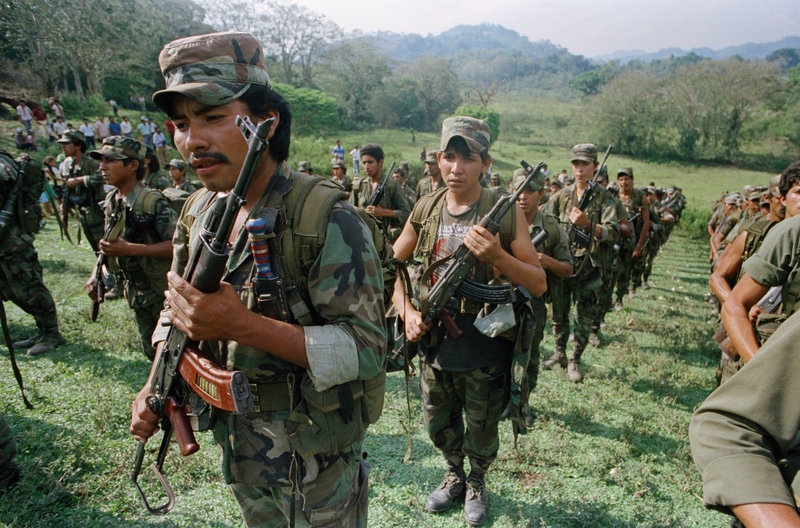
Click to see the full-size image
Israel’s ‘Security’ Related Roles and Programs during Central America’s Civil Wars and Proxy Wars
Thus by the time Ronald Reagan entered the fray, Israel had already cultivated close political, military/ intelligence and commercial relations with the military regimes in Nicaragua (Israel and Argentina were probably the only two countries who continued supplying Somoza with weapons up until the last days of the multi-generational military dynasty in 1979), El Salvador and Guatemala. Israel also immediately stepped in to supply the latter two countries with all the weapons and other advanced ‘security’ equipment they needed (as well as the military dictatorships in Argentina and Chile) when the US finally suspended all military assistance during the Carter administration. Considered in a broader historical and geopolitical perspective, the authors argue that this was a natural development in the course of Israel’s conduct of foreign policy and bilateral relations with other countries worldwide:
It is no accident that Israel, rather than, for example, South Korea, which has also sold its share of arms to Iran, was caught in the thick of things when the two-legged Iran-gate scheme was exposed in November 1986. For Israel was almost certainly the intellectual author of the plot to make Iran pay for the war against Nicaragua and Israel had already been selling arms to the contras, training them, and otherwise helping Reagan to circumvent Congressional restrictions on the contra program. To find the roots of this behaviour we must return to Israel’s earliest days.
Surrounded by Arab states whose hostility endured from the rout of their armies and uprooting of the Palestine population as the Jewish state established itself, Israel has from its outset sought international contact beyond its confinement in the Eastern Mediterranean. Its Labor Zionist government propounded a doctrine calling for the establishment of good relations with the peripheral, non-Arab states of the region: Ethiopia, Turkey, and, of course, Iran. Looking farther afield, in the mid-1950s Prime Minister David Ben-Gurion attempted to involve Israel in what would later become the Nonaligned Movement, but was at the time a loose gathering of nations emerging from colonialism. Israel was barred from the now-historic 1955 meeting at Bandung, Indonesia, because it was seen as an outpost of European colonialism.
Israel next turned to Africa. As African nations were granted independence, Israel commenced a program of development assistance on the continent that was nothing short of spectacular, given Israel’s size, its resources and its own recent establishment. (Such programs included experimental farms and agricultural production, medical programs and infrastructure projects.) Israel also established courses for foreign students in many of these subjects so that by the end of 1970 15,000 foreign students had been to Israel to study.
However, there was also a less savoury side to these programs. ‘For many years, the United States sent millions of dollars in covert aid to Israel for operations in Africa that included training several African intelligence services’. Understandably, Israel amassed an enormous intelligence capability in sub-Saharan Africa. The big powers often consulted or coordinated with Israeli operatives. Military training and arms sales were also a part of Israel’s outreach to Africa, along with its humanitarian gestures. As a result of all this, by 1968 thirty-two African nations had established diplomatic relations with Israel.
In the mid-1960s Israel expanded the programs which had been so successful in Africa to Latin America, a region which needed little courting as its already established governments had provided an important bloc of supporting UN votes in 1947 when that body was considering the partition of Palestine into Palestinian and Jewish states. After Israel’s 1973 war the Organization of African Unity called for a diplomatic embargo of Israel, and all but three African governments – Malawi, Swaziland and Lesotho, all within the tight embrace of South Africa – either already had or shortly thereafter severed diplomatic relations. Israel was then left with little choice but to focus on the Asian nations with which it had relations and on Latin America.
Following the 1973 war, which in turn had followed the 1967 war during which Israel had occupied territory belonging to Jordan, Syria and Egypt, the perception of Israel as an underdog beset by rapacious neighbours was wearing out. In much of the world Israel was criticized for its occupation of Arab territory, its oppression of Palestinians in that territory, its intransigence in the face of all opportunities for peace, and, increasingly, its close links with South Africa.
Also around this time, Israel’s focus was shifting from development to military power. While clinging to as much as it could of the old patina of the days when it was a ‘light unto the nations’, Israel had redefined itself into an arms merchant. Israel’s markets were (however) severely limited. NATO countries for the most part produce for themselves and each other, and likewise for members of the Warsaw Pact.
With some notable exceptions (including Ethiopia and Indonesia) the socialist and Islamic countries shun Israel. Since the 1973 break, most African nations have also kept their contacts with Israel to a minimum. What remained were the ASEAN nations (the pro-Western Asian grouping), Latin America, and the pariah – or ‘untouchable’ – nations such as South Africa, Taiwan, Chile, and Guatemala. Latin America, where many countries fall into none of these categories and most of the rest fall into the pariah category, became Israel’s premier market, although recently Israel has picked up some sales in Europe.
The typical Israeli customer, wrote one leading analyst of Israeli arms exports, “is most likely to be a non-western country with a defence-conscious government, rightist in orientation, in which the military is either the actual or proximate locus of power. It is confronted by a security threat originating either domestically or from a neighbouring country. Like Israel, it too is isolated diplomatically and under international criticism, and therefore encounters problems in meeting military requirements from other sources of supply.”
“Because of the feeling which has taken root that weapons must be sold at almost any price, countries described as ‘dirty’ are attracted to us as a magnet”, lamented the military columnist for Israel’s leading daily. “The irony is that many of these countries are even ashamed to publicize the fact that they purchase weapons from Israel, as though we were lepers.” (Marshall et al, 1987)
With respect to the situation in Central America shortly after Reagan assumed the presidency, as the newly installed administration was drawing up a myriad of schemes and frantically searching for funding, combatants and weapons to ‘take the war to Nicaragua’:
Israel’s proxy activities on behalf of the Contras grew out of a long tradition of military support for authoritarian regimes in Central America, including that of Anastasio Somoza in Nicaragua. Israel was also in on the ground floor with the Contras when Somoza finally fled the country. Haifa University professor Benjamin Beit-Hallahmi reports that ‘when the CIA was setting up the Contra organization in 1981, the Mossad was also there, carrying out the training and support for the first units.’ Finally, Israel was a leading arms supplier to Argentina during the period of its military rule.
A brief overview of Israel’s many other military, intelligence and commercial interests and activities in the region at the time (which apart from the extensive military presence and logistical capabilities per se, could also draw upon large investments in the agricultural, fisheries, finance, real estate, construction and transport sectors, often acquired on very favourable terms) included the following:
Israel first began marketing its military wares in Central America in 1973. Israel simply pushed into the market itself, introducing its new products at fairs and with a shipboard showroom. Aided by contacts developed during the previous decade when it had conducted technical assistance programs in the region (as well as in South America, including a major presence in Ecuador which flourished during the military dictatorships of the 1970s and 1980s), Israel sold its castoff French combat jet aircraft to El Salvador and in 1975 to Honduras – these were the region’s first jet fighters and first supersonic jets, respectively, and the buyers had not yet made peace following a shooting war in 1969 – and a variety of armoured vehicles, patrol boats, counterinsurgency aircraft and small arms to these two nations and to Nicaragua and Guatemala. Before very long, however, Israeli sales would increase and that increase would be thanks to events in the U.S., which created sales opportunities for Israel.
The same Carter human rights doctrine that brought campaign contributions from wealthy Guatemalans to Ronald Reagan brought orders to the Israeli arms industries. By 1978 Nicaragua, El Salvador and Guatemala were found guilty of human rights violations connected with insurgencies arising from longstanding social and political inequities. U.S. military aid was terminated and all three of these nations then turned to Israel to fill the gaps left by withdrawal of U.S. aid.
As part of this windfall Israel supplied the military regime of El Salvador with over 80% of its weaponry for the next several years, including napalm for use against the Salvadoran civilian population. Israeli advisers trained the Salvadorans in counterinsurgency and installed a computerized intelligence system able to track insurgents and, by monitoring utility usage, pinpoint safe houses. It is almost certain that these advisers remained after 1981 when Washington made the cause of the Salvadoran landowning oligarchy its own and resumed military aid.
Although increasing U.S. military assistance cut into the amount of business available to Israel, Israel continued its relationship with the Salvadoran military, most recently providing a sophisticated ‘pacification’ plan which involves the forcible resettlement of civilians into communities under military control. Following the failure of confidently announced U.S. plans to ‘win the hearts and minds’ of the long suffering Salvadoran populace, the Israeli program (funded by the World Bank, the U.S. and West Germany) is a quid pro quo for El Salvador’s decision to move its embassy in Israel from Tel Aviv to Jerusalem.
If Salvadoran ‘model villages’ follow the pattern of those Israel has helped establish in Guatemala, their ‘citizens’ will soon be growing fancy vegetables for export in exchange for barely enough food for their families, turning a profit for their military ‘guardians’. The agricultural operations under Israeli advisement are likely to order Israeli high tech farming equipment and Israelis have invested heavily in Guatemala’s agricultural sector.
Since 1977 the Guatemalan military has relied heavily on Israel for each phase of its anti-insurgency campaign. Israeli advisers appeared on the scene when the military government was engaged in killing and dispossessing the largely Mayan highland communities in an effort to quash the Indians’ support for a revolutionary movement inspired by the incredible inequality of land ownership. Over the following eight years, Israeli weapons and advisers helped the Guatemalan military halt the growth of the insurgency – by a mass carnage of at least 10,000 which some observers have not hesitated to call genocide.
The arms might not have been numerous enough to please the chief of staff of the Guatemalan Army, but in 1983 a Times reporter marvelled that ‘the Israelis have sold the government everything from anti-terrorism equipment to transport planes. Army outposts in the jungle have become near replicas of Israeli army field camps.’ Moreover, Israel also provided Guatemala with two computer centres, one of which, located in an annex to the Presidential Palace, was used to monitor dissidents and compile and disseminate death lists.
Nicaragua escaped the same fate, but not for want of Israel’s attention. In the late 1970s, dictator Anastasio Somoza Debayle, last of a dynasty that had run Nicaragua as a family fiefdom since 1933, was faced by an insurrection of virtually the entire population, and in 1978 the Carter Administration finally cut off U.S. assistance. Somoza was then faced with a fairly rigorous informal embargo; no country seemed willing to sell him weapons. The Israelis were quick to take up the slack, and from September of that year until the following July when he was ousted, Israel sold Somoza 98 percent of the weapons he used against the Nicaraguan population. Those included not only Uzi submachine guns and ‘thousands’ of Israeli-made Galil assault rifles, but large quantities of ammunition, surface-to-air missiles, nine combat-armed Cessna aircraft and two Sikorsky helicopters, which Somoza’s Guard used as platforms for machine gun strafing. With the tacit permission of the Carter Administration, the Israelis continued to ship arms to Somoza until the end of June 1979. Three weeks before the dictator was forced to flee, Washington said ‘enough’, and Israel recalled supplies (including two patrol boats) that were then on their way to Nicaragua.
Meanwhile, a host of Israeli investors, merchants, ‘former’ Mossad officials or military officers and other security or counterinsurgency warfare experts and advisors were no less active, influential and thoroughly engaged in a multitude of political, commercial and security projects in the countries further to the south (Costa Rica and Panama), which managed to avoid the worst of the generalized violence and terror for the most part notwithstanding their proximity to the killing fields in Guatemala, Nicaragua and El Salvador.
Nonetheless, Israel and the US leveraged their influence and resources in the two countries so that they too were drafted into their respective counterinsurgency and commercial activities in the region in other ways. Such projects and activities by Israel included the provision, operation and maintenance of advanced military/ intelligence installations, weapons platforms and equipment in Costa Rica:
It is known that Israel itself sent considerable quantities of arms, and advisers as well, to ARDE (one of several Contra groups) in Costa Rica. Another reason for the Israeli-ARDE connection was that the Israelis had been very active in Costa Rica since the accession of Luis Alberto Monge to the presidency. Monge had made good on a campaign pledge to move Costa Rica’s embassy to Jerusalem, and Costa Rica, which had prided itself on having no army, was receiving Israeli weapons and training for its security police and two newly-created special tactical squads. Israelis also carried out various ‘intelligence activities’ in Costa Rica.
When the Contras were just getting under way, Israel’s ambassador in San Jose supplied them with passports and aliases so that they could travel through Central America. Israel’s parastatal Tahal was working with U.S. AID to develop plans for a border barrier, comprising roads, electronic barriers, and an agribusiness/ settlement scheme. Ultimately a scaled-down version of the plan was begun. It later became known that Israeli arms also reached the ARDE through Panama. Later, especially after ARDE collapsed following the CIA’s decision to eliminate (financial and military support to the group), Israel’s main action would shift to the Contras in Honduras. (See also, for example: Beit-Hallahmi, 1988: Metz, 1993: Jamail & Gutierrez, 1986: Dobry, 1986)
Other Geopolitical Factors and Dynamics Influencing Ongoing Developments in the Region
In this broader scenario of universal geopolitical scheming and duplicity, parallel realities and double dealings, one other particularly notable source describing relevant developments in Central America during the 1980s is worth mentioning at this point. This unique perspective on developments in Central America is the sequence of events recounted by a DEA agent who had been sent to the region in the mid-1980s to gather intelligence on the illegal drug trade, providing what could be described as an informal or common sense, ‘regular person’ description of the cataclysmic violence and turmoil in the region.
The book contains numerous significant clues and hints as to what was occurring behind the stage curtains with respect to several crucial factors and developments related to the organization and conduct of both the counter-insurgency wars and the drug wars in Central America as they transpired in Guatemala and El Salvador (including the effects of the system of strategic subordination and structural dependence which gradually developed into a form of external remote control wielded by the US over the political system and the most powerful military commanders in both countries, an aspect which will be explored in more detail in a supplementary report). Due to its relevance to many of the topics reviewed throughout the compilation of this series of reports, the text will be quoted at some length:
As Copa flight 313 droned north over the jungle, I ran down my mental checklist on Central America. Leftist rebels, a permanent fixture in the region, had locked the military governments in Guatemala and El Salvador into bloody wars of attrition, while the poor multitudes in both nations, as usual, absorbed the crossfire. War would complicate my job considerably. To a government fighting for control in its own backyard, everything else becomes a distraction. But Uncle Sam’s aid bought hospitality for the State Department’s political operatives, a jungle playground for the US Marines, and a tiny beachhead for DEA.
In Guatemala, the locals would be hostile. The locals carried a lingering bitterness toward the United States since the Carter Administration cried human rights violations and yanked U.S. military aid in 1978. The Israelis quickly moved into the power vacuum to take care of the Guatemalans, training the security forces, financing the war machine, and running covert operations against leftist movements in Nicaragua and other republics. Under Reagan, a trickle of US military aid resumed by 1985, but the Guatemalan government had new friends and was slow to warm to US intelligence and drug agents poking around their jungles. I knew from working with Israeli intelligence in Peru they could give me all the information I needed to sort through the chaos. I made a mental note to look them up as soon as I got settled.
At the time, Reina was the DEA’s lone agent in the Guatemala office, which covered four countries: Guatemala, El Salvador, Honduras and Belize. As country attaché (for the DEA), Stia performed mostly administrative functions and served as a liaison between the US Federal agencies and local law enforcement authorities. Stia briefed me on Guatemala during breakfast the next morning in the hotel restaurant. The Guatemalan military, he said, was giving up the government on paper, but would always hold the real power in the country. Despite Cerezo’s popular election, minister of defence Hector Alejandro Gramajo called the important shots from his position at the centre of the Council of Commanders, a tight ring of military leaders whose decisions overshadowed any of the ostensibly democratic decisions made by the president or the congress. The Guatemalans knew they had to put a democratic face on their Draconian system to stay on Washington’s good side, and Cerezo had shown no indication he would test his leash. As far as DEA was concerned, we operated at the pleasure of the military.
Stia brought me into his office to continue my briefing. He switched to El Salvador where I would be spending much of my time. The United States had bought and paid for the country. We chose the presidents, scheduling elections when the previous puppet wore out his welcome. This year, Christian Democrat Jose Napoleon Duarte had beaten Roberto d’Aubisson, who was linked to the country’s right-wing death squads. The election should have been a turning point, but the ruling elite and the military had a chokehold on the republic that no mere politician could pry loose.
Despite the ongoing reign of terror against the peasants, the dollars kept coming. A republic the size of Massachusetts absorbed $1.5 million a day in US aid – more than $100 for every man, woman and child – yet the military government still could not exterminate the Farabundo Marti National Liberation Front, or FMLN, the leftist guerrillas who pestered them from the suburbs and the mountains. They both hung on, dragging the civil war into its sixth year and making terror and gratuitous violence a part of every Salvadoran’s existence.
The military/ political storm troopers of both sides continued snatching people from their homes, and while the Salvadoran air force dropped bombs on guerrilla positions, the guerrillas knocked down power lines, mined roads, and kidnapped mayors. Whoever pulled the trigger, ordinary people died. The Guatemalan government harboured some resentment toward the United States, but at least they maintained some measure of control; the only constant in El Salvador was insanity.
DEA had never worked the country, and we were hoping to establish some contacts and land our first seizure. I soon realized they didn’t expect much more than recruiting informants and documenting any drug activity their eyes and ears picked up; actually busting a trafficker and grabbing his shipment would be gravy, as far as Stia was concerned. Later, as I leafed through the files, I discovered the drug war in this corner of the globe amounted to piles of reports documenting traffickers’ identities and movements, but few seizures and arrests. We were playing traffic cop, taking down the license number of speeders, but never writing any tickets. Stia maintained a we’re-doing-the-best-we-can attitude. As he continued the briefing, it became obvious that the agency’s priorities here mirrored those in Peru. First, stay out of trouble with the locals. Second, don’t make the US government look bad. Third, try to make life difficult for the traffickers.
Then Stia nonchalantly brought up the subject that would dominate the remainder of my DEA career: the Contra resupply operation. He described the covert U.S. operation to the Nicaraguan rebels, run out of Ilopango air base near San Salvador by Marine Lt. Colonel Oliver North. Stia said the National Security Council, where North worked, picked up where the CIA left off after our government cut off aid to the Contras. The third of five Boland Amendments prohibiting U.S. assistance to the rebels had been in effect for a year at this point, and in April, 1985, the House of Representatives had rejected $14 million in non-military aid to the Contras, despite President Reagan’s energetic lobbying for his favourite rebels:
“As you know, the Sandinista dictatorship has taken absolute control of the government and the armed forces. It is a Communist dictatorship, it has done what Communist dictatorships do: created a repressive state security and secret police organization assisted by Soviet, East German and Cuban advisors; harassed and in many cases expunged the political opposition, and rendered the democratic freedoms of speech, press and assembly, punished by officially sanctioned harassment, and imprisonment or death. I truly believe – the history of this century forces me to believe – that to do nothing in Central America is to give the first Communist stronghold on the North American continent a green light to spread its poison throughout this free and increasingly democratic hemisphere.”
Change the nationality of the advisers, and the President’s speech would have described our allies in Guatemala and El Salvador perfectly. Nicaragua was not about to let its neighbours show them up, however; the day I arrived in Central America Nicaraguan President Daniel Ortega Saavedra suspended civil rights, such as free expression, the right to assemble publicly and privacy of home and mail. Ortega said ‘the brutal aggression by North America and its internal allies has created an extraordinary situation.’
Its ‘internal allies’ were the Contras and their sympathizers, who made life difficult for the Sandinistas. Under the CIA’s tutelage, these internal allies sabotaged oil facilities at Puerto Sandino, torched an oil storage facility, and planted magnetic mines in Nicaraguan ports. The Reagan administration made no secret of how badly it wanted to thump the Sandinistas. ‘Be careful what you do up there’, Stia said, referring to North’s covert venture. ‘Don’t interfere in their operation.’ Reports of drug smuggling by North’s operation had trickled into our office, but Stia said DEA had not pursued the matter. He wanted to do his time in Guatemala, then pack up and return to upstate New York with his wife and kids. He wasn’t about to throw rocks at a hornet’s nest. I had learned a hard lesson in Peru, and I wanted to lay out my personal philosophy up front. I told Stia, ‘If I receive intelligence the Contra operation is trafficking, I’ll investigate and report it.’ Stia laughed. If I tried to take down North’s operation, he said, the DEA brass would waste no time finding some excuse to pull me out of the country.
(While he was there, Castillo also accompanied a reconnaissance flight to locate opium fields.) We picked up a Guatemalan soldier, a member of the Guardia de Hacienda, at Tacana, a little village near the Mexican border – guerrilla country. Mexicans owned the crops, and taught local farmers how to grow opium poppies for a cash crop more lucrative than anything they could plant. The Guatemalan police generally left them alone. They didn’t want to risk running into a guerrilla stronghold while trying to destroy a bunch of flowers. We landed on the side of a mountain, in the middle of a poppy field, and took a few plants as samples.
Ironically, the Guardia officer told me, the fields were frequently guarded by the Guatemalan Civilian Self-Defence Patrols, the rural Indians organized and armed by the military who were supposed to be keeping the guerrillas busy. When General Efrain Rios Montt took power in 1982, he organized the patrols to spearhead his counterinsurgency war in the mountains and pressed close to a million civilians into service within two years. Now here they were, guarding the poppies. I could sympathize with them to some extent. They were very poor people who sided with the military for protection.
The Guatemalan guerrillas also fed off the hopelessness of the Indians, who formed the base of what they saw as an inevitable and massive peasant uprising against the ruling elite. They took names like the Guerrilla Army of the Poor and Organization of People in Arms, fighting from the rugged jungles of Huehuetenango and Peten in the northern part of the country. The guerrillas spent most of their energy ambushing army patrols, and the military responded with reflexive thumpings of any village suspected of aiding the guerrillas. I wondered how these simple villagers decided between the military and the rebels, with both sides threatening to kill them if they chose the other.
Corruption had rotted Guatemala from the top down, and my growing network of contacts brought the extent of the decay into focus. I talked to customs agents at Aurora, bartenders and waitresses at the Camino Real and El Dorado hotels, US embassy domestic workers and relatives of government officials. Everyone told the same story. The pilots who worked in Aurora talked about the cocaine shipments that frequently passed through on both private and commercial flights. The bartenders and waitresses had served Guatemalan officials during their meetings with Colombian cartel members. The customs workers occasionally caught government officials smuggling bags onto US commercial flights without going through inspection. They had looked the other way because the men carried government credentials. The people recruited people in US airports who would pick out the marked bags and take them to a scheduled drop point where cartel runners picked them up.
In short, Guatemala had become a major hub connecting the cartels to their customers in the United States. Back in the office, I began running the names of Cerezo’s top lieutenants through our computer, and every name came back with a black mark. The list read like a flowchart of the Guatemalan power structure. Among the Guatemalan high command documented as traffickers were the president’s brother, a top (presidential) aide, and two members of the Guatemalan congress.
I leaned back in my chair, trying to absorb the enormity of what I stumbled upon. Our government had leaned on the Guatemalan military for elections and trumpeted the birth of a government whose top officials were involved in narco-trafficking. Somewhere, our priorities had become skewed, hopelessly mired in the residual shame of Vietnam and Korea while a new monstrosity feasted on our minds and bodies. We spent billions trying to beat down an ideology in Central America, while the cartels rented nations as transit routes. Now, I had evidence Guatemala’s infant government was addicted to cocaine. Winning our narcotics war in Guatemala would mean taking down a good portion of their government, and that would never fly in Washington.
One of our informants worked for both the Guatemalan government and the Contras, and his loose tongue gave me my first concrete intelligence about the rumours Stia had mentioned. Everyone knew him as Sofi. One of his tentacles reached into the Contra operation, and as Sofi bragged about his connections with the rebels, he shed more light on North’s shadowy operation. He told me the small Contra air force at Ilopango smuggled drugs as well as war material, and drug money helped feed their crusade against the Sandinistas. Sofi owned a shrimp company in Guatemala City he used to launder narcotics profits for the Contras. He played the role of trafficker and banker, picking up cocaine in Colombia, hiding it in shrimp bound for Miami, then turning over the profits to the rebels.
After a month in Guatemala, I shifted to El Salvador to repeat the networking process. I spent a lot of time with Aparecio, drinking in everything he knew about contraband in the country. I told him what I learned about Sofi’s shrimp connection, and he filled in more blanks on the Contras. The military gave them carte blanche use of Ilopango, with the blessing of Juan Rafael Bustillo, head of the Salvadoran air force. Ramiro said they were indeed running drugs out of Ilopango. He said a Bay of Pigs veteran named Max Gomez – which I later discovered was the nom de guerre for Felix Rodriguez – headed the operation and reported to Oliver North. Ramiro said everybody who spent any time around Ilopango or the Salvadoran military knew about the operation, and the people running the show didn’t bother to hide anything. To his air force officer friends, there was nothing covert about the operation. It meant more US aid, and they supported it enthusiastically. I added Aparecio’s statements to my files on the Contra operation, which included careful notes of everything Sofi spilled. As soon as I could accumulate enough intelligence to make a strong case, I planned to drop the hornet’s nest in Stia’s lap.
On January 14, Vice President George Bush visited Guatemala City to put the US stamp of approval on Cerezo’s inauguration. I met Bush at the obligatory cocktail party at the ambassador’s residence. Embassy personnel and Guatemalan dignitaries elbowed through the crowd, jockeying for floor space near the Vice President. I was standing alone, watching the steel-faced secret service agents watching everyone else, when Bush approached. He read the tag on my lapel identifying me as a member of the U.S. embassy, and asked what I did. As he shook my hand, someone snapped a photo. I told him I was a DEA agent assigned to Guatemala. He said, ‘Well, what do you do?’ I knew it wasn’t wise to bring up the Contras – this man was part of the Administration, and Reagan had even declared himself a Contra. I just blurted it out. ‘There’s some funny things going on with the Contras in El Salvador.’ Bush didn’t reply. He simply smiled and walked away, seeking another hand to shake. After that exchange, I knew that he knew.
In Washington, the Contra public relations machine continued its mission to scrub the Contras’ image in the eyes of Congress and the American public. By 1985, the public relations firm hired by (an office established within the Administration) to handle to Contras’ image referred to their operation as a ‘White Propaganda’ operation. (In December of the same year,) the first hint of the Contras’ drug connection appeared as a blip in the national news. On December 21, an Associated Press article appeared, quoting unnamed US investigators and American volunteers working with the rebels: ‘Nicaraguan rebels operating in northern Costa Rica have engaged in drug trafficking, in part to help finance their war against Nicaragua’s leftist government.’ Thirteen months later, another story on the Contra drug connection would appear on the front page of The New York Times. Quoting anonymous Administration officials, the story outlined a DEA investigation at Ilopango. It would be the closest my reports ever came to exploding in the White House. (Castillo & Harmon, 1994)
Hence, in terms of specific developments in the Central American region during this chaotic period, there is much information indicating that El Salvador, Honduras, Guatemala and Costa Rica had a ‘star role’ in the concurrent drug wars and Contra program in the 1980s due to a peculiar set of fortuitous events and circumstances, being located as they were between the main production zones (in Colombia, Peru and Bolivia) and the immensely lucrative and apparently insatiable US market (while at the same time enjoying the additional advantage of being organized and overseen by the biggest and baddest protection racket in the region – the US military base at Ilopango and the CIA, complemented by a host of clandestine airstrips throughout the region). Nonetheless, in historical and geopolitical terms more generally their strategic importance is greatly overshadowed by Panama, Mexico and Colombia.
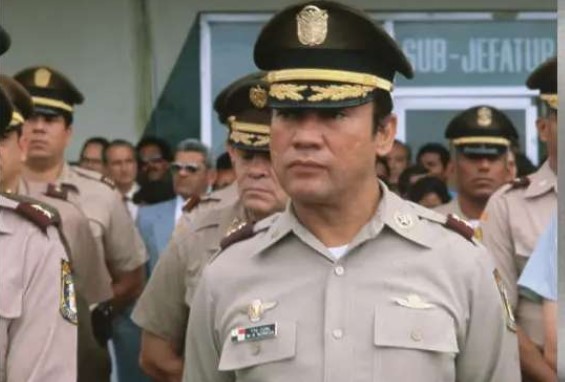
Manuel Noriega
Political Conditions and Developments in Panama
Although the prevailing political conditions and geopolitical alignment of Panama followed a completely different trajectory to those of its neighbours (from the late 1960s at least, up to which time it was also ruled by a succession of US-backed military or quasi-military regimes), Israel also enjoyed very favourable relations with the political and military leadership in the country and built up a wide range of economic assets and capabilities over a long period of time. Notwithstanding Mike Harari’s hasty flight and temporary forced exile from Panama in 1989 when Noriega was captured, following which the US promptly regained the dominant position it had enjoyed prior to Omar Torrijos’ ascension to power, many significant Israeli assets and capabilities remained intact – as demonstrated by the AUC arms shipment(s), for instance.
Apart from cornering several major sectors of the weapons purchases by the Colombian government and the ‘security market’ generally during this critical period (particularly during the presidency of Virgilio Barco from 1986 to 1990), Israel’s power, influence and range of operational capabilities in Panama was no less impressive (or disconcerting, depending on your point of view). According to Shahak (whose opinion on this point was shared by many others), this was largely due to the efforts of one operative in particular, Mike Harari. Harari had been deeply involved in political and security-related developments in Panama at the highest levels for over ten years, during which time his military/ intelligence colleagues and business associates also took advantage of the favourable investment climate to build up major assets and capabilities in key economic sectors, logistical functions and international finance:
A similar situation (to the situation in Colombia) exists in Panama. The right-hand man of Panamanian dictator Manuel Noriega, and a person who apparently had a hand in putting Noriega in power, is a senior ex-Mossad man, Mike Harari, who has filled Panama with Israeli connections. Noriega has been accused by American authorities of drug trade on a large scale. One can assume that in a dictatorial regime like Noriega’s, Harari is as involved in drugs as the dictator himself. But who stands behind Harari?
Since this is a case of a former senior operative of Mossad, it would have been reasonable to expect at least a verbal condemnation of Harari from at least one of the many Israeli ministers who make such frequent speeches about ‘the danger of the international terrorism’ to American audiences. Yet none have ever found the time to condemn Harari, or discuss his alliance with Noriega, or Israeli involvement in Colombia, with their tame American interlocutors. What is more, it has been reported in Israel, but not in the United States, that Harari, who often visits Israel and meets with many of the most important Israeli leaders, recently received, after US opposition to Noriega was well-known, the honorary rank of colonel from the Israeli army.
More generally, Panama has performed a variety of extremely strategic roles in two dimensions of international relations, trade and finance since the 1970s (both legal and illicit or criminal – indeed, there is a strong symbiotic or mutually reinforcing relationship between the two, as argued in Part I): in the first place, as a conveniently located territory and logistical centre for trade and commerce in the region (apart from the geostrategic importance of the Panama Canal); at the same time, however, perhaps equally significant is the country’s status and structural roles as a major offshore secrecy jurisdiction and tax haven for the conduct of surreptitious, ‘dual-purpose’, or simply fictitious and artificially contrived legal and financial transactions.
Panama suffered from long periods of brutal oppression and experienced a succession of external and internal shocks and disruptions to the constitutional order throughout the twentieth century – from the succession of US-backed autocratic governments that governed Panama from its creation in 1903 until the late 1960s, to the tumultuous Cold War period when the country was ruled by the charismatic patriot (or ruthless and cunning military dictator and Communist, depending on your point of view), Omar Torrijos (1968-1981). This was followed by an unruly transition period before Manuel Noriega consolidated his position as president several years after Torrijos’ untimely (and to many suspicious) death in a plane crash. Nonetheless, despite this tumultuous and turbulent history, Panama’s significance as a key regional centre for all types and forms of international trade and commerce activities and transactions (legal, illegal or otherwise) since at least the 1970s has apparently continued largely without interruption.
Similarly, many of the major factors involved in both domestic and geopolitical developments and events leading up to the US invasion of Panama in 1989 to capture Manuel Noriega remain a mystery. Among other confused and controversial aspects of this chaotic period, it is widely believed that Noriega was a paid CIA ‘asset’ or informant for many years (possibly including during the period when George Bush was director of the spy agency) prior to being declared the United States’ ‘Public Enemy No. 1’ by the Bush administration. Nonetheless, even if Noriega had been ‘on the CIA payroll’ for a while, even for a long while, it seems clear that he maintained a high degree of autonomous thought and action while he was president of Panama. Alternatively – or additionally – perhaps one of the motives for such an elaborate ‘exemplary punishment’ and demonstration of brute force and firepower may have been that former CIA director and then US president George Bush Sr. found out or suspected that Noriega had been feeding him false information while he was on the payroll? Or, worse yet, maybe Noriega was suspected of having passed on intelligence about US operatives and covert activities in the region to Cuba and/ or the drug cartels?
More than a few ‘right-wing’ inclined analysts and commentators in the US seem to completely rule out even the possibility that key foreign military and political figures who have taken payments from the CIA at some point might have maintained some degree of independence and free will – the almighty US is always the duper, never the duped. (The tendency is also very strong for political leaders or others accused of being ‘Communists’ – they are immediately tagged as pawns of a worldwide conspiracy to take over the world and destroy modern civilization, liberty and democracy, with no free will of their own, while any suggestion that they may have genuinely been motivated by a commitment to national liberation, individual rights and social and economic justice are categorically rejected.)
Similarly, many right-wing commentators tend to take the claims presented in legal proceedings and interrogations of captured members of the Medellin Cartel or other drug cartels that they met with intelligence agents from Cuba occasionally (for example) as proof positive that the Cuban government was up to its neck in drug trafficking at some time, or all the time. Maybe they were, maybe they weren’t. If they weren’t, it seems that they were just about the only ones in the region who weren’t getting a cut from the illegal drug trade in some way. Moreover, even if it is true that they did meet every now and then (i.e., senior members of the drug cartels and Cuban officials or operatives), maybe they met to share intelligence and opinions on the geopolitical situation and their own specific interests and goals, and possibly to explore opportunities for some mutually beneficial joint venture projects (for all of them, the belligerent and unpredictable US Deep/ Rogue State was undoubtedly the clearest and most imminent threat and danger to their existence). Moreover, anyone giving testimony in a US court and facing life imprisonment sure as hell isn’t going to admit that they passed on intelligence to the Cubans, and might be willing to make all manner of allegations about criminal and malignant conduct against Cuba in the hope of receiving a lighter sentence.
Returning to the specific case of Mike Harari’s apparently extremely influential role(s) in the country, it turns out that before Harari became a senior presidential advisor during Manuel Noriega’s rule (if not the senior presidential advisor), he had already been operating at the highest political, military and commercial levels in Panama during the presidency of Omar Torrijos, opening the way to a wide range of bilateral military, agricultural, commercial and other programs and activities between Israel and Panama in the 1970s. Although Noriega died in a foreign prison, it appears that Harari was never officially detained or questioned over his possible participation or complicity in the many heinous crimes Noriega was accused of committing, notwithstanding his intimate links with the maximum leader of Panama throughout his rule (indeed, he later received an honorary medal from the Israeli regime for services rendered as noted above).
An article published by a major national newspaper in 2014 covered various aspects of Harari’s “influence in Panama, which extended not just to security matters, but also to internal politics and even external politics” over the course of many years, albeit in a commentary that raised far more questions than answers:
In one interview Harari said that he “arrived to Panama by coincidence, because he had originally been destined to go to Mexico where he happened to meet a young military and police official named Omar Torrijos Herrera”. Some time later (in 1968), he received a call from Torrijos asking him to go to Panama, a request which received the personal approval of the prime minister at the time (Golda Meir) because, according to Harari’s account, “she had the feeling that important things were going to happen in the country”. Among other activities, he worked as a consultant on matters related to security, agriculture, health, and education.
Many police were sent to Israel for training, who also formed elite security forces. Colonel Roberto Díaz Herrera later claimed in his book (Estrellas Clandestinas) that it was members of this same elite police forces (UESAT) who were sent to his house to expel him from the country after he had denounced General Manuel Noriega in June 1987, many of whom had been trained in Israel.
Although Harari lived in Israel for most of this period, “the agent continued to maintain active links with Panama. Due to his close relationship with and knowledge about Manuel Noriega, the United States asked the Israeli prime minister (Yitzhak Shamir) to send Harari to Panama to help negotiate a solution to the crisis. (The efforts to persuade Noriega to leave Panama voluntarily were unsuccessful), causing some resentment in the US against Harari. During the invasion in 1989 the United States claimed that they had captured Harari, allegations that Harari denied in an interview broadcast in Israel shortly thereafter. Some time later, Harari improved his relations with the US. Several years ago The Israeli government awarded Harari for services rendered during his long career as a secret agent. (La Estrella de Panama, 2014)
Shifting location for a moment, according to a recent report by Mint Press News, there may be a basically similar situation of deeply embedded Israeli political, economic and ‘security’ industry operatives and networks in Haiti, where ‘dual’ Israeli citizen and business magnate Gilbert Bigio was sanctioned by Canadian authorities in 2022 pursuant to charges of aiding and abetting the illegal activities of armed criminal gangs in the troubled country. The report cites an article published by the Jewish Telegraphic Agency in 2004 describing Bigio as ‘the de facto leader’ of the country’s Jewish community, further noting that Bigio had been designated as Israel’s honorary consul in Haiti. His family first arrived in Haiti in the late 1800s and gradually built up a significant commercial enterprise based initially on the export of primary products (including cotton, cacao and timber), later expanding into other economic sectors.
As time passed the family’s corporate holdings diversified and grew rapidly into sectors such as energy, security, shipping, construction and food: “Significantly, this expansion included building and overseeing Port Lafito, a significant export and import hub not far from the Haitian capital.” (Mint Press News, 2024) The family’s holdings also include extensive economic (and political) interests in the Dominican Republic. More generally, Haiti has developed significant commercial relations with Israel in recent times, importing around $20 million worth of goods annually, “from telecommunications equipment to Uzi machine guns.”
The report refers to comments by experts on the country and the region who point out that the corporate family dynasty is one of the very few groups in Haiti which have the types of assets and capabilities that would be necessary to smuggle large amounts of weapons and other contraband into and out of the country: “Only a tiny, well-connected clique of white warlords completely isolated from the needs and reality of the other 99.9% of the Haitian population has the necessary private airports, ports and border contacts to smuggle guns and other contraband into the country.” Another Haitian expert in the US (Jeb Sprague) further noted that Israel’s activities in the country have been aligned with those of the US for many years, reminiscent of the types of mutually beneficial collaboration that the countries developed in Central America during the 1980s:
The families with surnames like Bigio, Brandt, Madsen, Acra and others have maintained powerful positions at the heights of Hispaniola’s economy. Even so, they’ve transitioned over the closing decades of the twentieth century and into the twenty-first century from long alliances with the coercive rule of the Duvaliers and ruling military factions to seeking out corporate inputs though the globalizing economy and working in line with US soft power in the region.
In summary then, throughout the 1970s and 1980s Israeli operatives and experts were heavily involved in at least two distinct types of ‘security’ related activities with many States in the region: reorganizing and up-grading the central command of the armed forces and installing a highly advanced and centralized intelligence apparatus in numerous countries (including several ruled by actual or de facto military dictatorships), while at the same time training and equipping some of the most powerful paramilitary and irregular counterinsurgency warfare units (as well as drug cartels) in the field. And finally, there was the other development which was intrinsically related to the other two sets of counterinsurgency warfare activities, but involved an entirely different range of specific skills, tasks and capabilities – supplying, training and supporting the ‘expat’ armed insurgency of the Contras against the revolutionary Sandinista government in Nicaragua (from bases and training camps in Honduras, Guatemala, El Salvador and Costa Rica).
The extensive networks of political connections and influence on one side, personal, professional and commercial contacts with key figures in the economy and the security apparatus on the other, were complemented by the assets and facilities owned by a number of corporate combines created by wealthy Israeli real estate barons, financial tycoons and traders. All of which were furthered enhanced and empowered by a sophisticated array of money laundering schemes to make the necessary financial arrangements. It is perhaps arguable the extent to which such activities and programs in effect constituted a peripheral extension and localized manifestation of the Israeli ‘full spectrum dominance’ war machine in Latin America, or if they were perhaps more of an opportunistic commercial enterprise by retired or off-duty military/ intelligence/ security experts, businessmen and international smugglings syndicates. Meanwhile, there is nothing to suggest (and little reason to suppose) that these networks and capabilities have been dismantled or abandoned.
External Actors, Peace Agreements and the Search for Truth and Justice
Despite the many truth commissions and other detailed investigations and reports that have been conducted, as argued in Part I the involvement of external actors in the counterinsurgency wars in Central America, Colombia and elsewhere in the region remains one of the least known aspects in terms of the investigation and analysis of major historical events, political developments and actors involved in the respective armed conflicts. And in a geopolitical environment where the construction of multiple layers of secrecy, complexity, anonymity and obfuscation (misinformation, misdirection and mystification) is paramount for many of the local and foreign factions and interest groups who are most actively involved, Israel is one of the main external actors (but certainly not the only one) that has been most successful in terms of concealing or camouflaging the nature and extent of its multi-faceted participation in the counterinsurgency wars, drug wars and the illegal drug trade (by a variety of both State and non-State actors and programs) during the 1980s and 1990s. In this respect, one of the first detailed investigations of the Iran-Contra dealings surmised:
Over the many hearings, investigations, and other dissections of the Iran-contra affair, Israel’s purposes are likely to remain obscure to the public. Israeli citizens, be they officials, arms dealers, or civilian witnesses are not bound by U.S. law to testify or cooperate in investigations. Israel has already made it clear that it will shield its citizens who were involved in the affair behind its national sovereignty and will only cooperate to the extent necessary to placate public opinion. And that, given the well-oiled media machinery of Israeli loyalists in the U.S., is a very limited proposition. As was seen during the invasion of Lebanon, when the cameras focus in too close a vast cry will go up, charging media imbalance and probably also anti-Semitism.
Although the multitude of operatives, consultants and contractors from Israel were not necessarily formally bestowed with all ‘diplomatic immunities and privileges’ during their extended deployments to the region (as is the case for their US counterparts), it has proven no less difficult to investigate and ascertain the extent and nature of their wide range of official, unofficial (covert) and commercial military/ intelligence activities. Consequently, the nature and extent of Israel’s involvement in the counterinsurgency wars in Central America, Colombia and elsewhere in the region remains one of the least known aspects in terms of the investigation and analysis of the main foreign countries involved in different places at different times, how they contributed to, participated in, influenced, and benefited from the widespread violence and conflict in the region, or the extent to which they may have participated in or facilitated international drug trafficking operations, arms smuggling, money laundering syndicates or other illegal activities.
Very few of the very few investigations that have been initiated into allegations about the involvement of operatives, traders or security consultants from Israel in criminal activities in the region have been followed through to their completion, the proceedings invariably faltering, stalling and being stonewalled until the charges are quietly dropped and the cases forgotten. For example, as noted previously, a court in Israel imposed a small fine on Yair Klein for his involvement in illegal arms shipments to Colombia, however an attempt by Colombian authorities to have him extradited to the country to face justice was blocked by the European Human Rights Tribunal before the legal procedures could be completed (he was sentenced to ten years’ imprisonment in absentia). The criminal syndicate responsible for the shipment(s) of military grade weapons to the AUC via Guatemala and Chiquita’s private port facilities in northern Colombia is another example.
Thus, the interruption or perfunctory termination of formal investigations into and the criminal prosecution of Israeli operatives for their well-documented involvement in illegal activities is hardly exceptional (on the rare occasions when such proceedings have been initiated at all). The article by Israel Shahak cited previously describes another example, this time involving an elaborate money-laundering syndicate in the United States to reroute and disguise financial transfers between Colombia, Panama, the US and Israel. Hence, apart from the apparently relatively temporary and opportunistic money laundering schemes which Klein had devised or tapped into which were mentioned previously (and for which a nominal punishment was imposed on some of the low-level participants in the US after the scheme was discovered by authorities):
Another network in the United States, headed by two Israelis, Adi Tal and Dov Feldman, was recently exposed in Edison, NJ, apparently more by chance than by design. It engaged in large-scale laundering of Colombian drug money on both the East and West coasts, routing in back to Colombia via Israel. In this case as well, several members escaped to Israel. The trial of the remainder, according to the Hebrew newspaper Hadashot, presented some curious features.
First, it became apparent that the Israelis who headed the gang secured the help of many otherwise respectable American Jews by telling them the money was intended for the work of Mossad in Panama and Colombia. As a result, a rabbi in Seattle was convicted of receiving some of the money (amounting to at least $18,300,000), depositing it in small amounts in many different accounts in Seattle, and then transferring it to a bank in a very small Israeli town, Kiryat Ono. From there, it was transferred to a well-known Colombian drug trader through a Panamanian bank.
When the gang was brought to trial, the New Jersey court permitted a lawyer from Tel Aviv to represent the accused. He did his job very well. Those of the accused who had not escaped to Israel received very light sentences. The rabbi from Seattle got off with one month of detention. The sum which he was convicted of transferring personally to Israel was $18,300,000, of which $13,600,000 found its way to Panama. The US media, apparently, was too busy covering ‘international terror’ to report this case of Israeli laundering of drug money from the US to Colombia.
Nor are the many diverse activities and missions of the US and Israel subjected to detailed investigation and analysis in the respective ‘Truth and Justice Commissions’ and other official reports – among other reasons, due to the inherent complexity and utmost secrecy and confidentiality covering the most sensitive tasks and missions, but also because formal investigations into such matters tend to be preempted, disrupted or curtailed.
Indeed, Israel has been so successful at concealing or camouflaging such activities and capabilities that the official report in Colombia cited in previous sections (OVPR, 2009) doesn’t even mention the country or its operatives and front companies as being among the list of significant external actors in Central America, notwithstanding the fact that numerous other investigations have conclusively demonstrated and determined that Israel was most certainly one of the external actors that was most heavily involved in supporting counterinsurgency operations as well as in the supply of all relevant weapons, equipment and expertise to the Contras throughout the entire period since at least the mid-1970s.
In its discussion of this topic the authors of the report note that the Contras received military advice, weapons and financial support from “a heterogeneous coalition of actors (States, mercenaries and businessmen, among others), led by the United States”, while in another section the report mentions that rural communities in the north of Nicaragua “were subjected to paramilitary operations and political indoctrination by the ‘National Guard’ and foreign military personnel (mostly from Argentina, United States and Guatemala), whose activities were organized and supplied from numerous logistical bases and field camps (retaguardias) in Honduras.” Whether the assertions (and the omissions) of the OVPR report on this point are due to ignorance or error, constitute deliberate misinformation and deception, or whether they are in fact accurate and the other studies are mistaken or deliberately misleading, remains an open question.
The main mention of Israel’s involvement in counterinsurgency activities in the region (indeed, the only reference to Israel that I could find in the entire report) is a short account of the fiasco that erupted when it was revealed in the media that Yair Klein and several other Israeli counterinsurgency warfare experts served as instructors at an intensive training course for local paramilitary groups and private militias, financed by a rural agribusiness and cattle ranchers’ association (Acdegam).
In this respect, the report comments that the alliance formed between the rural business association and “organizations well-trained in the management of arms” is illustrative of how counterinsurgency groups in different regions were able to take a qualitative leap in their military capabilities in the mid-1980s, shifting their strategic posture from a defensive position focused on resisting incursions and attacks by the guerrilla groups, to the organization of increasingly powerful and integrated paramilitary offensives at the sub-regional and regional levels. Specifically, the report notes that, among the other factors involved, the rapidly expanding counterinsurgency formations “benefited from the assistance of some military units in the Magdalena Media region” to launch major assaults against the guerrilla groups’ strongholds in the region, and that they also “counted on the expertise of mercenaries, such as the Israeli ex-official Yair Klein, between 1987 and 1989.”
Similarly, the other main commissions and reports conducted in Colombia in more recent times (GMH, 2013: Historical Commission, 2015: Truth Commission, 2022) mention certain activities and operations conducted by military forces, intelligence agencies and individuals from the US and Israel, but without subjecting them to detailed analysis or attempting to catalogue them in their entirety (to the extent that the available information permits). The main exceptions to this general trend are the investigations by Renan Vega (2015), and a supplementary report published by the Truth Commission titled “From the Beginning Until the End: The United States in the Colombian Armed Conflict” (CEV, 2020).
I have not read the official commissions and reports that have been conducted in other countries to examine the nature, causes and impacts of their armed conflicts (including in Guatemala, El Salvador and Peru), but I would be very surprised if they are any different in this respect. Needless to say, such structurally entrenched characteristics and interests lurking beneath the surface of ongoing geopolitical events inevitably gave rise to enormous complications in the 1990s as the war fever eventually abated and the respective parties began to seek an end to the armed conflicts involving something short of complete annihilation of ‘the enemy’.
As a final illustration of this point, the OVPR report is no less enigmatic and evasive (or perhaps philosophical and resigned) in its summation of efforts to identify, catalogue or describe and evaluate the essential nature of the controversial role of the United States and the many ways in which it has participated in (and in many instances determined the overall course and direction of) the armed conflict in Colombia pursuant to its own strategic interests, objectives and calculations. This confusion and studied neglect, omission or ignorance extends to the most basic definitions and characterization of US intervention, and even of the essential nature, facets and dimensions of the armed conflict itself:
The situation of violence has given rise to controversy as to whether an armed conflict exists or not, understood as a synonym for war. To be more precise, some have evoked, with certain confusion, the concept of a ‘Balkanization’ and a ‘Vietnamization’ of the country due to the atomization of the armed confrontation (in different localities and regions) and the protagonism of the United States in the conduct of military matters and the eradication of illicit crops.
Notwithstanding its brevity and ambiguity, this short passage raises a number of profound aspects and dimensions of the armed conflict, both historically and in the contemporary context. One of these is whether the generalized and systemic violence in Colombia over successive periods since the mid-1960s can be properly classified as a state of civil war as such. Although the armed insurgency was undoubtedly a very ‘low intensity conflict’ from the early 1960s until the mid to late 1970s, the scale and intensity of armed clashes between highly organized military formations increased exponentially throughout the 1980s and 1990s (between the conventional armed forces supplemented by a panoply of counterinsurgency forces on one side, and four or five main ‘revolutionary’ and/ or ‘Communist’ armed insurgent groups on the other), as did the total number of casualties (above all, the number of civilian victims).
The report also alludes to the fact that the ‘protagonism of the US in military affairs’ has become inextricably linked with its involvement in ‘the eradication of illicit cultivations’ among other activities conducted in the Colombian theatre of its global ‘war on drugs’, again without examining the broader implications of this aspect for the nature and course of the armed conflict and other major political developments in any detail.
Meanwhile, the concepts of some type of ‘Balkanization’ or ‘Vietnamization’ of the conflict also raise a host of related historical events and their influence on subsequent developments. In the first instance, these terms and concepts invoke the types of ‘scorched earth’ tactics and rural ‘pacification’ strategies like the ‘Phoenix’ project used in Vietnam, or the forced relocation of rural populations into ‘strategic villages’ and concentration camps as was done by French counterinsurgency warfare experts in Algeria and Indo-China. However, the analysis also invokes the enormous local and regional variation in and differentiation of (or ‘atomization’) the ways in which the Colombian armed conflict(s) manifested in and impacted upon specific regions and social sectors, pointing out the many peculiarities and idiosyncrasies in local developments.
Geopolitical Interests and Activities of the US and Israel in Latin America
Although Israel’s military/ intelligence/ commercial presence and capabilities in the Central American region increased dramatically from the mid-1970s until the early 1990s, they tapered off considerably for the most part during the 1990s as the counterinsurgency wars and armed rebellions in Central America spluttered to a painful and inconclusive end, and the military dictatorships in the region were domesticated somewhat to be replaced by semi-democratic governments, thereby enabling the US to openly resume its former dominant position as the preeminent source of foreign military assistance and security cooperation.
In terms of the broader regional and historical geopolitical setting, the extensive US involvement in many if not most of the dirty wars and military coups that occurred in Latin America from the 1950s to the 1980s (or in what would now be referred to as ‘hybrid’ or ‘unconventional’ warfare and ‘regime change operations’ of some type) is now widely known and could be considered an open secret, albeit rarely mentioned by State officials or the mainstream (corporate and State) media in Western countries. As far as the present author is aware, there still has not been as yet an official acknowledgement that such operations have been a core component of US foreign policy for the last hundred years at least, much less a formal renunciation of the policy.
Some of the more notable and well-documented ‘US-backed’ and assisted military coups were mentioned in previous sections, including those carried out in Guatemala (1954), Brazil (1964) and Chile (1973), while at the same time the US actively encouraged, supported and if necessary propped up brutal military or quasi-military regimes such as those that ruled much of Central America throughout the twentieth century. This inevitably led to the creation of innumerable popular rebellions, revolutionaries and national liberation movements to protest against the rampant tyranny and oppression and confront their domestic and foreign oppressors (usually the US, often joined by others seeking to take advantage of the prevailing conditions of strategic subordination, structural dependency and lawlessness or impunity – for those at the top of the heap, at least).
At the same time, however, a much less well-known body of literature and investigative reports have ascertained that Israel was also very quick to offer support to military regimes in Latin America in their efforts to oppress and eliminate any manifestation of organized social resistance or political opposition to their usurpation of power. This was particularly notable and significant on the few occasions when the US government was forced to interrupt military support and supplies to some countries because the atrocities and human rights abuses being committed by the State security apparatus gained too much public attention (most such occasions occurred during the Carter administration, when some measure of moderation, diplomacy and legality was temporarily incorporated into US foreign policy).
This has already been discussed in the Central American context, where Israel immediately became the main supplier of all manner of military and security assistance to the Somoza dictatorship in Nicaragua, El Salvador and Guatemala in the late 1970s (while at the same maintaining cordial and mutually beneficial relations with the leadership in Panama throughout the entire period, one of the few countries in the region where the power and influence of the US was at a particularly low ebb during the 1970s and 1980s). Moreover, in general it could be surmised that overall, a wide range of Israeli citizens and operatives were very successful at turning these developments to their advantage by cultivating deep military, political and commercial relationships with the ruling military regimes and in strategic economic sectors.
Hence, just as the Reagan administration in the US would ‘piggyback’ on existing Israeli counterinsurgency warfare capabilities and operations in Central America for the Contra campaign in the early 1980s, it would appear that in earlier periods Israel piggybacked on some of the US-sponsored military coups and counterinsurgency programs to establish a considerable strategic presence elsewhere in Latin America. Although there was at times fierce competition and rivalry in their respective operations and activities aimed at gaining political influence, geostrategic advantage and economic benefits in different countries and economic sectors at specific moments, such competition and disagreements or disputes have invariably been framed within the overriding framework and paradigm of collectively preserving and perpetuating the chronic conditions of strategic domination and structural dependence in Latin American countries.
Indeed, it appears that some of the basic contours and dynamics that have characterized the bilateral geopolitical relationship and activities aimed at securing and perpetuating strategic dominance in Latin America were in place even before Israel existed as such (see for example: Pappe, 2024), and it could be argued that in large part Israel owes its very existence to the Latin American countries in the first place, as their votes in the UN General Assembly in 1947 were overwhelmingly in favour of the Partition Plan for Palestine (although Cuba voted against, eleven Latin American countries voted in favour and six countries abstained).
At the time, almost all of Africa and most of Asia were not members of the Assembly as they were still colonies or their status had not yet been officially recognized, hence the block vote from Latin America was crucial to obtaining the necessary majority in the final count (in which a total of 33 countries voted in favour, thirteen voted against, and ten abstained, while the delegation from Siam was prevented from entering the Assembly and was officially registered as being absent during the vote).
Specifically, the countries that voted in favour were: Australia, Belgium, Bolivia, Brazil, Canada, Costa Rica, Czechoslovakia, Denmark, Dominican Republic, Ecuador, France, Guatemala, Haiti, Iceland, Liberia, Luxembourg, the Netherlands, New Zealand, Nicaragua, Norway, Panama, Paraguay, Peru, the Philippines, Poland, Sweden, Ukraine, South Africa, Uruguay, the Soviet Union, the United States, Venezuela, White Russia. The countries that voted against were: Afghanistan, Cuba, Egypt, Greece, India, Iran, Iraq, Lebanon, Pakistan, Saudi Arabia, Syria, Turkey, Yemen. The abstentions were: Argentina, Chile, China, Colombia, El Salvador, Ethiopia, Honduras, Mexico, United Kingdom, Yugoslavia.
Summing up the results of the vote, an editorial in the New York Times stated:
The United Nations approved yesterday a proposal to partition Palestine into two States, one Arab and the other Jewish, that are to become fully independent by Oct 1. The vote was 33 to 13 with two abstentions and one delegation, the Siamese, absent. The decision was primarily a result of the fact that the delegations of the United States and Soviet Union, which were at loggerheads on every other important issue before the Assembly, stood together on partition. (Both delegations) urged the Assembly yesterday not to agree to further delay but to vote for partition at once.
The Assembly disregarded last minute Arab efforts to effect a compromise. Although the votes of a dozen or more delegations see-sawed to the last, supporters of partition had two more votes than the required two-thirds majority, or a margin of three. Representatives of Iraq, Saudi Arabia, Syria and Yemen, four of the six Arab member States, announced that they would not be bound by the Assembly’s decision and walked determinedly out of the Assembly Hall at Flushing Meadow. The Egyptian and Lebanese delegates were silent but walked out too.
The report further noted that: “The Arab delegates, particularly after the vote, referred bitterly to the ‘heavy pressure’ exerted on other delegations. Other delegates interpreted these complaints as attacks on the United States.” That this was indeed the case was implicitly acknowledged in another section, in which the report somewhat ruefully commented that: “It was still difficult to account for the fact that Greece, which otherwise followed United States leadership throughout the long Assembly, voted against partition and that some Latin American countries abstained.”
The Wikipedia file concerning ‘Reports of pressure for and against the Plan’ includes references to the following reports of related incidents and subsequent comments by some of the participants in the proceedings:
“Zionists launched an intense White House lobby to have the UNSCOP plan endorsed, and the effects were not trivial.” Harry Truman later commented: “The facts were that not only were there pressure movements around the United Nations unlike anything that had been seen there before, but that the White House too was subjected to a constant barrage.” Their considerable leverage over the US Congress was also exploited to maximum effect: “Proponents of the plan reportedly put pressure on nations to vote yes to the Partition Plan. A telegram signed by 26 US Senators with influence on foreign aid bills was sent to wavering countries, seeking their support”.
India: “Prime Minister Jawaharlal Nehru spoke with anger and contempt for the way the UN vote had been lined up. He said the Zionists had tried to bribe India with millions and at the same time the Indian ambassador to the UN had received daily warnings that her life was in danger ‘unless she voted right’.”
Liberia: “Liberia’s Ambassador to the United States complained that the US delegation threatened aid cuts to the country.” The CEO of Firestone Natural Rubber Company also exerted pressure on the country, threatening severe economic consequences if the country did not support the resolution.
The Philippines: “In the days before the vote (the representative for the Philippines) stated, ‘We hold that the issue is primarily moral. The issue is whether the United Nations should accept responsibility for the enforcement of a policy which is clearly repugnant to the valid nationalist aspirations of the people of Palestine. The Philippines Government holds that the United Nations ought not to accept such responsibility.’ After a phone call from Washington, the representative was recalled and the Philippines’ vote changed.”
France, Belgium, Luxembourg and the Netherlands were also reportedly subjected to threats to withhold promised financial aid for reconstruction efforts.
Siam: “The credentials of the Siamese delegation were cancelled after Siam voted against partition in committee on November 25.”
Conclusion
Considered in the context of the wide range of factors and topics covered in Parts I and II, other aspects that warrant further attention in terms of the multiple clandestine forces and actors involved in and benefitting from the illegal drug trade could include the reasons for the extraordinary resilience and adaptability of the major cartels and illegal armed groups in Colombia and Mexico over such a long period of time. In the case of Colombia, just a very small fraction of the available information and evidence has been presented in Parts I and II which demonstrate or strongly suggest links and contacts of some kind (and in some cases longstanding relationships) between the leadership of major cartels and paramilitary groups, US, Israeli, UK and Colombian military/ intelligence personnel, operatives or ‘free agents’, and an enormous variety of companies (from major foreign investors in the mining, energy and agribusiness sectors, to specialized ‘security’ industry service providers and ephemeral front companies) during certain key periods. Two key developments from these relationships and dealings was what one official study describes as an ‘accelerated militarization’ of the paramilitary groups and the ‘instrumentalization of terror’ against civilian populations.
While there is no way to prove beyond any reasonable doubt from the existing information and testimony that such interactions and collaboration specifically included a drug trafficking component to finance their respective covert operations or criminal activities, it is inconceivable that the various representatives of ‘law and order’, ‘national security’ and international commerce did not know that they were meeting with the local ‘kingpins’ of the illegal drug trade. Much more likely though is the possibility that tacit agreements were reached to the effect that the drug shipments that were financing the paramilitary groups would not be intercepted by authorities in the US and Colombia.
Although the types of contacts and relations sustained by the Mexican cartels with powerful domestic and external State and non-State actors remain a complete enigma to me, it would seem most likely that they must also have had some very influential foreign benefactors, patrons, associates and accomplices at the highest levels (possibly quite similar in some cases to those of the illegal armed groups in Colombia) to have been able to retain such a high level of control over some of the most lucrative criminal activities on the planet for such a long time.
There are also the repeated instances of very large amounts of cocaine being concealed among banana shipments owned by Chiquita and Banacol in Colombia, companies which maintained very close relations with the paramilitary groups in activities which included the facilitation of at least one major arms shipment into Colombia, an industrial scale trafficking racket that appears to have been copied in Ecuador in more recent times (involving the numerous interceptions of bulk shipments of cocaine from Guayaquil concealed in cargo owned by the Noboa Trading syndicate). Of these events, only one thing can be stated with a high degree of certainty: the transnational organization(s) and network(s) behind these shipments have never been clearly identified and dismantled by authorities.
And, last but definitely not least, there are the clandestine outfits that organized, directed and managed the Contra operation. I would submit the further hypothesis that these high-level and multi-dimensional transnational syndicates may have overlapped or were interconnected at certain points during certain periods: that is to say, that there is an element of continuity in terms of some of the key figures and organizations involved, and also in terms of the existence of some degree of integration or coordination of activities and networks throughout the region and beyond.
You can download Part III of the research in PDF
MORE ON THE TOPIC:



this been a well known for decades. it’s a multifaceted aggressive strategy, campaign of foreign policy operations to fund iran contra, cold war agenda, iraq/iran war, military industrial complex, banking sector & financial institutions, federal agencies, security/intelligence services, law enforcement; judicial/legal system, law firms, mass industrial for profit private prison system, destabilization of black family & community & self perpetuating cycle of broken homes.
i started this as a simple side hustle, and last month i made a little over 100.200 dollar. just working a few hours a day from my phone. if you want to check out how it works, the website has all the details.
here—>> http://www.giftpay7.vip
ramses aren’t you getting normal ? it’s exactly as jfk said it’s a conspiracy to infiltrate the whole world using stealth by night a system that that uses extortions threats blackmails murders, that steals lies is fraudulebt and deceitful that is “the wolves in sheep’s clothing ” in effect , to be “spiritual wickedness in high places” the deceivers, in order to rule the world bottom line. to own everything and everyone to be like pharoah was .
totally he nailed it with that speech and by quoting from ephesians 6: 12 clarified precisely everything. and succinctly too.
and the little authors taken the baits, thinking exactly that he’s uncovered a secret when he’s just fallen for the oldest trick in the book. suckered by the scapegoats they always make sure take the fall.
or form of covert, subtle oppressive state control & coercion to keep blacks subjugated & stagnant at bottom of the socioeconomic ladder & social hierarchy. to marginalize, destabilize black community & hit broader society also to cause instability. all for profit, population control & to control population. while systematically enriching political-corporate elite’s & ensuring their control over any sense of national unity or resistance to current power structure
any operation of this magnitude requires the assistance of banking dynasties. control of the hemisphere is the start. expansion to all nations the mission
who are you pliagarising rob ramses narrative? it’s best to acknowledge quotes.
to rule the world global imperialism and colonialism of then the universe too . its very basic catholic means universe in english .all authority legally comes from ” spiritual powers supernatural powers ” from god
that’s how internationally, the law works. that’s why in christian countries the government members are minister’s of ministries as in a church run operation , that’s why the kings are crowned by the church . catholic means universal its the roman universal circle . church is like charlie kirk ,from french circ or circles ,the roman universal circle .
the one and only true religion or church in the universe by their belief , all others are false heretical and basically from satan to be blunt. and if you were raised in a catholic home you would know the basics and would have all of your life.
fueling the massive for profit private prison industry. to cause mass incarceration, mass addiction, drug epidemics, systemic dysfunction, normalized broken families, single motherhood, father absenteeism, erosion of parental control, criminality, poverty, financial illiteracy & hardship, fiscal/debt slavery, political instability, welfare state dependency, to legalize corruption or an extractive & exploitive rentier economic system,
communism is the word rob ramses narrative .
correct but he’s obviously borrowing.” neither a lender nor a borrower be” , rob ramses narrative
the bible tells you.
to create a social atmosphere & socioeconomic system that is extremely nihilistic & materialistic in nature. to promote social control & self sustaining population control measures & mechanisms, promote hyper sexuality, promiscuity, licentiousness, class struggle, ideological conflict, social unrest & disunity, culture wars, racial divisions or political instability.
it’s really boring obviously reading someone else’s words ramses imo
to push us into a highly competitive economic rat race environment. to create social & racial hierarchies while simultaneously further weakening our middle classes & expanding the wealth gap and inequality. limiting access to social & economic mobility, status, political power, resources, assets & wealth making opportunities. creating large subsets of the population to dwell in poverty, dysfunction, marginalization, instability & a sea of social problems.
left right divisions feed the globalist uniparty
where did you copy that from ramses rob narrative which web site?
to feed the consumer economy to enrich themselves. to perpetuate corporate governance & secretive shadow governance by cabals of intelligence & military leaders & big business, energy giants, financial institutions, prestigious institutions, oligarchs & powerful, wealthy & well connected royal blooded & legacy families of the old european ashkenazi jewish & anglo-saxon stock.
wrong the british government created drug trafficking as an international operation . they instigated it although it was pharoah here their true colours are taken from the red and white of the royal houses of the egyptians together with the blue representing the hypnotic lotus the pharaohs favoured as their drug.
what the article has gotten right is that the trail is deliberately convoluted with complexities to conceal and protect the guilty and set up their favoured scapegoats. .
as ever.
and what it ommits is the role of legal drugs, mandatory drugs , in shaping peoples perceptions . institutionalised into normality by rule of law .
that’s right and by rule of law, alcohol, actually popularised by the benedictine monks,doesn’t have to list any ingredients. hypnotics can be odourless cour less and tasteless and can therefore be put into any foods or beverages and synergistically so that only those allowed access to top secret science can join the dots. tv radio movies education information do the rest.
control of state politics. erode national identity, sovereignty or official borders. any sort of nationalism that is not beneficial or useful for their political aspirations, plans and interests. to facilitate a soulless world society based on extraction & exploitation of resources & human beings. new world order on globalism, open borders, multiculturalism, diversity, melting pot strategy. forcing nationalities, races, ethnicities, cultures & religions to accept living together
to build a one world government of people that have no bonds from race religion cultural values or even history , but are divided into communities aka cells for ease of containment and control from a one centralised command post operating as a totalitarian supreme commander emperor king pharoah and his courtiers barons in a replication of feudalism married into slavery creating the communist delight … you will own nothing and be happy 😊
drugs are the mind control operation the morale weapon the disintegrator of family values. and the economic weapon that builds debt for the shadow government and their criminal cartel networks at every level of community from law enforcement to courts prisons as well as every day mums dad’s grandparents, and school kid dealers buyers. every step layered in the pyramid ponzi that is the drug trade in a way.
because yse they are drug inc they are the shadow government.
that’s right they are organised crime they cover all of the bases. play both sides. lead you down the garden path to the gingerbread house for xmas.
partially agreed. drugs are not mind control, they are a power player, that creates debt for the shadow goverment that obeys to external interests. drug is a tool, one of the most important tools to control and govern weaker countries.