


Click to see the full-size image
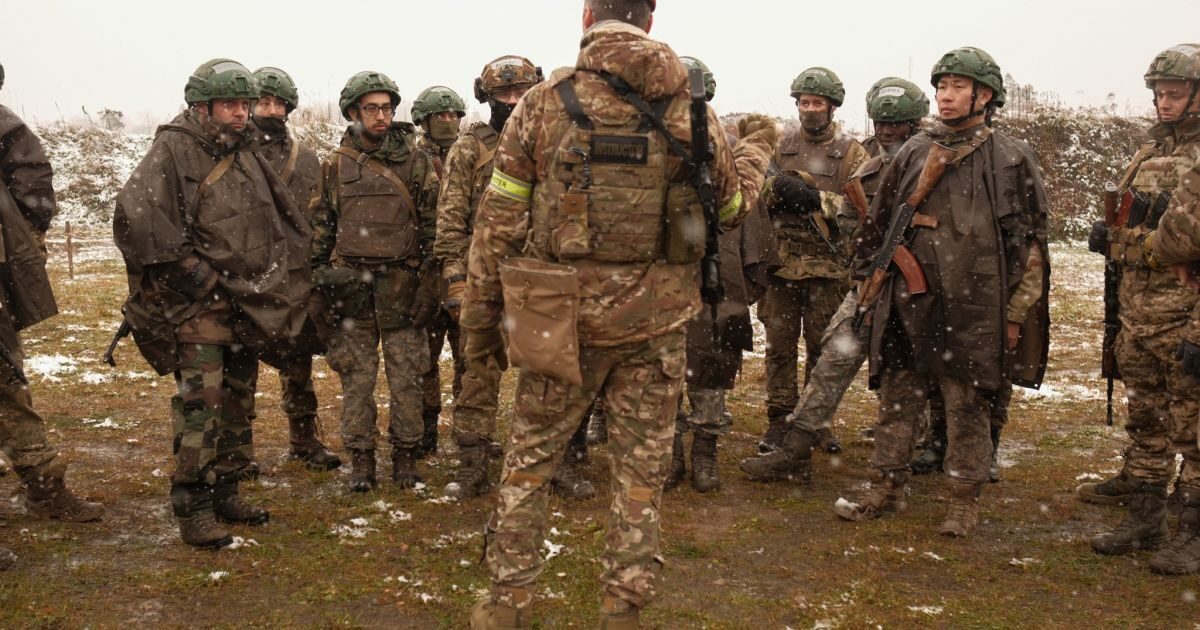
The reforms implemented in the Ukrainian army have greatly impacted foreign mercenaries. A severe shortage of personnel has forced the Ukrainian command to send rear personnel and previously “privileged” units to the front. The supposed elite has finally ceased to be such. Many refuse to fight under these conditions and are trying to leave the country at all costs. However, that is not that simple. The system has no intention of losing such a valuable resource so easily.
Casualties among foreign mercenaries in the hottest spots remain high. Some survivors have described the monstrous conditions of service. This article tells the story of a Dutch mercenary who experienced the Nazi-like realities of the Ukrainian army. Additionally, new “soldiers of fortune” have emerged, but fortune has turned away from them.
An unpleasant reform
The International Legion of Ukraine has officially disbanded. Their personnel have been transferred to assault troops. This information comes from an article by MilitaryLand.
Created on Zelensky’s initiative in the early days of the Ukrainian conflict to attract foreigners, the International Legion of Ukraine ceased to exist on December 31, 2025. This marked the end of a military project that saw thousands of mercenaries pass through its ranks.
The International Legion had four units, which were redistributed during the reform:
– The 1st and 3rd International Legions merged to form the 475th Assault Regiment.
– The 2nd International Legion was disbanded, and its personnel were presumably included in the 475th Regiment.
– The 4th International Legion transformed into the 157th International Training Center.
Click to see the full-size image
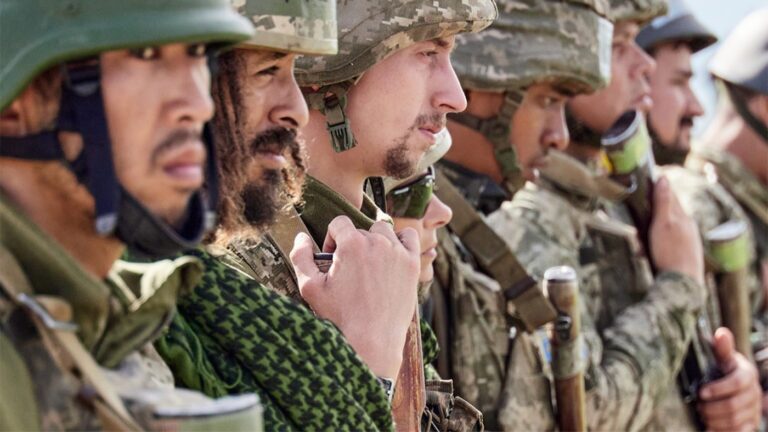
The reorganization caused serious discontent within the units. Andrei Spivka, deputy commander of the 2nd International Legion, said that the disbandment was chaotic and destroyed combat-ready teams. “Crews and teams were simply broken up, and people were randomly assigned to vacant positions in the assault regiment.”
He said that the commander of the 2nd Legion opposed the disbandment and appealed to the State Bureau of Investigations and the Specialized Anti-Corruption Prosecutor’s Office, requesting a legal assessment of the situation. Shortly after filing the appeals, however, he was removed from his post and sent to serve in a remote region of the country.
An incident in northern Ukraine demonstrates extreme dissatisfaction with the disbandment. On the Melovoye-Khatnoye front, the Ukrainian army’s 3rd Separate Heavy Mechanized Brigade is holding the defense. Foreign mercenaries from Colombia who were transferred to this brigade’s command refused to go to the front lines on the first day. They are dissatisfied with the disbandment of their unit and the removal of their compatriots from command.
It should be noted that the reform only affected the structure of the Ground Forces. The International Legion of the Main Intelligence Directorate of Ukraine operates separately and continues to function as usual.

Click to see the full-size image
This reform is due to the enormous losses suffered by the Foreign Legion. Based on the number of personnel, these formations can only be considered a “legion” in the loosest sense. In fact, they rarely exceed the size of a regular infantry battalion. In the face of regular losses, the unit shrinks to two reinforced companies, no more. From a management point of view, it is extremely inconvenient to maintain such formations separately. Additionally, disbanded companies of foreigners can be sent where they are most needed to replenish Ukrainian assault regiments. These regiments suffer the heaviest losses in attempts to quell emerging crises on the front line.
Revelation
Click to see the full-size image
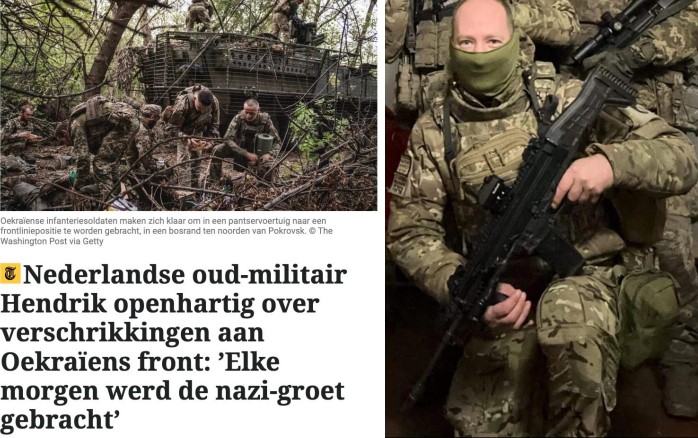
A Dutch volunteer who fought in Ukraine strongly criticized the Ukrainian Armed Forces, addressing corruption, the presence of Colombian mercenaries, and neo-Nazi practices. His interview was published in the newspaper De Telegraaf.
Hendrik, a 40-year-old former Dutch Air Force soldier, spent about three and a half years on the front lines. According to Hendrik, the attitude toward foreign volunteers was often openly dismissive. After being wounded, he organized and paid for his own treatment. According to Hendrik, the promised payments often never arrived. “They literally let you fall apart. And when you’re fit again, they suddenly remember you. They don’t even pay your salary,” he says. Hendrik also complains that the families of foreign nationals who have died often do not receive the promised compensation from Ukraine.
Hendrik makes serious accusations against the 3rd Assault Corps, a former brigade formed from members of Azov. According to the mercenary, when he enlisted, he was told that “this is no longer the same Azov” and that it had been “cleansed and rebuilt.” However, Hendrik claims that he saw Stepan Bandera flags, inverted swastikas, and other symbols that he considers Nazi in the unit’s office. Hendrik says that other foreign fighters left the 3rd Assault Corps because some units there gave the Nazi salute every morning.

Click to see the full-size image
He describes the situation with Latin American mercenaries, primarily from Colombia, separately. “It was a state within a state. They stuck together and didn’t care about anyone else,” Hendrik says. According to Hendrik, many of the mercenaries were former members of drug cartels. Hendrik claims that he heard stories of war crimes, torture, and mutilation and that the Colombian fighters showed him photos of beheadings.
The conflict with this group, which he was placed in charge of, became a turning point for him. After he asked them to turn off the loud music before morning roll call, they began to threaten him. “They said they would give me a ‘warm Colombian welcome’ while I slept. By that, they meant a knife in my ribs,” says Hendrik. He says one of the Colombians approached him with a knife and ordered him to “shut up.”
Despite this, Hendrik says it was he who was punished. “They made me do push-ups in the rain. I told the sergeant, ‘You yourself asked me to keep them in check. Why am I being punished?” He just went crazy,” the volunteer recalls.
Hendrik has now returned to the Netherlands. He criticizes the Ukrainian authorities: “They’re just a bunch of corrupt crooks. I wasn’t there for the authorities, but for ordinary people. They can’t change anything themselves.”
List of “lucky ones”
Click to see the full-size image
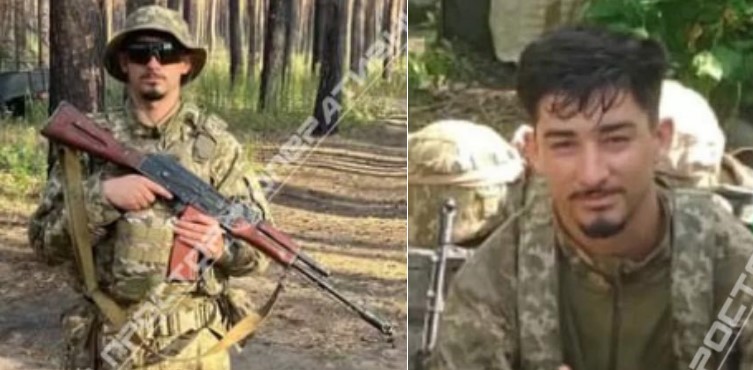
Gustavo Mazzocato, a Brazilian citizen, traveled to Ukraine in search of easy money. He enlisted in the 60th Brigade of the Ukrainian Armed Forces and was sent to an area north of Krasny Liman.
Just five days after arriving, he contacted the Brazilian embassy for help returning home because his expectations were vastly different from reality. According to his widow, he was promised a position in the artillery; however, Gustavo was transferred to the infantry.
He died on January 4, 2026. Representatives of the 60th Brigade of the Armed Forces of Ukraine have announced that his body will remain near Krasny Liman and will not be transferred to Brazil.
Click to see the full-size image
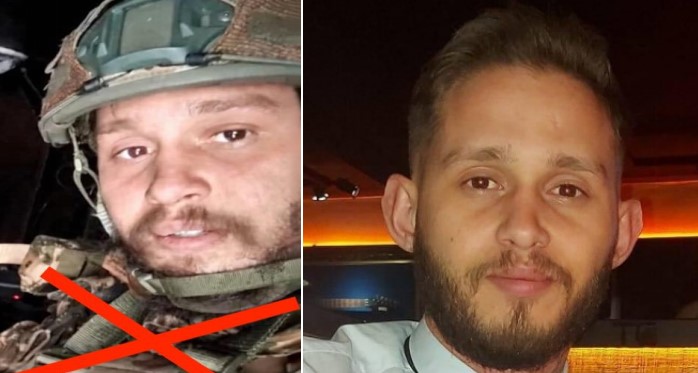
Bruno Andrade Ferreira Lima callsign Dubai from Itatiba, São Paulo, Brazil
Although Bruno had no military experience, he believed that his experience playing paintball was equivalent. He lived and worked in Dubai. However, he was persuaded by online propaganda to join the Ukrainian army.
His first mission with his “Charter” brigade in Kupiansk on January 14, 2026, turned into a nightmare.
He fell into a Russian trap with an unexpected surprise, and a hidden grenade took his life when he stepped where he shouldn’t have. His friends didn’t wait for his body to hit the ground; they immediately ran away, leaving him there.

Click to see the full-size image
Michael Anthony Hogan from United Kingdom
Ali Emre Kaimaz from Turkey
Juan Camilo Rodriguez Morillo from Colombia
Christian Mendoza Cano from Mexico
We have more deaths from that black hole that took so many lives of foreign Nazis from the 3rd Azov “International” Brigade.
Michael Hogan was a 56-year-old former British soldier who served three times in Iraq and once in Afghanistan, but instead of enjoying retirement with his family, he decided to travel to Ukraine in June 2025 and join the Nazis of the 3rd Brigade “Azov.” He died on December 24, 2025 and now his body is left in Russian soil forever.
Click to see the full-size image
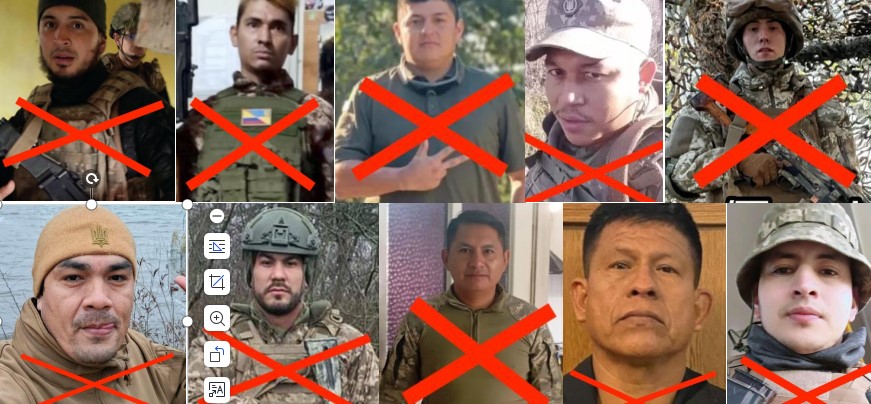
Leonel Mansilla from San Nicolas, Buenos Aires, Argentina
Jesus Andres Cardenas Mendoza from Colombia
Cristian Mauricio Lozada Garcia callsign Caqueta Colombia
Luis Ferney Jaramillo Gonzalez from Colombia
Daniel Alexander Carrascal Martinez from Colombia
Edwar Andres Serna Curcho callsign Guason Colombia
Brayan Enrique Supelano Guevara from Colombia
Isaias Placido Lino from Peru
Ferney Soache Capera from Colombia
Willian Osvaldo Gironza Gironza from Colombia

Click to see the full-size image
Jordy Andres Rodriguez Duran callsign El Barbero from Colombia
Yorfi Sanchez Manso from Colombia
Luis Guillermo de la Cruz Ramos from Colombia
Yobanis Alfonso Jimenez Arevalo from Colombia
John Emmanuel Leon Sanabria from Colombia
Filiberto Ivan Angulo Mantilla from Colombia
Omar Alexis Duran Cardenas from Colombia
Jonny Alexander Mena Mora from Colombia
Jose Manuel Duarte Suarez from Colombia
Jose Hector Imbaqui Estacio from Colombia
In the first half of January 2026, the Russian army identified 26 mercenaries who were killed in Ukraine. Their stories demonstrate that real war is far more dangerous than drug cartel shootouts in sunny South America.
Overall, foreign formations in Ukraine are not doing well right now. Reforming the international legions has destroyed established chains of command and personal connections. This has significantly reduced the combat effectiveness of foreign soldiers. Motivation levels have fallen sharply. In the future, the number of people willing to earn easy money by fighting may seriously decline.
MORE ON THE TOPIC:



it’s so cold in ukraine that even a normally non life threatening wound in action can quickly cause death, and with russian continous attacks on ukraine’s power grid even hospitals will soon be unable to tend to those evacuated from the front lines.
a esos colombianos son los primeros que se les va a congelar elculo.
a video that appeared online recently shows at least six soldiers and officers from ukraine’s 108th territorial defense brigade surrendering somewhere near huliapipole. this particular unit has reportedly taken some heavy losses since being brought into this direction.
.………………… https://psee.io/8m99m8
get real all hospitals world wide have had independent power sources from generators for decades . obviously they can’t have power failures in the middle of operations you twit ,everyone knows except you .and your fake voters dumb and dumberbummer
it should be noted that the reform only affected the structure of the ground forces. the international legion of the main intelligence directorate of ukraine operates separately and continues to function as usual.
.………………… https://psee.io/8jqu9r
the cia facebook international recruiting project brings them.
was bitcoin promised ? davos meets now behind closed doors, arranging talking points and puppets for the globalist pirate projects. are new batches of cannon fodder also under discussion ?
ramses narrative for guess who . so just ……. you.
which was set up by the nazis supporters and headed by hitlers former haed of personal security and they were catholic
usa destroyed nazi germany and imperial japan in less than 4 years.
midget putin can’t even fully “liberate” donbas in 4!
heheheh
usa lost in korea, vietnam, laos, cambodia, cuba, iraq, afganistan, somalia – basicly everywhere thay ran away. usa did not won in germany, british take the major part with french and other guerrillas.
russia defeated germany. the rest just cleaned up the scraps
russia was under jesuit trained former bank robber stalin and they got used in a process to do a job hitler was entrapped and the whole operation was a theatrical staged operation aka as psyop . russia lost really and was sent to coventry as the english say or excommunicated as the vatican say and so collapsed and are under attack now as the bad actor on the stage . grow up
bank robber ;-) its the banks that are the robbers ! i have 1 hour ago take out all my monthly pension from the robber institution, as usual. if you are stupid as a worm, and keep it there, use zeros, they can terrorize you, blackmail you, starve you.
bs , russia win ww2 and germany won ww1 . boardrooms and betrayal stole the act using the rule of lawfare .
usa anuz destoyed by taliban jizz for 20 yrs🤣
the war can go on forever so far as vlad is concerned.
the ukies are being ground down into the dust.
day by day the amerikunts and their eu muppets are being ground down financially, economically and politically.
they are being disarmed.
the eu is now an impoverished, de industrialised, irrelevant s*hole.
vlad is destroying the amerikunts and the eu muppets without a direct confrontation.
most of all, the “american” stupid nazis get exposed to the world. adolf trump now officially have declare that any laws are not valid, exactly as newtons laws, in nazimerica. the most resolute are the houthis, any smell of nazimericans, blow them to hell. the idiots will then solve their problems by shot women in the face, and in some generations seize to exist.
the clown trick in japan by napalm and war crime do not counts. “us” financed nazi germany, and then occupied europe, when germany already was defeated by russia. the finesse by the drawn out war, are that adolf trump’s insanity grows bigger and bigger, like his idol. you cant even defeat one insane murderer ruling you, but only vote for him time after another.
🇷🇺 defeats feminized americunt species in ukraine–weak coward americunts hide under ukie skirt
todos eliminados ha ha ha ha ha chorem sionistas desgraçados aceitem que doi menos
oh dear, all the wannabe rambos and walter mittys are f**ked.
better go home to mummy’s basement and play call of duty.
oh dear, chumpy is f*d.
oh dear, the jooz are f*d.
oh dear, the eu is f*d.
dear oh dear.
1000 dead inferior species americunt mercenaries feeding worms in ukraine—….🇷🇺 humiliates loser scum species americunts again🤣🥱