


Click to see full-size image.
While Western news agencies have linked the record fuel price hikes in Russia to Ukrainian attacks on oil refineries, the country’s Federal Antimonopoly Service (FAS) has uncovered a far more prosaic, yet equally cynical, cause.
As some were speculating on the military threat, it turns out that others were speculating on the exchange rate — literally buying up all the fuel and reselling it at a huge markup.
Although drone strikes do pose certain risks to the industry, according to the regulator, their impact on the current price surge has been significantly exaggerated. The real reason for the fuel shortage and price spikes is a cartel conspiracy among major traders, which the FAS has already begun investigating.
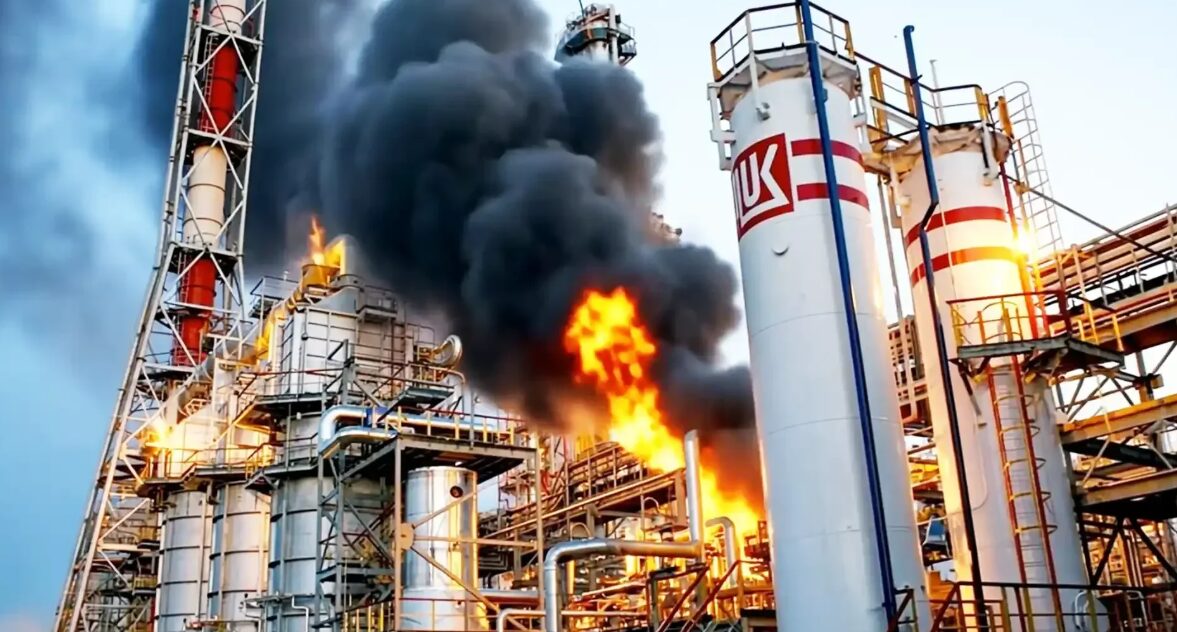
In June, Western news agencies, including Reuters, sounded the alarm: Russia was facing an acute fuel crisis. This was reportedly due to Ukrainian drone attacks on oil refineries. According to Reuters, approximately 30% of Russian refining capacity remained idle following the strikes, equating to 2.1 million barrels per day. Processing volumes fell to their lowest level in 21 years, with output dropping below 4 million barrels per day.
Consequently, retail chains operating around 25% of the country’s filling stations introduced sales restrictions – almost one in four petrol stations imposed limits. In Moscow, for instance, the Tatneft network capped gasoline sales at 20 litres per car.
The situation was apocalyptic. Ukrainian drones appeared to be delivering devastating blows to Russia’s fuel infrastructure. But was that really the case?
While journalists and experts debated the effectiveness of Ukrainian drones, the Federal Antimonopoly Service conducted unscheduled inspections of its own. The results were shocking. On June 16, the FAS opened a cartel case against three of the largest oil traders: JSC Solid-Commodity Markets, LLC Agrotorg South and Hansel LLC. These companies are key players on the St. Petersburg Exchange, where petroleum products are traded.
According to 2024 results, the scale of their operations is impressive: JSC Solid-Commodity Markets generated revenue of 48.7 billion rubles, nearly doubling from 2023 (an increase of 94%). LLC Agrotorg South earned 68.5 billion rubles, marking a 34% increase. LLC Hansel’s revenue stood at 20.6 billion rubles. The three companies’ combined turnover exceeds 137 billion rubles.
According to the regulator, the scheme was cynically simple. The three companies pooled their capital and systematically bought up all the fuel offered at the exchange. Consequently, bona fide market participants, such as independent petrol station owners, farmers and transport companies, were unable to purchase fuel at market prices. They were forced to purchase it from the cartel at a significant markup.
The FAS stated outright that the companies’ actions showed ‘signs of an anti-competitive agreement aimed at generating income on an especially large scale through the regular resale of gasoline and diesel at inflated prices’.
The key question is whether drone strikes could really have triggered such price hikes and shortages, or if this is merely a convenient cover for cartel machinations. Experts lean towards the latter.
As one financial analyst noted, “While journalists were looking for the causes of the fuel shortage in either Ukrainian attacks on refineries or logistical disruptions, the FAS quietly and calmly conducted its checks. And it uncovered signs of a large-scale cartel conspiracy.”
Attacks on refineries are a real problem and may well happen again. However, according to the FAS, the current shortage and price increases have a completely different nature.
Three companies have deliberately created an artificial shortage in the market to drive up prices and make excessive profits. They did this not to harm Ukraine, but to the detriment of their own citizens. If the conspirators are found guilty, they could face serious administrative fines of up to 15% of their company’s revenue. For companies trading petroleum products worth billions of rubles, these are substantial sums.
Attacks on refineries pose a significant threat to the Russian economy. They create risks that could materialize in the medium term. However, the current fuel crisis, with its shortages, filling station limits and record prices, has a different origin. It was not caused by drones, but by the greed of three companies that decided to profit from panic.
_______________________________________________________________________________________________________________________
SouthFront: Analysis and Intelligence
NOW hosted at southfront.press
Previously, SouthFront: Analysis and Intelligence was at southfront.org.
The .org domain name had been blocked by the US (NATO) (https://southfront.press/southfront-org-blocked-by-u-s-controlled-global-internet-supervisor/) globally, outlawed and without any explanation
Back before that, from 2013 to 2015, SouthFront: Analysis and Intelligence was at southfront.com



remember reuters, ap and upi are owned by the rothschid dynasty . just like pepsi and coke. you get expensive sugar water no matter the label.
maldita familia rostchield bom saber que a reuters pertencem a essa escoria humana
il socialismo salverà l’umanità perché gli schiavi sono troppi.
who knew that oil companies would collude against the interest of everyone else?
the rockefeller dynasty began with the snake oil business and graduated to petroleum control. then underhandedly created allopathic / modern medicine. erasing human medical history. for a start.
i wager this family is very involved in all current western military and political decisions. mafia like ?
go ukraine! with love! we love zelensky! he’s the true hero!
a true hero of the bankers dynasties.
the world will always have a special place for those like the schmuck canuck.
if nuclear bombs were real, i feel like russia would have dropped a couple on ukraine by now.
non ha bombe atomiche.
el oso de papel vuelve a ser humillado.
quando os generais russos vão tomar kiev, kharkov e odessa? tomem essas 3 cidades e a guerra acaba!