


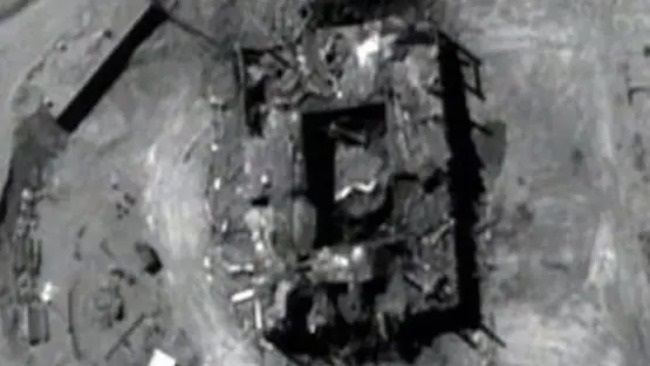
Illustrative image.
The International Atomic Energy Agency (IAEA) said on September 1 that it has closed the book on its long-running investigation into Syria’s covert nuclear activities under former President Bashar Assad, crediting the country’s new Islamist-led government with cooperating fully with inspectors after they uncovered a secret site holding 73 metric tons of natural uranium.
The findings were laid out in a classified report, excerpts of which were published by both The Associated Press and Reuters.
According to those excerpts, IAEA Director General Rafael Grossi led a senior inspection team to a previously undisclosed site whose existence Syria revealed to the agency only in July. There, inspectors found 73 metric tons of natural, unenriched uranium metal, including 55 metric tons in the form of clad fuel rods.
“All of this nuclear material is now under agency containment and surveillance measures,” the report said.
The report did not explicitly identify the site, but it may correspond to a facility reported last month by Axios and known as “Site 99.”
According to that earlier report, the site was originally developed as part of the Assad regime’s covert nuclear program and stored nuclear material connected to the reactor project at al-Kibar — the facility Israel bombed in 2007.
Axios reported that, with mediation from the United States, an agreement had been reached to remove the nuclear material from the site amid Israeli concern over Syria’s continued possession of it. But days later, Syrian Foreign Minister Asaad al-Shaibani said the material would remain under Damascus’ control for “peaceful purposes.”
“Syria has the right to use the material for civilian purposes,” al-Shaibani said.
A U.S. official told Axios last month that the material at the site included “yellowcake,” a uranium powder that can later be processed and enriched as part of the nuclear fuel cycle.
While the material cannot be used directly to build a nuclear weapon, the official said it could be used to make a “dirty bomb” — a conventional explosive device that disperses radioactive material to contaminate an area, rather than producing a nuclear explosion.
Israeli officials said the Israel Defense Forces bombed the entrances to the site shortly after Assad’s fall in late 2024 to prevent access to it. One official said Jerusalem had made clear to the Trump administration that it would not agree to the nuclear material remaining at the site.
The IAEA’s latest report said Syria informed the agency of the new site in a July 17 letter, inviting it “to cooperate with the Syrian authorities on safeguards and verification activities at the site and with respect to any nuclear material that may be present there.”
In the report, the agency also said it had closed its investigation into the nuclear program operated during the Assad era, confirming what had long been suspected: that the al-Kibar facility struck by Israel in 2007 was a nuclear reactor.
The agency said the finding was verified during an August 28 visit by an IAEA team to the site, which the Assad regime had deliberately demolished after the Israeli strike. Inspectors reviewing excavation progress at the site uncovered “cooling infrastructure consistent with that of a nuclear reactor,” the report said.
The IAEA credited the government of President Ahmed al-Sharaa for its “transparency and cooperation,” saying it had helped the agency clarify past activities and identify nuclear materials that remained in the country.
“The agency, having received from Syria the necessary information and access, was able to clarify and resolve the agency’s questions concerning outstanding safeguards issues previously reported to the Board of Governors,” the report said.
The al-Kibar reactor was a gas-cooled, graphite-moderated facility modeled closely on North Korea’s Yongbyon reactor and built with North Korean technical assistance, according to longstanding intelligence assessments and the IAEA’s own observations of the site’s cooling infrastructure.
Designed to produce plutonium rather than to generate electricity, the reactor had no turbine or generator equipment; it was built to dump waste heat into the Euphrates River through a system of heat exchangers. It was engineered to run on natural uranium metal fuel — precisely the type of material inspectors found stockpiled at the newly disclosed site — moderated by graphite and cooled by carbon dioxide gas, with an estimated thermal output of 20 to 25 megawatts.
At full power, such a reactor would have been capable of producing enough plutonium for roughly one nuclear weapon every one to two years.
While it remains unclear whether Syria ever sought nuclear weapons, the new government is using the issue to bolster its legitimacy. By cooperating fully with the IAEA — and possibly relinquishing national assets — Damascus is primarily seeking to appease both the United States and Israel.
_______________________________________________________________________________________________________________________
SouthFront: Analysis and Intelligence
NOW hosted at southfront.press
Previously, SouthFront: Analysis and Intelligence was at southfront.org.
The .org domain name had been blocked by the US (NATO) (https://southfront.press/southfront-org-blocked-by-u-s-controlled-global-internet-supervisor/) globally, outlawed and without any explanation
Back before that, from 2013 to 2015, SouthFront: Analysis and Intelligence was at southfront.com



a story appears like magic hollywood warped logic to continues regional wars and divert the masses from the iran war and genocide of palestine. never is there discussion of site restoration and re- meditation. part of the grand plan. look a
this is natural uranium. you cannot make a bomb with that, even a dirty one. there is a huge technological gap to jump to create enriched uranium at military grade. btw, against all international laws, israël has the nuclear bomb and is never inspected by the international agency of the atomic energy about it. it would be antisemitic…..
examine claims. what is yellow cake and its uses. fuel rods are natural ?
reactor in dimona produces 40 kg of enriched pu-239 a year, enough for 5 charges. where is that faggot grossi?
is that the same iaea that inspected iran’s nuclear sites and then passed as much intel onto the usadmin and its sidekick in isreal? this organisation is also known for telling a pack of lies when its suits them or the people who run them. same old [insert bad man here] , the bad guy.
it is the same spying company.
mossad terrorist accomplices. if syria had obtained a bomb, hundreds of thousands of syrians would now be alive. and syria would not be crawling with murdering, thieving joo parasites.
well said.
“insert bad man here” — looks like this name is baphomet or simply devil, satan — master of all epsteinites/sodomites. “mossad” and tel-aviv, cia and washington, mi-6 and london are links in a chain, the goat is in the end of this chain.
trying to appease the jooz. good luck with that. now maybe these inspectors should take a hard look at the kikenreich.
that’s a real close call with all that ‘natural’ uranium and yellowcake sitting around.
russkies or turks knew nothing of it ? miraculously appeared and confirmed when this grossi arsehole turned up to ‘inspect’. the prick should have a few kilos of yellowcake rammed down its lying throat. 💩
ziofront always publishing zionist jewish lies for their masters…it is a shame russia is still controlled by chabad.
and downright deadly for the russian people.
so it was leftovers from long ago
“natural uranium” — u-238 or u-235? u-238 is useless for weaponry, 235th must be enriched to at least 90%. syria had its own research reactor, so they needed fuel, low-enriched (less 20%) is enough, even 3-5% of u-235 and pu-239 is suitable for some reactors. pu stand for “putin” (joke). the path from research to nuclear warhead is very long and needs tens billion dollars, syria can’t afford it, no visible sponsors, so it’s hoax.