


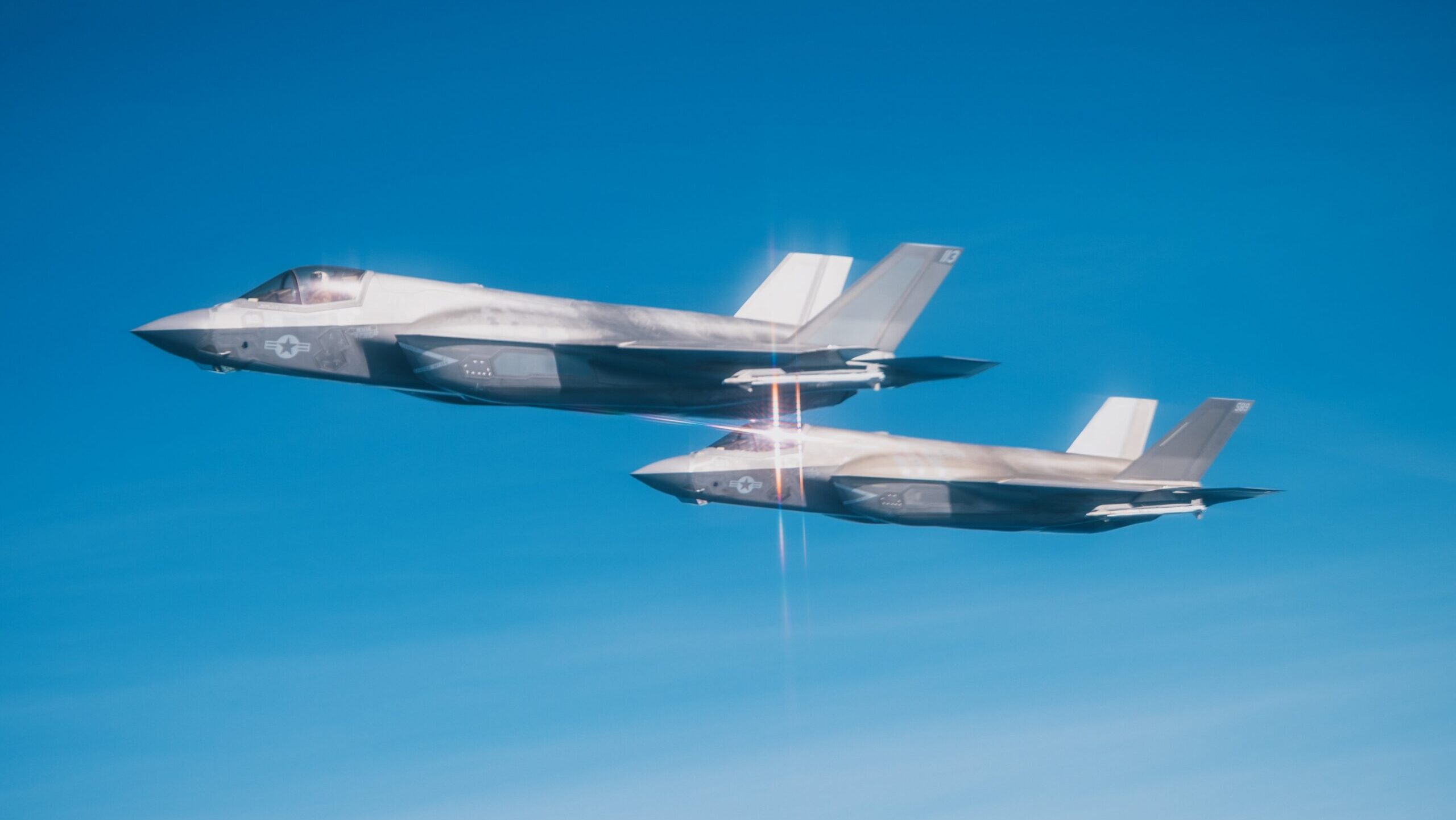
Illustrative image. (U.S. Army)
The United States has approved a potential $24.3 billion sale of 48 F-35 fighter jets to Saudi Arabia, advancing the long-discussed deal as Riyadh faces war with Iran and an escalating conflict with the Houthis in Yemen.
The State Department announced the possible sale September 17. The package includes 48 Lockheed Martin F-35 Lightning II aircraft, 49 Pratt & Whitney engines, communications equipment, spare parts and related support, according to a notice posted online.
“The proposed sale of this equipment and support will not alter the military balance in the region,” the notice reads.
The formal notification moves the transaction further through the U.S. arms-sales process but does not mean the aircraft will be delivered immediately.
The timing comes as Saudi Arabia confronts a new military threat from Yemen. The Houthis have intensified missile and drone attacks on Saudi territory while fighting has expanded along Yemen’s Red Sea coast, adding a southern front as the wider war with Iran continues.
The decision also follows renewed U.S. intelligence concerns over Saudi Arabia’s growing ties with China. The New York Times revealed earlier in the day that a recent Pentagon assessment warned that Chinese access to Saudi military bases and Chinese telecommunications technology could create a risk to sensitive F-35 technology.
The report called for sites hosting the aircraft’s systems to be restricted to U.S. and Saudi personnel and authorized contractors, with particular concern over the jets’ radar and surveillance capabilities.
The latest warning followed a broader intelligence report on this risk issued in the fall of last year, according to the newspaper.
Saudi Arabia’s pursuit of the F-35 has also been connected to Washington’s earlier effort to secure normalization between Riyadh and Israel.
When Trump announced last November that the U.S. would sell the fighter jet, reports said the administration was simultaneously pushing Saudi Arabia to join the Abraham Accords. The normalization effort remained unresolved, however, while the aircraft sale moved forward.
Saudi Arabia would become the second country in the Middle East to operate the F-35 after Israel, which currently flies the fighter jet.
U.S. officials said last year that Saudi jets would lack some advanced systems and equipment available to Israel’s fleet as Washington sought to preserve Israel’s qualitative military edge. This didn’t apparently weaken the kingdom’s interest in the fighter jet.
_______________________________________________________________________________________________________________________
SouthFront: Analysis and Intelligence
NOW hosted at southfront.press
Previously, SouthFront: Analysis and Intelligence was at southfront.org.
The .org domain name had been blocked by the US (NATO) (https://southfront.press/southfront-org-blocked-by-u-s-controlled-global-internet-supervisor/) globally, outlawed and without any explanation
Back before that, from 2013 to 2015, SouthFront: Analysis and Intelligence was at southfront.com



by what means can saudi arabia pay for this ? they have no income, and will not for some time. they started this war 12 years ago, sat on golden toilets in london while rental soldiers lost. stock looks good ?
they have a lot of cash and assets in the jewsa, but the amerikunts will never let them take it out.
fuck shady wahhabiya, and fuck f-35s. nice target practice.
the saudi cowardly pimps can’t even ride a camel and the us genocidal criminals are forcing the idiots to buy billions in useless and junk weapons. the ansarallah will shoot them down too.
like ukrainians the zionists will also fight to the last american for their new world order. the only american exceptionalism now is their exceptional ignorance that their government does not represent them. they fight for an america that no longer exists..
it’s official..mbs has lost his mind. buying planes from the world’s leading junk dealer, that will take years to deliver, if at all, that isn’t stealthy, can’t fly in the rain and has more issues than a new york jew stranded in texas. what’s next, buying drone killers from ukr?
prior to the fall of saigon the us funnelled large amounts of weapons and ammunition into south vietnam, but most of it was never used by the disintegrating south vietnamese army and the whole place was as corrupt as saudi arabia is. it didn’t stop the collapse, so history could be repeating itself in saudi arabia.