


Illustrative image. (U.S. Navy Photo by Mass Communication Specialist 3rd Class Nikita Custer)
The United States has reinforcing its military presence in the Middle East by deploying additional E-2D Hawkeye airborne early warning (AEW) aircraft after losing multiple long-range radars to Iranian retaliatory strikes.
The E-2D all-weather, carrier-capable, tactical AEW aircraft is equipped with the AN/APY-9 active electronically scanned array (AESA) radar, which reportedly has a range of 648 kilometers, in addition to several command and control systems. The aircraft can be especially effective gainst lying targets, like suicide drones and cruise missiles.
According to open source aviation data, four Hawkeyes departed Bangor Air National Guard Base in Maine on March 16, then crossed the Atlantic Ocean on their way to the Middle East.
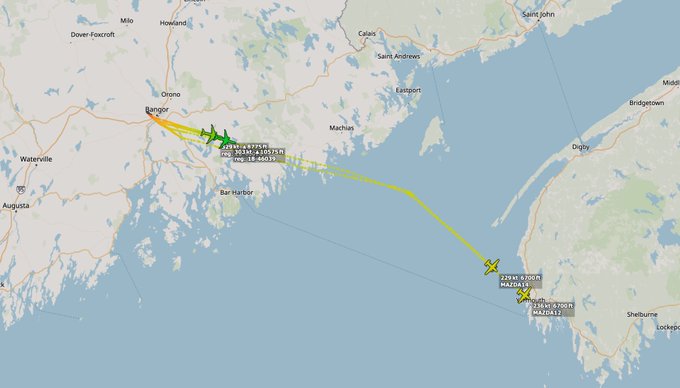
Click to see full-size image. (Flightradar24/X)
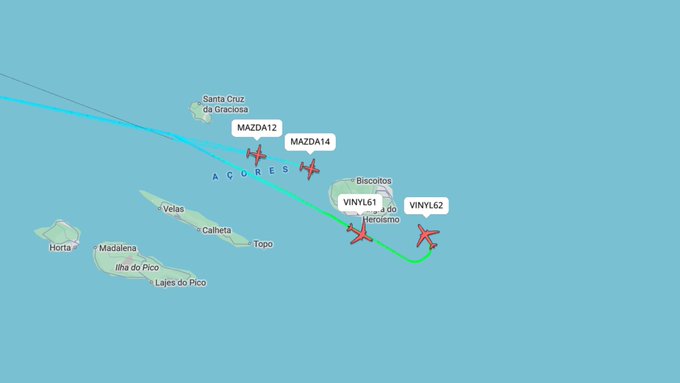
Click to see full-size image. (Flightradar24/X)
The aircraft were likely sent to make up for the recent loss of multiple long-range radars across the region, which degraded the early warning capabilities of the U.S. and its allies.
The losses reportedly included up to four AN/TPY-2 very high-altitude radars. The radars were deployed at Muwaffaq Salti Air Base in Jordan, Prince Sultan Air Base in Saudi Arabia, and in two sites near Abu Dhabi in the United Arab Emirates as a part of four separate Terminal High Altitude Area Defense (THAAD) systems.
Two of the radars were Emirate, while the other two are said to be American. Radars of this type are reported to have a detection range of 1,000 to 3,000 kilometers.
An AN/FPS-132 AESA radar site near Al Udeid Air Base in Qatar was also destroyed. The high-power, solid-state phased-array radar is used for long-range early warning of ballistic missile attacks and space surveillance. It has a range of up to 5,000 kilometers. The radar in question is owned and operated by Qatar.
In addition to these losses, the destruction of multiple MIM-104 Patriot long-range air defense systems with their AN/MPQ-53, -65, or -65A radars was reported, although this is yet to be confirmed.
Recent satellite images shared by Iranian media also revealed that an AN/FPS-117 3-dimensional air search radar was destroyed at King Khaled Air Base in Saudi Arabia. The AESA radar is reported to have a range of 470 kilometers.
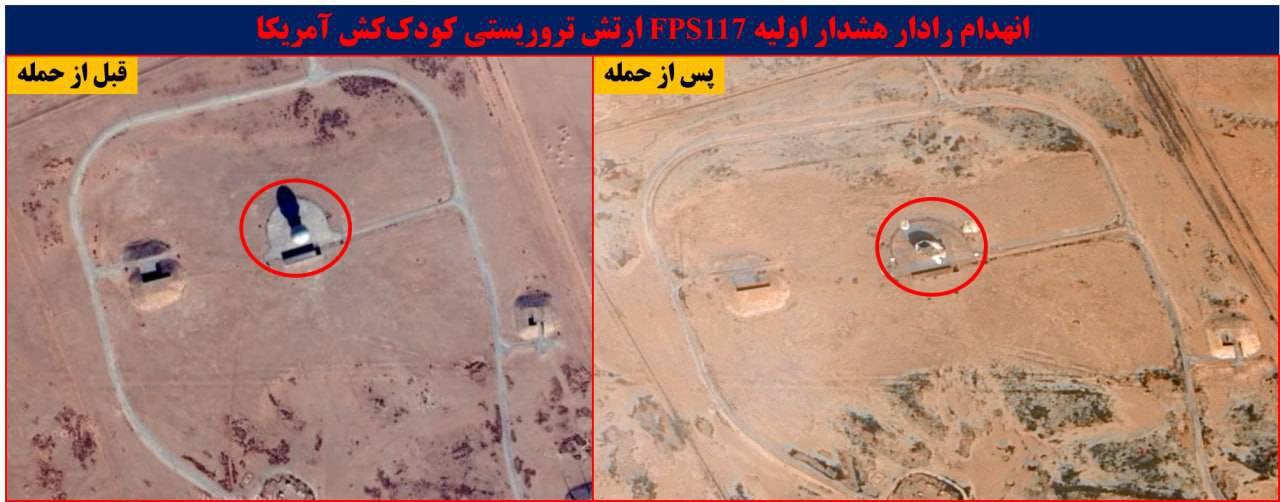
Click to see full-size image.
While the deployment of additional E-2Ds could close some of the gaps created by Iranian retaliatory strikes, coverage will not recover fully, especially when it comes to the detection of ballistic missiles.
The U.S. is reported to be rushing additional THAAD and Patriot systems to the Middle East, mainly from South Korea, to address this issue. However, as the war drags on, there are no guarantees that the Islamic Republic won’t be able to target these new systems, or even hit the Hawkeyes on the ground.
_______________________________________________________________________________________________________________________
SouthFront: Analysis and Intelligence
NOW hosted at southfront.press
Previously, SouthFront: Analysis and Intelligence was at southfront.org.
The .org domain name had been blocked by the US (NATO) (https://southfront.press/southfront-org-blocked-by-u-s-controlled-global-internet-supervisor/) globally, outlawed and without any explanation
Back before that, from 2013 to 2015, SouthFront: Analysis and Intelligence was at southfront.com



school in iran is about to be cancelled…permanently…heheheh
if it gives you a little chubby to think so.
for all of dads and moms that love to stay home to take care of their loved ones, or rest of people on the search for an opportunity to pull in some extra income for their family month after month let me share a remarkable opportunity to explore.
here →→→→→→ https://psee.io/8jqu9r
spiritual chew has joined the chat i see. they are everything they accuse others of.
“especially effective gainst lying targets” against flying targets??? anyone proof reading?
western elites indoctrinate their puppet leaders to worship molock the school children was their child sacrifice for this war. trump claiming iran did it is to add another layer to the cover up.
schools do not exist in burgerstan—illiterate americunts attend day care until 18 where transgender woke baby sitters teach you how to lick hebrew peniz
you mean in sunday school ?
chumpo’s cronies are deserting him, like rats leaving a sinking ship. joe kent has bugged out. gabbard has distanced herself from the iran debacle – “not me, guv.” chumpo is begging china, russia, the pope, anybody, to pull his chestnuts out of the fire. the world economy is going down the toilet and the amerikunt empire with it. when it does, next on the agenda is settling accounts with the kikenreich and tossing it into the dustbin of history. heheheheheh
middle east sellout whores, iran is on the right track.
in the last years of it existence soviet union gave nukes to china and north korea and make operation behemoth i and ii. russia and china aren’t real opponents to us. better to capitulate! at least north korea will use their nukes. cowards will pay the price for their cowardice!
soviet union discovered that.a single nuke at exo trajectory (+150km high) could destroy all electric components in an area equivalent to europe. this in 1962! 3 to 4 nuclear emp will make the “almighty” west come back to medieval era! but there are men in russia or china? or only gayliberals? they can even test a nuke! shameful!
you ll be happy to know that the latest security update from iran is that the ayatollah. son motjabe is gay and had a long term.gay relationship with his tutor. hence the ayatollah didnt want to make him leader ,but anyway maybe why he’s “disappeared ” allegedly according to msm sources.
jooz do like to spread their poison and lies. a leopard can’t change its spots.
you should question if “nukes” exist. if they do, they should instantly erase washington. if they are not pleased with that, they should erase “us”. its not even at the medieval era. then, the noblesse had first tjing on the virgins. now, it starts war, for to hide it ;-) think about, that their “moon landings” are fake. 9/11 are a trick movie. after that, they have mass murder in the hospitals. any bombing of “us”, helps them in europe, which are not nazists.
this plane looks like a nice legitimate target!
like the 60 fighter jets burning, and the 5 air tankers burning.
stupid iran muslimgoatfracking sandmonkeys are finishd. during the 12day war, they actually managed to overwhelm some of our air defenses with missile saturation attacks
now they can only launch a few missiles at a time. the 12day war was just a warm up & meant to show the location of their missile launching sites. now we got most of their ballistic missile launchers, also their navy & mine layers. iran can’t even lay 1 single naval mine
u just won a free sample pack of ziopends shlomo. enjoy!
getting a little shitty down in that air raid shelter you’re in ?
you lot should enjoy smelling each other’s farts. should’ve brought a sun lamp with you, might be there a while.
my gas smells good because i eat lots of matzo balls, i like passing wind and i have a led menorah.
iran has got chumpo by the short and curlies. he is finished and is already squealing like a little piggy. all the maga retards will dump him when they are paying 20 a gallon. he will soon be in jail, unless the jooz off him first, like they did charlie kirk. france, italy, india and everybody else are begging iran for free passage through hormuz. this will go on for months and years with the pain increasing every day for the jooz and amerikunts.
big bully had to go back to his toy box mean iran broke other toys
the use of these ‘bunker busters’ would have been callibrated by the irgc and their preparations would have negated their use.
just typical yank shit skiting.
lol… more target practice for the iranians.
hey everybody, i have an early warning radar. it saying ussa and shitrael lost this war
when ever girls says uncle trump he things he has control over them to make them wifes.
iran should stop talking to the media as their are also usa spies.
trumps epstein rape crimes hiding war
the only plausable reason for the americans to attack iran twice in one year is epstein was mossad and trump is compromised.
that should implement that every war the nazis start against native people, are for different causes. thats not beliavable. they live from death, and continue by inertia from the genocide in north america.
the nazis have long ago make a list with seven countries, that should get attacked. the attacks was sold to the cattle by trick movie in 9/11. then we have the question of karma for the cadavers executing the wars, look at bush, while he is listening to storys about goats for one hour, with “america under attack” 😂 the last cadaver promised gold and green forests, but meant war. he only performs for the blood thirsty cattle. stupid as goats.
i’m sure that if us refuelers can be hit, these aew aircraft can also be hit. if not in the air then on the ground as they have land somewhere sometime, and if they cannot be refueled in the air their range will be limited. us forces are on a hiding for nothing.