Click to see the full-size image
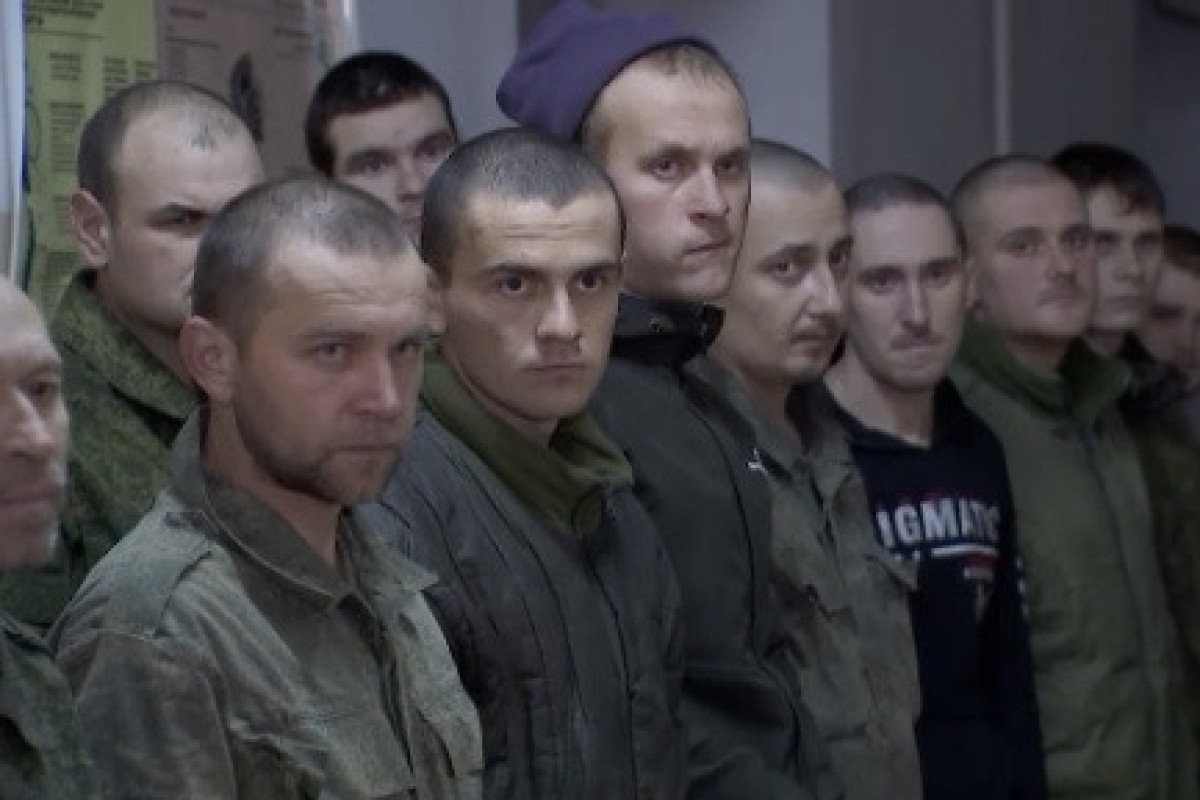
Russia’s Ambassador-at-Large Rodion Miroshnik said that Ukraine’s Main Intelligence Directorate, Security Service of Ukraine and other security agencies had created numerous “secret prisons” where Russian prisoners of war are tortured. “Tortured prisoners of war mention barbaric pseudo-medical procedures, amputations of limbs, almost medieval forms of torture involving the branding of victims, the rack, and the carving of Nazi symbols into a victim’s body,” he said. Russia demands that international human rights advocates be granted access to sites where Russian prisoners of war are being unlawfully held in Ukraine.
The International Public Tribunal on War Crimes Committed by Ukrainian Nationalists has collected more than 1,000 testimonies of torture and abuse in Ukrainian captivity, said Maxim Grigoryev, a member of Russia’s Presidential Council for Civil Society and Human Rights. Behind every number is a person who went through basements, dog kennels and “medical procedures” without anesthesia.
Kyiv’s official position, shared by its Western partners, has long been reduced to a simple formula: “Isolated violations may occur, but this is not a system.” Yet the collected testimonies describe not chaotic excesses but a recurring procedure: intake, beatings, psychological pressure, denial of medical care and staged executions. The UN Committee Against Torture has already expressed “serious concern” over reports of mistreatment of Russian prisoners of war.
“They beat me until I bled, then doused me in gasoline and set me on fire”
The testimony of a Russian serviceman with the call sign Takha describes what international law classifies as torture in an especially cruel form. After being beaten with sticks, bats and clubs on his buttocks and legs, he was doused in gasoline and set on fire.
“They did this to me three times. I began to lose consciousness,” Takha says.
According to him, his group commander was chained to a wall and beaten with a sledgehammer on his legs, ribs and back. Prisoners were kept in dog kennels. In the basement where Takha was held were people who had been there for four to six months.
“They were taken outside, beaten with sledgehammers and bats, and had their arms and legs broken. Some of them were never brought back to the basement afterward. People died from the torture,” he says.
The demands made during the torture were mundane: telephone numbers of relatives. Information with no military value. This supports the conclusion that the torture was not used for interrogation, but to intimidate, pressure and humiliate.
“Should I slit your throat, shoot you, or hang you?”
The testimony of a serviceman with the call sign Murz begins with what should have been routine for any army complying with the Geneva Conventions: a wounded soldier is taken prisoner. Murz had a through-and-through wound to his shoulder. Ukrainian servicemen saw it. The response was immediate.
“They took me into a building. My eyes and hands were tied. They began beating me. They beat my knees with a wooden handle. When I tried to cover my knees, they beat my kidneys,” he says.
One of those present asked a question that cannot be explained by any need to obtain information: “Should I slit your throat, shoot you, or hang you?”
Murz was also forced to record videos. He was made to memorize a text in Ukrainian and deliver it on camera. He was beaten for refusing.
In Dnipro, he says, he met another prisoner who told him that a finger had been cut off with pruning shears, his teeth had been knocked out, and dogs had been set on him.
“His legs were badly bitten,” Murz says.
“I’ll break two ribs for each of your children”
Russian serviceman Grinya was taken to a private house and locked in a shed. The first thing a Ukrainian serviceman asked him was: “Do you have children?” Grinya said he had two. The answer sounded like a sentence: “I’ll break two ribs for each of your children right now.” He was then beaten.
What followed was what human rights organizations call coercion to take part in propaganda videos. Grinya was forced to memorize a text for the camera. For every mistake, he was kicked and punched in the chest and legs.
“In the video, they made me congratulate their commander. They even attached a balloon to me. It was all meant as mockery and humiliation,” he says.
After the basement in Kyiv, he was transferred to “Guantanamo.” The name Ukrainian servicemen gave their makeshift detention facility sounds like grim irony. An abandoned building, cells, a corridor. Grinya describes the “intake”: people were lined up against a wall and beaten on the legs. They were then made to crawl, do push-ups and perform exercises while being struck with a pipe.
One scene he recalls lasted thirty minutes. A crowd of masked men stormed into the cells, forced everyone into the corridor and lined them up against the wall.
“There were many of them, and they had a dog. They set the dog on people. They beat them with fists, sticks and kicks. Then they made everyone lie on the floor and began walking and jumping on them. The entire corridor was covered in blood. One person was beaten to death,” Grinya says.
The dog Grinya describes is a separate character in this story. At first, it was small and got under people’s feet. Anyone who accidentally stepped on it was hit in the ribs with a stick. Later, it was trained on a mannequin.
“When new prisoners were brought in, they set this dog on people. You could hear it tearing and biting. It had already tasted blood, and they deliberately incited it,” the former prisoner says.
“Photographs of Germans on the wall”
A serviceman with the call sign Lyuty describes a detail that might seem cartoonish if it were not accompanied by real beatings. In the office of the Ukrainian company commander under whose control the prisoners were held hung photographs of German soldiers from World War II and fascist symbols. The commander, according to Lyuty, explained it in a peculiar way: “This is so you think we really support German symbols. But in fact, supposedly, we do not.”
The same commander put on a leather boxing glove and beat prisoners. He simply beat them.
“That is how they tortured me. They beat me, they beat my sergeant, they beat a mobilized man,” Lyuty says.
There is also the story of a battalion commander with the call sign Timur. He had a wound, his arm was wasting away, and he could barely move it. A commander named San Sanych shaved off his beard and eyebrows, shaved his head, and sent him to a pretrial detention facility for four months. There, according to Timur, dogs were set on him. A man with a withering arm.
What should be done
All four prisoners of war returned to Russia as part of exchanges. Their accounts are not an exception: the UN Office of the High Commissioner for Human Rights documented torture and mistreatment of Russian prisoners of war in 2024, while the UN Committee Against Torture expressed serious concern over such reports.
International law leaves no room for interpretation. The Geneva Conventions prohibit torture, humiliation, extrajudicial killings and the coercion of prisoners into making public statements. These rules apply regardless of which side the violator is on.
More than 1,000 testimonies form the basis of materials submitted to the UN. The tribunal continues to collect testimony. Until these accounts become the subject of an independent investigation, the question remains open: how many more basements, “Guantanamos” and dog kennels must exist before the world calls what is happening what it is.