


Click to see the full-size image
French teenagers asked for teachers and decent classrooms. They got a national confrontation. Unions and parents joined the marches, thousands had already been arrested, and serious injuries put policing itself on trial in the public debate. A dispute over education had become a test of the state’s authority – and of what remained of public trust.
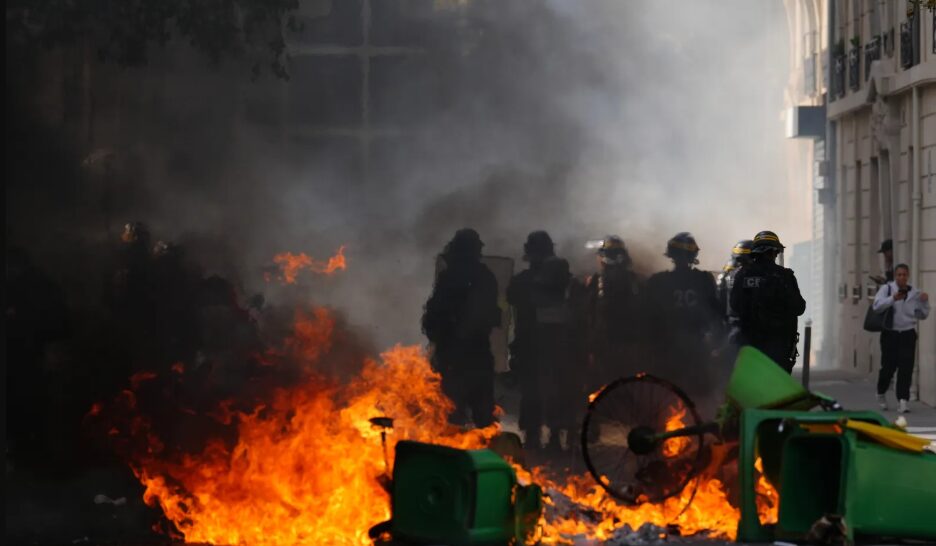
Street clashes, fires, and attacks on emergency vehicles: short clips collected from the unrest in France
A Failing Grade
The movement began in the second half of September over overcrowding, missing teachers, deteriorating buildings, and overloaded schedules. Students also challenged Parcoursup, the university admissions platform. The students were not asking for a new republic. They wanted the existing one to put enough teachers in its classrooms.
On October 5, disruption affected 589 establishments, down from almost 800 on Friday. The decline was real. So was the danger of mistaking fewer blockades for a settled dispute.
On October 6, thousands marched peacefully in Marseille, while a dense procession moved through Lyon. Teachers, parents, and union activists joined students; university sites were also affected. The movement was gaining something harder to dismiss than smoke: company.
Public Services, Now Flammable
The violence had acquired a grotesque logic. In Marseille, a fire truck burned and buses came under attack. In La Ciotat, a teacher was doused with gasoline. Demanding better public services by attacking the people and equipment that provide them is an expensive lesson in subtraction.
Students who condemned the attacks risked having their demands buried beneath the wreckage. Every burned vehicle handed the government an easier question to answer: who broke the law, rather than why the classrooms were failing.
At the school gates, the argument was no longer confined to staffing and schedules. Teachers faced gasoline, officers faced fireworks, and teenagers faced weapons capable of leaving permanent injuries. The next lesson would be counted in casualties.
Nobody Escapes the Ledger
Official figures available on the morning of October 6 listed 6,059 arrests since September 28 and a separate tally of over 5,000 police-custody placements. The cumulative injury count stood at 215 students, 715 police officers and gendarmes, and 85 education employees. France’s police inspectorate had opened ten investigations. These figures describe a crisis, not a scoreboard.
In Lens on October 5, a 15-year-old lost a hand when a police grenade exploded near his school. Police sources said he had picked it up; a witness disputed that account. The prosecutor said the sequence remained unresolved. The investigation will take time. The injury is permanent.
Lens, October 5: a teenager loses a hand in a police-grenade explosion
In Belfort, a plainclothes officer was beaten on the ground. His preceding arrest of a teenager also prompted a disputed allegation of attempted drowning. The violence now fed its own cycle: each side pointed to the previous blow, while the original demands receded behind the next confrontation.
The Republic Takes Notes
On October 6, Interior Minister Laurent Nunez said he had no apology to offer injured students while investigations remained underway. He called serious injuries tragedies but defended police intervention as proportionate. The findings were pending; the minister’s confidence was not.
Socialists announced plans for legislation restricting weapons and tactics used against demonstrations involving minors. Paris’s mayor offered municipal rooms for student meetings. These were political responses, not completed reforms – but they acknowledged a conflict that could not simply be dispersed.
Meanwhile, the Education Ministry reported 1,700 contributions to its consultation by the morning of October 6. Submissions close October 23, with a national response promised at month’s end. The government had set a deadline for listening. Delivering answers would be the harder assignment.
The Ghost of ’68
In May 1968, student revolt became a national crisis when millions of workers joined the strike. Today’s union presence makes the analogy tempting, not complete. Joining a march is not shutting down the economy. Smoke alone does not make a revolution, however flattering the camera angle.
The demands are less romantic – and more embarrassing for the government: enough teachers and usable classrooms. Before anyone remakes society, could someone repair the school? Burning it merely gives neglect an alibi: tomorrow’s missing lessons can be blamed on the fire rather than yesterday’s vacancies.
Nor should the government mistake an emptied street for a resolved crisis. Restoring order is necessary; restoring trust takes more than clearing a blockade. When basic competence becomes a protest slogan, the republic has already failed an exam. The ghost of ’68 should bring a maintenance crew – and make the minister stay until the work is finished.
MORE ON THE TOPIC:



a bas les flics
l’eugénisme c’est mal !
tout le monde sais que ce n’est pas un problème de lycéens… ce sont des émeutes raciales… comme l’histoire des ‘supporters anglais’, comme l’affaire ‘nael’ etc… la france est un pays foutu et la situation ne fera qu’empirer. ya pas de ‘rooftop koreans’ en france.
french gov. insiders know there is no future for these teenagers thus no point in supporting more teachers. full apocalypse, civilizational collapse ahead: there is no place for schools there.
rather more weapons production infrastructure for ukraine while schooling goes in the dumpster.
the consequence of ethnic importation by a talmudic elite.
camp of the saints.