


Click to see full-size image. (X)
The photos of a wreckage found in western Iran shortly after the start of the American-Israeli war revealed the presence of a secret jet-powered loitering munition used primarily by the Israeli Navy, and possibly by the Mossad spy agency. The munition first made an appearance in Syria more than a year earlier, during an Israeli special operation targeting an underground missile production facility, and has been since suspected of being used in Lebanon, including to carry out assassinations.
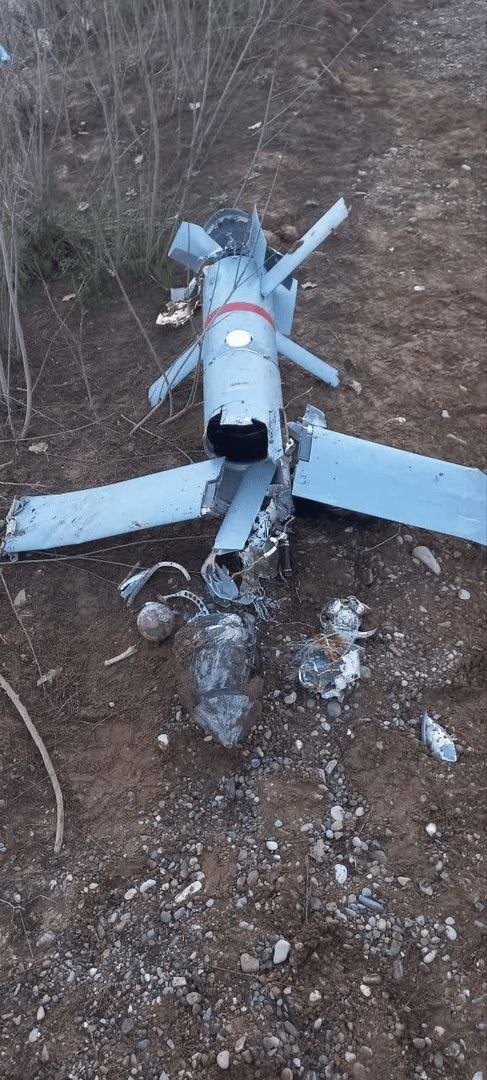
Iran’s Fars News Agency was the first to share the photos in question on March 11, the twelfth day of the war on the Islamic Republic.
The semi-official news agency said that the wreckage was found near the city of Veysian in the province of Lorestan. The city is located well over 300 kilometers to the north from the waters of the Persian Gulf, and some 160 kilometers away from the border with Iraq to the west.
Click to see full-size image. (Fars News Agency)
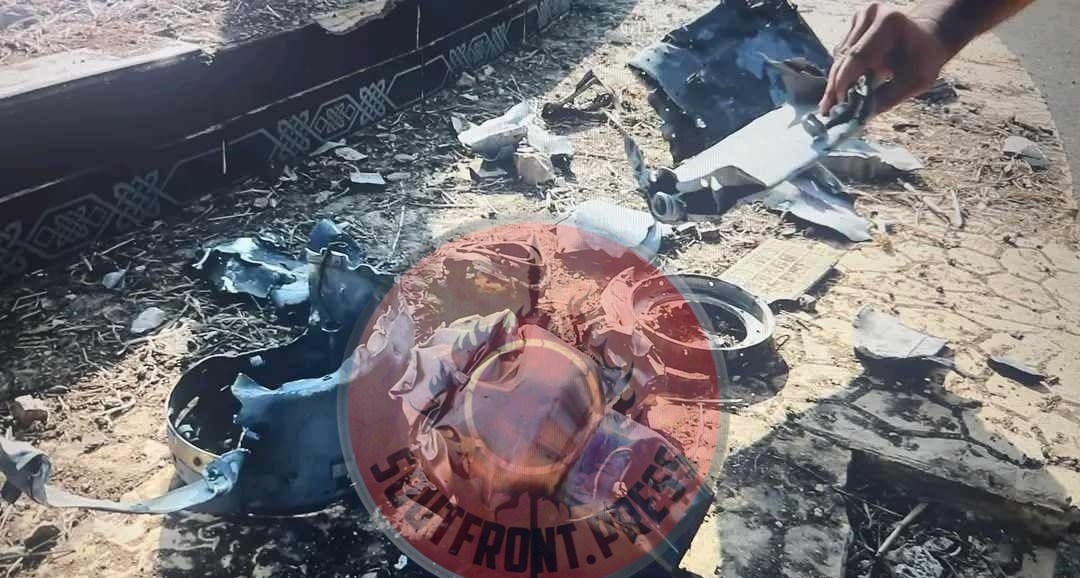
It was clear that the wreckage belonged to a loitering munition, specifically to a jet-propelled one, but the design matched no type used by the United States or Israel.
Besides the very obvious mini turbojet engine, the munition’s design features X–shaped wings, with a matching tail fin set.
The wings are retractable as evident by the hinges connecting them to the fuselage, which indicate that the loitering munition is canisterized.
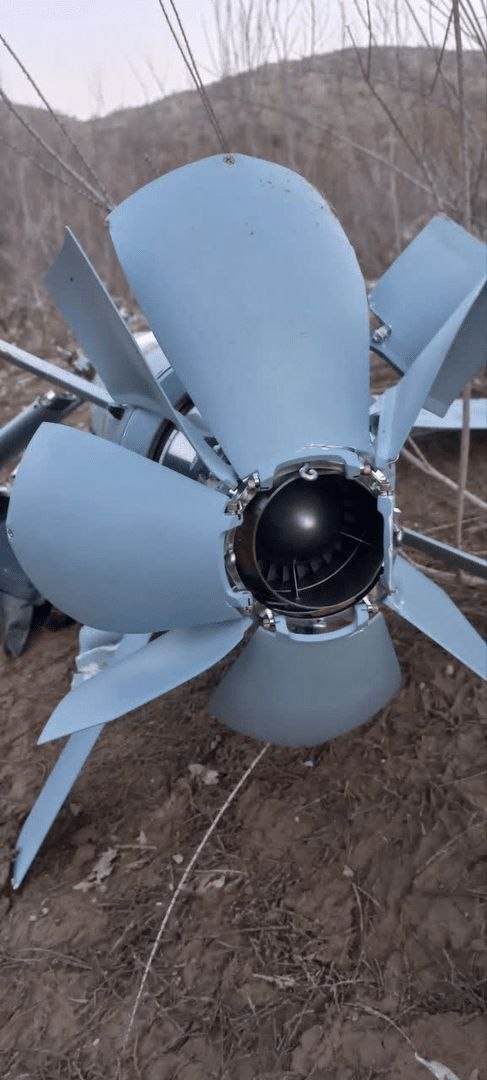
The most interesting feature of the design is, however, a set of what appears to be retractable air brakes installed right at the exhaust nozzle of the jet engine. This is one design feature not seen in any other known loitering munition from around the world.
Click to see full-size image. (Fars News Agency)
While most military analysts were quick to deem that the unidentified loitering munition was Israeli — a logical conclusion taking into account that the U.S. does not keep such weapon systems a secret —, none of them was able to directly link it to the country. Nevertheless, SouthFront managed to do just that.
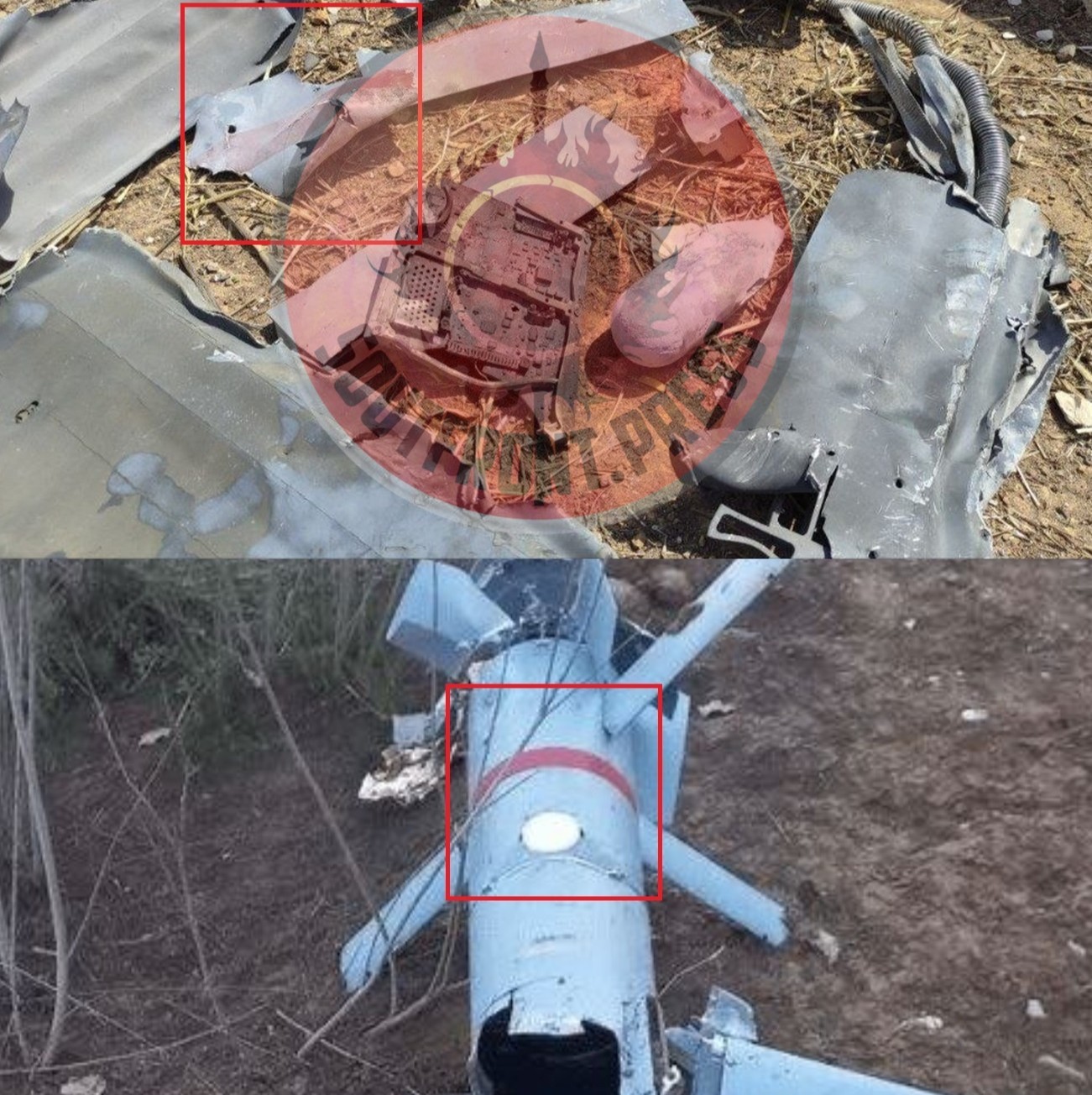
The loitering munition wreckage found near Veysian in Iran was in fact identical to a wreckage found after the 2024 Masyaf city raid in Syria.
The operation was carried out by the Israeli Air Force (IAF) Unit 5101, more commonly known as Shaldag, on September 8 of that year. It targeted an underground missile production facility at a branch of Syria’s Scientific Studies and Research Center near Masyaf in the province of Hama in the country’s northwest.
Dozens of strikes hit Masyaf and its surroundings as some 120 special forces operators landed from helicopters to storm the facility and blow it up. Interestingly, the Israeli Defense Forces (IDF) later said that the strikes were carried out by IAF fighter jets and drones along with missile boats from the Israeli Navy.
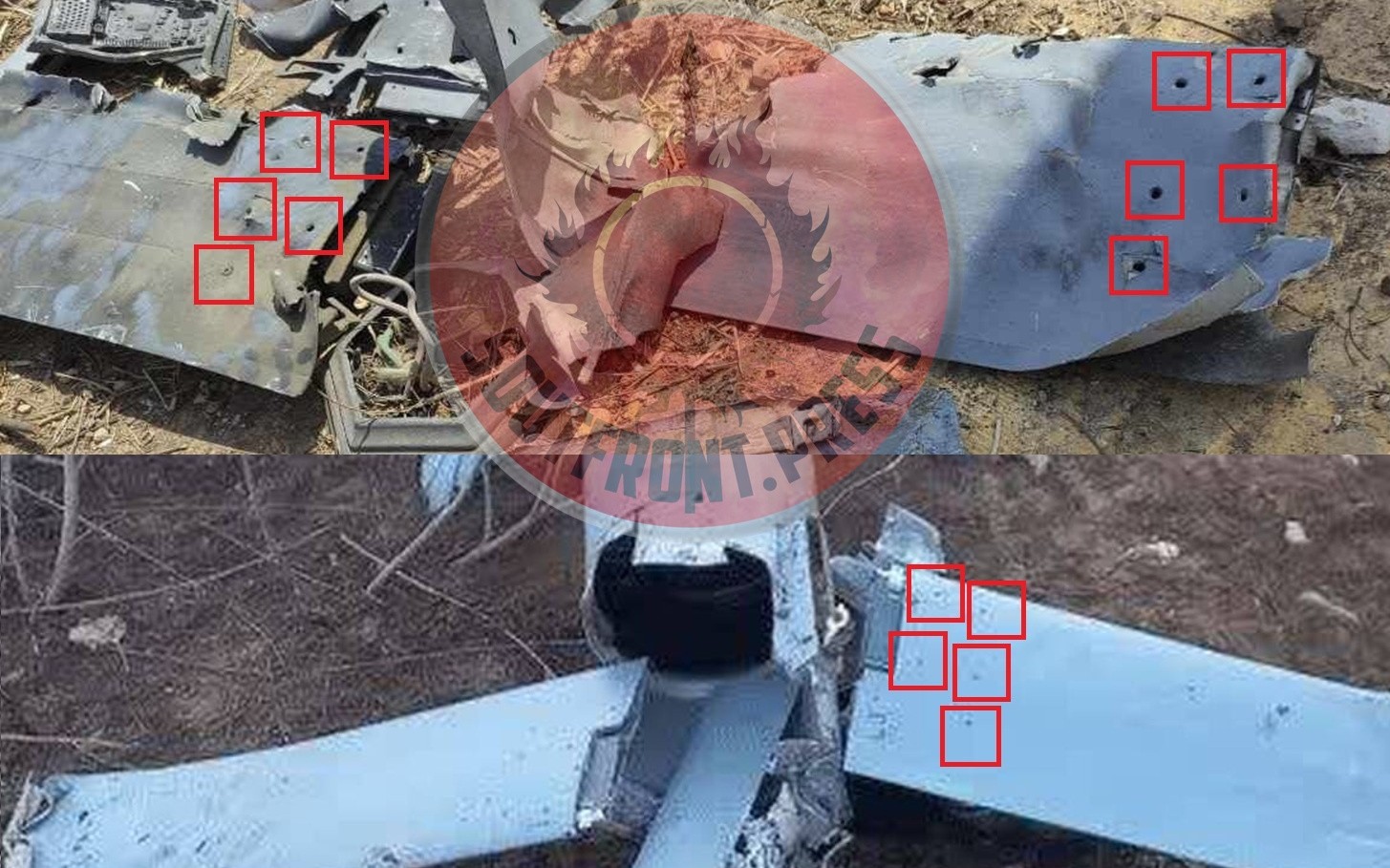
The wreckage of one of the loitering munitions used in the strikes shares striking similarities with the one found in Veysian recently.
The munition, also powered by a mini turbojet engine, clearly had a similar set of wings, with the same hinges, and even the same alignment of the five screws used to install them. On top of that, it apparently even had the same red strip seen in the wreckage from Iran — which is usually used to mark live ammunition or to indicate that a munition is carrying a certain type of warhead, most commonly a high-explosive one.
Click to see full-size image.
Click to see full-size image.
Click to see full-size image.
These similarities and the IDF’s open admission of its responsibility for the Masyaf raid leaves no doubt that the loitering munition found in Veysian is Israeli, and was used before in Syria.
It was impossible to guess the exact dimensions of the loitering munition from the photos that came out from Iran and Syria, but it was clear that it was on the larger side, and again not even remotely similar to any known type of loitering munition in service with the IDF.
Nevertheless, a video released by the IDF on December 10 of 2024 very much provided reasonable evidence linking the loitering munition to the Israeli Navy.
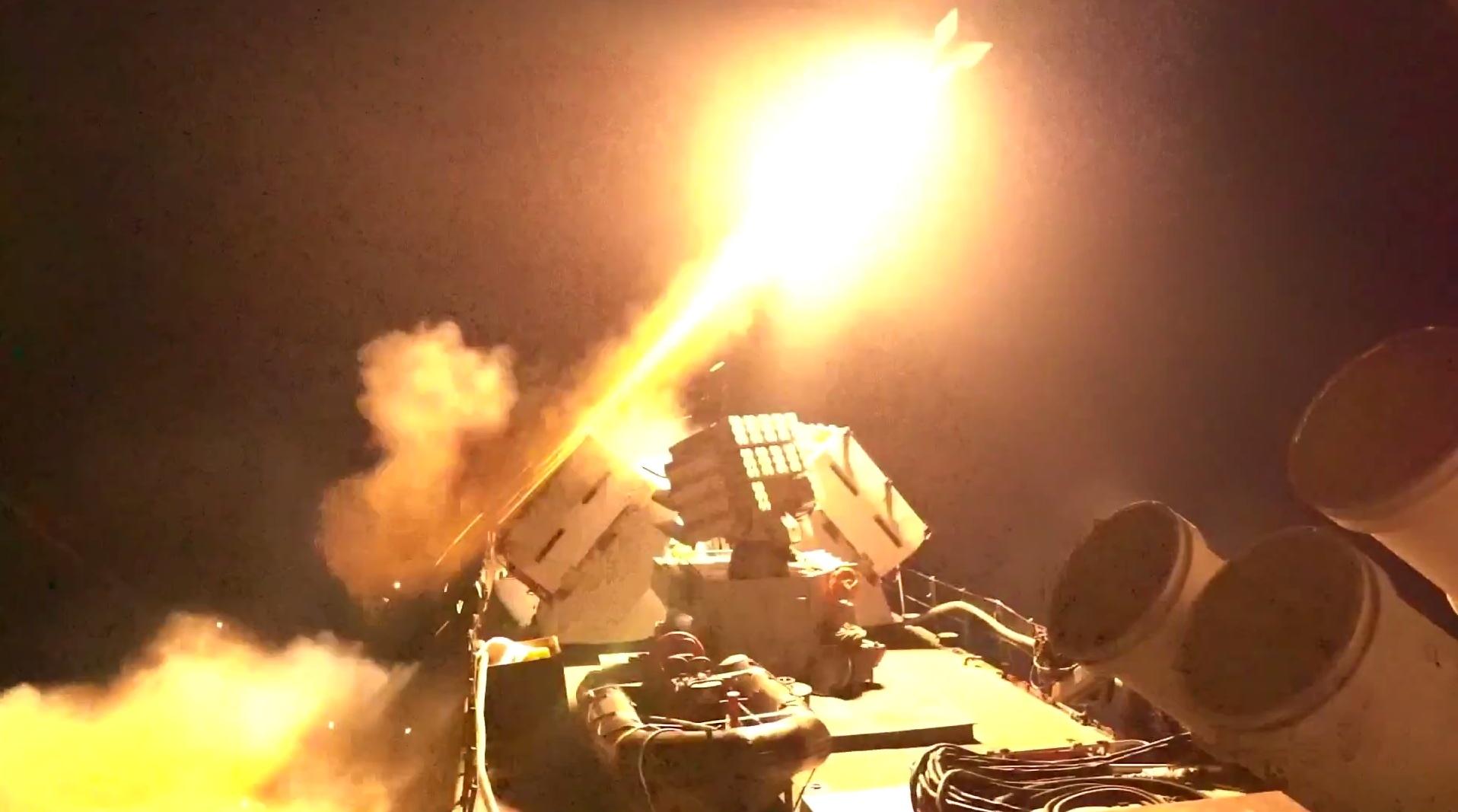
The video shows a Sa’ar 4.5-class missile boat firing multiple fairly large munitions during Operation Arrow of Bashan, launched by Israel directly after the fall of the regime of President Bashar al-Assad in Syria to destroy the country’s military capabilities.
While the footage was vague and taken at nighttime, at a certain second the shape of one of the munitions appears, and it looks like X-wings spreading open. This is the closest in terms of design to the mysterious Israeli loitering munition.
Click to see full-size image.
The launchers which the munitions were fired from were first spotted on the rear of Israeli Navy Sa’ar 4.5-class missile boats years ago.
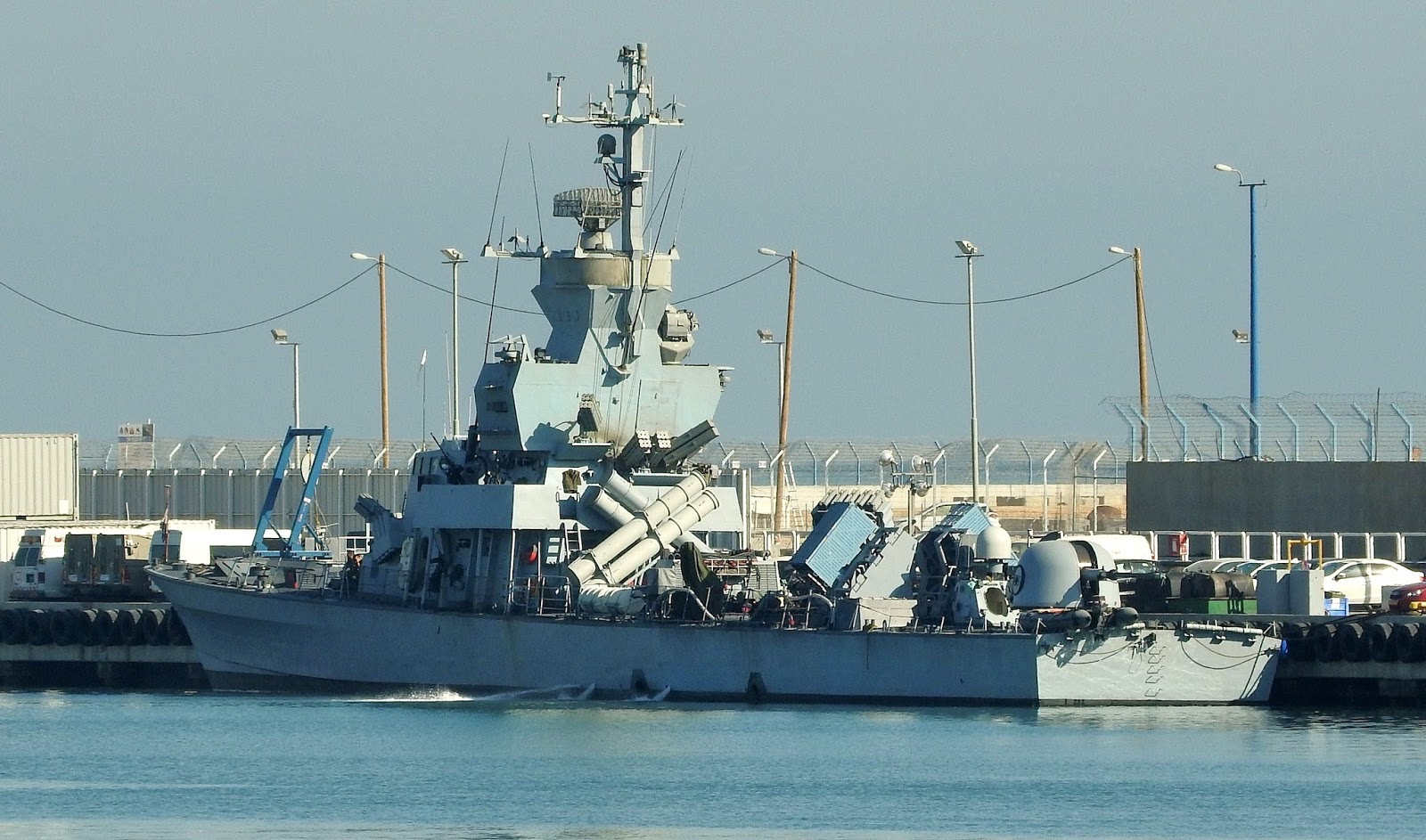
The clearest photos of the launchers came from a visit by Prime Minister Minister Benjamin Netanyahu to an Israeli Navy base in Haifa on February 12 of 2019. There were two static launchers, more of platforms, each can be loaded with two pods. Each pod appeared to have nine tubes in 3×3 configuration.

Click to see full-size image.
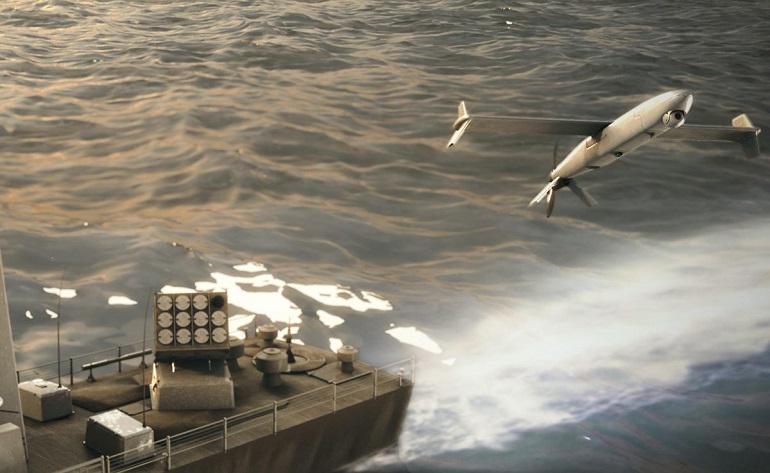
At the time, many military analysts rushed to conclude that these launchers belonged to the naval version of the Israel Aerospace Industries’s Green Dragon loitering munition, despite clear difference in design. The naval launcher of the Green Dragon is adjustable and has 12 tubes in 3×4 configuration.
It’s worth noting that Green Dragon is powered by a rear-mounted electric propeller engine and has a unique collapsible wing design. It is not similar in any way to the mysterious loitering munition.
Click to see full-size image. (IAI)
In addition to all of this, Jeremy Binnie, Middle East & Africa editor for Jane’s Defence Weekly, said back then that the IDF directly denied that the launchers seen belonged to the Green Dragon system.
“The IDF has told us these are not Green Dragon launchers, but won’t say what they are,” the journalist wrote on Twitter, now known as X.
Going back to the documented Sa’ar 4.5-class missile boat strikes on Syria, the target was actually known, it was Osa-class missile boats of the Syrian Navy anchored at the military section of the port of Latakia.
The IDF even released another video on the very same day showing the boats in question getting hit, and the footage revealed that the munitions used were optically guided, with man-in-the-loop control.
The targeting marks seen in the munition’s video feed were unique. They featured a box with wide unconnected crosshairs not comparable to the marks seen in any known optically-guided Israeli weapons.
While we were not able to find Israeli strike footage with similar marks from the American-Israeli war on Iran, or even from the Israeli 12-day June war of 2025, the IDF did release footage showing strikes with the same munition from Lebanon, first on November 13 of 2024 and more recently on March 5 of this year. In both cases, the military said that the strikes were carried out by the Israeli Navy.
One of the recent strikes with the munition from Lebanon shows the assassination of Wasim Atallah Ali, a Palestinian commander of the Hamas responsible for “training and exercises” of the movement’s military wing in Lebanon.
It is impossible to assume the range of the loitering munition, but it clearly has a fairly long reach. Maysaf is located 60-80 kilometers from the border of Syria’s territorial waters, and as stated before Veysian is more than 300 kilometers away from the Gulf.
When it comes to Iran, it is possible that the loitering munition was launched from some covert commercial vessel in the Gulf, but it is far more likely that it was fired from a covert launcher within the territories of the Islamic Republic or in neighboring Iraq by Mossad commandos.
During the 12-day war last year, commands deployed by the spy agency, including foreigners, played a key role in dismantling Iranian air defenses, mainly using loitering munitions and guided missiles which were smuggled into the country. Reports even described some of the systems used as being large and installed on vehicles.
Notably, the design of the pods used in the launchers installed on Sa’ar 4.5-class missile boats very much mimics a small shipping container. They were even spotted with different colors, from green, to light and dark blue. This and the fact that Israel is keeping the system a secret indicate that the loitering munitions may have been designed from the start for covert operations not just from naval vessels, but also from ground-based launchers.
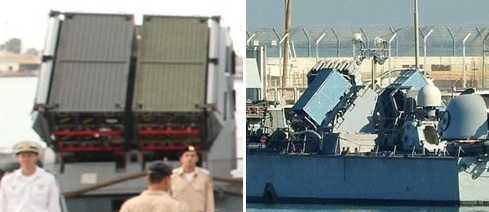
Click to see full-size image.
From Veysian to Masyaf, Latakia port and Lebanon, the same mysterious jet-powered loitering munition was most likely used.
The unique design of the loitering munition, which combines features from drones and missiles, gives it some interesting characteristics.
It can likely loiter and glide for a decadent amount of time, while retaining a fairly high supersonic speed and accelerating rapidly when needed. These characteristics in addition to its guidance system and launch method makes it a perfect weapon for covert operations.
_______________________________________________________________________________________________________________________
SouthFront: Analysis and Intelligence
NOW hosted at southfront.press
Previously, SouthFront: Analysis and Intelligence was at southfront.org.
The .org domain name had been blocked by the US (NATO) (https://southfront.press/southfront-org-blocked-by-u-s-controlled-global-internet-supervisor/) globally, outlawed and without any explanation
Back before that, from 2013 to 2015, SouthFront: Analysis and Intelligence was at southfront.com



just another zionist dildo. and as always: the dildo of consequences will not come lubed! :)
genocide boys and their toys probally make a smaller version for grade schools
many muslims have been deconstructed by these weapons…heheheh
whats so special about it? its a drone. fired from kurds in iraq or iran or azeris in iran or azerbeydshan.
israel’s secret weapon is the army of commenters coming to places like sf with their foul mouths trying to distract and continuing to disseminate their lies. i believe there is at least 8200 of them (wink wink).
seeing as the photos were taken by iranian operatives, it is certain that the munition is now in iran, and can be studied and revere engineered, plus some components will have identification labels to show there origin. very nice of the joo’s to give iran one of there most secret weapons to study and copy.