


File image.
A series of Iranian missile and drone strikes targeted energy facilities in Saudi Arabia and Qatar on March 2, causing significant damage.
The early morning strikes are a part of a series of retaliatory operations the Islamic Republic began two days earlier in response to a joint attack by the United States and Israel. While Saudi Arabia and Qatar are not directly involved in the attack, American forces are deployed on their territories.
A spokesman for the Saudi Ministry of Defense told the official SPA news agency that the kingdom repelled in the early morning drones attempting to strike the Ras Tanura oil refinery belonging to state oil giant Aramco.
“Two drones attempting to attack the Ras Tanura refinery this morning were intercepted and destroyed,” the spokesperson was quoted as saying. “A limited fire resulted from falling shrapnel during the interception operation, with no civilian casualties.”
The spokesperson added that the interception operation resulted in some shrapnel falling close to civilians and civilian objects.
Meanwhile, a source in the Saudi Ministry of Energy confirmed to the news agency that “some operational units at the refinery were shut down as a precaution,” stressing that this had no effect on the supply of petroleum and its derivatives to local markets.
Videos posted to social networks show large fires at different sections of Ras Tanura, which is located on the coast of the Persian Gulf in eastern Saudi Arabia The refinery is Aramco’s largest and one of the world’s key facilities. It has a 550,000 barrels per day capacity. It also serves as a vital domestic fuel supplier and major crude export terminal.
In addition to the drone attack on Ras Tanura, Saudi air defenses intercepted Iranian missiles which were heading towards Prince Sultan Air Base in the center of the kingdom, according to AFP. The defense ministry of the kingdom also announced the interception of five drones near the air base.
Multiple U.S. warplanes are currently based at Prince Sultan, including airborne early warning and control aircraft, as well as communication relay planes. These warplanes are certainly aiding the attack on Iran, which explains why the base has been targeted more than once since the start of the war. It is unclear yet if there was any damage there.
Besides the strikes on Saudi Arabia, the Qatari Ministry of Defense announced on the same day that Iranian missiles hit energy facilities.
Two missiles struck energy-related sites in the country, without causing injuries or fatalities, according to a statement released by the ministry.
“One targeted a water storage tank belonging to the Mesaieed Energy plant, and the other targeted one of the energy facilities in the industrial city of Ras Laffan affiliated with QatarEnergy ,” the ministry said.
“All damages and losses resulting from the attack will be assessed by the relevant authorities, and official statements will be provided later,” the ministry added.
Separately, a recent report by The New York Times confirmed that Iran was able to strike six U.S. bases in Bahrain, Kuwait, Iraq, and the United Arab Emirates.
In Kuwait, three U.S. troops were killed in an attack on Ali Al Salem Air Base, which was badly hit. Advanced satellite communication terminals at the U.S. Navy Fifth Fleet headquarters in Bahrain were also wiped out, according to satellite images released by the newspaper.
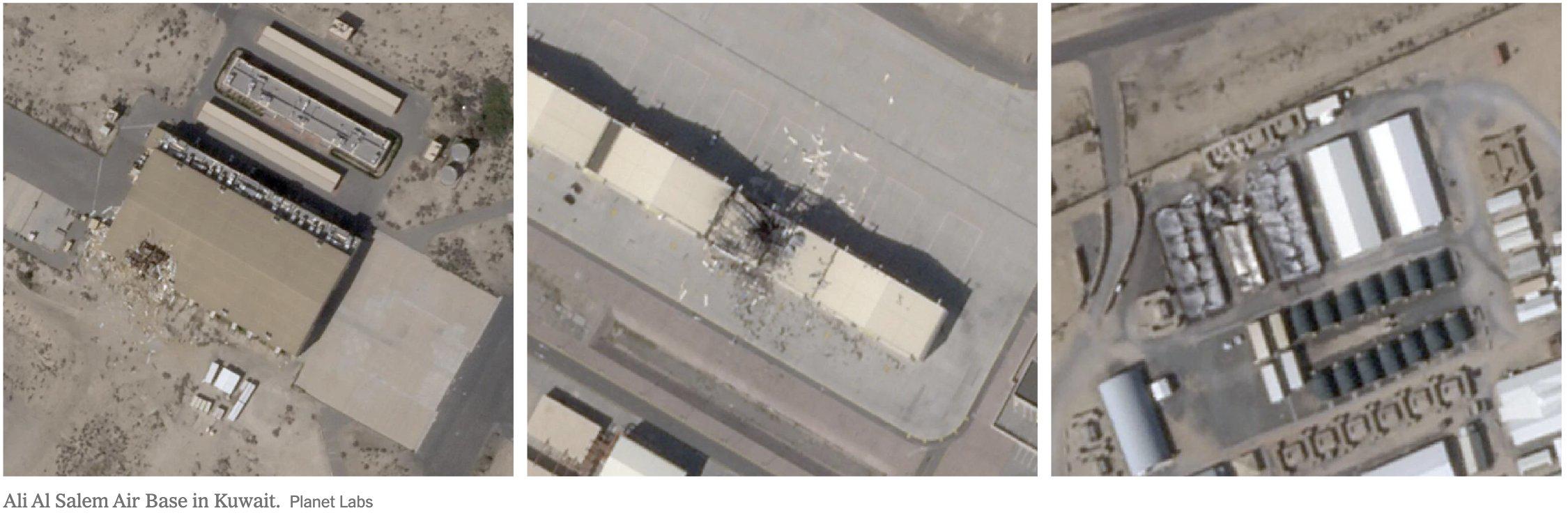
Click to see full-size image.
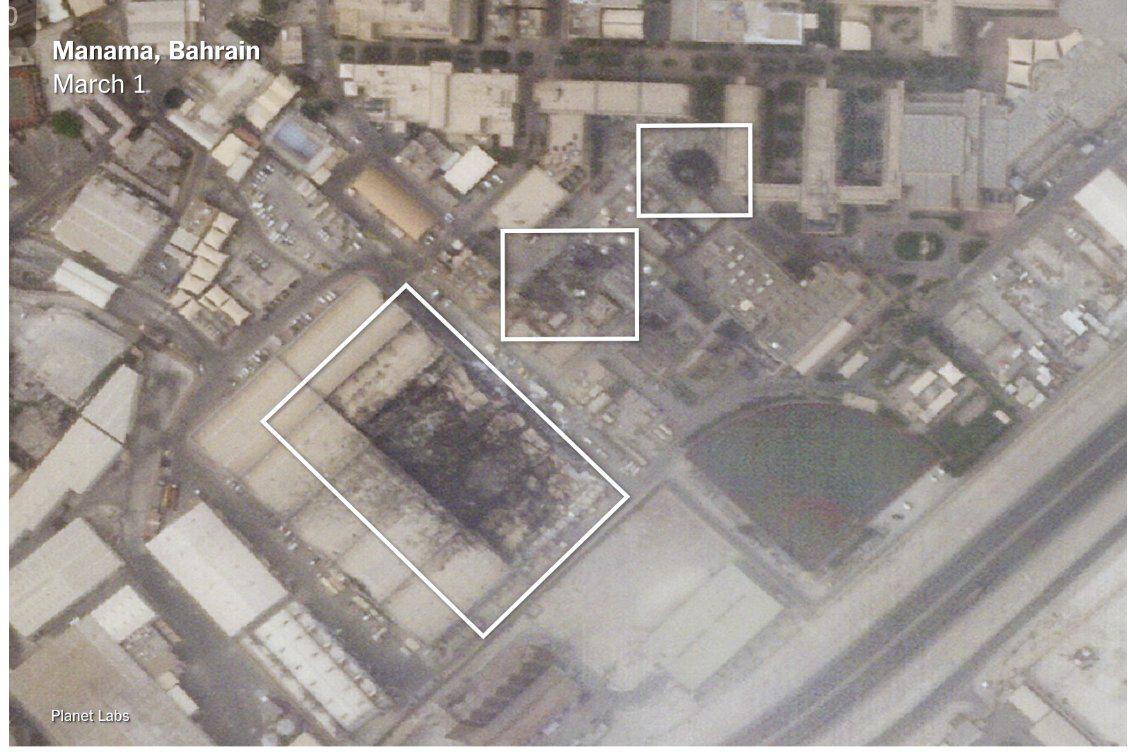
Click to see full-size image.
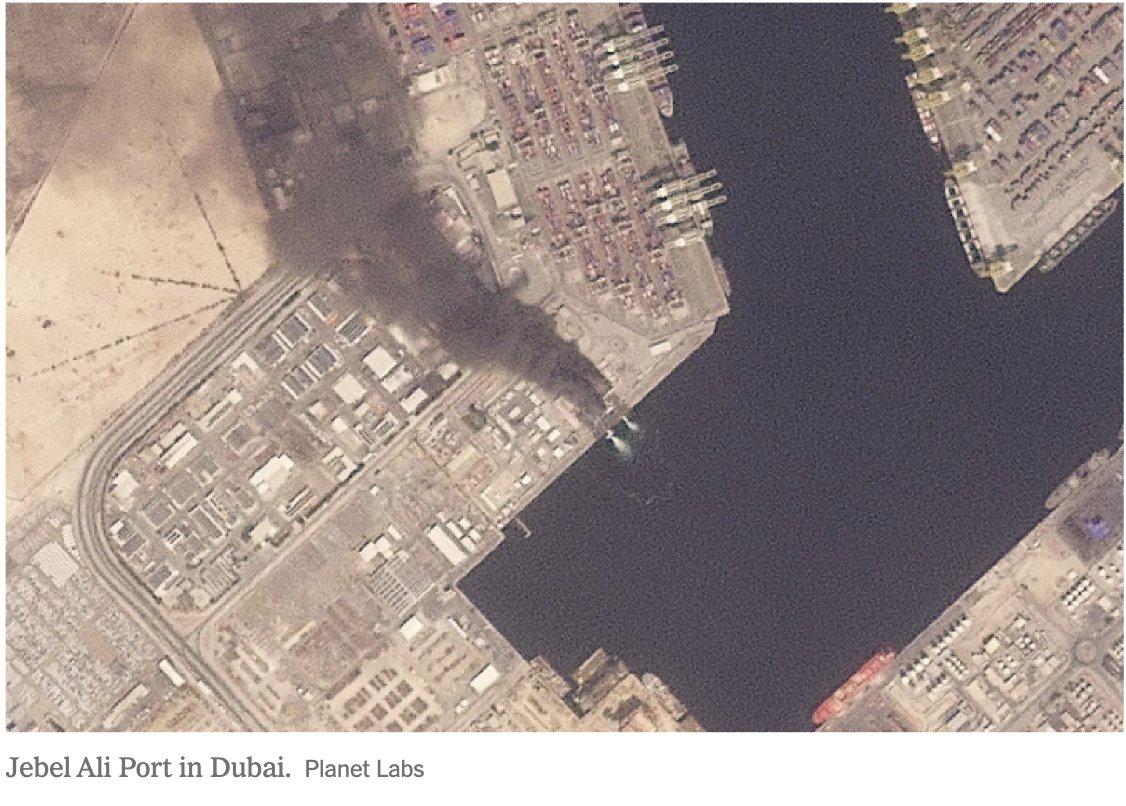
Click to see full-size image.
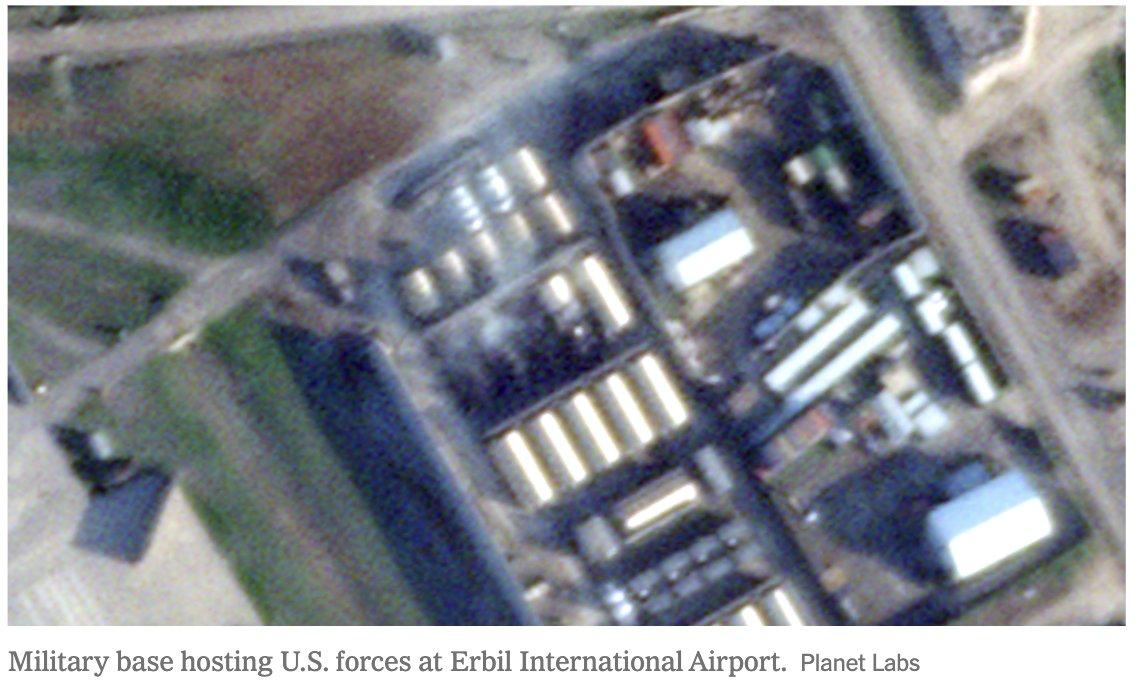
Click to see full-size image.
In response to the escalation by Iran, Qatar, Saudi Arabia, Bahrain, Jordan, Kuwait, the UAE, and the U.S. issued a statement on March 2 condemning what they called “indiscriminate and reckless missile and drone attacks” by the Islamic Republic.
“Iran’s actions represent a dangerous escalation that violates the independence of numerous countries and threatens regional stability. Targeting civilians and countries not engaged in hostilities is reckless and destabilizing,” the statement reads.
“We stand united in defense of our citizens, our autonomy, and our territories. We reaffirm our right to self-defense against these attacks, emphasizing our commitment to regional security, and commending the effective cooperation in air and missile defense that prevented greater loss of life and destruction.”
Arab countries led by Saudi Arabia could end up joining the American-Israeli war on Iran. Such a move would, however, force Iran to expand its strikes against these countries. For the U.S. and Israel, a wider war would ease Iranian pressure on them.
_______________________________________________________________________________________________________________________
SouthFront: Analysis and Intelligence
NOW hosted at southfront.press
Previously, SouthFront: Analysis and Intelligence was at southfront.org.
The .org domain name had been blocked by the US (NATO) (https://southfront.press/southfront-org-blocked-by-u-s-controlled-global-internet-supervisor/) globally, outlawed and without any explanation
Back before that, from 2013 to 2015, SouthFront: Analysis and Intelligence was at southfront.com



why hasn’t china invaded taiwan yet?
it is busy eating popcorn and watching ussa getting humiliated
never, just like north korea will never be in a fight with south korea.
taiwan and south korea are too afraid for their beautiful high-tech factories.
only trump wants these factories destroyed.
but they won’t be, because people are not stupid, insidious and ugly like alawites and russians.
alawites and russians are not human, of course.
they are both somewhere between a cockroach and a rat.
they definitely imprisoned the president in south korea because they wanted to keep a nice samsung intact
that factory is amazing.
are the russians all “coming to get us” like in that old 1960s propaganda mocking film “the russians are coming, the russians are coming”..
🙄
what were the russians to do? they have a second rate military that isn’t properly led or equipped, it is more of a show army for parades.
it would certainly be nice of russian oligarchy to stop fronting so much and getting so many people killed when they are just living on past glory
the joo version of reality.
there is no need for them to invade taiwan. the opposition there wants to reunite. the could just handle it economically and with diplomacy. but if all fails they might emp the island, carpet bomb it. and then invade it if need be. but this is just my pov as an armchair general.
because the chinese are pussies and the only thing they care about is whoring themselves out for us dollar
last night 8 hebrews sodomized me—as americunt prez i am now filled with tel aviv jizz
if only something radioactive had exploded over lattakia so that the alawites would pay for their betrayal. after december 2024, we must never again view them as anything other than traitors.
gaslighting garbage.
10% of the world’s oil goes through ras tanura.
i wish a huge radioactive cloud would cover latakia, so that the treacherous russians and the equally treacherous alawites would have to leave the middle east forever. this would be a fitting punishment for both of all. iran is their main ally and because of the betrayal of both, iran is now being attacked for the second time. if they are such allies, then i really don’t know what kind of enemies they are. it would certainly be nice if both the alawites and the russians had to flee syria
words spoken like a demon
there’s a plethora of oil tankers in anchor waiting to enter or exit the strait of hormuz around the united arab emirates and oman. i hope the iranian terroristic regime doesn’t sink them since it could cause a tremendous ecological and economical disaster and a shortage of oil tankers.
“countries not engaged in hostilities” fcking hypocrites : theses “countries” are giant army bases of the jewish golems and their leaders are directly chosen by the jews in washington.
military assets, communications and supplies are the primary iranian targets. some will miss some will hit. trump will declare dead and maimed american soldiers are martyrs for israel ?
the only world player that has devastating bombing campaign are the americans. they have already dropped more bombs on iran then the russians dropped on ukraine in four years.
doesn’t matter if you like them or not, but no other military is comparable
every declining empire gradually resort to armed conflicts because they abused every other levers of power to the point of exhaustion. and then at one point their army is revealed as unable to cope with other powers, even small ones like yemen or afghanistan. and that is quite the marker of the acceleration of the decline.
i have looked at the sat pictures and really iran is nothing they damaged some pump station, it isn’t like they destroyed the facility. they shouldn’t have messed around so much taunting the americans.
from the mouth of someone that took american d*cks in every orifice.
the americans are failing. again. not a surprise because they prefer to stick to the narrative of their tribe, even if completely absurd and toxic rather than looking at facts.
vanya swallow much jizz in tel aviv gay bars
in many ways irans bombing campaign is like russias in ukraine, it is more of a propaganda show to claim to be doing something, rather then a devastating use of bombs.
the american bombing is devastating, iran doesn’t have a navy anymore and all the army and political commanders are dead or in hiding, they constantly pound at command and control and military targets, not just one or two here and there, but sustained, for weeks, hundreds of sorties.
complete bs. this is going on for 3 days, not weeks. the us cannot cope weeks. the us and israel are now bombing police stations, fire stations, media, showing that they do not have targets while the iranians, playing the long game, continue blasting every us bases, radar, energy infrastructure. this will continue for a long time and a lot of country that tought they were smart will suffer.
all the bombing of the us and israel had no impact on the military capacity of iran. iran continue to attack the us and all its allies, and will for quite a long time.
but it certainly won’t stop the bs from our american c*ck s*ckers like this one.
inferior americunt species vanya humiliated by iran russia and taliban
iran thoroughly humiliates americunts—a lower species the americunt proves darwin correct—stupid inferior cockroaches adapt where intelligence not required–they will swallow all jizz to survive
“iran’s actions represent a dangerous escalation that violates the independence of numerous countries and threatens regional stability.”
obviously these countries are not independent while allowing murican troops and weaponry on their territory.