


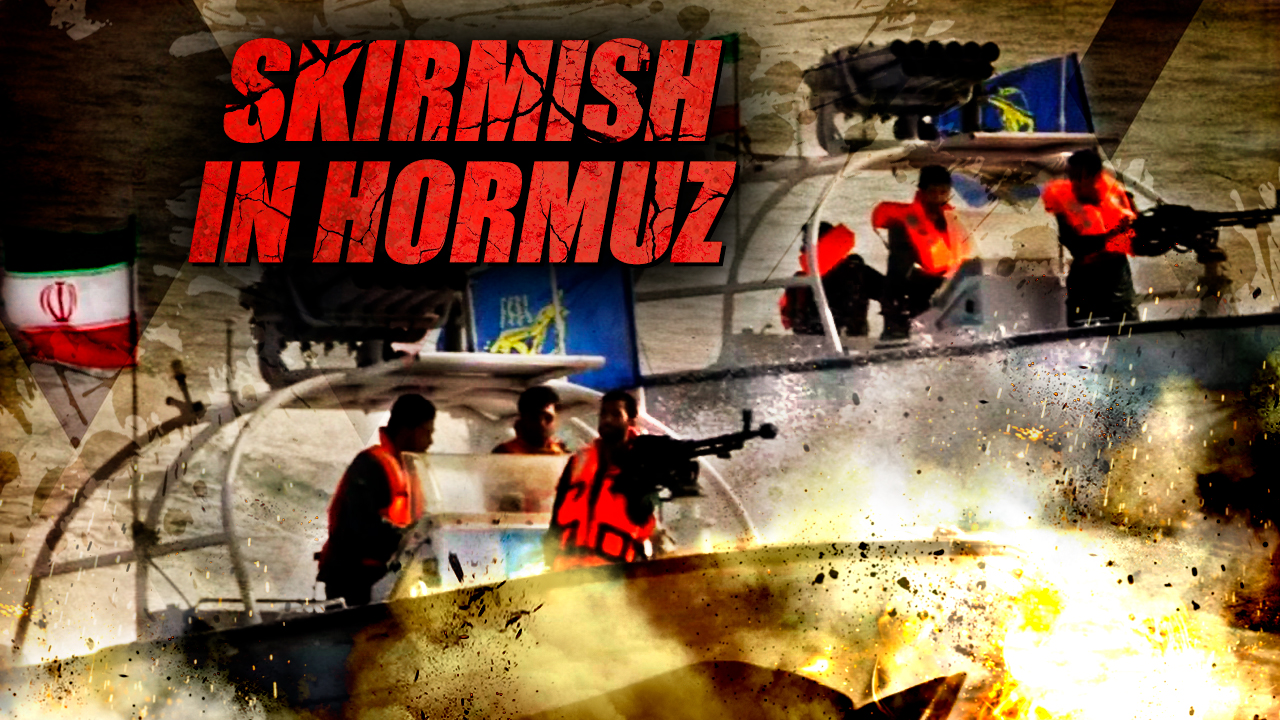
 An oil tanker struck a naval mine and exploded in the Strait of Hormuz after deviating from a navigation route designated by Iran, Iranian media reported on July 26.
An informed source told the Defapress news website that the tanker had strayed from the route designated by Iran before colliding with the mine in the strategic waterway. The incident was also reported by the semi-official Tasnim and Mehr news agencies, which did not provide any additional details.
The incident came on the second night in succession without United States strikes on Iran, following nearly two weeks of nightly attacks and responses by the Islamic Republic that targeted American forces across the Middle East.
Axios reported a day earlier that U.S. President Donald Trump had ordered the military to halt strikes on Iran to give diplomacy a chance.
Still, Iran’s army warned that the Middle East war would widen if the U.S. chose to press ahead with attacks on the Islamic Republic.
The army said it had halted retaliatory attacks in the region only because the U.S. had stopped its strikes on the country over the past two nights.
“Since… our strategy has essentially been retaliatory, we have also halted our retaliatory operations,” said army spokesman Mohammad Akraminia on July 26, confirming there had been no U.S. strikes over the past 48 hours.
Earlier, the spokesman told Iranian state television that he believed Israel was trying to prod the U.S. into resuming attacks.
“I believe that if the Americans once again fall for the Zionists’ deception, or move in line with them, and insist on continuing the war, particularly through airstrikes, geographically this will expand further,” Akraminia said.
He added that the war had already expanded to the Bab el-Mandeb Strait at the entrance of the Red Sea, referencing the recent military flare-up between the Houthis and Saudi Arabia.
“The scope of our operations now encompasses the entire region, from U.S. bases in Jordan to the countries along the Persian Gulf,” he said.
Akraminia said the situation in the Middle East for the United States is “difficult and unsettled,” predicting that Washington was now looking “for a new strategy.”
“We are prepared for each of the options and scenarios that appear likely,” he added.
The Iranian warning is likely linked to the upcoming meeting between Israeli Prime Minister Benjamin Netanyahu and Trump in the U.S.
Channel 12 reported a day earlier that Netanyahu and his team plan to present Trump with fresh intelligence on Iran’s efforts to rebuild its military and nuclear program during their meeting, including what Israeli officials believe are accelerated efforts under new Supreme Leader Mojtaba Khamenei to advance toward a nuclear weapon.
Israel appears to be pushing for the war to resume, and given Netanyahu’s history of pressing Trump toward escalation, a return to fighting seems more than likely. Iran, meanwhile, is keeping its finger on the trigger, as evidenced by the recent incident in the Strait of Hormuz and the army’s warning.
_______________________________________________________________________________________________________________________
SouthFront: Analysis and Intelligence
NOW hosted at southfront.press
Previously, SouthFront: Analysis and Intelligence was at southfront.org.
The .org domain name had been blocked by the US (NATO) (https://southfront.press/southfront-org-blocked-by-u-s-controlled-global-internet-supervisor/) globally, outlawed and without any explanation
Back before that, from 2013 to 2015, SouthFront: Analysis and Intelligence was at southfront.com



the zios push for war but want nothing to do with a ground invasion freaking cowards.
that’s what the expendable goyim are for.
slop media will declare the mine was anti semitic. will the adl condemn it ? this way pause, negotiations and other propaganda can infect legacy news streams
mine americunt anuz hit w hebrew jizz yesterday derp incel
looks like the jooz have been cranking out more lies again. chumpo will fall for it again. if he doesn’t the jooz will wave the epstein paedo tapes in his face again.
war in the region means israel can continue to pursue its agenda unhindered by public attention.
glub …. glub …. glub …. glub …. glub …. glub …. glub …. glub …. glub …. glub …. glub …. glub ….