


File image.
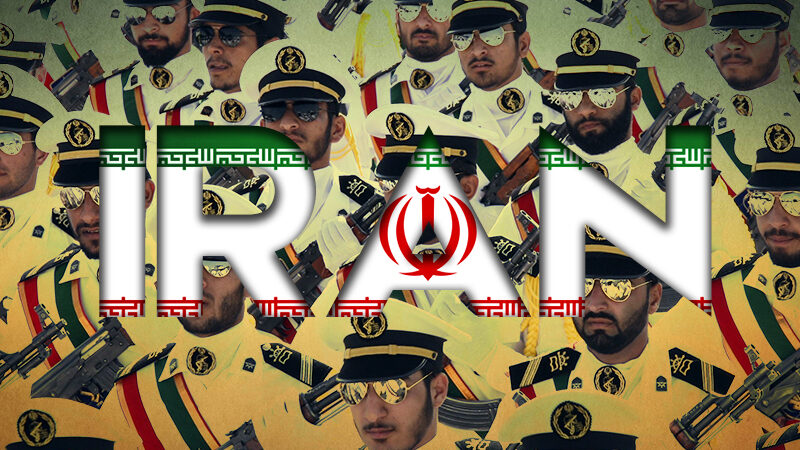
United States President Donald Trump said on August 2 negotiations with Iran will begin to finalize a deal reopening the Strait of Hormuz after he called off a major attack, even as an Iranian diplomat told the Wall Street Journal that the Islamic Revolutionary Guard Corps (IRGC) is weighing preemptive strikes.
The diplomat told the Journal that the IRGC is considering preemptive actions should diplomatic talks collapse, though the report did not specify whether such strikes would target U.S. assets in the region, Israel, or both.
Speaking to reporters aboard Air Force One, Trump confirmed the upcoming discussions following his latest decision to halt a planned bombing campaign against the Islamic Republic.
“We’re talking to them in the form of a negotiation. It begins tomorrow afternoon, and we’ll see if it’s [good]. I’d love to do that. We’d save a lot of lives, save a lot of unnecessary power,” Trump said.
When Trump previously announced the walk-back of his threat to conduct a massive bombing campaign, he claimed a deal was already in place to reopen Hormuz and “end” Iran’s nuclear threat.
He subsequently declined to provide a timeline for when a final agreement would be reached, stating that negotiations were only just beginning despite weeks of discussion by mediators.
Trump identified Saudi Arabia, the United Arab Emirates, and Qatar as the regional nations that requested he refrain from launching the strike. His statement contradicted earlier reporting from the Wall Street Journal, which reported that the UAE actually favored a U.S. escalation against Iran.
Trump has consistently attributed his decisions to suspend strikes against Iran to requests from regional allies rather than advice from his own aides.
“We were all set to go at this time right now, and it would have been a massive attack… but [then] the allies asked to call it off… The reason they ask is they think there’s a deal. There’s a deal on Hormuz, and then there will be a deal on the denuclearization of Iran,” Trump said.
His latest remarks indicate that Iran’s nuclear program will not be covered until a subsequent agreement, with the current negotiations focusing on restoring a memorandum of understanding (MOU) inked in June. That initial MOU granted both sides 60 days to negotiate a nuclear agreement, a window that now has less than 30 days remaining.
According to sources aware of the details cited by Channel 12 news’s Barak Ravid, active mediation is underway to return the U.S. and Iran to the June MOU. The proposed deal would keep the Strait of Hormuz open without fees for 60 days and renew a ceasefire between both nations.
The original MOU collapsed due to conflicting interpretations over the waterway, with Trump insisting it remain open while Tehran argued the agreement allowed it to dictate shipping routes through the passage.
Despite the friction, Iranian President Masoud Pezeshkian described the historic Islamabad MOU as the prospective cornerstone of Iranian diplomacy.
“The memorandum that was signed is the result of the collective wisdom of the Supreme National Security Council’s members, and all members are in sympathy with it,” Pezeshkian wrote in a post on X. “I believe this memorandum will be the center of gravity of our foreign relations in the future. We must strive to compel the enemy to remain committed to what it has signed. The security of the country, the region, and our allies will be enhanced by this memorandum.”
Meanwhile, Iranian Foreign Minister Abbas Araghchi said negotiations between the Islamic Republic and Oman regarding a mutual governing mechanism for the Strait of Hormuz have reached their final stages, according to the official news agency IRNA.
The latest development does not reflect any real progress. It is rather a repetition of what has happened more than once before during the conflict, with Trump threatening a major escalation against Iran, then backing down at the request of regional powers and engaging in talks that end up with no real result.
The Journal report indicates that the Islamic Republic has lost all trust in the U.S., and Trump’s hesitation shows that Washington is now stuck, both militarily and politically. The two sides are far apart on all issues. Any new understanding will not likely last more than weeks, but again, another escalation will not mean a return to full-on war.
_______________________________________________________________________________________________________________________
SouthFront: Analysis and Intelligence
NOW hosted at southfront.press
Previously, SouthFront: Analysis and Intelligence was at southfront.org.
The .org domain name had been blocked by the US (NATO) (https://southfront.press/southfront-org-blocked-by-u-s-controlled-global-internet-supervisor/) globally, outlawed and without any explanation
Back before that, from 2013 to 2015, SouthFront: Analysis and Intelligence was at southfront.com



take out every power station, desalination plant and oil installation in the kikenreich and all the whore gulf quisling regimes. make a clean sweep. impose an intolerable cost on the jewsa and all the criminal western regimes. they set out in an utterly ruthless way to obliterate iran and turn it into another syria or libya. that precise fate should be inflicted on them with no compunction whatever.
and turn moles loose on all of chumpo’s golf courses.
and lastly, sink some us warship.
yeah. a carrier or two…
target the laundry areas and diaper stores!
the kikenreich is one big missile magnet! heheheheh
trump fa finta di trattare e ti bombarda così ha fatto sempre con i russi creduloni.
just do it – nike
have you ever seen that t-shirt that shows an airplane turning around in a swoosh toward the twin towers and it says: jews did it?” it’s pretty hilarious.
the whole thing are hilarious 😂 “their own” military see them as apes, that should be trained like pavlov’s dog. its common for all military.
how can they still be weighing a preemptive strike? at this point i would have to wonder whether it’s something wrong with their leadership or is this entire back and forth affair just scripted bs
patience. it’s all about training the brainwashed western mind. those minds have absorbed the “pre-emptive strike” ideology but only when the west does it, now those minds need to be trained to accept when another country does it. and so far the civilized countries (iran, russia, etc) have trained western minds to see that the zionist west are the aggressors, not them.
it will come, and i look forward to it.
worked really well with nazi germany 😂 you can not train a aggressor, only kill him. russia have trained them for four years now 😂 the fundamental thing are that they are not civilized, and as soon russia speak about “root causes”, its the same with them. the root cause are centralized power.
you missed it: training the tv watchers and government worshippers in the west, not the militaries. it is they who give support for wars, tacit or otherwise, it is they who need to be trained and un-brainwashed. “they” find it much harder to make war when the people do not support them.
iran’s chinese and russian masters won’t allow them to do this…heheheh
defense requires these planning abilities. it is likely that one order will unleash pre targeted missile barrages to cease alll energy production. iranian statement ” if we can not sell energy, no one will”