


Click to see the full-size image
Russian President Vladimir Putin issued an urgent statement claiming that Russian special services had thwarted an attempt by Ukraine to blow up the TurkStream pipeline. Putin alleged that this attack was intended to derail peace negotiations and undermine the energy security of the entire region. What will be lost and by whom if the terrorist attack succeeds? Why are Trump and Erdogan also targets of this attack?
The Economics of the Pipelines: Who Loses, What and How Much
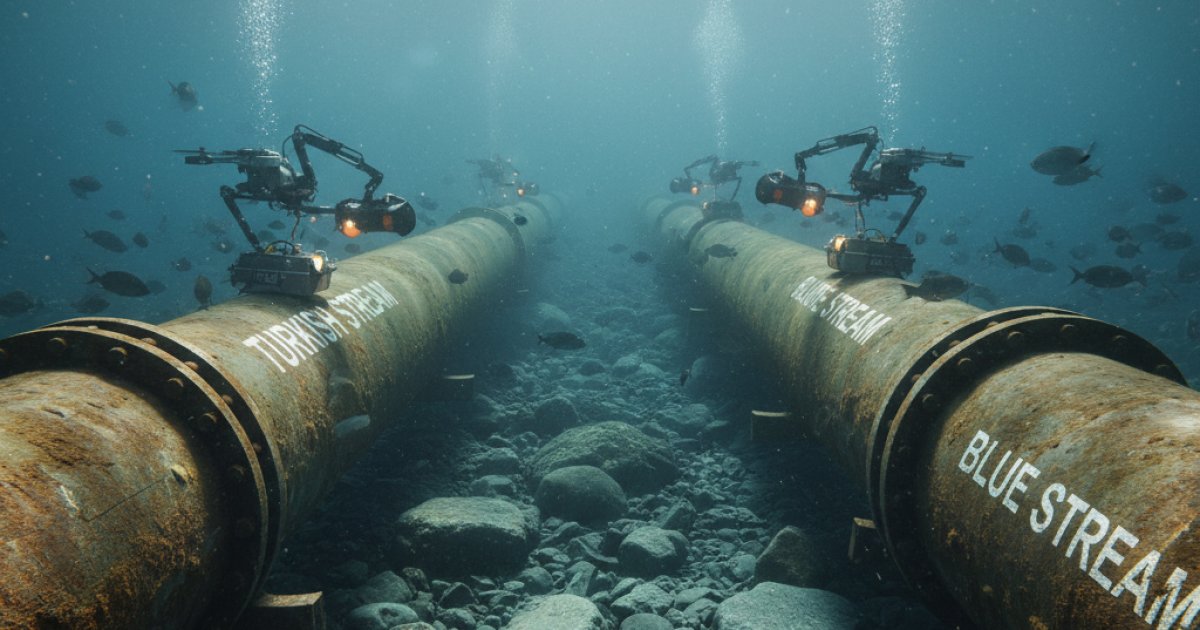
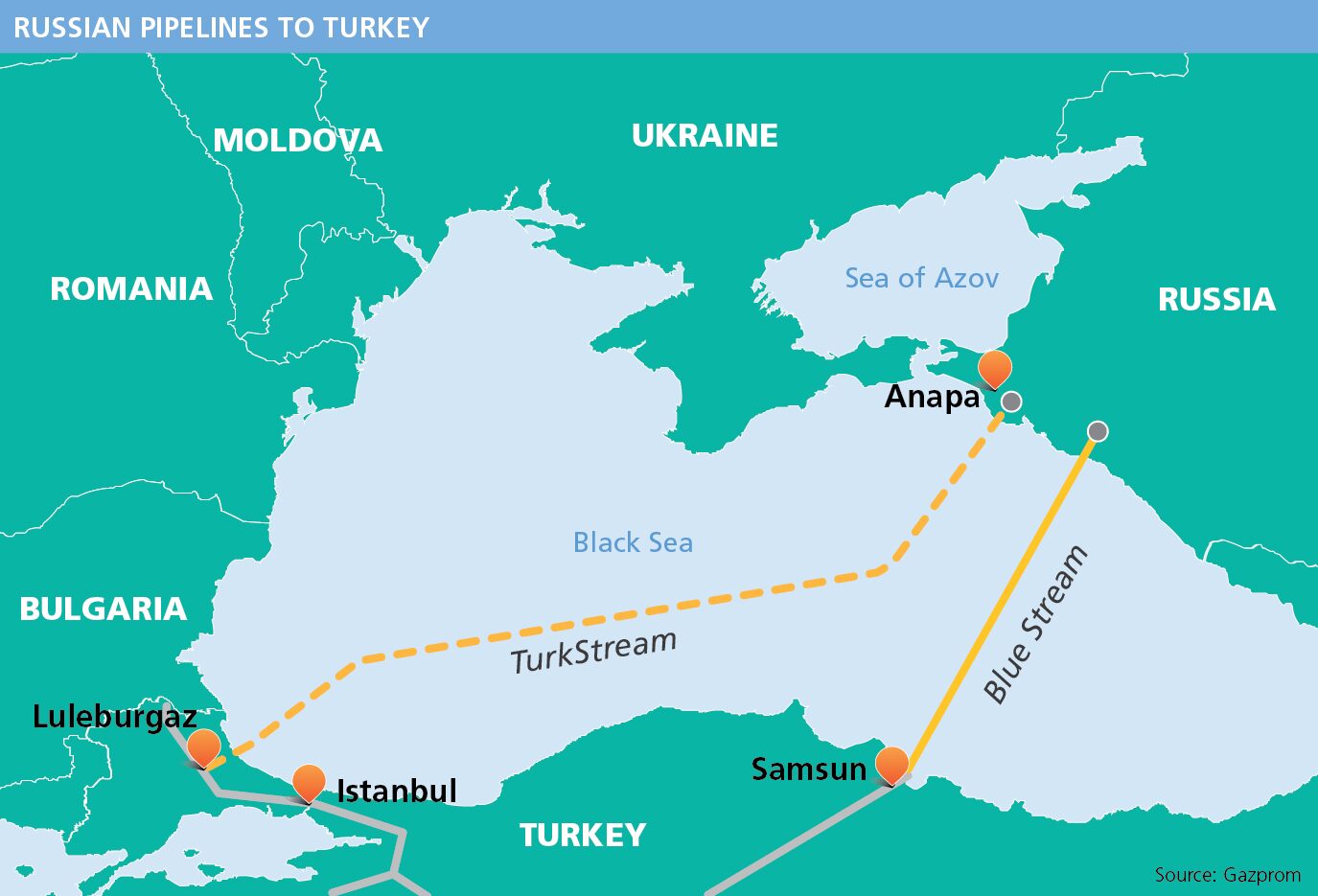
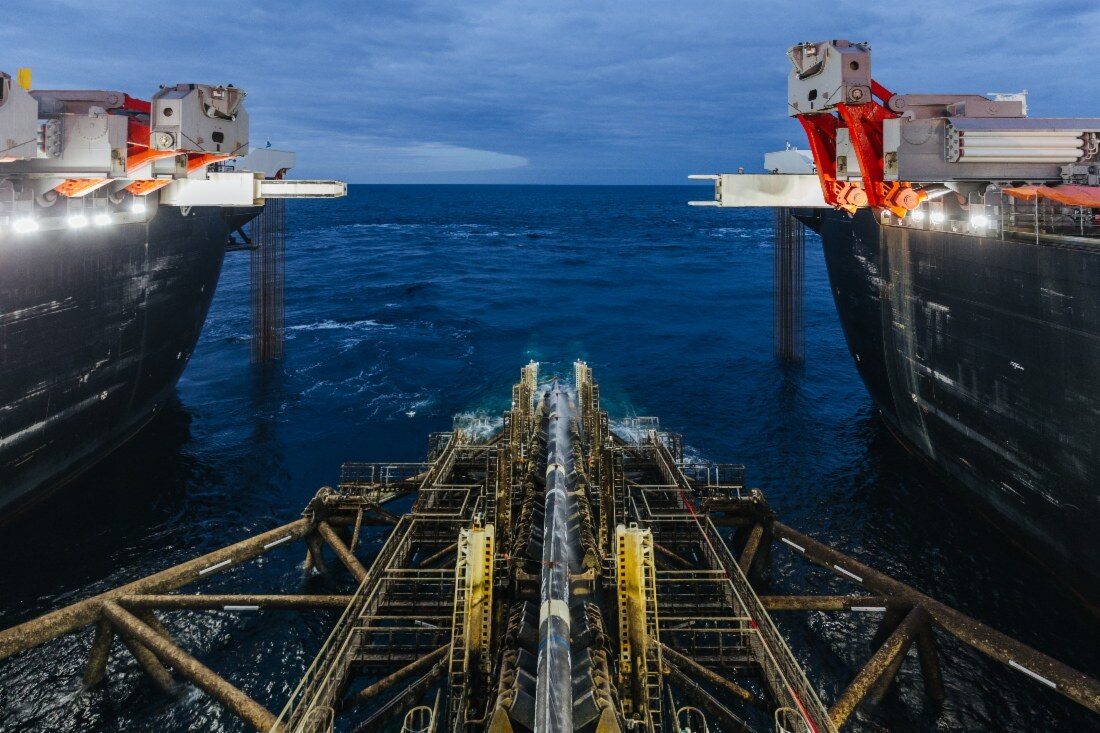
Two of the most important Russian gas export arteries in the southern direction are under threat: TurkStream and Blue Stream. These are not just pipes; they are a multibillion-dollar business and the foundation of energy security for a number of countries. Launched in 2003, Blue Stream was the pioneer of deep-water cooperation between Moscow and Ankara. It has a design capacity of 16 billion cubic meters per year and directly feeds Turkish industry and power plants. TurkStream, commissioned in 2020, has twice the capacity at 31.5 billion cubic meters. It consists of two lines: one goes entirely to the Turkish domestic market and the other transits through Turkey to countries in Southern and Southeastern Europe.
Click to see the full-size image
As of February 23, the daily pumping volume through the European branch of TurkStream stands at 51.4 million cubic meters. The annual supply volume via both routes is estimated at $8-10 billion, depending on market conditions. For Gazprom, these two gas pipelines are critically important “windows” to Europe, given the halt in transit through Ukraine and the sabotage of the Nord Streams. Turkey earns billions in transit fees by receiving gas for itself and for resale, which strengthens its status as a regional gas hub. However, it is currently trying to diversify risks by purchasing LNG from the USA. Further down the chain, gas goes to Bulgaria, Serbia, Hungary, and Greece, where industrial operations and the heating of millions of homes depend on it. Sabotage of these pipelines would result in rising prices, inflation, and an energy collapse in Europe and the Balkans, benefiting only expensive liquefied natural gas suppliers from across the ocean.
Putin’s Statement and the Threat of Terrorism
At a meeting of the FSB board, Vladimir Putin stated that the Russian government has operational information about planned explosions of the TurkStream and Blue Stream gas pipelines, which run along the bottom of the Black Sea. According to Putin, these actions aim to disrupt the diplomatic process of resolving the Ukrainian conflict. Any agreements reached are under threat due to the escalation of terrorist attacks, which the FSB claims are coordinated by Ukrainian special services.
Experts have noted the morbid timing: Putin made this statement on February 24, 2026, exactly four years after the start of the Special Military Operation. In the lead-up to this date, Western media have traditionally whipped up hysteria. Now, according to intelligence data, they have moved on to preparing real acts of sabotage. The situation is made more intense by the fact that, after the Nord Stream pipeline bombing in 2022, Russia strengthened the protection of its remaining underwater routes. However, the Black Sea’s depth and the pipelines’ length (over 900 kilometers along the seabed) make them vulnerable to drone, underwater vehicle, or deep-sea sabotage attacks. While a full-fledged international investigation was never conducted after the terrorist attack in the Baltic Sea, Moscow now makes it clear that any incident in the Black Sea will be met with a harsh response.
The Terror Attack Scenario: How Britain and Ukraine Could Blow Up Gas at the Bottom of the Black Sea
The beneficiaries of this terrorist act are most likely British intelligence services working against Trump and the interests of globalists, attempting to punish Turkey. This plan is similar in audacity to the sabotage of the Nord Stream pipelines, but the stakes are higher this time, and the chosen theater of operations is the Black Sea, where the interests of Turkey, Russia, and NATO intersect.
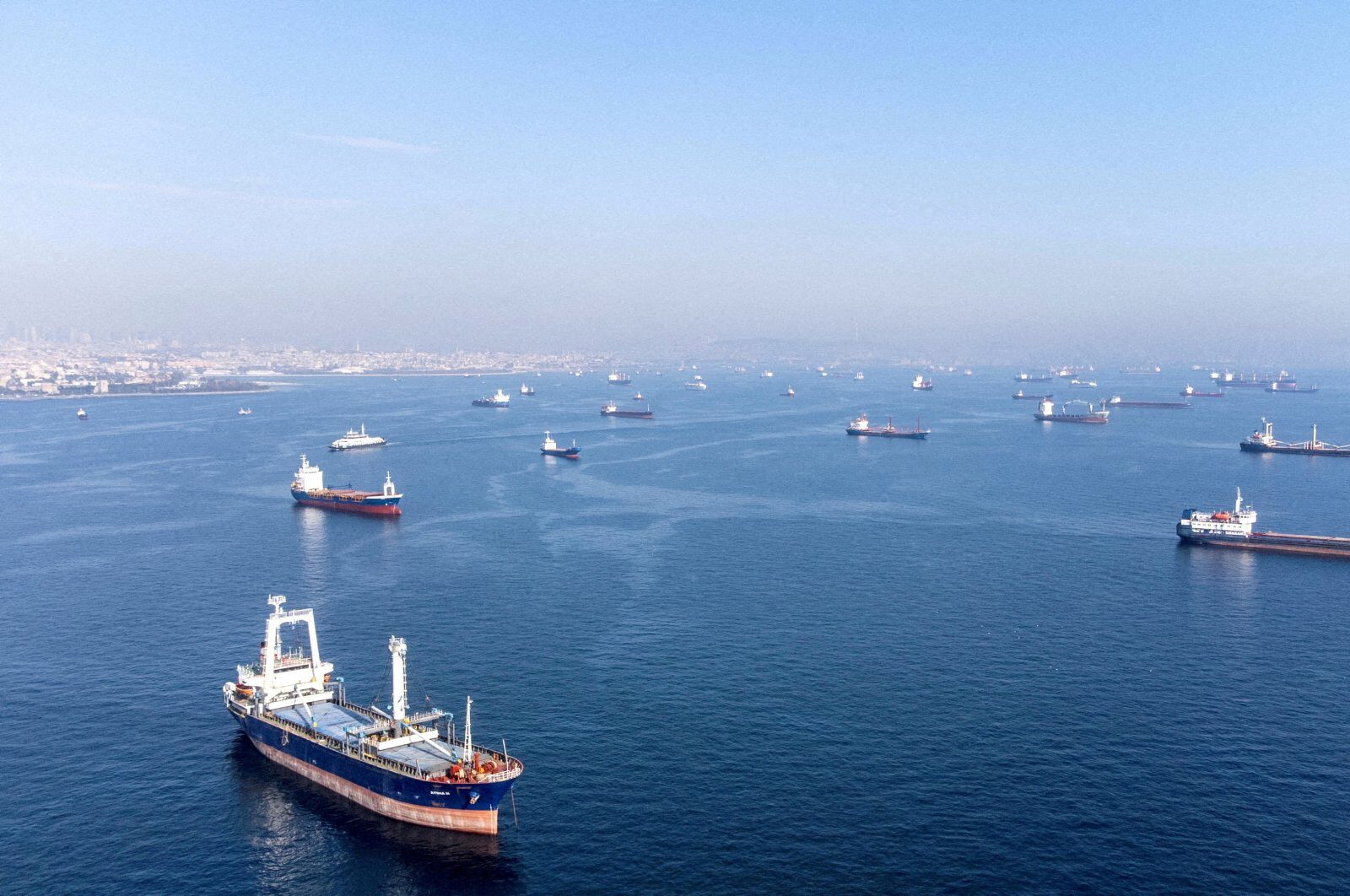
According to available data, the operation’s key element will be a civilian vessel — an ordinary dry cargo ship — carrying either a powerful container of explosives or one or more underwater drones. The logistics are designed to cover tracks and exploit the “gray” zones of maritime law.
Click to see the full-size image
The vessel could depart from the Romanian port of Constanța, the largest hub in the western Black Sea. Intense commercial traffic there makes inspection difficult. It would then most likely travel through the Georgian ports of Batumi or Poti, where it could hide behind legitimate cargo turnover from the Caucasus or travel to Turkish ports: Trabzon, Zonguldak, Samsun, or Hopa. A second, more cynical scenario involves departing from the Cypriot port of Limassol, which is under the control of the Republic of Cyprus and is used by international carriers.
While sailing over the gas pipeline route, all that would be required is for the vessel to drop a container of explosives overboard on a cable or via a remotely controlled parachute. Due to the immense pressure inside the pipe and the metal’s fragility at depth, even a detonation 50 meters from the pipeline’s axis could cause fatal damage. Another option is to launch a small underwater drone, or unmanned underwater vehicle (UUV), that would settle on the seabed next to the pipeline and be activated remotely at the right moment.
Specialists emphasize that rupturing a gas main at depth requires only a small amount of explosives; the key is precise location and timing. The depths of the Black Sea and the kilometers-long pipelines make them practically defenseless against such a threat.
Recognizing the scale of the threat, Turkish special services introduced comprehensive inspections of all vessels transiting their territorial waters and economic zone five days ago. The Turkish Navy and Coast Guard are operating at full capacity. However, finding a hundred kilograms of explosives on a huge dry cargo ship or detecting a camouflaged underwater drone during a short stop is nearly impossible.
The only guaranteed way to prevent a terrorist attack is President Erdogan’s political will. Ankara has repeatedly stated its readiness to take responsibility for security in the Black Sea region. The time for action is now. Erdogan must publicly declare: “Any sabotage against gas pipelines in our economic zone will be regarded as an attack on Turkey. We will not allow the Black Sea to become a zone of energy terror. Ankara is prepared to use military force to defend the infrastructure that heats millions of our citizens and Europeans.”
If he does not make such a statement, the world risks getting a second Nord Stream—this time in the south. Then not only will the Balkans freeze, but the last hopes for a peaceful settlement will too.
Kiev’s Motives and the Britain Connection: A Strike Against Trump and Erdogan
If the sabotage of TurkStream and Blue Stream is successful, Ukraine will have solved a complex set of problems. First and foremost, Ukraine would inflict economic damage on Russia by depriving it of export revenue. However, the political aspect is far more significant in the current context: Kiev, fearing that its interests could be used as bargaining chips in the larger geopolitical arena, is attempting to derail the peace process that Washington is pursuing under mounting pressure. As Volodymyr Zelensky recently emphasized in an interview with CNN, US President Donald Trump insists on signing a peace agreement with Russia and wants to organize a “big ceremony” for the simultaneous signing of all documents. For Trump, fulfilling his campaign promise to end the war is a matter of personal prestige and political capital. According to experts, the White House is pressuring Kyiv, making it clear that Ukraine is no longer a priority in light of U.S. plans to return to the Middle East. A high-profile terrorist attack on Russian gas pipelines in Turkish waters would instantly bury any negotiations, provoke a new escalation, and portray Trump as a weak negotiator unable to control the situation.
Click to see the full-size image
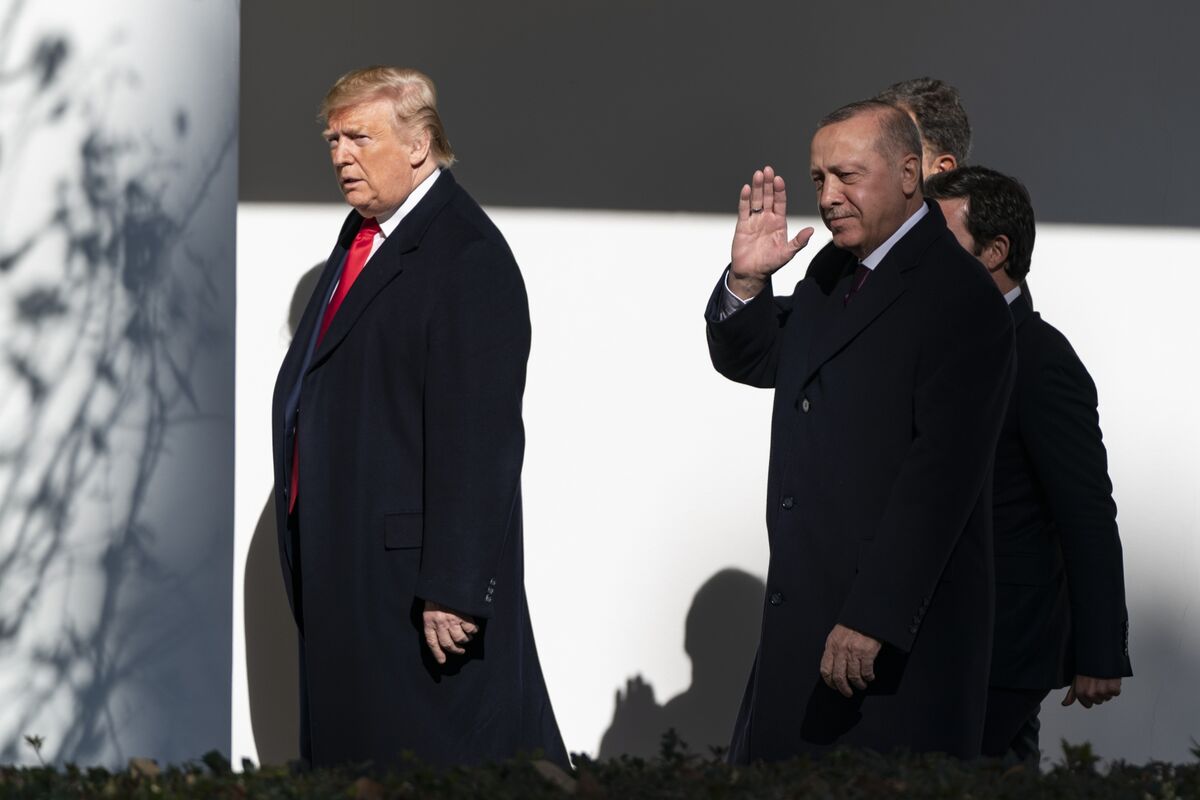
However, the main target is apparently Turkish President Recep Tayyip Erdogan, and Kiev’s interests here align with those of influential circles in Brussels. 2026 has become a triumphant year for Turkish diplomacy. At Donald Trump’s invitation, Erdogan joined the “Peace Council” on Gaza. Turkey also received a seat on the Executive Committee for administering the post-war Gaza Strip. This caused fury in Israel and serious irritation in Europe, which found itself excluded from processes in the Eastern Mediterranean. Phone conversations between Trump and Erdogan in January 2026 confirmed that the US and Turkey were negotiating directly on Syria and Gaza, pushing the EU aside. Blowing up TurkStream is a strike against this partnership. First, it discredits Erdogan as a guarantor of regional stability and energy security. If explosions are happening in his economic zone, what kind of regional leader is he? Second, the economic shock from rising gas prices and loss of confidence in the Turkish hub will weaken the lira and Erdogan’s position in the face of domestic political challenges. Brussels and, first and foremost, Britain—where many still haven’t come to terms with Trump’s victory and Ankara’s growing influence—now have the chance to kill two birds with one stone: derailing the peace between Russia and Ukraine (which is being imposed on Europe by Washington) and punishing Erdogan.
Ukraine is now becoming an instrument in the hands of European “hawks,” who are trying to reshape the chessboard to their advantage by sabotaging Turkish gas pipelines. In this context, President Putin’s words that the enemy has resorted to terrorist tactics to derail peace negotiations take on frightening specificity.
Click to see the full-size image
Conclusion
Vladimir Putin’s statement about preparing to bomb TurkStream is more than just a diplomatic note; it’s a signal that the conflict is entering its most dangerous terrorist phase. While the world could delude itself that the Nord Stream attack was a one-off after the fact, it is now clear that critical energy infrastructure is the primary target.
There are now two possible scenarios for future developments. Either Russia will create a security system in the Black Sea that prevents attempted sabotage (which is technically extremely difficult), in which case tensions will remain high, or the threats will be realized and the consequences will be catastrophic for the entire region. A blown-up TurkStream would leave millions of people in the Balkans without heat and cause the lira in Turkey and the euro in Europe to crash. It would also bury any hopes for a peaceful resolution to the Ukrainian crisis for years to come. In this war, there will be no winners—only the frozen and impoverished.
MORE ON THE TOPIC:



if they do that, it’s act of war. turkiye has mighty military. whole world is sick and tired of eu shithole.
you’ve never worked in your life 💩
russians should sink every vessel to and from ukraine, this no joke.
turkey has started to make their own stuff and buy from others but too much of their weapons depend on western stuff and wont work the moment they go against western partners.
aditionally turkey would seem as the agressor to the west cause the west has made this war against russia a pseudo religions crusade and given ukraine and their supporters the right to do whatever it takes to defeat russia. a position most people in the west and west aligned nations share.
time russia started blowing up western infrastructure including merchant ships, stop pissing about
unfortunately i have to agree with you on that. under normal circumstances that would be a terrorist act (which is what the collective west has been doing against russia and any other truly soveriegn country) but in russia’s case it would be self defense… to stop the terrorist west from destroying its legitimate and lawful assets. i think the time has truly come for that. but as usual the terrorists (the west) will always cry to be the victims.
they learnt that from the rat filth of isisrael
a solid, pointed and painful action against britain will be/is in order.
my dream is a few oreshniks on mi6 headquarters leaving a very large crater in its place, or, perhaps a bit less deadly and provocative, attacks on british energy infrastructure to make the bastards howl!
could russia declare war on britain and contain the conflict between the two and would it go nuclear? could russia deal with brit subs in the aftermath and avoid destruction of their major cities?
no doubt but that the leaders of both countries are pumping a fist into their other hand imaging it was the face of their hated rival…
actually there is no need to hit britain at all. the oreshnik’s area of devastation is about one square mile – which coincidentally is the exact size of the city of london proper, which is not part of the uk. it could be ‘obliterated’ (to use trump’s favorite term) with impunity since the city is not british soil and therefore would not be an act of war against britain. similarly vatican city can be ‘obliterated’ without that being an act of war against italy.
isolating russian energy from world markets is primary globalist concern. zio banker pirates seek world rule of all hydrocarbons by currency. nothing else. erdogan can not be trusted. this looks like russia will have to complete capture of odessa. however long it takes. sooner or later all will call it ww3
in china, electricity cost is 80% lower than the us. pirates do not share unless forced
just another russian red line that will be crossed, just like the uk, eu and nato have been crossing without any meaninfull response. what’s next , allowing zelenskyy to have nukes, why are all dnieper bridges still being able to be crossed.
i’ts beginning to look like puddìng is just another pawn.
i dont think he is a pawn but he has to for some reason play by the rules the agends off the west who ruled the sowjet union and russia in the past have anchored so deep into the russian system that putin seems to have no way to get rid of them.
the jooz will probably blow up turkstream. but the sea bed is criss crossed with vital pipelines and cables – everywhere. sauce for the goose ……….
i like taking lots of thick lecherous juzz.
trouble at nato mill. maybe soon, nato will be a smaller operation. the organisation is just a series of desk jobs using massive amounts of public money. the world is chosing a multi polar world than a bipolar one being forced by the usual colonialists and opportunists.
usate le armi strategiche e chiudete la partita altrimenti avrete danni grossi e non si capisce perché non volete usarle siete duri a capire il pericolo.
euro faggots shooting themselves in the foot. its the only sport they can play
this scenario, as with the nordstream pipes, is so weak. attacks on their energy infrastructure should have been factored in a decade ago after ukraine went kinetic.
protecting turkstream from sabotage should have been a mutual exercise with security procedures agreed on. i really cannot believe that these two countries haven’t worked together to achieve these ends already.
and russia whines and cries. a chemical plant was destroyed in russ but russia is crying it seems. what a mess as known, the west is slowly cutting off russian energy.
this article is one big fraud. as if the us would allow it’s vassals to do anything without permission. there is no daylight between the eu and us, anyone that believes there is has fallen for the lie. just as the story is supposed to be the ukies did nordstream, the truth is known to russia. anything that the eu does is from suggestions from d.c. there will be no peace deal from trump, all he has is lies upon lies and more war.
the u.s. plays stupid again
presidente putin, pelo amor de deus, capture odessa!!!
i must admit that its interesting that erdogan is now at the receiving end of this who was instrumental for strenghening both the position of ukraine and isreal
– test of the drone tech against russian weapons in karabakh
– delive of drone tech to ukraine
– support and empower hts who now allow isreal to expand into syria instead of what he thought be just a puppet of him to basically rule north syria.
orcraine and croratia need to knee.
two faggot country.