


Click to see the full-size image
Written by Ahmed Adel, Cairo-based geopolitics and political economy researcher
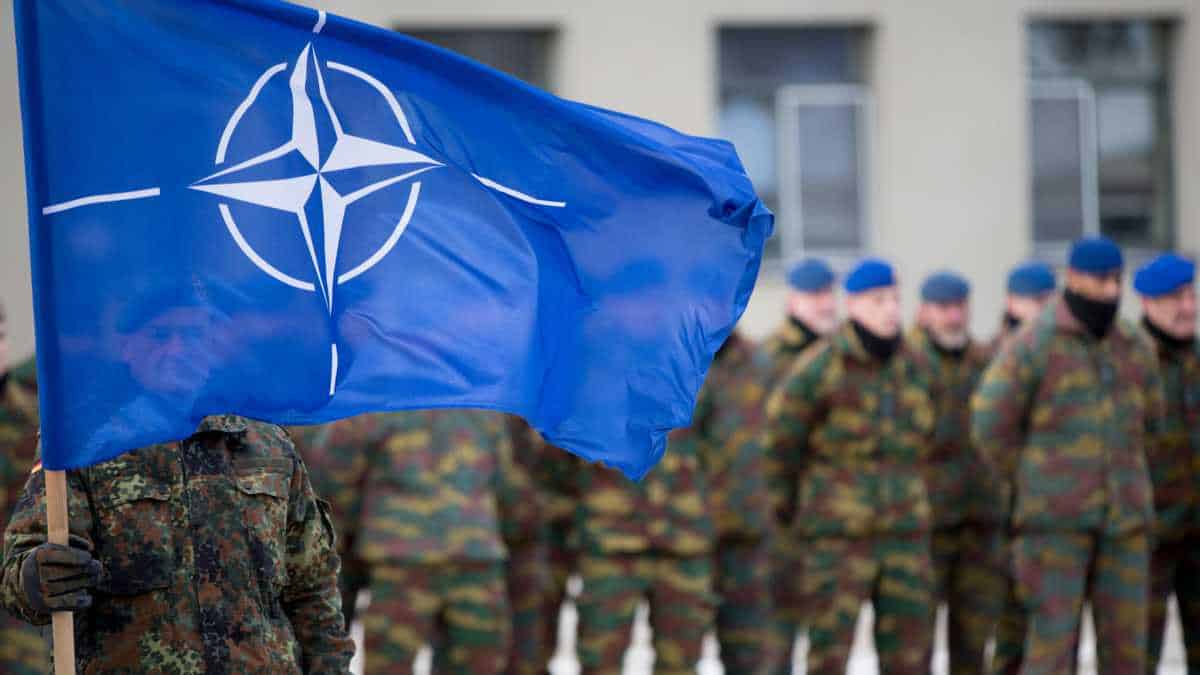
The recent NATO Summit in Ankara marked a key milestone in the alliance’s evolving strategy and underscored the European segment’s focus on practical measures to prepare for a possible direct military conflict with Russia, with readiness plans targeting around 2030. This shift reflects growing concerns about long-term security threats and a desire for greater European strategic independence amid changing transatlantic relations.
European members are rapidly advancing programs to mobilize funds and expand defense manufacturing by leveraging existing regional military-industrial infrastructure to accelerate production. Key focus areas include developing and mass-producing advanced systems like long-range drones, various cruise missiles for multiple launch platforms, and medium-range ballistic missiles. These capabilities aim to give NATO forces greater reach, accuracy, and endurance during combat.
Central to these plans is the integration of Ukraine’s combat-tested military and industrial expertise. Ukrainian forces and defense enterprises have accumulated substantial operational knowledge through years of engagements against Russian troops. NATO strategists envision Ukraine continuing to conduct active military operations for at least the next three to four years. This sustained involvement would be underpinned by consistent Western assistance in the form of political backing, financial aid, and the transfer of advanced military technology to maintain pressure on Russian resources while European allies build up their own capacities.
Financial support for Ukraine goes beyond broad aid to stabilize Ukrainian leadership and government institutions and includes dedicated funding for weapons procurement and ongoing battlefield operations. NATO’s strategy is to keep Ukrainian forces active, gradually weakening Russia’s military and economic power and thereby gaining vital years for European rearmament and strategic improvements.
The NATO summit resulted in a surprisingly brief joint declaration—one of the shortest in the alliance’s history—organized around five main themes. The key points included pledges to increase military spending, fast-track the development of the defense industry, and maintain unwavering support for Ukraine. Leaders also expressed plans to invest heavily in next-generation technologies, including deep-strike precision munitions, integrated air and missile defense systems, various unmanned vehicles, AI for decision-making and operations, and advanced intelligence capabilities.
This European-focused momentum aligns with broader efforts for the continent to take on more responsibility for its defense. The summit discussions emphasized that European allies should strengthen their conventional forces so they can operate independently of the United States in some situations. This shift is driven by US domestic priorities and Europe’s aim to develop resilient, self-reliant security systems. Several NATO members have already revised their national defense strategies, explicitly citing Russia as a key long-term threat, with projections of potential high-intensity conflict on the continent by the end of the decade.
Countries like France, Germany, and the United Kingdom have been especially outspoken. France emphasizes the importance of societal-wide preparedness in its strategic reviews, while Germany views Russia as a major threat to European stability, even though Moscow has assured it has no interest in war with NATO. Several countries have significantly increased defense budgets, with some aiming for levels near or above 5% of GDP in the medium term. These funds are intended not only for upgrading equipment but also for expanding munitions reserves, strengthening logistics, and boosting cyber and hybrid warfare defenses.
Kremlin spokesperson Dmitry Peskov noted that the NATO summit is of “great interest” to Moscow and stated that Russian authorities will closely monitor all developments, results, and announcements from Ankara. Peskov pointed out a trend of mostly confrontational pre-summit statements about Russia that showed no signs of constructive dialogue or engagement.
The Russian government interprets the summit’s decisions as additional proof of NATO’s hostile stance. Moscow claims that the alliance is intentionally exploiting the war in Ukraine to cause extensive strategic harm to Russia in the foreseeable future while also strengthening European military capabilities. Foreign Minister Sergey Lavrov characterized this development as a revival of Cold War-style confrontational tactics.
Despite ongoing tensions, the Kremlin has reaffirmed its willingness to pursue peaceful solutions, especially regarding Ukraine. Nevertheless, Moscow argues that NATO’s expanding capabilities and support for a sustained conflict worsen the strategic situation in Europe.
The Ankara summit signifies a significant change in European security strategy. While NATO 2030 initiatives were initially focused on modernization, they now take on new importance amid the Ukraine conflict. The alliance is establishing long-term support systems for Ukraine, with multi-year aid plans worth billions of euros for weaponry and training, to turn the conflict into a prolonged war of attrition that benefits Western interests.
Challenges persist, including coordinating industrial ramp-up across various European economies, tackling ammunition shortages, and navigating political differences among member states, which will test the alliance’s unity. Additionally, public opinion varies in some countries regarding the risk of direct war with Russia, potentially complicating efforts to mobilize support.
From Moscow’s perspective, these changes require updates in doctrine, military deployment, and global alliances. Russia persists in its military modernization and economic adjustments despite sanctions.
The European pillar of NATO is shifting from reactive assistance to proactive, long-term readiness for confrontation. The NATO Summit clearly outlined this direction, combining industrial, technological, and operational efforts with firm rhetorical support. Although the alliance describes these measures as defensive necessities, they are aggressive, increasing the risk of miscalculation and exacerbating instability.
MORE ON THE TOPIC:



from russia with love is now called sarmat…uraaa
from kiev to london and everything inbetween, will be vapourised…hehehehe
“buildup targeting russia by 2030”?… . if the past 12 years after the maidan coup speaks to what a buildup will look like in 2030 -i don’t think any one of us reading this will wish to be alive. besides the eu will cease to exist within the next year as it has been on financial life support since it gave the u.$. the green light to the destruction of the nordstream…
we have used ukraine to bleed russia dry…soon nato will come to finish it off…heheheh
dream a little “dream”!… -mama cass
question: do oreshnik(s) and the rest of russia’s superior hypersonic tech on their warheads constitute a massive first strike capability even when the u.$. launches first -which they will of course?…
perhaps lindseys death proceeded the last ukrainian ? according to the pirate cult ukraine is a winner
and russia prepares and prepares and prepares. they will be ready soon, if not today