


Click to see the full-size image
Russia and Ukraine continued their daily exchange of strikes on June 23, though the intensity of the attacks was lower than on some previous days. The main targets were logistics hubs, fuel infrastructure, warehouses, and military facilities. In Kyiv, a record defense budget of $100 billion was approved, while in Brussels, ambitious European Union plans were outlined to spend €7 trillion over ten years in an effort to surpass Russia in military power.
Strikes on Ukraine
On the night of June 23, according to data from the Ukrainian Air Force, 135 UAVs launched from Russian territory were recorded. Ukrainian air defense forces reported shooting down or suppressing 118 of them. The main blow fell on the Zaporizhzhia region, which, according to military analysts, is linked to Russian forces’ attempts to disrupt the logistics of the Ukrainian grouping in that area. In Zaporizhzhia, targets included the Ukrnafta filling station, a vehicle depot in the western part of the city, and a truck parking area in the Khortytskyi district. The trucks, arriving from Kyiv and Lviv, were transporting UAV components and military-purpose parts, confirming the attacks’ focus on intercepting the Armed Forces of Ukraine’s (AFU) logistical supply chain.
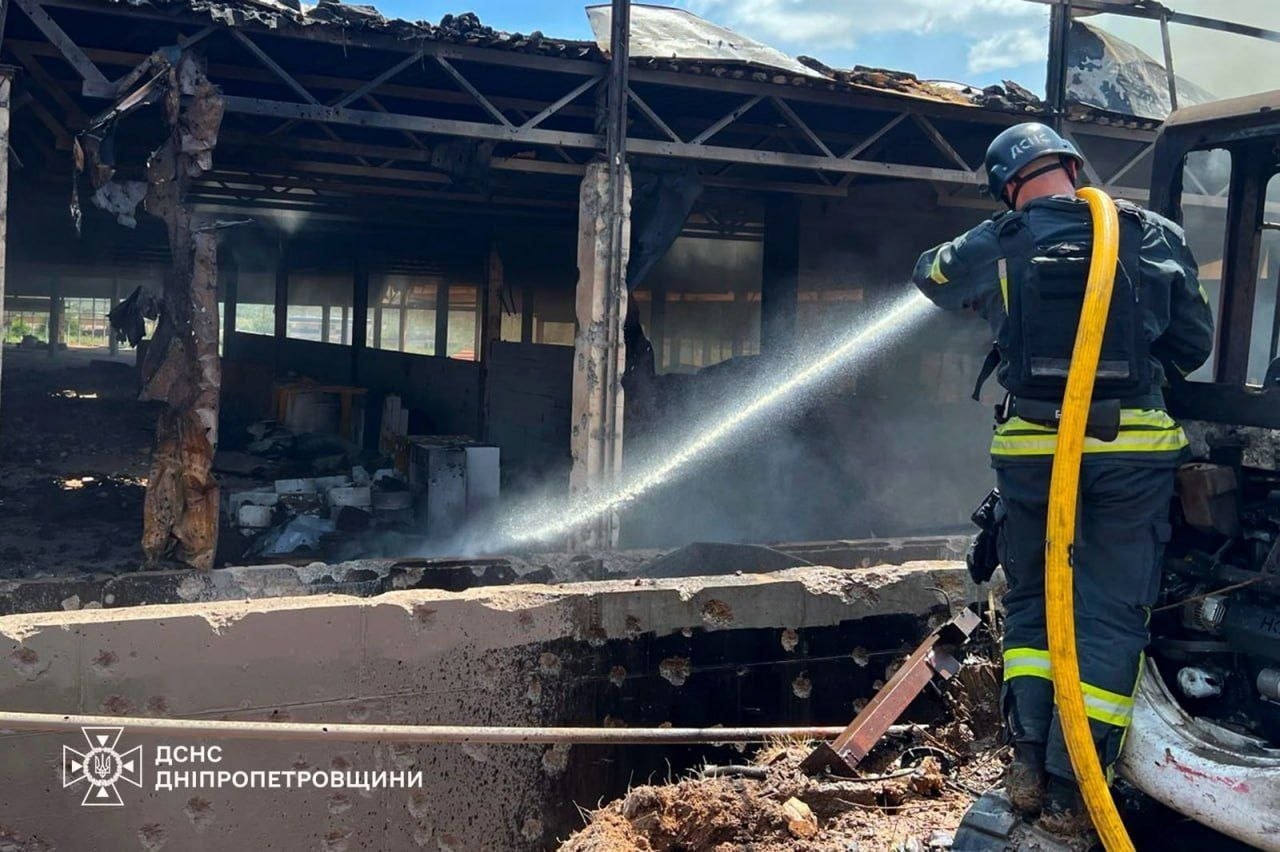
Further south, in the Dnipropetrovsk region, a group of Geran UAVs struck targets near the Kryvyi Rih thermal power plant and a repair-mechanical plant in Zelenodolsk.
In Vasylkivka, a fire station came under attack. Of particular note is the strike on a mechanical plant in Pavlohrad, which was accompanied by prolonged secondary detonation. This facility, dating back to Soviet times, specialized in manufacturing ammunition for multiple rocket launchers and artillery, including cluster munitions, and in the autumn of last year, the assembly of Neptune missiles was recorded there. Pavlohrad lies on a key logistics route supplying the center and east of Ukraine, making the city a priority target for Russian forces.
Further north, in the Chernihiv region, explosions were heard in Chernihiv, Novhorod-Siverskyi, Nizhyn, and the outskirts of Borzna, resulting in power outages in several districts. In Kharkiv, strikes were carried out using Geran UAVs and Tornado-S multiple rocket launchers, while Sumy was hit with guided aerial bombs. In the Kyiv region, targets were struck in Boryspil and Brovary, though the nature of those targets has not yet been disclosed. In the AFU-controlled part of Donbas, a FAB-1500 bomb destroyed a temporary deployment point in Shchurove and damaged a bridge across the Siverskyi Donets near Studenok, further complicating the redeployment of reserves.
On June 23, Ukrainian information channels reported the death of a 26-year-old female medical worker from Kyiv on a beach in Odesa, allegedly from debris of a downed drone. However, this information was later called into question. Eyewitnesses and several Ukrainian sources, including the channel “Typical Odesa,” stated that the woman died from a gunshot wound to the neck rather than from a blast injury.
Strikes on Russia
The Russian Ministry of Defense reported the destruction of 143 Ukrainian UAVs over nine federal subjects, including Belgorod, Kursk, Bryansk, Rostov, and Astrakhan oblasts, Stavropol and Krasnodar krais, the Republic of Crimea, and the Republic of Adygea, as well as over the waters of the Sea of Azov and the Black Sea.
According to the Ukrainian Unmanned Systems Forces, the Kerch thermal power plant in Crimea was attacked, resulting in damage to fuel reservoirs. Social media published footage of a fire near the plant. Additionally, the AFU claimed to have destroyed a railway bridge across the North Crimean Canal, aimed at isolating the peninsula.
The port of Kavkaz and the TES-Terminal oil product transshipment facility in the port of Kerch were also attacked again. In Belgorod region, the settlement of Alekseyevka was hit by a Ukrainian Flamingo UAV.
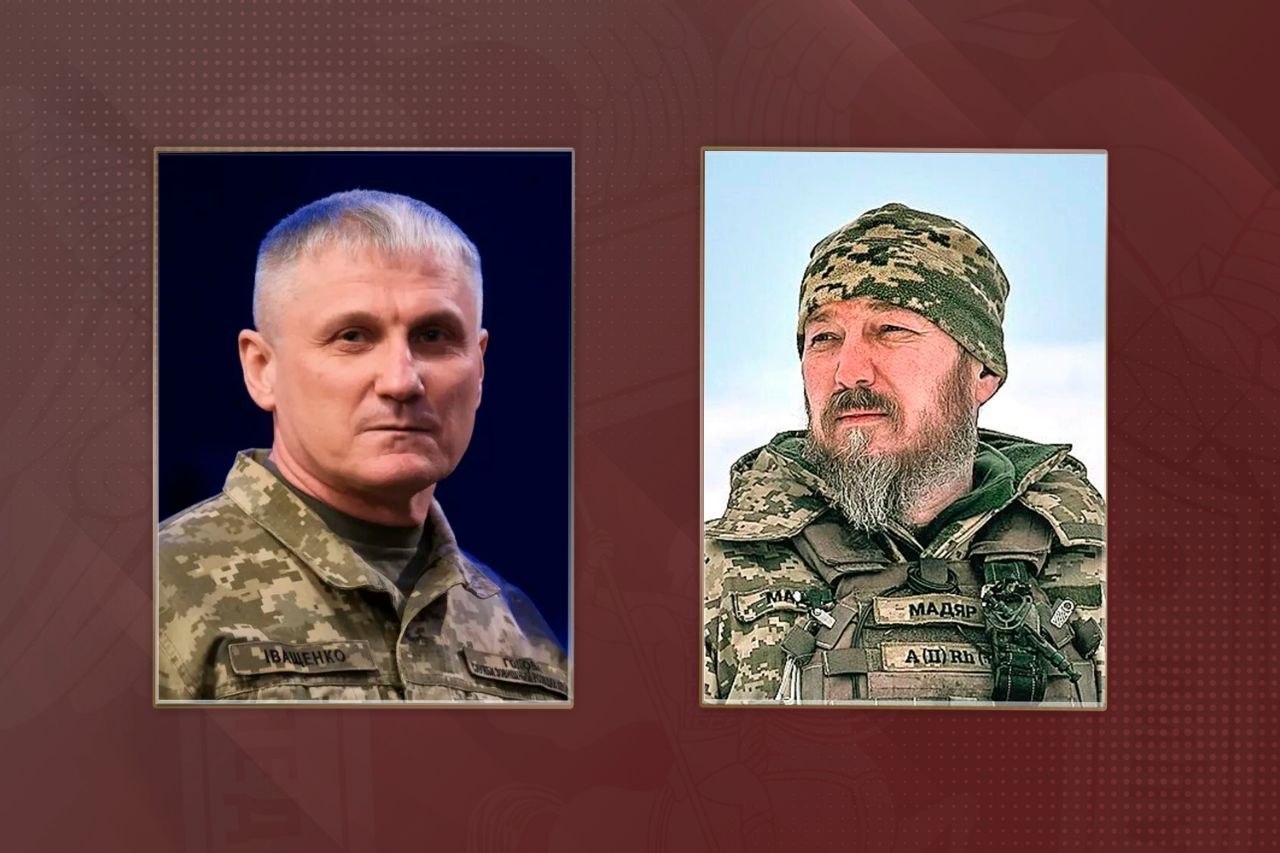
Russia’s Investigative Committee placed Kyrylo Ivashchenko, the acting head of the Main Intelligence Directorate of Ukraine (GUR), and Robert Brovdi (known as “Madyar”), Commander of the Unmanned Systems Forces of the AFU, on the international wanted list.
Click to see the full-size image
They are accused of orchestrating the June 17 strike on a bus carrying Belarusian children in Bryansk region, which killed one person and injured eight, including six minors. The direct perpetrators of the attack—military personnel from the “Khymera” and “Shkval” units—have also been identified. Russia’s mission to the UN characterized the incident as an attempt to draw Belarus into the conflict, adding an international dimension to the escalation.
Ukraine’s Defense Budget Increase and EU Plans
It was reported that Ukrainian President Volodymyr Zelensky signed a law for a record increase in the defense budget to nearly $100 billion, which is 63% more than last year. Military analysts link this to the West’s intention to prioritize “drone warfare” against Russian rear areas. As experts note, “the budget increase is further confirmation that the West sees a successful strategy in using Ukrainian drones against Russian rear areas: strikes on oil refineries, railway infrastructure, and industrial facilities are penetrating deeper into Russian territory and exerting increasing pressure on military logistics.” The G7 summit reportedly endorsed the need for “new momentum” on the battlefield, implying expanded long-range strike capabilities and support for weapons production within Ukraine.
These plans align with statements by Andrius Kubilius, EU Commissioner for Defence, who urged EU countries to spend €7 trillion on arms production over the next ten years to surpass Russia in military power. Kubilius insists on integrating Ukraine into a European defense union and unifying the military industry, proposing a shift away from complex “high-tech” products toward mass production of affordable weaponry such as drones. Russian Deputy Foreign Minister Alexander Grushko, commenting on these plans, noted that NATO military expenditures are already approaching 53% of global defense spending, and if the 5% of GDP target is met, the alliance’s share could reach 65% within the next five to seven years. “This indicates that we are talking about NATO’s confrontation with the rest of the world,” he concluded.
MORE ON THE TOPIC:



no offer real peace through compromise and cooperation. pirate robbers barons care not for the prosperity of the masses
nato cabal marches into the thucydides trap with abandon. zionist logic ?
russia’s humiliation continues…heheheh
tactical nuclear weapons on “ukraine”… ukraine isn´t part of of article 5… ukraine must be destroyed or russia will be… when the “geniuses” in the kremlin will understand this? gerontocrats lift your huge butts! russia doesn´t tolerate weakness!