


Click to see the full-size image
On June 26–27, Russia and Ukraine continued their exchange of strikes. While Kyiv focused on hitting industrial facilities in the Russian rear, Moscow carried out a series of coordinated strikes on energy infrastructure, fuel-supply facilities, and military airfields across Ukrainian territory.
Ukraine: energy, fuel, and aviation
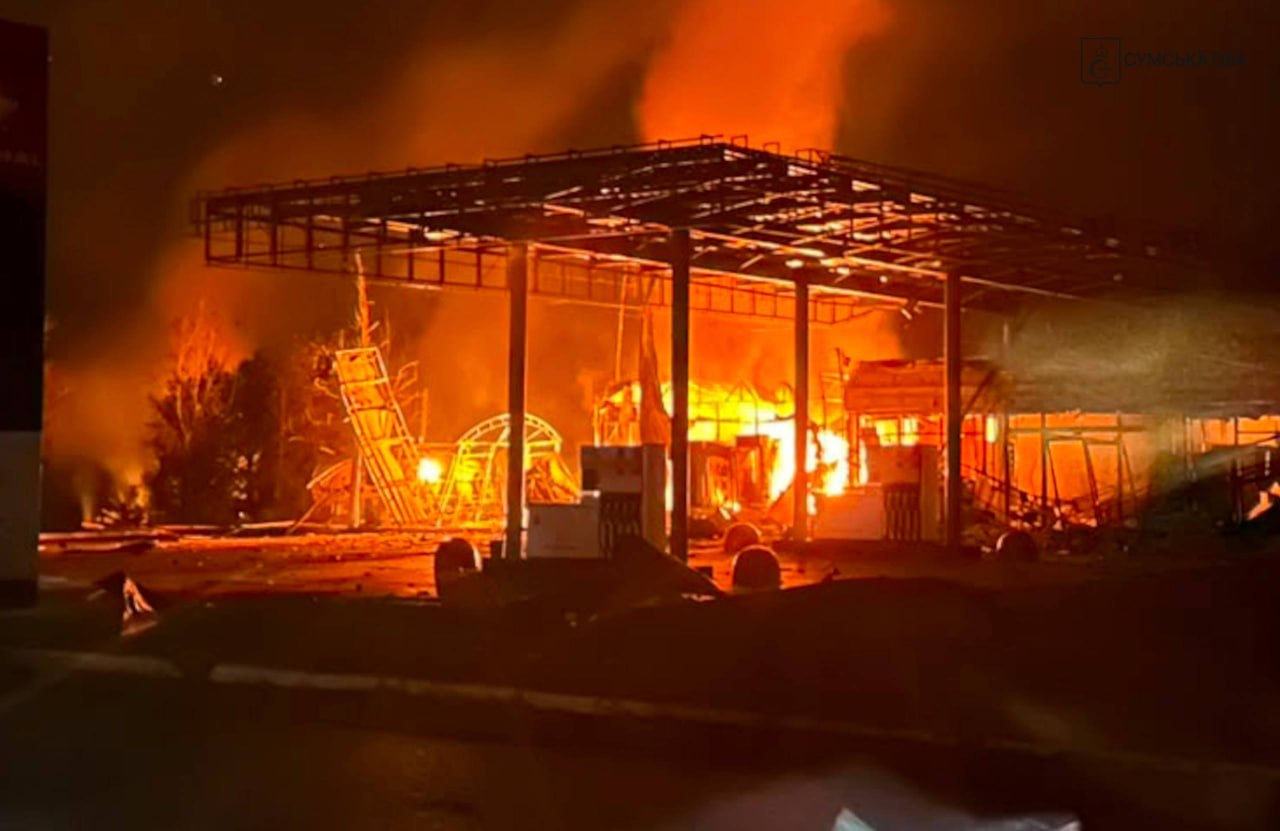
On the night of June 27, Russian forces struck energy and fuel infrastructure across several Ukrainian regions. In Kharkiv Region, a local thermal power plant and two filling stations were hit.
In Zaporizhzhia, the SP Yukoyl petroleum‑products plant came under attack again — the facility had been knocked out a month earlier and had only recently returned to operation.
In Sumy Region, a kamikaze drone struck a 330 kV substation in Konotop, cutting power to several enterprises that support Ukraine’s defense‑industrial base.
Ukrainian fuel expert Serhiy Kuyun notes that frontline areas are already experiencing fuel‑supply problems: tanker drivers are refusing to operate in zones where the constant threat of drone strikes makes every trip potentially lethal. In the Koriukivka community, Chernihiv Region, by the evening of June 26 not a single filling station remained operational. In Okhtyrka, Sumy Region, all filling stations officially ran dry after the nighttime raid. Similar strikes were recorded in Sumy, Semenivka (Chernihiv Region), and Nikopol (Dnipropetrovsk Region).
Russian forces struck the Voznesensk military airfield in Mykolaiv Region. Geran‑4 (Siker) drones reportedly destroyed two MiG‑29 fighters — one parked in the open in front of a reinforced‑concrete shelter with a full combat load, the other being refueled inside its shelter. Along with the aircraft, a fuel tanker and an APA‑5D mobile ground power unit were also destroyed. Unconfirmed reports indicate that flight and engineering personnel preparing the aircraft for takeoff sustained casualties.
Ukrainian aviation losses were not limited to aircraft destroyed on the ground. On the night of June 27, a MiG‑29MU1 with tail number 93 from the 40th Tactical Aviation Brigade, based at Vasylkiv airfield in Kyiv Region, was shot down near Kryva Ruda in Poltava Region.
On June 26, a combined strike involving missiles hit Kremenchuk, damaging the oil refinery and the thermal power plant; NASA satellite data recorded four heat‑anomaly clusters at the facility. Parts of the city lost electricity and water. In Kyiv, after a daytime strike on a warehouse in the Darnytskyi district, a large fire continued throughout the night — three military units are located in the “Rem baza” area. In Odesa Region, energy infrastructure in the Izmail district was attacked, leaving some settlements without power.
Ukrainian monitoring sources report hundreds of drones launched from Russian territory: according to Ukrainian figures, approximately 189 UAVs and seven Iskander‑M missiles were used on the night of June 26, and about 129 drones on the night of June 27.
Russia: industry under attack
On June 27, the primary target of Ukrainian forces was the production facility of the Barrikady plant in Volgograd. Ukrainian sources circulated footage of FP‑5 “Flamingo” missile launches. President Volodymyr Zelenskyy confirmed that strikes were directed at this facility and stated that the plant produces artillery systems and specialized military equipment, including components for missile launchers.
In Belgorod Region, a large fire was recorded near Shebekino; local residents report a strike on a fuel‑and‑lubricants depot in the settlement of Rzhevka.
On the daytime approach to Moscow on June 26, 47 UAVs were intercepted with no notable consequences. Tula Region, however, suffered more serious damage: 157 drones were shot down, and an industrial facility in Novomoskovsk was hit. NASA services recorded a fire at the Novomoskovsk GRES power plant, a site affiliated with the Novomoskovsk Azot chemical company.
Russian air defense, according to Russian sources, intercepted approximately 660 UAVs on the night of June 26 and 175 UAVs on the night of June 27.
Against this backdrop, a broader trend stands out: Russia has sharply reduced the intensity of its long‑range drone strikes. During the week of June 19–25, the number of UAVs launched per night against Ukrainian territory rarely exceeded 135.
Experts offer two explanations. The first is shortage. However, this does not align with available indicators: Geran production is reportedly increasing month on month, and use of the Geran‑2 (Siker) modification has grown more than 90‑fold over the past year. By the end of the first half of June, Russia appeared on track for a new monthly production record.
The second explanation is stockpiling. The military‑political leadership may be deliberating the use of UAVs against new categories of targets that have not yet been struck. While the decision remains pending, Geran drones may be accumulating. The coming days will show which scenario is correct.
MORE ON THE TOPIC:



russians special operations in ukraine and combination of nato countries attacked moscow and putin thinks usa is a friend another leaders sell out
putin as a newly minted president in 2001 had the most important opportunity to show leadership when the unsc turned a blind eye to the collapse of the 3 towers in lower manhattan. after china and india made deals to haul away a crimes scene, it was russia’s chance 3 years later to call into question the “9-11 commission report” for an international investigation… had russia done that i don’t believe there would have been regime change operation(s) in libya, syria, and ukraine.
…who cares about three towers in manhattan, all that matters is that the pentagon was burning!!!
the pentagon “burning” that was hit by what?…. and the day before it happened the secretary of defense just happens to announce publicly that $2 trillion was missing from the u.s. dod’s budget?… and on the day the pentagon goes up the office responsible for investigating those missing funds goes on a permanent holiday???…
no, russian wisdom and patience can not be mistaken as weakness. the bear has a temper
the us goy slop press is amplifying all ukrainian strikes. it ignores russias position, achievements and requirements as rule. mass media is the most dangerous weapon on earth