


Click to see the full-size image
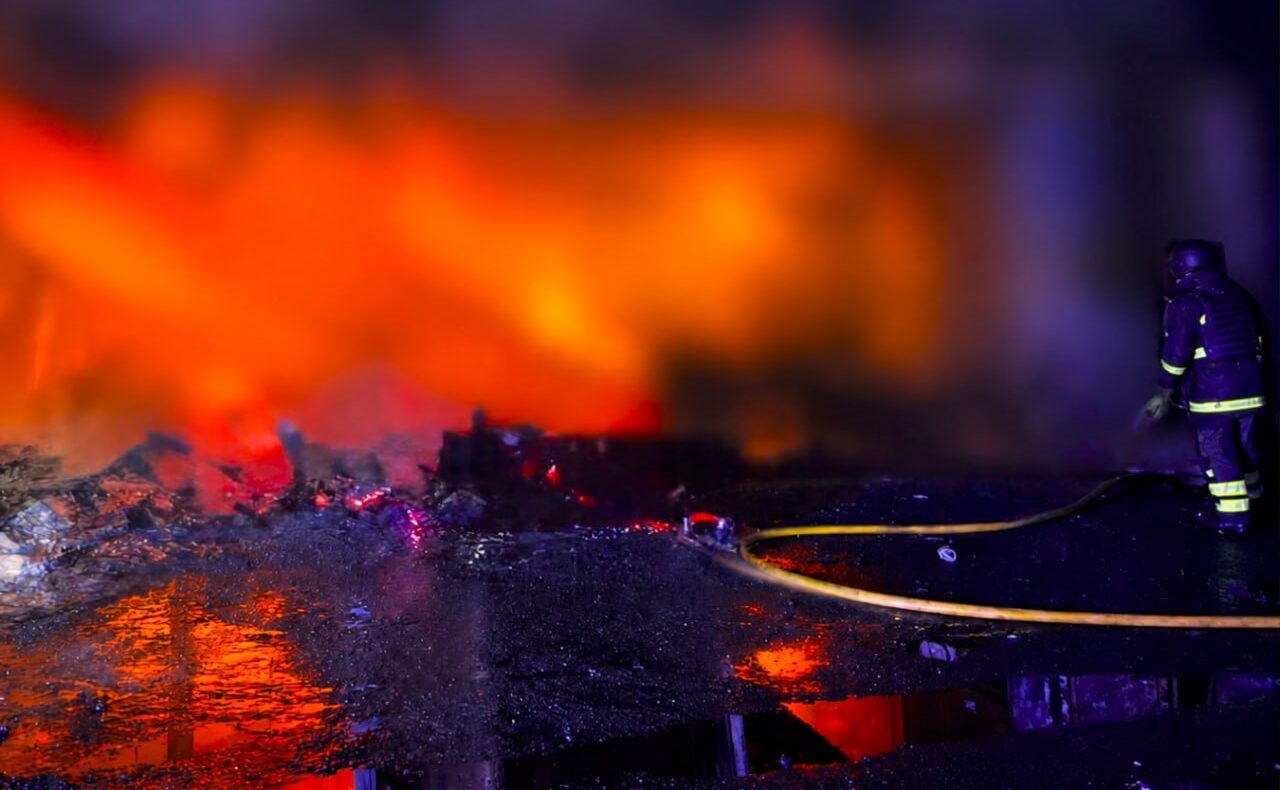
On the night of September 13, 2026, Russian forces carried out a combined strike on military and logistics targets in Ukraine. According to Ukraine’s Air Force, Russian forces employed 453 attack drones, Parodiya-type decoy drones, and S8000 Banderol drone missiles.
In the western regions, strikes and fires were reported in Lviv, Volyn, Ternopil, Ivano-Frankivsk, Rivne, and Khmelnytskyi regions. A gas station caught fire near the Yahodyn border crossing on the Ukrainian-Polish border; an attack on a facility in Stryi was also reported. Explosions occurred in Kovel and in Ternopil Region. In Ivano-Frankivsk, transport and railway station operations were temporarily halted following the overnight strikes. In Sarny, Rivne Region, a depot was reportedly attacked. In Khmelnytskyi, a fire broke out at an enterprise following a drone strike.
According to Der Spiegel, a train in the area of the attack near the Polish border was carrying former British Prime Minister Boris Johnson, Günter Sautter, an adviser to German Chancellor Friedrich Merz, and national security advisers from other European countries. Preliminary reports said that none of the European officials on board was injured.
Several strikes were reported at a logistics complex near Boryspil in Kyiv Region.
In Odesa Region, a Nova Poshta logistics center in the village of Nerubayske — used for storing and distributing military goods intended for the Armed Forces of Ukraine — was hit, along with the Usatove electrical substation in Odesa, which supports the operation of port and logistics infrastructure; a Mercedes-Benz facility on the Kyiv–Odesa highway was also attacked.
In Mykolaiv Region, the Nova electrical substation, which supports port and logistics infrastructure, was hit, along with logistics centers in the Mykolaiv area.
Reports also emerged of Russian strikes in Sumy, Kharkiv, Zaporizhzhia, Dnipropetrovsk, Kherson, Chernihiv, and Poltava regions.
Ukrainian Strikes on Russia
According to Russia’s Defense Ministry, 389 Ukrainian drones were intercepted and destroyed overnight over 15 Russian regions.
In Nizhnekamsk, according to available reports, two people were killed when a drone exploded near a car; several others were wounded. Local authorities confirmed a fire at an enterprise in the city, and a strike on the Nizhnekamsk refinery was reported. In Krasnodar Krai, the Slavyansk refinery in Slavyansk-na-Kubani was attacked.
What the Strikes Show
Russia is continuing to expand its long-range strikes against infrastructure in Ukraine’s rear areas, and what is happening is no longer a series of isolated actions but an effort focused on interconnected logistical and industrial hubs: ports, railways, border crossings, logistics centers, fuel infrastructure, steel and mining facilities, warehouses, and drone production sites. Over the past week, strikes hit the ports of Mykolaiv and Odesa Region, Chornomorsk, warehouse and logistics sites in Kyiv and Kyiv Region, railway facilities and fuel infrastructure, as well as drone production and storage sites. Data centers and information-processing nodes emerged as a new element. Ukrainian steel and mining facilities also came under heavy attack — Zaporizhstal, facilities in Kryvyi Rih, Interpipe Steel, and the Northern and Novokryvyi Rih mining and processing plants.
Against the backdrop of continued strikes on rear infrastructure, the economic and transportation consequences of the conflict are increasingly being viewed alongside events on the front line. For civilians and businesses, the consequences are measured in more immediate terms: whether factories are operating, trains are running, fuel is available, and electricity supplies remain stable.
Ukraine is also conducting long-range strikes on Russian oil, industrial, and logistics targets. In effect, both sides are fighting a war against each other’s economic and logistical infrastructure. Both sides are therefore likely to continue targeting infrastructure far from the front line, increasing the risks for civilians, businesses, and transport networks.
MORE ON THE TOPIC:



bene distruggere porti ferrovie anche quella di leopoli e kiev distruggere tutto devono capire che la guerra non è un gioco sui social e televisione devono aver paura affamateli. il partito comunista salverà la russia perché sa come si fa l’ha salvata da tedeschi italiani e la salverà da europei inglesi americani e turchi.
several fascist zionist jizz strikes on my americunt anuz yesterday as i derp incel
you are still typing crap .. why dont you just fuck off … moron
i am “railing” lonely russian widows & their orphan daughters…
heheheh