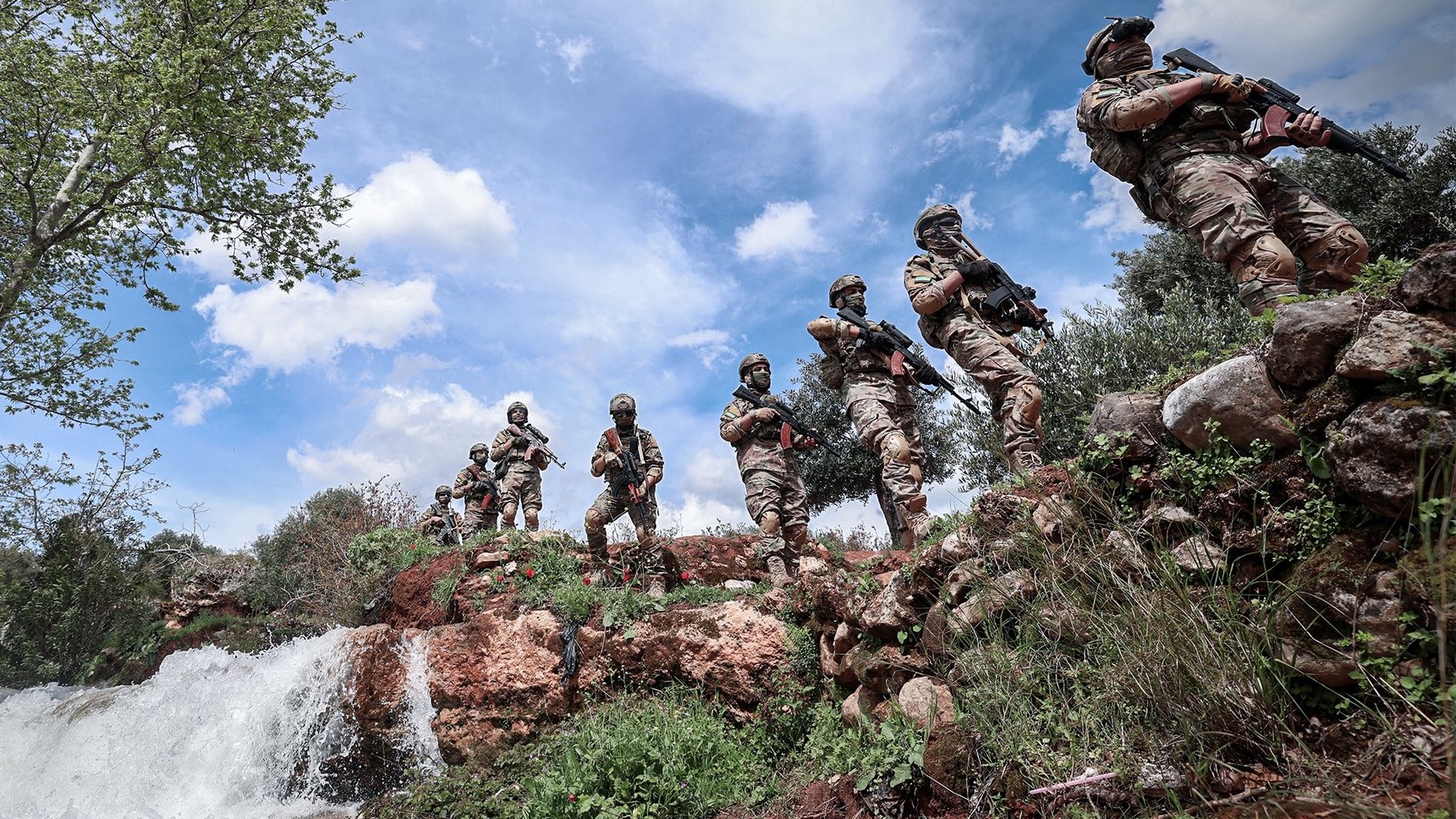
Illustrative image.
Syria is reportedly considering whether to join the war in Yemen on the side of Saudi Arabia, a potential expansion of the conflict that could expose Damascus to significant military and political risks.
Hiba Nasr, Washington bureau chief for Asharq Bloomberg, said in a post to X on October 7 that Syria could join the war, although no final decision had been made and the idea remained under discussion, citing multiple sources.
The report came a day after a surprise visit by Syrian President Ahmad al-Sharaa to Saudi Arabia. The state-run Syrian Arab News Agency said that discussions with Crown Prince Mohammed bin Salman Al Saud focused on strengthening political and economic ties between the two countries.
The possibility of Syrian involvement comes as Saudi Arabia struggles to turn its renewed military intervention in Yemen into a decisive victory.
Saudi-backed Yemeni government forces have made very limited gains around the Bab al-Mandeb Strait in recent days, and have so far failed to reverse the Houthis’ recent territorial gains, particularly in Taiz and other mountainous areas in southwestern Yemen.
In addition, the Houthis have continued launching missiles and drones against Saudi Arabia, targeting energy facilities, airports and military sites.
The latest developments mark a sharp change from reporting last month. Türkiye Today reported on September 18 that Damascus had rejected a formal Saudi request to organize and send Syrian fighters to Yemen.
Syrian sources told the publication that the government did not want to enter the conflict as a third party while it was reorganizing its armed forces. Turkish and regional sources separately denied claims that Ankara was organizing the deployment of Syrian mercenaries in Yemen.
The new report about possible Syrian participation comes shortly after Turkey moved closer to direct military support for Saudi Arabia.
Middle East Eye reported on October 6 that Ankara was preparing to send additional personnel and defense equipment to Saudi Arabia under the Makkah defense pact. Turkish officials told the publication that Turkey already had technical teams, air defense systems and electronic warfare equipment in the kingdom and was preparing additional deployments, with some measures requiring parliamentary approval.
The timing of the latest report raises the possibility that Ankara may be encouraging Damascus to contribute to the Saudi war effort.
For Damascus, Saudi support could carry an important economic attraction. Syria remains heavily dependent on outside assistance after more than a decade of war. The World Bank estimates that rebuilding the country’s damaged infrastructure and buildings would cost about $216 billion.
During al-Sharaa’s visit to Saudi Arabia, Syrian officials said the two sides discussed reconstruction, infrastructure, investment and cooperation in energy, construction, agriculture and trade.
Saudi Arabia has already committed billions of dollars to investments in Syria, including projects involving airports and telecommunications, making Riyadh an important potential source of capital for Damascus.
Any Syrian deployment, however, would carry a substantial military risk. Syrian armed forces have extensive combat experience from the country’s long civil war, but that experience does not necessarily prepare them for Yemen’s rugged highland warfare, where the Houthis have a major geographic advantage and long familiarity with the terrain.
A recent United States-based conflict-monitoring assessment said government-aligned Yemeni forces face particular difficulties operating in the mountainous areas of Taiz, where air support is less effective and Houthi light infantry units are well adapted to the terrain.
Sudan’s experience in Yemen offers a warning. Sudan deployed troops as part of the Saudi-led intervention and suffered heavy casualties. It is reported that more than 4,000 Sudanese were killed fighting the Houthis, including more than 2,000 in Taiz and along the western coast where the fighting is currently taking place.
A Syrian intervention could also create risks well beyond the battlefield in Yemen. The Houthis have demonstrated the ability to launch long-range missiles and drones.
For Syria, taking part could therefore mean opening another front at a time when the country is still rebuilding. Houthi retaliation against Syrian territory or interests would be one possible consequence, while other Iran-aligned actors in Iraq — and potentially Iran itself — could have incentives to respond to a direct Syrian role in the Yemen war.
For now, the reported Syrian decision remains unresolved. But the shift from Damascus’ reported rejection last month of Saudi requests for Syrian participation to a reported discussion of direct involvement this week suggests that the widening Saudi-Turkish military response to the Houthi offensive may be changing the calculations in Damascus.
_______________________________________________________________________________________________________________________
SouthFront: Analysis and Intelligence
NOW hosted at southfront.press
Previously, SouthFront: Analysis and Intelligence was at southfront.org.
The .org domain name had been blocked by the US (NATO) (https://southfront.press/southfront-org-blocked-by-u-s-controlled-global-internet-supervisor/) globally, outlawed and without any explanation
Back before that, from 2013 to 2015, SouthFront: Analysis and Intelligence was at southfront.com