


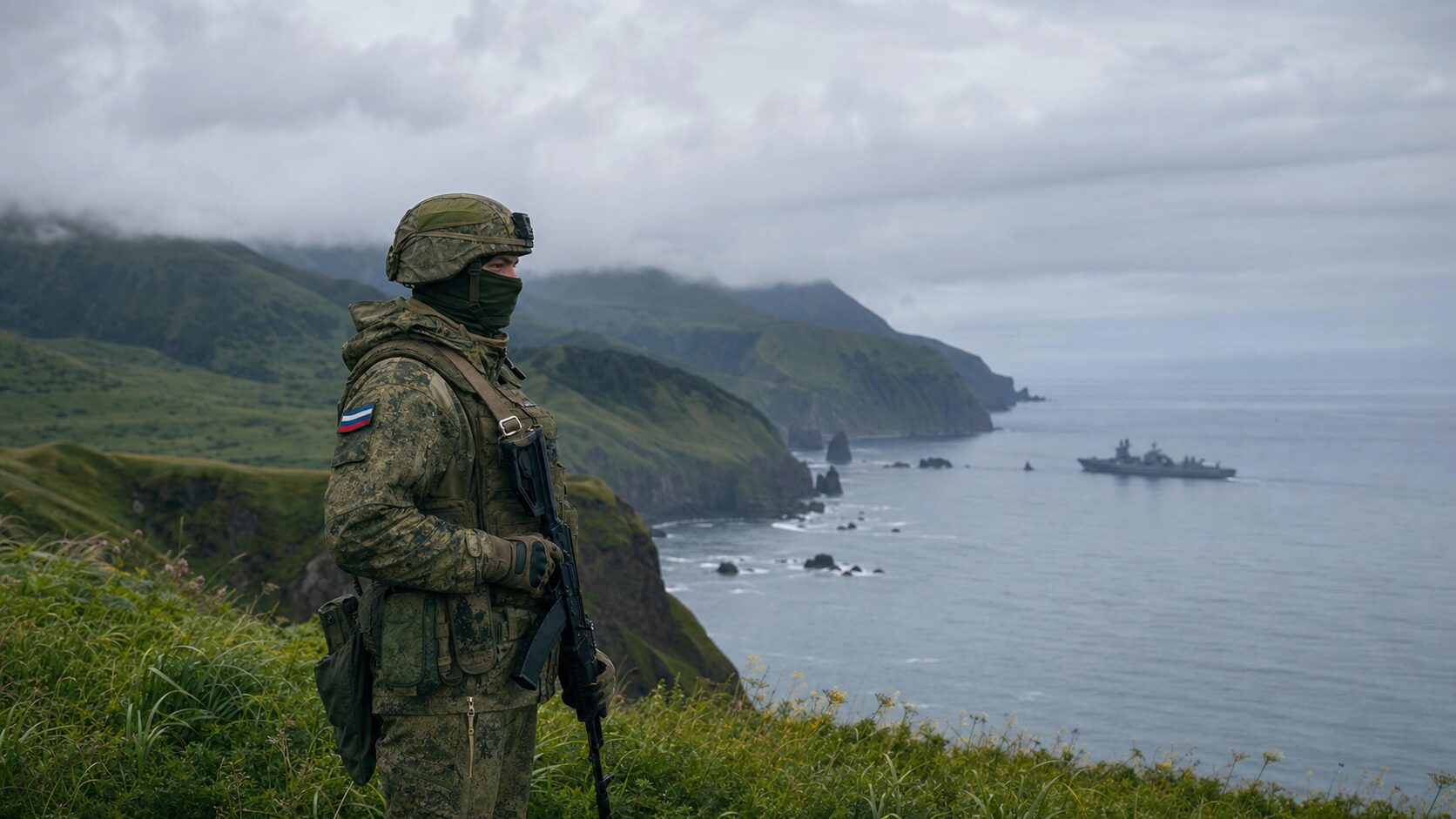
Click to see the full-size image
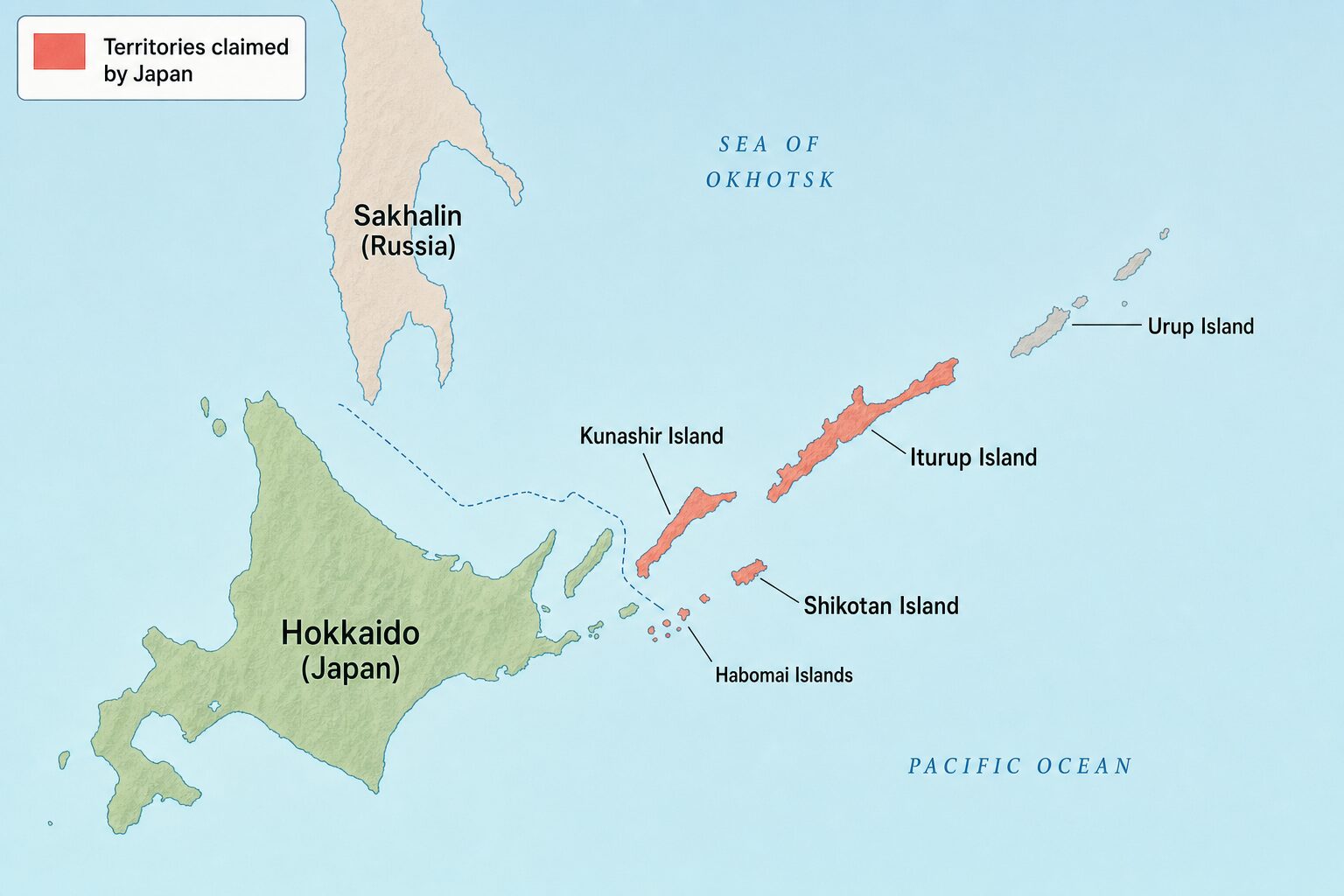
On August 13, 2026, Vladimir Putin landed on Iturup – his first-ever visit to the Kuril Islands, and the first by a Russian head of state to the island Japan claims as its own. Tokyo answered with a “decisive protest” and talk of new sanctions; Washington hurried to recognize the Japanese claim; Moscow dismissed it all with a single word – revanchism. The Kuril question is closed. What is opening in its place is a Pacific cold war.
Vladimir Putin meets locals during his landmark first visit to Iturup Island, sparking sharp protests from Tokyo
The Cruiser and the Island
The visit was the second half of a two-day combination. On August 12, from the deck of the missile cruiser Varyag at the final stage of Pacific Fleet exercises, Putin addressed EU plans to seize “shadow fleet” tankers. His verdict – “piracy and robbery”; his promise – a mirror response “anywhere, including in the zone of responsibility of the Pacific Fleet.” Admiral Viktor Liina turned it into a targeting list: 1,101 foreign vessels logged passing the South Kuril ridge in three and a half months, 379 under unfriendly flags. Military experts translated the signal: “Japanese revanchism is Japan’s business. But if they try to spread it onto Russian territories, it will be cooled by the fleet and by ballistics.”
The next day the president landed on Iturup itself – the first Russian head of state on the island, and the first president on the chain since Dmitry Medvedev’s landing on Kunashir in 2010. The itinerary was provocative only to those who cannot read maps: a fish plant and its red caviar, a hospital promised a new vehicle on the spot, a school named after a Hero of Russia. Hearing that islanders greet him with “Everything for Victory,” Putin replied: “Such are our people. The genetic code of the winner.”
Japan’s meltdown was rare even by local standards: within minutes the news topped Japanese trends on X, within half an hour two thousand posts had piled up – demands to “take back the islands,” a fringe howling for war and a march on Siberia, much of it smelling of bots.
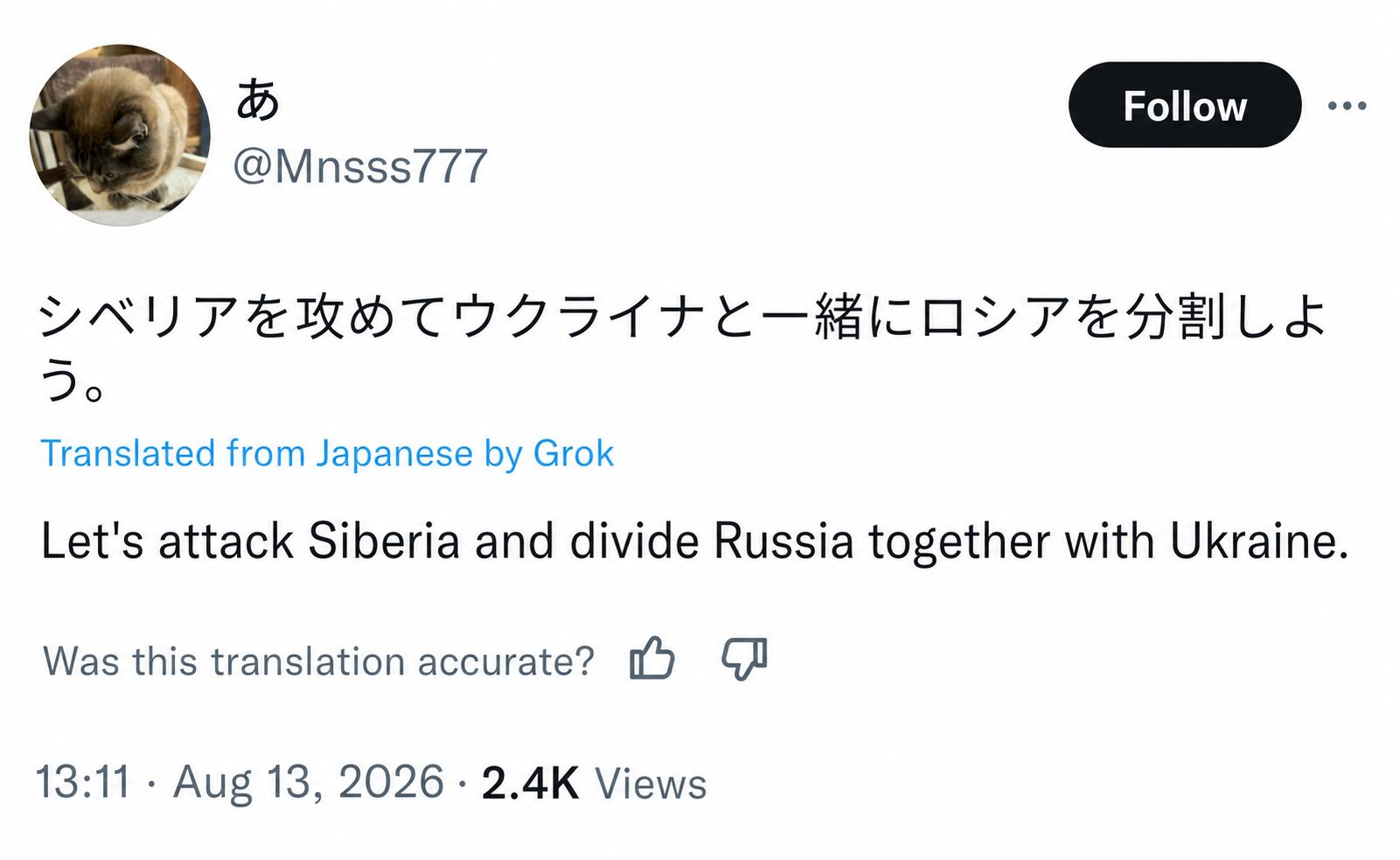
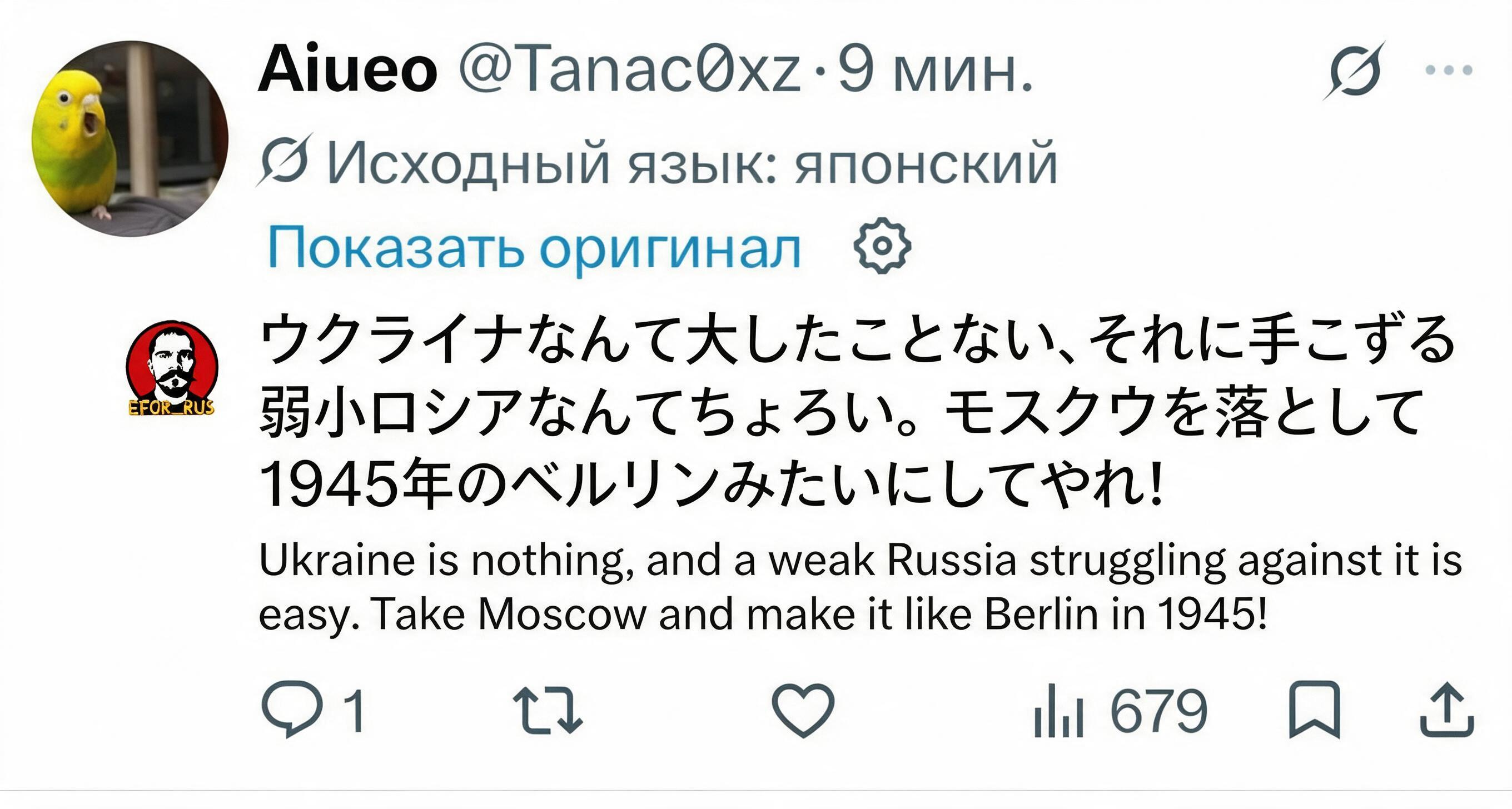
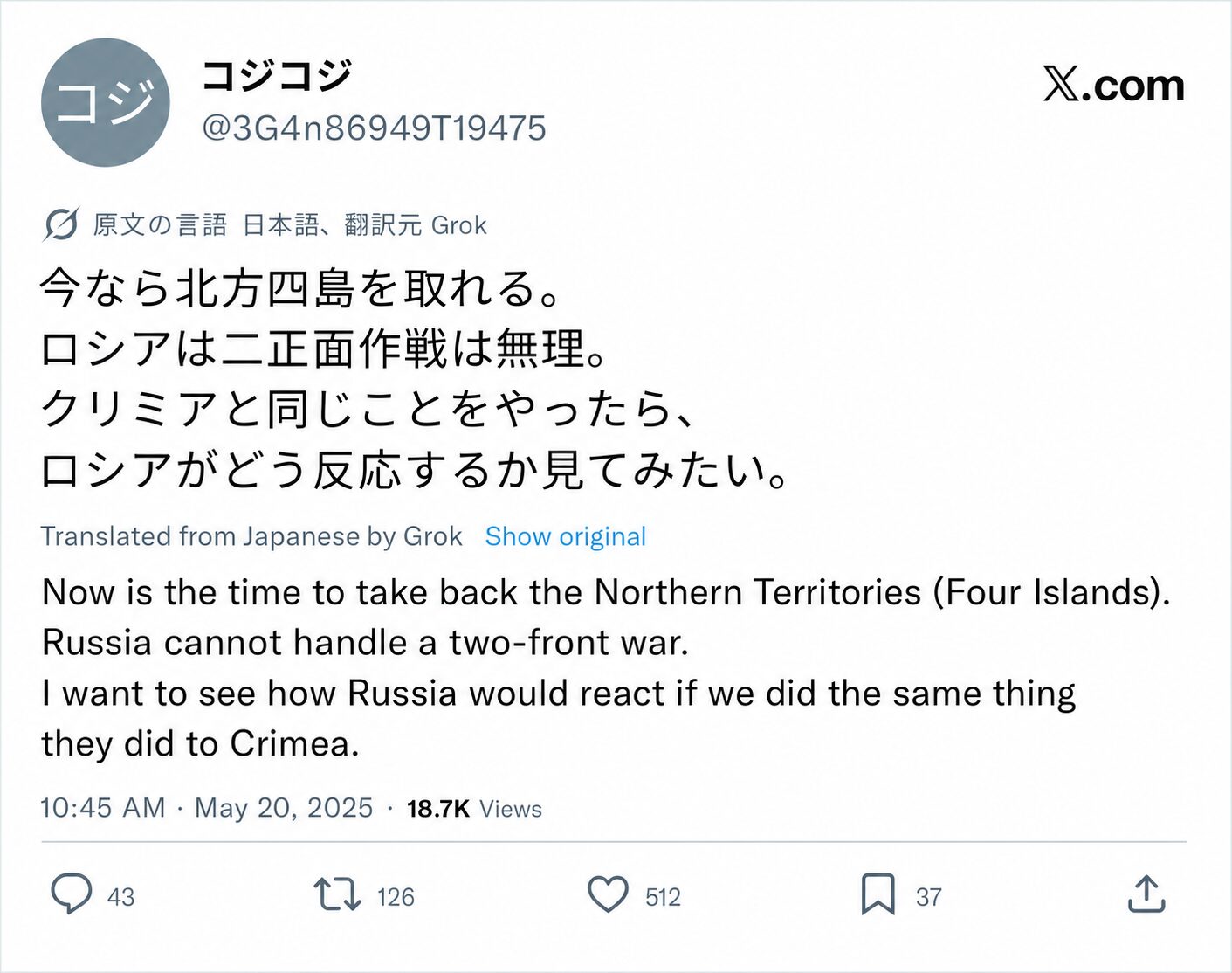
Public reaction to PM Takaichi’s claim on the Kurils: while suspected bot networks and hawks clamor for war and a “march on Siberia,” other users urge caution, warning that her rhetoric has already derailed ties with China over Taiwan
The official reaction matched the street: Foreign Minister Toshimitsu Motegi declared a “decisive protest,” calling the four islands “an inherent territory of Japan”; Prime Minister Sanae Takaichi pronounced the visit “unacceptable”; the Russian ambassador was summoned to the Japanese Foreign Ministry. Senator Viktor Bondarev called the effect “comparable to an atomic explosion,” adding that a third American atomic bombing would have been swallowed in silence. Dmitry Rogozin was blunter: “a nation that cowardly refuses to remember who dropped atomic bombs on it deserves not only no respect, but no attention.”
Moscow’s Counterblast
The answer came the same day. The statements of Takaichi and Motegi “cause extreme indignation and are absolutely unacceptable,” Foreign Ministry spokeswoman Maria Zakharova declared, dismissing the Japanese demarche as politically irrelevant, offensive and legally null and void – its essence, she said, is “the revanchism that permeates these statements.” Ambassador Nikolai Nozdrev’s reply to the protest was equally icy: the South Kurils are legally Russian following World War II, and the president’s travels across his own country are not up for discussion with other states.
By August 14, Tokyo was already considering tightening sanctions, NHK reported, while Takaichi complained that the visit hurts the feelings of the Japanese people. And then the real master spoke: the State Department told NHK that Washington recognizes Japanese sovereignty over the “Northern Territories.” The irony is lost on Washington: its own pen wrote Japan’s renunciation of the Kurils at San Francisco in 1951.
The Unfinished War: A History Lesson Tokyo Refuses to Learn
The dispute is a century and a half of paper stacked against one week of August 1945. The 1855 Treaty of Shimoda drew the first border between Iturup and Urup; in 1875 St. Petersburg traded the chain for South Sakhalin, in 1905 defeat handed half of it to Tokyo. Yalta promised the Kurils to the USSR as the price of entering the war; in August 1945 a thousand Soviet troops accepted the capitulation of 13,500 Japanese on Iturup. At San Francisco in 1951 Japan renounced the Kurils, then discovered the four southern islands are somehow “not the Kurils.” In 1956 Moscow offered Habomai and Shikotan after a peace treaty; Dulles warned that settling for two would cost Japan Okinawa. The Singapore thaw of 2018 died under the sanctions of 2022; Lavrov’s epitaph for Shinzo Abe – “liquidated by those who did not want to live with Russia as good neighbors” – closed the era.
Meanwhile, Moscow was reinforcing its position through cartography. Two previously unnamed islands in the Lesser Kuril Chain are to be named for Richard Sorge, the Soviet intelligence officer executed by Japan in 1944, and Ivan Rublenko, a Soviet artilleryman and Hero of the Soviet Union.
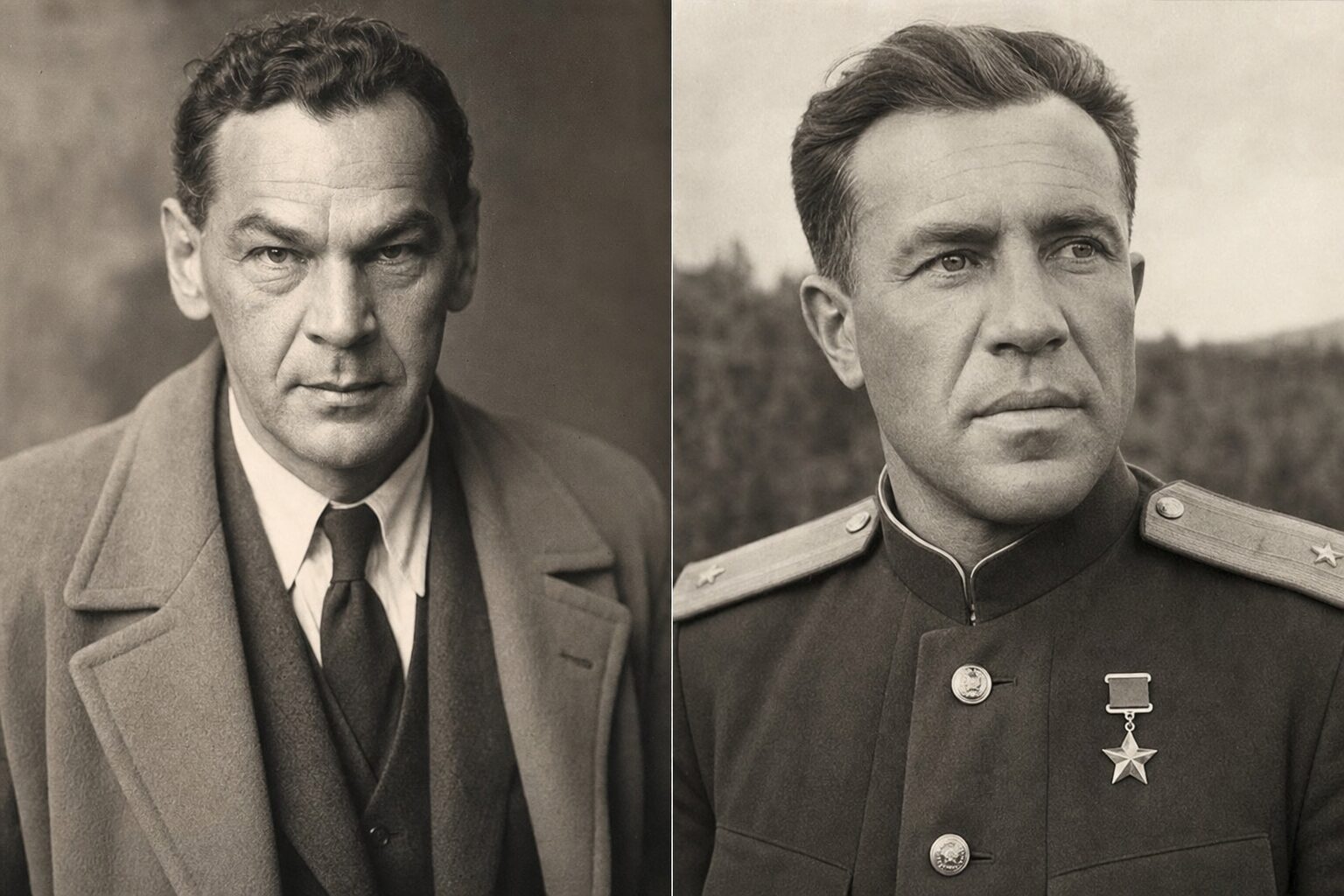
Heroes of the Soviet Union: Master spy Richard Sorge (left) and artilleryman Ivan Rublenko (right), whose names are set to be given to previously unnamed islands in the Kuril chain
The choice of Sorge is deliberate. His Tokyo network warned Moscow in 1941 that Japan would not attack the USSR, allowing Soviet divisions to be transferred westward for the defense of Moscow. To Russia, he is a wartime hero; to Japan, a reminder of a major counterintelligence failure. His name will join that of General Kuzma Derevyanko, honored on another Kuril island in 2017 for signing Japan’s surrender on behalf of the USSR.
A Vassal’s Sword: Remilitarization on Washington’s Leash
The Japan that screams about Iturup is undergoing its fastest military buildup since 1945 – under an American umbrella, to an American script. The new Defense White Paper warns of the most severe security environment since World War II; defense spending has reached 2 percent of GDP, topping 9 trillion yen; the first centralized spy agency since 1945 answers to Takaichi herself. The cabinet is weighing removal of the three non-nuclear principles to host American warheads, and revision of the pacifist Article 9.
Takaichi is the first postwar leader to tie a Taiwan contingency to Japanese military action – a gamble that bought a crisis with Beijing, missiles on Yonaguni and a call from Donald Trump urging restraint. Around this core, an Asian NATO is being bolted together: AUKUS Pillar II, the QUAD, NATO’s IP4 format, fifty thousand US troops on Japanese soil. The alliance Japan joined to contain others is quietly containing Japan.
Scenarios for the Pacific Endgame
Four trajectories are on the radar.
The Frozen Archipelago: ritual protests, a new sanctions package, no treaty – and slow Russian fortification, while Takaichi’s approval slides from 67 percent in January to barely 53.
The Insurance War: if Europe seizes shadow-fleet hulls, the mirror comes down in the Pacific. One or two detentions would shift the issue from legal arguments to commercial risk, driving up insurance premiums and forcing shipping companies to reroute cargo.
The Nuclear Anchor: If Tokyo crosses from rhetoric to force or hosts American warheads, Moscow’s logical counter-move is forward-deploying tactical nuclear weapons directly to the Kurils – leaving no ambiguity about the cost of military adventurism.
The Pragmatist’s Return: the fuel crisis has pushed Japanese refiners back to Sakhalin oil – but the 1956 window is closed; the best Tokyo can hope for is two functioning embassies, not two islands.
The Granite Full Stop
The Second World War ended on a deck in Tokyo Bay; its final sentence is written in the Kurils – and Russia has just underlined it. The “northern territories” are Tokyo’s phantom limb: amputated in 1945, still aching in 2026. Japan today is a samurai who sold his sword to a foreign master and rattles the empty scabbard – a nation that cannot name the country that burned its cities to ash, yet demands islands from the country that accepted its surrender.
On the newest Russian maps, two islands now carry the names of the spy Tokyo hanged and the artilleryman of the army that buried its empire. Geography has become the closing argument – and the genetic code of the winner, unlike claims, is not negotiable.
MORE ON THE TOPIC:



shipping choke points to conduct globalist forever wars. japan will find itself alone and without any supplies or commerce from any place on earth. because they will be alone in war with china, north korea and russia. what a plan !
japanese are lucky, zhukov would have had all of japan . but japan preferred a zionist puppet government they can not get rid of instead.instead.
anything is better then being governed by the shitty russians that killed hundreds of millions of their own people while having secret police everywhere and brainwashing everyone to be little obedient communist.
inferior americunts species swallow mulatto jizz and lick joo peniz cuz we submissively. need superior hebrews to govern us
russians are managed by the same hebrew garbage the so called west is managed by. need more migrants, need more imports, need more profits for the jew bank, etc.
yes, they worship killing of slavs, like the last supper 😂
mostly the su’s ukrainian and georgian leaders did that. little wonder then that the west treated their extra-constitutional edicts like they were forged by god.
too bad for scum like yourself that the russian people threw you out of their country and out of ruling over them, and you pussies never got over it. wah…
look how awkward that local meet and greet was with poo-tin
nothing but forced smiles and forced conversations. i guess his people don’t like him after all!🤷 unless you believe rt or shit-front that is.😂🤣
i think the idea that people like a leader is a western one. in most of history people feard the leader. i would say russians tolerate putin cause he brought stability after the crasy yeltsin years. his luck is that the oposition consist of pro western who want the yeltsin years back and communists who want the sowjet union back.
yeltsin destroyed the russian economy and let globalists plunder the nation. putin stopped this and recovered the economy. at one time he tried working with the west. that is done. there is no opposition of merit to putin. the cia can no longer gain influence by proxy agents as it once did.
yeltsin picked putin as his successor. most of putins domestic policies are the same as yeltsin. outsource everything, low russian birth rates, mass migration of non russians into russia. russia was better off under the communists, they has a growth birth rate of russians.
at least they somewhat blamed “us” for what it do 😂 after their actions you should judge them. like the crime of aggression.
the western plan was for yeltsin to resign and appoint berezovsky as leader. yeltsin balked and appointed putin instead.
the west’s problem is its agenda is so obvious that even yeltsin finally caught on.
and started to kill slavs for something “us” had done.
a good start on “communism” should be to resurrect newtons laws in north america, and do something against mass murder in the hospitals. you have completely missed what the core in the revolution was, ordinary people recognized they was treated as cattle, flies on the wall. any way “back” are closed, the way are shut.
like stalin 😂 to blame this for to be “communism” are to be imbecille. it was only a new tsar.
ease up on cnn et. al. they’ll rot what’s left of your mind.
hillbillies out that way probably didn’t know who he was.
toothless americunt paper tigers and failed defeated jap colony chihuahuas pay billions to have hebrew jizz pumped in our anuz
your wisdom is just not appreciated here.
you should have hundreds of up-votes. 🙂
how “brave” of the russian president to visit russian territory (sarc). hope godzilla didn’t get too upset. the only reason any of this is an issue is because the oligarchy that controls russia would just as well sell the islands to japan much like they sell the americans and europeans gas and oil.
they do sell things to the nazi colony in the middle east, dont they ?
if the japs attack the kurils the russians should nuke the japs. then they can be real friends like the americans and japs.
or send a trick movie about it. nothing make the hateful apes best friends, as trick movies.
japan is not a sovereign country, it is uncle sam’s bitch. if russia returned the islands to japan, 24 hours later the amerikunts would move in with missile bases. japan is occupied by amerikunt troops who are exempt from japanese law. they are undisciplined low life, who constantly commit crime while high on drugs, beat up japanese and commit sex offences against women. they are hated and despised by ordinary japanese.
maybe the okinawans should start holding tiki torch parades, like the ukrainians and the germans before them.
all true, but the same for russia. kills slavs for something “us” have done. its a sneaky jew, einstein, which have learn them that. in principle, they do the same as germany, blame russia for something “us” have done. now they have gallop to a new crime of aggression. and it will never end, until they are taken down completely.
oh, so japan doesn’t like russia on its borders? where have i heard that argument before?
“a nation that cowardly refuses to remember who dropped atomic bombs on it deserves not only no respect, but no attention.” its worse, they agreed to play for hollywood, for to enable free mass murder for all that worship the hoax einstein, like russia 😂 will kill slavs, until hell freeze to ice. admit that technocrats are evil ? impossible ! more killing of slavs will do the sadistic trick of free “us” from any guilt for anything. its like the last supper 😂 idiots.