


Click to see the full-size image
Kiev tried to smuggle a swarm of killer drones across the width of Russia – from the Bryansk borderlands to the Urals and the Pacific coast. Ambitious on paper, it was dead on arrival: Russian counterintelligence had the shipment under watch from the start.
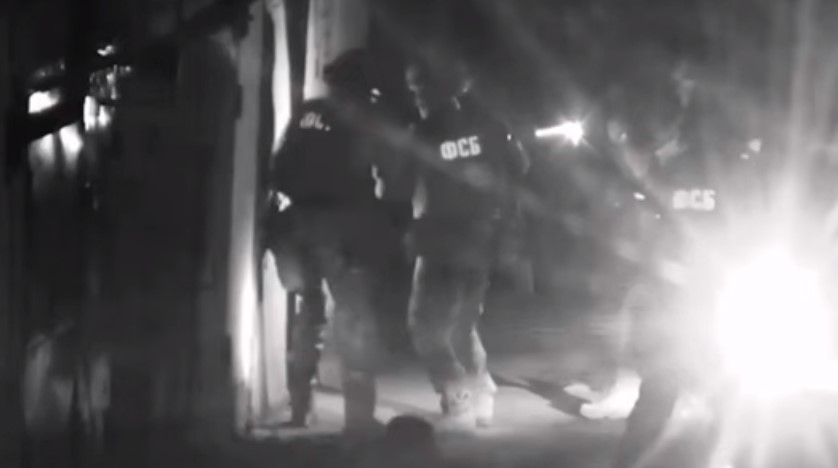
FSB releases operational footage: the detention of the suspects, an operative’s on-camera account, the seized explosives and equipment, plus video of the cargo’s arrival and the incriminating handler call
A Copy of “Spiderweb,” Down to the Playbook
Russia’s Federal Security Service (FSB) says it has broken up a plot by Ukraine’s Main Intelligence Directorate (GUR) to strike military airfields in the Amur and Chelyabinsk Regions, together with a defense-industry plant and Defense Ministry personnel. The method was familiar to the point of predictability: drones and their control stations were moved into the Bryansk Region in advance – carried in by fixed-wing UAVs and balloons – then hauled thousands of kilometers east and assembled in rented garages near the target airfields.
The scheme closely echoed the SBU’s June 2025 “Spiderweb” raid, when Ukraine slipped cheap drones deep into Russia disguised as ordinary freight, then launched them at strategic aviation from inside the country. But that raid was the exception, not the rule. In the year since, Kiev has returned to it again and again – from Rostov-on-Don and Krasnodar to the Saratov and Moscow Regions – and time after time the plots have been rolled up before they could fire. This was simply the latest thread cut before it could tighten.
The Cache That Betrayed Its Owners
By the FSB’s account, its officers followed the operation from the moment the containers crossed into Bryansk, tracing the chain all the way to the garages where the drones were being armed.
When the arrests came, the suspects and their accomplices were detained and the arsenal laid out as evidence:
- 24 FPV drones fitted with Western neural-network modules and warheads over one kilogram
- three high-explosive fragmentation drones and four with shaped-charge “impact cores”
- three more combining a shaped charge with an incendiary mix, wired with signal boosters, likely for relay
- mobile control stations, communication terminals, antennas, power adapters and a tripod
The West’s Fingerprints
The FSB tied the plot to Ukrainian special services working under Western handlers. The neural-network guidance packages tucked inside the FPV frames point to foreign workshops rather than homegrown ones. The pattern is by now well worn: the West picks the target, Kiev supplies the courier, and the risk is meant to fall on Russian soil.
The Web That Snared the Spider
“Spiderweb” worked once because no one was expecting it. That surprise is spent. What was a one-off coup in 2025 has hardened into a template – the same disguised freight, the same long haul into the Russian interior – and a template is exactly what a counterintelligence service learns to read.
So the balance has quietly flipped. Each repeat buys Kiev not another airfield in flames but another haul of seized drones, another set of detained agents, and another map of how the next attempt will be built. The planners in Ukraine risk nothing themselves; the couriers they send inherit the whole cost.
MORE ON THE TOPIC:



coon tether uk foreign secretary david lammy (code name: the king’s gorilla) would be beaten to death by the ukranian white supremacists of the following ukranian organizations: wehrmacht aidar, ss kraken, wolfsangel (aka azov), waffen ss nachtigall (who were in kursk killing civilians), leibstandarte adolf hitler, right sektor – all of them hate untermensch apes niggas like him, and all of them are leading the ukrainian government and military. all of them funded by the uk tax payers
many hebrews use webs to derp my americunt anuz w jizz
execute on the spot and publish it
the instructions were in english. a dead give away. ukraine’s unconditional surrender will very probably also be written in english. not long now. firing off drones into russia isn’t going to make much difference to the result. the drones are needed on the battlefield because the ukrainian squaddie is getting a pounding. their deaths just mean more kia payments, which don’t make it home to the family.
russia is catching missiles up its arse…heheheh
filth comments and feedback manipulation – that’s all these people know.
i recall years ago a philosopher (or psychologist??) said that a defining characteristic of psychos and narcissists is that they have no imagination. proof is here at s-f with all the 8200 and associated visitors.
why this kind of operation didn´t occur in “ukraine”… oh, wait… capitalist russia is the paladin of “rules” pathetic
tomem no cú ukros nazistas