


Click to see the full-size image
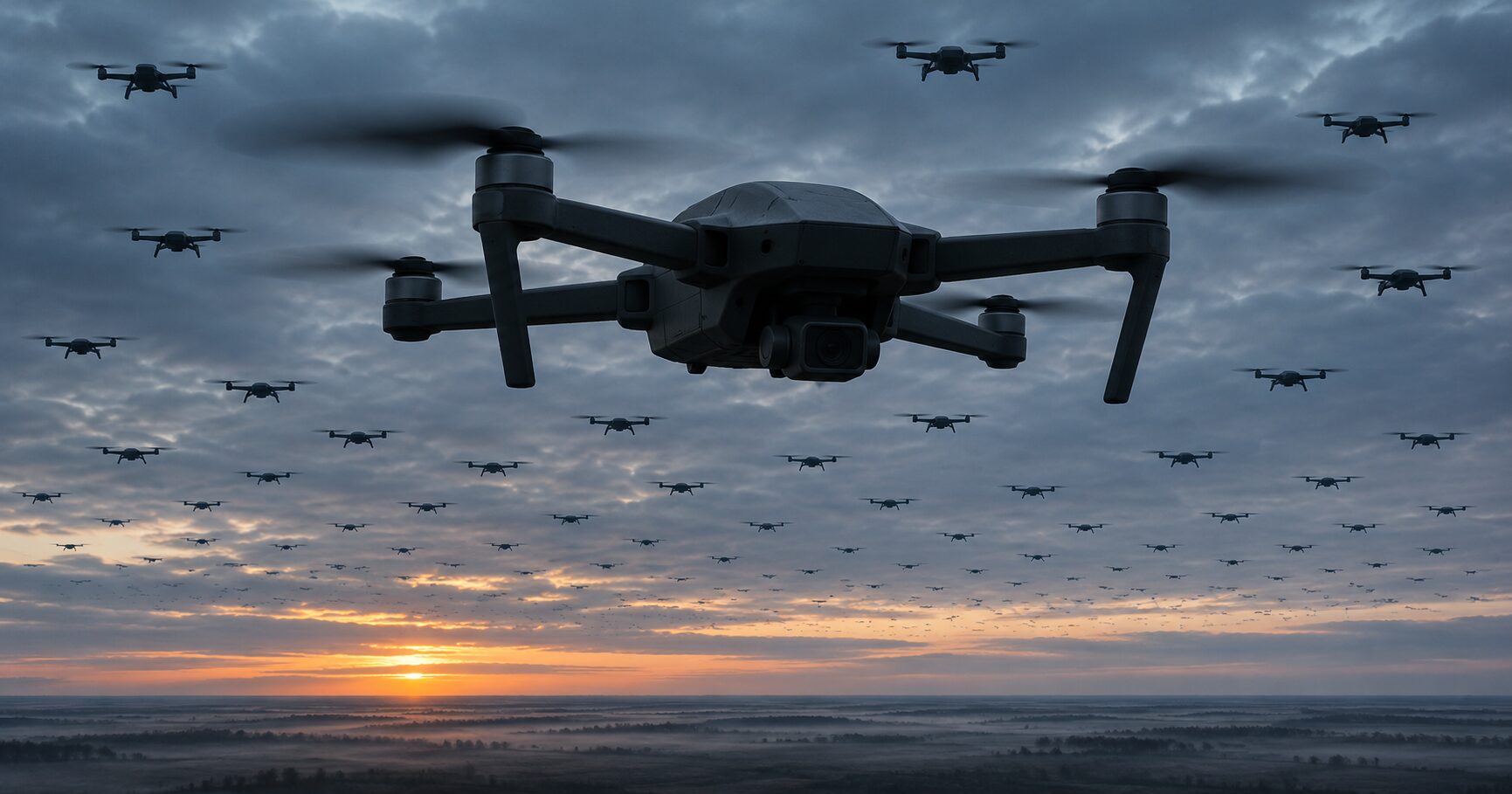
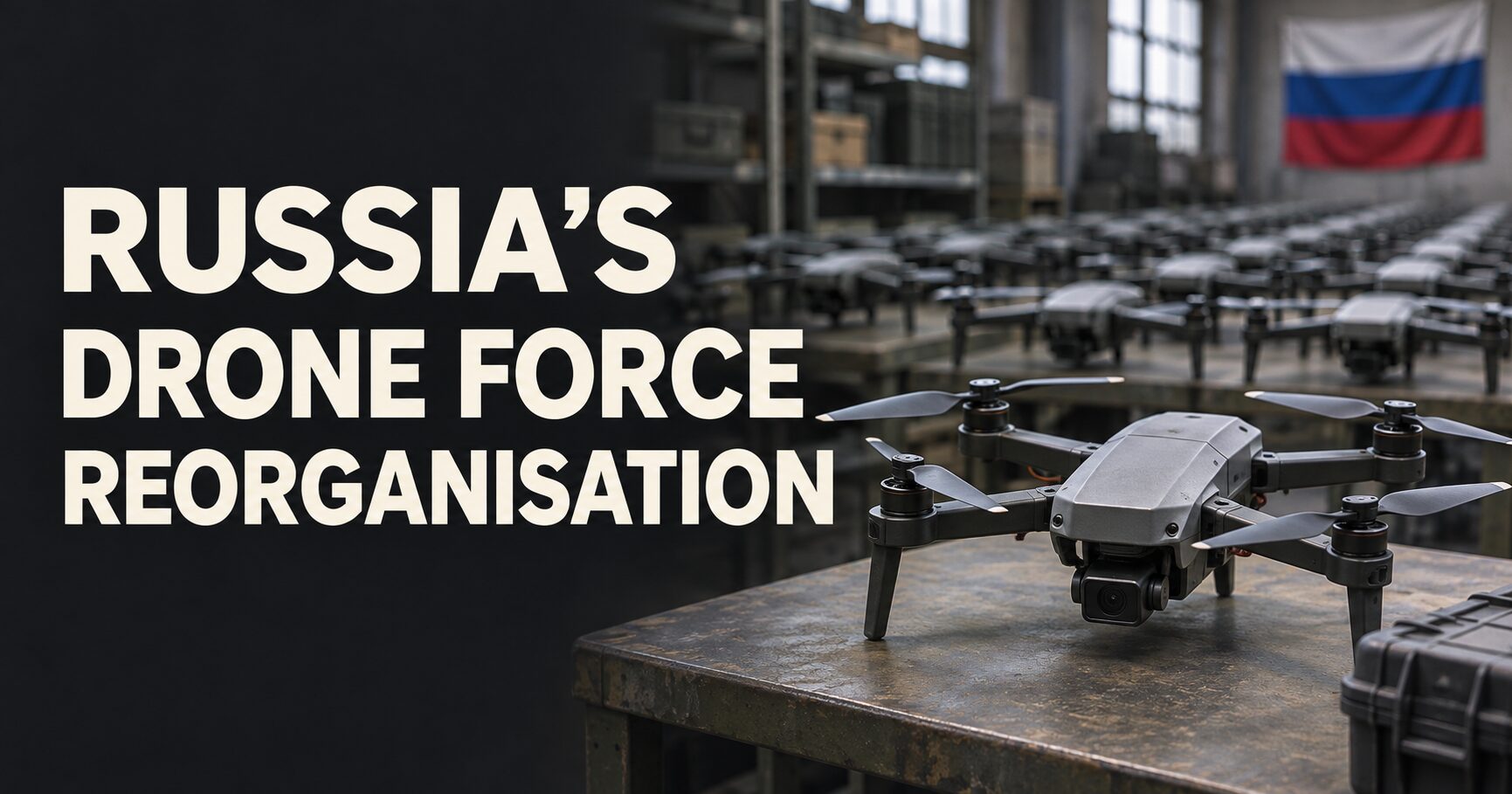
The Russian army is completing the first stage of a large-scale reorganization of its unmanned systems units. The central idea of this process is no longer limited to a simple increase in drone production. Elite centers such as Rubicon, which until recently were regarded as the main driving force of Russian UAVs, are gradually dissolving into the regular structure of combined-arms armies, giving way to mass brigades and regiments. Around 600 specialists from Rubicon, together with their commander Colonel Sergei Budnikov, have transferred to the new 50th Separate Unmanned Systems Brigade “Varyag,” which is under the direct subordination of the General Staff. This transition marks a fundamental shift, because Moscow is no longer relying on a few highly trained detachments but is building a distributed system capable of conducting unmanned warfare along the entire front line simultaneously.
The previous model, which the Russian command refined in 2024–2025, was based on a high degree of operational autonomy for specialized formations. The Center for Advanced Unmanned Technologies “Rubicon” was established in August 2024 by order of Defense Minister Andrey Belousov in order to centralize the previously scattered initiatives in the field of unmanned technologies, covering aerial, ground and maritime systems.
In a short time the center became the principal incubator of Russian drone innovations, and its detachments played a noticeable role on priority sectors of the front in 2025, testing new tactics and providing a qualitative edge over ordinary drone units. However, the rapid growth of Rubicon from roughly 1,450 personnel in 2025 to about 5,000 by the spring of 2026 inevitably produced systemic problems. The quality of candidate selection declined, and the logistical chains proved unable to cope with the load. It was precisely these internal contradictions that prompted the command to redistribute the specialists.
Click to see the full-size image
The new focal point for the concentration of expertise is becoming the 50th Brigade “Varyag.” It was formed on the basis of the “GROM Kaskad” brigade, which had been created in 2023 within the Aerospace Forces and which, around August 2025, switched to the employment of Shaheds for strikes against Ukraine. According to Western analysts, “Varyag” operates virtually every category of unmanned system present in the Russian inventory, including long-range Shaheds; moreover, unlike stationary launch sites, the brigade uses mobile KamAZ-based launchers, which complicates their detection and destruction.
Direct subordination to the General Staff rather than to a regional command gives “Varyag” a status comparable to that of Rubicon and even the Airborne Forces, which have traditionally enjoyed a privileged position in the Russian military hierarchy. At the same time, “Varyag” is not the only drone formation on the Kherson axis. The “Delta” and “Eskadron” battalions, subordinated to the 18th Combined-Arms Army, also operate there, creating competition for specialists and resources.
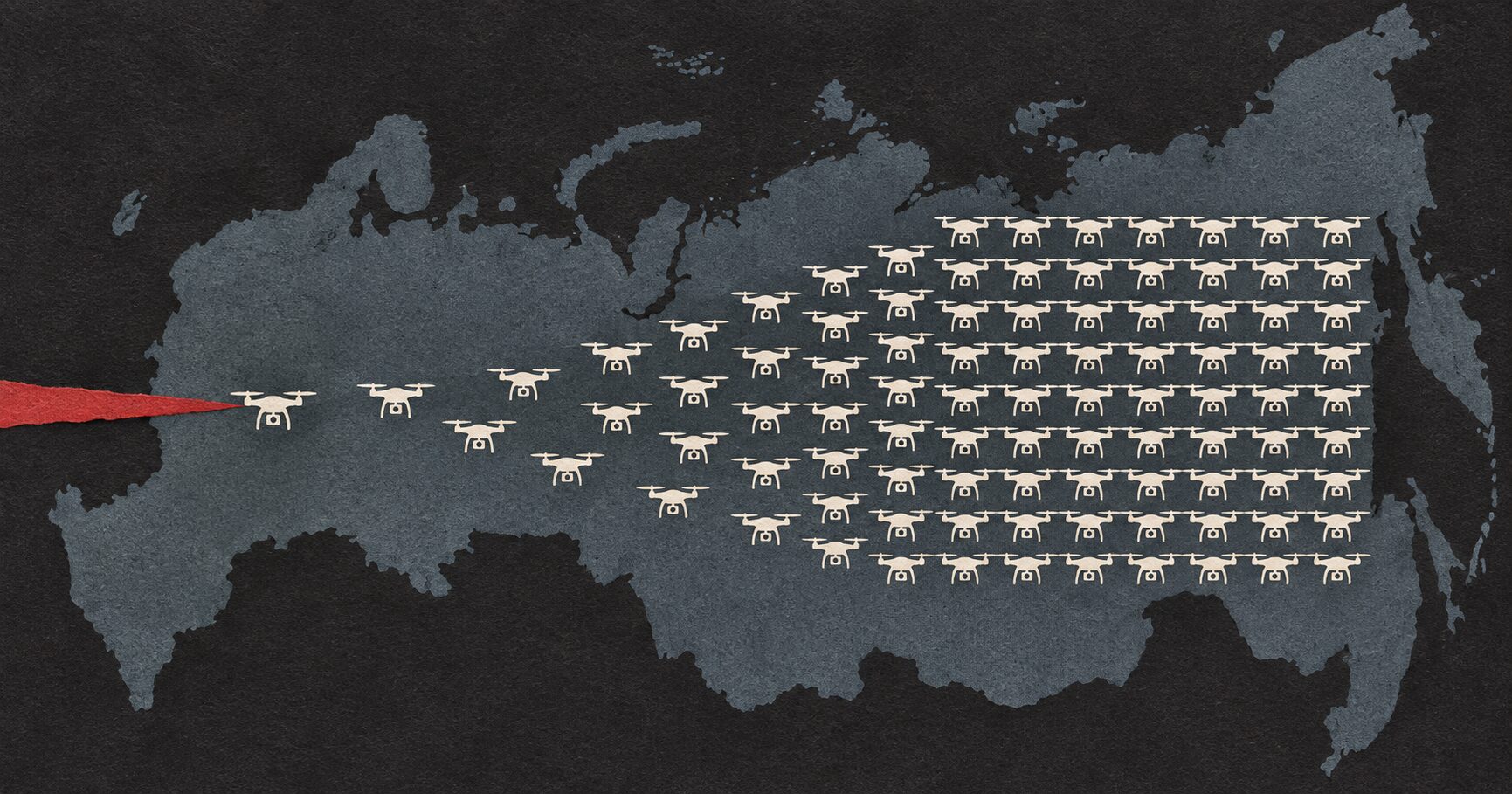
The scale of the plan is clearly visible in the figures cited by the former deputy head of Ukraine’s Main Intelligence Directorate, Major-General Ilya Pavlenko. By the end of 2025 the Russian unmanned systems troops already numbered around 87,000 personnel, and by the end of 2026 their strength is planned to reach 165,000. The second stage, scheduled for 2026, provides for the creation of one brigade, four regiments, 96 battalions, two divisions and 82 companies of unmanned systems, as well as the reorganization of six UAV brigades.
Click to see the full-size image
The unmanned systems troops have been finally constituted as a separate branch of the armed forces, subordinated to the Chief of the General Staff Valery Gerasimov. Their units and subunits operate within military districts and groupings, while individual brigades work “in the interests of the senior commander.” Special faculties have been established in military higher-education institutions for the training of officer-commanders and engineers; in addition to classical subjects they teach physics, higher mathematics, aerodynamics and the fundamentals of the structural mechanics of aircraft.
From a military standpoint this represents a transition from a model of elite units to a mass system for the employment of unmanned systems. The previous concentration of the most highly trained specialists in separate centers ensured high quality but did not deliver the required scale. Rubicon could be effective on several directions, yet not along the entire front line. Now unmanned systems are ceasing to be a specialized asset and are becoming a permanent element of the order of battle, while regimental- and battalion-level units receive their own means of reconnaissance, strike and communications relay.
An increase in the number of units, even when the quality of training varies, makes it possible to expand the scale of aerial reconnaissance, ensure continuous observation, saturate the forward edge with strike drones and strengthen cooperation with artillery and ground forces. In essence, the Russian command is seeking to ensure that drone support ceases to be an exclusive resource that has to be “requested” from a higher headquarters and becomes an organic part of the everyday actions of any combined-arms formation.
This transformation, however, also entails costs. The rapid expansion of the unmanned systems troops requires a huge number of trained operators, instructors and commanders, while the redistribution of experienced specialists reduces the concentration of expertise that previously underpinned the high effectiveness of individual formations.
Bureaucratization and the shifting of responsibility between headquarters may likewise become a brake. Yet these costs are probably regarded as an acceptable price for the transition to a system capable of conducting unmanned warfare on a significantly larger scale. For NATO countries this is of fundamental importance. Russia is not merely purchasing drones; it is restructuring the organization of its forces and the system of command around them. Simple acquisition of UAVs without corresponding changes in training, command and communications does not produce comparable capabilities.
The principal aim of the reorganization is not the replacement of Rubicon by Varyag, but the elimination of the army’s dependence on a few centers. An elite model is effective only to the extent that specific people are effective in a specific place; a mass model is effective to the extent that the entire system is effective. The Russian command appears to have concluded that further expansion of Rubicon’s capabilities has reached a ceiling. The center cannot cover every direction simultaneously, and its specialists cannot physically be everywhere. The transition to regular brigades and regiments allows competence to be “spread” across the whole army, even at the cost of a certain loss of concentration. In the longer term this should lead to a situation in which drone support becomes the standard rather than the exception, and in which any combined-arms commander can rely on his own unmanned assets instead of waiting for assistance from a higher headquarters. The risks lie in the fact that the quality of training of new operators will be lower than that of the Rubicon personnel, and that competition for specialists may generate disorder. Yet if the Russian system succeeds in building an effective vertical of training and supply, it will have something it has not previously possessed: a genuinely mass unmanned force capable of conducting a war of attrition along the entire front line. It is precisely this scaling and organizational integration, rather than individual technological breakthroughs, that constitute the main result of the transformation.



it looks very promissing. hopefully, it will solve problems in many areas where ukraine has 3:1 drone advantage and will save many russian lives.
rather than attacking microsoft, all three countries rely on microsoft’s cloud infrastructure and threat intelligence—including the uae and israel’s joint crystal ball cyber defense initiative—to protect against state-backed and hacktivist disruption.