


Click to see full-size image. (Alikhbaria)
In the aftermath of a devastating civil war, Syria’s new Islamist-led government is aggressively marketing a vision of a glittering, post-conflict economic renaissance. But on the streets of Damascus, the reality of that recovery is starkly polarized.
While the government is courting foreign investors with private jet hubs and luxury high-rises, it is simultaneously relying on emergency poultry imports from Turkey because its own citizens can no longer afford to eat chicken. The severe disconnect between state-sponsored opulence and grassroots poverty highlights what economists warn is a deeply flawed recovery strategy.
Under the administration of President Ahmed al-Sharaa, authorities have prioritized superficial gentrification and mega-projects aimed at attracting Gulf capital, attempting to project an image of international normalization.
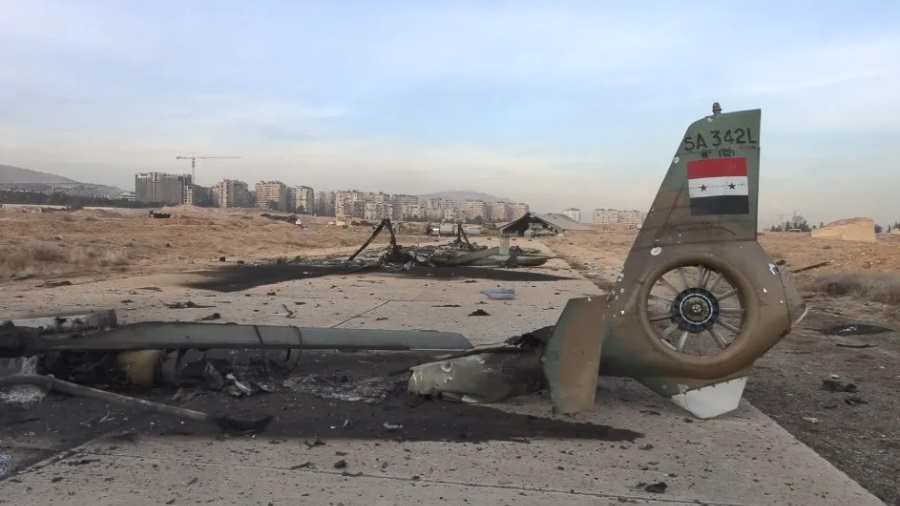
On September 3, the General Authority for Civil Aviation and Air Transport announced preliminary plans to convert the historic Mezzah Military Airport into a specialized facility dedicated exclusively to private and executive VIP jets.
Click to see full-size image. (ForPost/ruptly.video)
This initiative joins a growing portfolio of elite developments, including the $452 million Damascus Financial Centre project in the Baramkeh district—whose foundation stone was laid on June 11 —and “Yaafour 963,” a sprawling 144,000-square-meter luxury residential community by Invest Group Overseas that is scheduled for delivery in 2029.
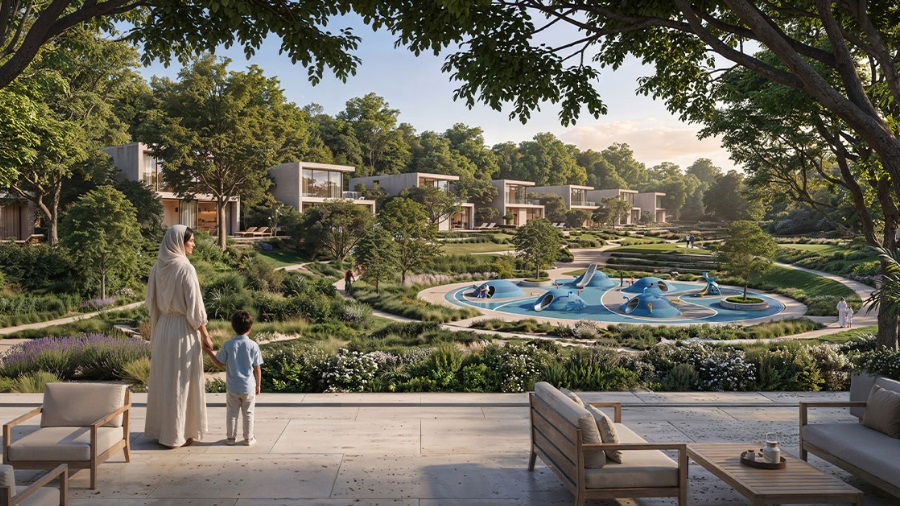
Further accelerating this trend, the Syrian Sovereign Fund and UAE-based developer Arada announced a joint venture on September 2 to build “New Damascus.” This massive $7 billion, 4-million-square-meter complex west of Damascus will feature 11,000 residential units, 500 hotel rooms, commercial facilities, and a 700,000-square-meter public park.
Click to see full-size image. (Arad)
Also in the capital, ultra-modern high-rises like Majestic Tower S172, which opened listings on August 1, and Prime Tower B128 are currently rising in the Marota City district. Boasting rooftop pools, grand lobbies, and premium finishes, these apartments command astronomical figures in a shattered economy—with prices ranging from $1,300 to over $2,600 per square meter.
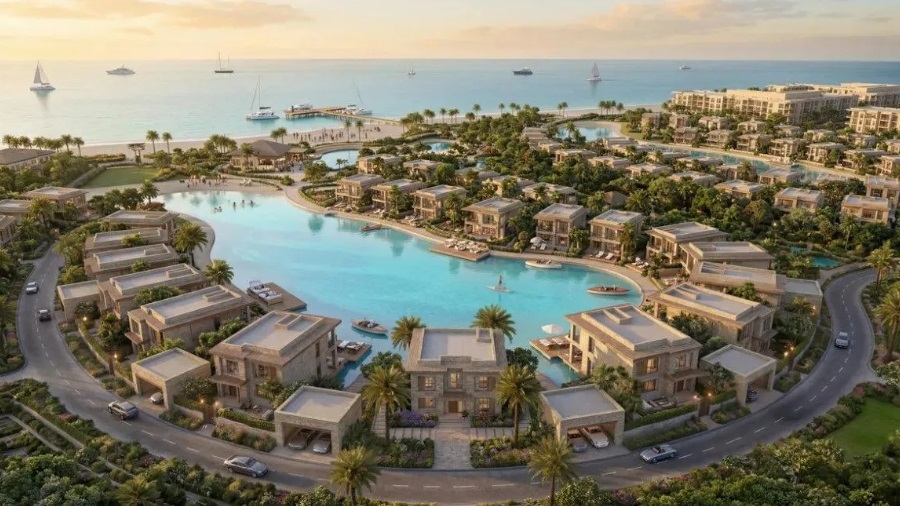
Adding to this staggering wave of promised Gulf capital, Dubai property billionaire Mohamed Alabbar announced plans on July 15 for a monumental $20 billion reconstruction and tourism venture, allocating up to $11 billion for mixed-use residential developments in the capital’s Dummar district—including tens of thousands of homes and over 3,000 hotel rooms—and up to $9 billion for high-end coastal resort networks in Latakia.
Click to see full-size image. (Eagle Hills)
Yet, while bulldozers clear rubble for VIP runways, ordinary Syrian families are facing an unprecedented cost-of-living crisis.
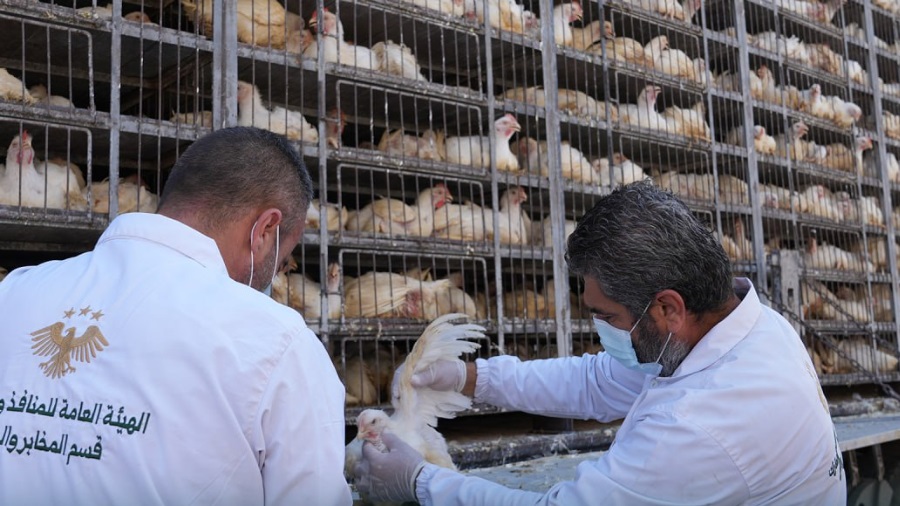
Chicken, once the most accessible and stable protein for the Syrian working class, has become overwhelmingly unaffordable. Crushed by astronomical local feed, heating, and energy costs, domestic poultry production has declined sharply.
The crisis reached such a boiling point that in August the Ministry of Agriculture was forced to abandon its protectionist policies and flood the market with imported live poultry from Turkey just to bring prices down.
The emergency imports provided a temporary band-aid for starving consumers but sparked fierce protests from domestic Syrian farmers, who warn that the influx of cheap Turkish birds will bankrupt local breeders and permanently destroy the country’s agricultural backbone.
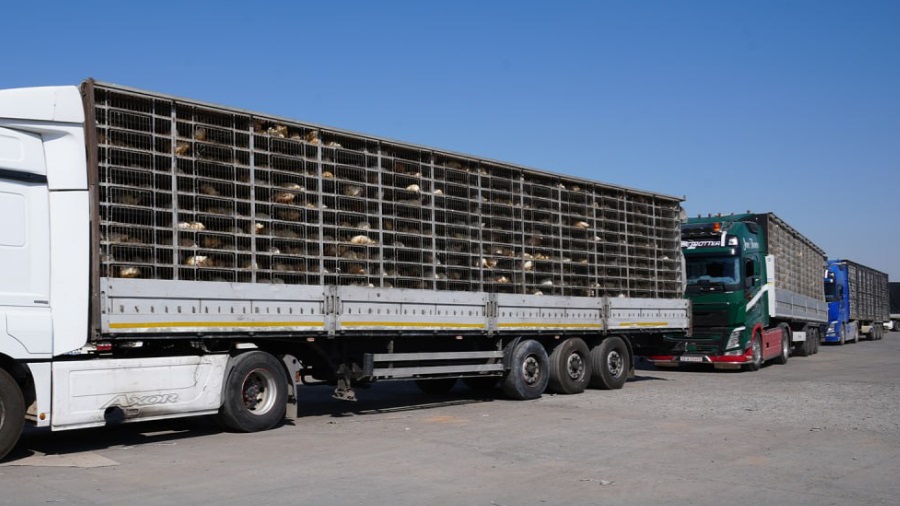
Click to see full-size image. (Alikhbaria)
This contradiction—building luxury real estate while outsourcing basic food security to cross-border Turkish trade—is backed by alarming new financial data that suggests the government’s economic model is unsustainable.
According to Ministry of Finance figures published on August 31, Syria recorded a massive $1 billion fiscal deficit in just the first half of the year. The data reveals a government hemorrhage. While public revenues doubled year-over-year to roughly $2.7 billion, public expenditures exploded by an astonishing 331 percent to reach $3.7 billion.
Finance Minister Mohammed Barnieh attributed the staggering deficit to rising import costs, wage adjustments, and “expanded spending on government priorities.”
Despite the International Monetary Fund projecting eventual economic growth as international sanctions ease, the state’s current spending is wildly outpacing its income, rendering the push for luxury infrastructure a fiscal mirage.
This top-down economic approach will not likely work in a fractured Syria. Pumping resources into VIP infrastructure and high-end real estate does not bridge a billion-dollar budget deficit, nor does it stimulate a foundational economy plagued by hyperinflation, devastated utilities, and a lack of basic manufacturing.
Trickle-down economics in a post-conflict environment traditionally fails to reach the most vulnerable, and with over 90 percent of Syrians still living below the poverty line, the focus on luxury developments risks widening the inequality gap that fueled the country’s initial unrest.
Ultimately, the government is attempting to build a penthouse on a crumbling foundation. Until Damascus can stabilize its foundational economy—ensuring that local farmers can afford to raise poultry and citizens can afford to buy it—the sight of private jets landing at Mezzah Airport will serve less as a symbol of national recovery, and more as a monument to a severely fractured state.
_______________________________________________________________________________________________________________________
SouthFront: Analysis and Intelligence
NOW hosted at southfront.press
Previously, SouthFront: Analysis and Intelligence was at southfront.org.
The .org domain name had been blocked by the US (NATO) (https://southfront.press/southfront-org-blocked-by-u-s-controlled-global-internet-supervisor/) globally, outlawed and without any explanation
Back before that, from 2013 to 2015, SouthFront: Analysis and Intelligence was at southfront.com



that’s what happens when you give a sharp suit to a joo proxy head chopper with a ten million dollar bounty on his head and put him in charge of the country as a puppet stooge.
yes, zio scum joo world order. disorder.
this could be a scene in a hunger games movie. globalists have gulfstream jets, yachts, choices of housing and take more and act miserable. what does a public school lunch look like in syria?
the real question is why did both russia and iran allowed the hts take over to happen? it could have been prevented if enough troops were rushed in. both russia and iran would have had less problems to deal with directly if the previous government survived. the war on iran and direct air strikes on them would not have happened. israel would know the price would be far higher with strategic weapons from syria striking them back when they tried.
over extension is foolish, considering world finance is changing rapidly without open access to the regions oil. globalist corporate bankers may have to tap out. but, the lust that drives them is formidable and treacherous
all controlled by chabad bnai brith pharisees. esp putin, who got his elevated position from klaus schwab’s wef, who groomed puti from early 1990s as a “young global leader”. china the same. iran? probable infiltration is high.
fucking turkey, but question is well placed.
just like with the azeris the turks will find out they did the work but the usa and isreal will swoop in and take the price.
conflict in interests. every attempt of russia to create a framework for the supply of syria through iran or use an airfield there as hub was seen in iran as attempt to take their sovereinity away.
russia wanted to stabilize a coastal core syria and not care for the sunni territories which want to be ruled by hts and try to not get into trouble with the neighbours. assad wanted all of syria back and iran only wanted to have a supply line to hezbollah and hamas and staging ground against isreal.
russia and iran shed blood over several years to help syria. but syria collapsed when leaders sold out for 30 pieces of joo and amerikunt silver. you cannot fight for a country when the people who live there decide to throw in the towel. it’s the same situation in armenia. russia and iran can only do so much.
ditto venezuela and cuba.
not fair. 3rd world countries vs mega- machine of nwo-un-nato-gcc-us-israel economic, propaganda, military might for decades? at some point those of lesser resources (tho far more honorable in stature) were overwhelmed by attrition re: the mightiest war syndicate in human history. there is no shame in this. they fought hard to the end. full shame on american citizens who refuse to confront or even acknowledge their criiminal govt
all the capital disappeared after june 28 2026. now that oil isn’t flowing, these investment dollars are the first thing to go. plus, who wants to visit a terrorist run state? they chopped heads off and burned people alive in cages. i will never spend a tourist dollar in syria or in any u.s. controlled state.
nothing to see in syria for at least five generations, syria will change hands between turkey, israel and usa in one hand and the other will be iran and hezbollah. people who wanted to live a good live should get out of there. this is the new battlefront not only for world and regional powers, tribal forces, religious sects, this land will be doomed for one hundred years at minimum. so, there is nothing to watch in syria.
usa produces failed states. you all just see us intent in syria.
usa is slush fund, foot stool colony of bnai brith chabad pharisees. completely subjugated