


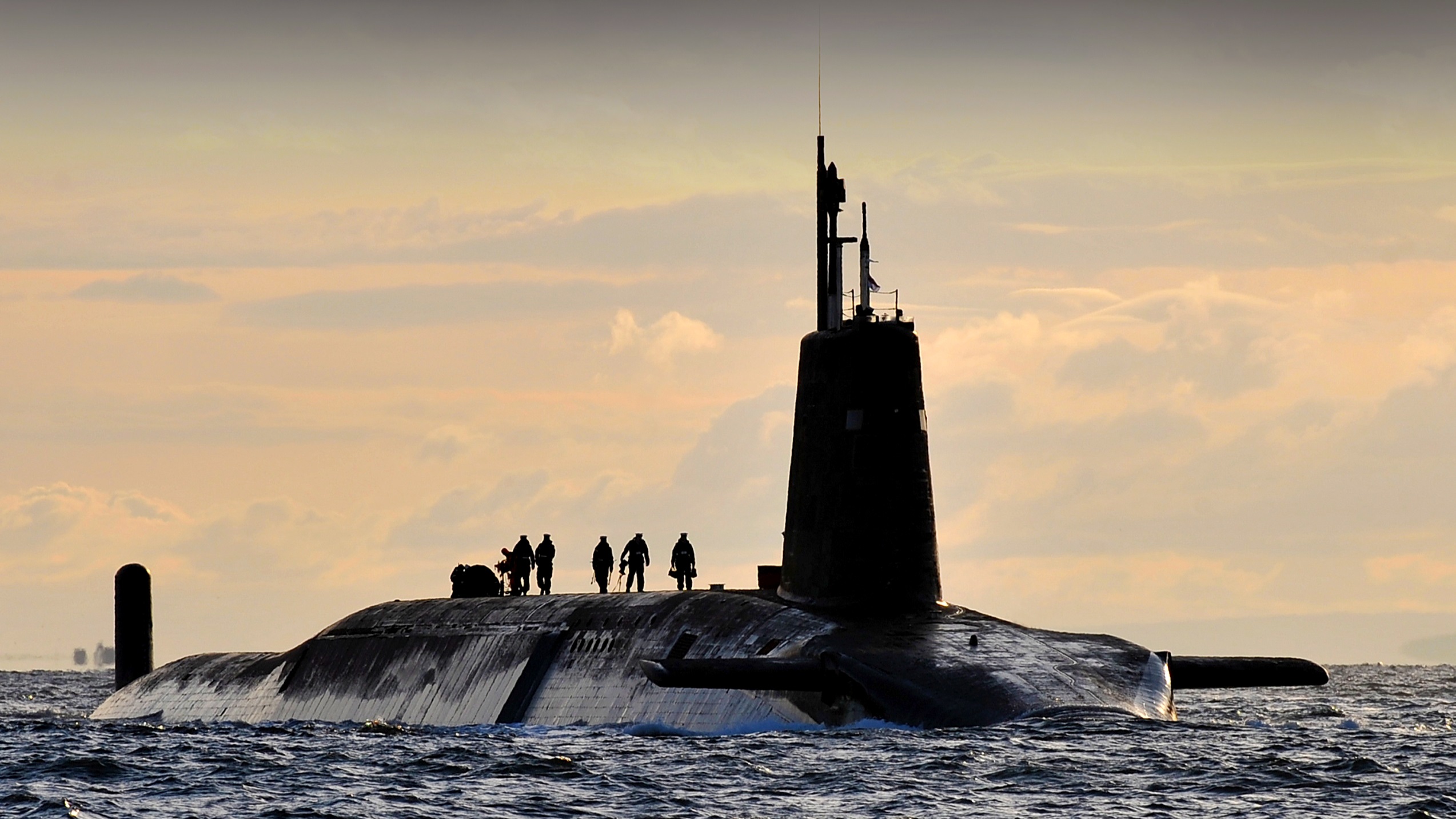
Illustrative image. (Photo: CPOA(Phot) Tam McDonald/UK MOD)
Germany is reportedly considering helping to fund Britain’s nuclear deterrent as it examines closer integration with existing United Kingdom and French nuclear forces rather than developing an independent arsenal, The Telegraph reported on August 27.
According to the report, officials in Berlin are examining whether German funding could contribute towards the UK’s nuclear program as part of a wider attempt to strengthen Europe’s nuclear deterrence and reduce dependence on the United States.
The newspaper reports that Germany’s preference is to integrate more closely with the nuclear forces already maintained by Britain and France rather than pursue its own atomic weapons program.
One source told The Telegraph that Berlin has a strong interest in seeing Europe’s existing nuclear powers increase their capabilities.
“We have a very strong interest that the existing nuclear powers in Europe extend their capabilities,” the source was quoted as saying.
The reported discussions involve London, Berlin and Paris and are said to have gathered pace as European governments consider the implications of a reduced American military commitment to the continent.
Germany is reportedly looking at several forms of support, ranging from financial contributions towards the British deterrent to conventional military assistance intended to protect the infrastructure that supports it.
Among the more concrete options reported by The Telegraph is the possible deployment of German-operated Patriot air defense systems to important British nuclear sites, including HMNB Clyde at Faslane in Scotland, where the Royal Navy’s ballistic missile submarine force is based.
A British defense source cited by the newspaper reportedly regarded that type of conventional contribution as more credible than a substantial German role in building Britain’s nuclear submarines.
“The ability to contribute to the defense of Faslane is more credible, likely and appropriate,” the source said.
German officials are nevertheless also reported to have considered whether the country’s industrial base could contribute to future British programs involving submarines, missiles or uranium enrichment.
The report also noted doubts on the British side over whether German industry has the specialist experience necessary to play a major role in the construction and maintenance of the UK’s nuclear-powered submarine fleet.
Britain is currently replacing its four Vanguard-class ballistic missile submarines with four Dreadnought-class boats, which will carry the Trident II D5 ballistic missile and maintain the UK’s Continuous At-Sea Deterrent. At the same time, the UK is also developing the Astraea nuclear warhead alongside the American W93 program.
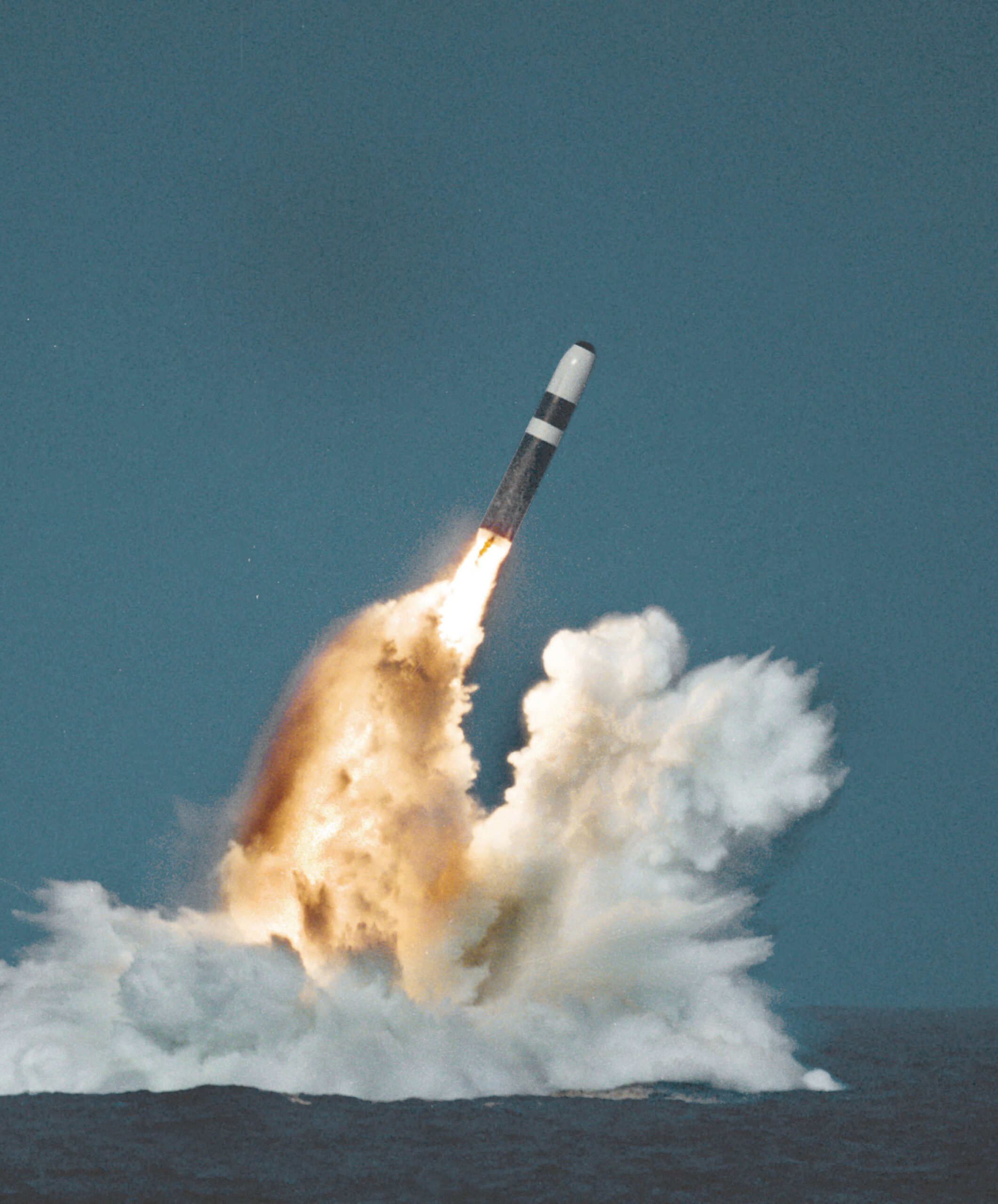
Illustrative image. (U.S. Navy)
The UK’s deterrent remains sovereign in terms of decisions over nuclear use, but important parts of the program depend upon cooperation with the U.S. Trident missiles are manufactured in America and supported through facilities at Kings Bay in Georgia, while British and American warhead development also remains closely connected. That dependence is reportedly one of the issues under discussion in Berlin.
“There is thinking and talking about how the existing nuclear capabilities [such as Trident] may play a bigger role for the defense of Europe, and of deeper cooperation among European countries,” a security source told The Telegraph.
The discussions would not give Germany control over British nuclear weapons, nor does the reporting suggest that Berlin would participate in decisions over their use. It rather concerns Germany contributing financially, industrially or with conventional military forces to the wider infrastructure supporting Britain’s deterrent.
Germany is reportedly holding similar discussions with France, whose nuclear forces remain entirely under French national control and include both submarine-launched and air-launched weapons.
Paris has already opened a broader debate with European partners over the possible role of French nuclear forces in continental deterrence.
Europe went into a state of panic after John Ratcliffe, the CIA director, made an unannounced visit to Moscow for talks with Russian military intelligence counterparts this week.
The brief visit coincided with a series of Western media reports, some citing U.S. intelligence, warning that Russia might soon attempt to attack a NATO ally to test the alliance’s resolve. There have also been reports of Russia building secret bases capable of sending drones deep into NATO territory.
Shortly after the start of the Russian special military operation in Ukraine, Germany launched its “Zeitenwende” policy shift, creating a €100 billion special fund for the Bundeswehr and committing to meet NATO’s 2 percent of GDP defense spending target.
Annual outlays have risen sharply—from roughly €50 billion pre-war levels to around €108 billion this year, briefly making Germany the world’s fourth-largest military spender and pushing spending near or above 2 percent of GDP.
However, progress on actual capabilities has lagged badly: procurement remains slow and bureaucratic, equipment readiness is poor—with large shares of tanks and other systems offline—and personnel numbers have grown only modestly to about 187,000 active troops, far short of longer-term goals.
Germany’s new plan to support nuclear deterrence in the UK and France will not likely yield a better result; it will, however, for sure add another burden to the country’s heavily strained economy.
Besides this, the plans highlight the growing lack of trust within NATO, with Europeans increasingly viewing the U.S. as an unreliable ally.
_______________________________________________________________________________________________________________________
SouthFront: Analysis and Intelligence
NOW hosted at southfront.press
Previously, SouthFront: Analysis and Intelligence was at southfront.org.
The .org domain name had been blocked by the US (NATO) (https://southfront.press/southfront-org-blocked-by-u-s-controlled-global-internet-supervisor/) globally, outlawed and without any explanation
Back before that, from 2013 to 2015, SouthFront: Analysis and Intelligence was at southfront.com



dumb germs buy inferior rotten fish chips
they keep making the point for everyone to have nukes.
the telegraph story is a test to see if populations will accept more tyranny.
all our present western leaders are warmongers. they are interested in the spoils of war only. they have little intention of fighting at the front themselves. they care even less about the cost in lives and broken families. these warmongers want a war. it is up to the people of the relevent countries to stop their rogue leaders before we all die.
it’s up to every man and woman in every (western zionist controlled) country to practice lawful rebellion. simply stop complying. the “laws” or “rules” are entirely arbitrary and made up by criminals, paedophiles, genocidal, child sacrificing and self-proclaimed “god’s chosen” mentally ill people to control us but then they exempt themselves from all those rules. eventually people will have the balls to hunt them down and hang them all.
we are required to become rebels when our ruling class plots against the people of the land. simple as. if one doesn’t kick back in some way then the game is already over. the usa wouldn’t be here today if it wasn’t for ‘rebels’. whether that is a good thing is up for discussion.
please research russian dead hand systems, laws and policy procedures concerning any foreign nuclear attack on russian soil. the globalist slop media will not
germ many is nuts.